
Understanding ship operation and container flow in the terminal
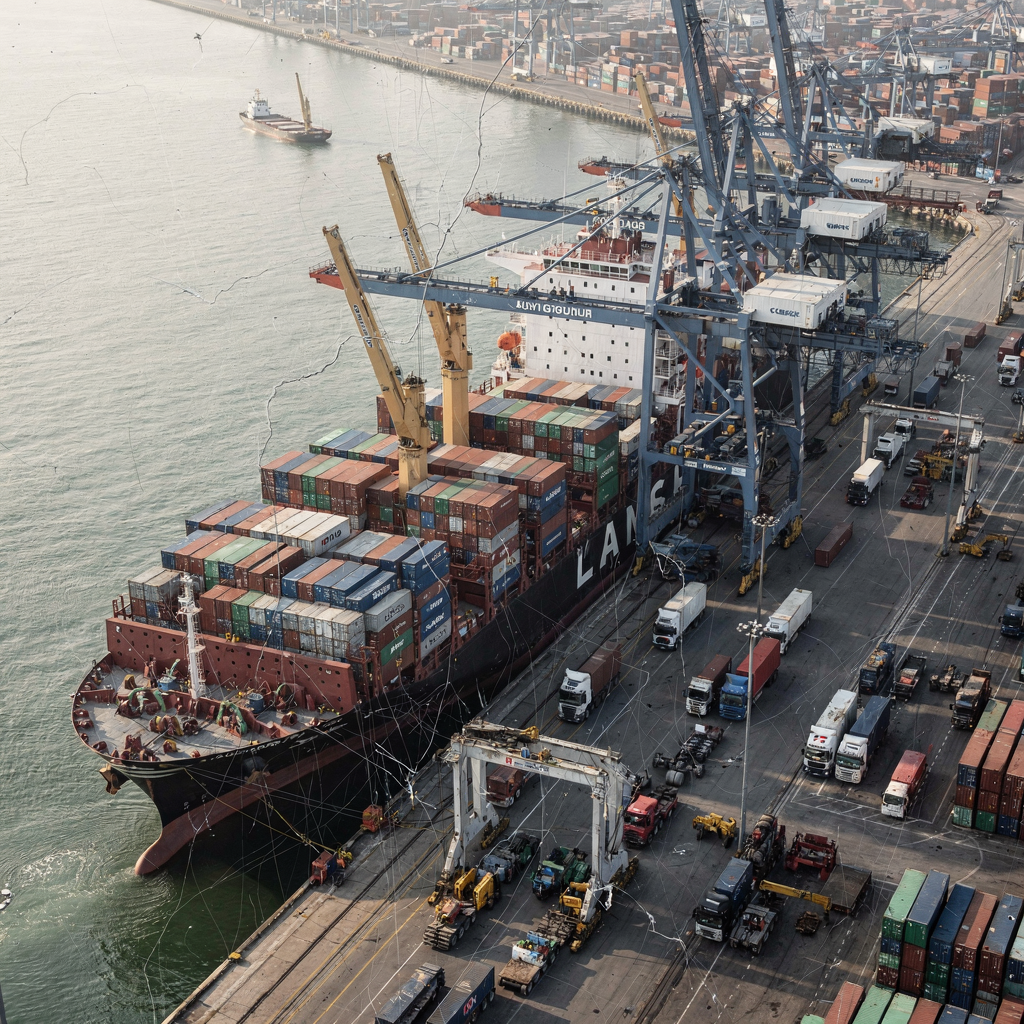
Efficient QUAY operations start with clear tasks for each quay crane and team, and then with disciplined container flow between the quay and yard. A typical quay crane performs two core tasks: DISCHARGING arriving boxes to the landside and LOADING export stacks back onto the ship. When teams separate these phases, they create sequential queues, and then ships wait longer at berth while cranes shift from one phase to the next. That pattern explains why many terminals study single-cycling versus double-cycling workflows to improve throughput and reduce idle time for vessels.
Single-cycling makes cranes focus first on UNLOAD and then on loading, which simplifies planning but prolongs berth occupancy. By contrast, double-cycling overlaps discharge and loading so that cranes work simultaneously on both flows. Research shows that double cycling can create significant efficiency and that double cycling can reduce crane cycles by roughly 20% and vessel handling time by about 10% [JSTOR study]. These numbers matter: fewer cycles and less operating time translate directly to lower berth fees and faster turnaround for both ship and terminal operators.
Key performance metrics include crane utilization, berth productivity and container throughput per hour. For example, crane utilization measures the percent of time a crane actively moves boxes; higher utilization often yields higher productivity but can also increase variability if not managed. A well-tuned operation balances utilization and availability, and then uses yard capacity and stack planning to sustain flow. For readers who want to dig deeper into how quay crane productivity responds to different scheduling strategies, see this practical guide on improving quay crane productivity in container terminals optimizing quay crane productivity.
Operationally, the scheduling problem becomes more complex when the yard, trucks, and quay cranes must align on timing. Terminal teams must balance storage space, yard crane moves and landside truck windows so that containers do not wait at the gate or the quay. To improve the operation, many teams adopt real-time monitoring and adopt rule sets that reduce handoffs, and many organizations like the institute of transportation studies have published models that formalize berth and crane assignment. While single-cycling is simple, double-cycling reduces ship dwelling at the berth and improves overall utilization when the yard and quay coordinate well.
Maximising double-cycling efficiency at the container terminal
To make double-cycling work, terminals must plan for simultaneous tasks and then align resources to match that tempo. The principle is straightforward: operate multiple quay crane bays to service DISCHARGE and loading flows at the same time so that container lifts feed each other and trucks or AGVs clear stacks quickly. Properly executed, double-cycling reduces idle time for cranes and for the ship. In fact, double cycling can reduce the number of crane cycles by about 20% and deliver around a 10% vessel turnaround time improvement when systems coordinate well [Intelligent Cargo Systems].
Practical coordination requires clear roles for quay crane operators, yard tractors, and yard cranes. Yard tractors must deliver export boxes to assigned slots in a just-in-time rhythm, and yard cranes must stage stacks to minimize rehandles. Terminals that use AGV fleets see benefits, but automated guided vehicles require routing that minimizes empty moves and reduces dwell. Automated approaches work best when terminals also use predictive analytics to pre-plan moves; for an explanation of predictive tools, see this piece on predictive analytics in container port logistics predictive analytics.
Environmental benefits also appear. Shorter operating time for equipment reduces fuel burn and CO₂ output at the terminal, and then ships gain flexibility to slow-steam when schedules allow. A study even notes “Dual cycling reduces turnaround time, thereby giving the vessel more time to travel and allowing for slow steaming and reduced emissions” [ScienceDirect]. That quote shows how container handling choices affect both berth scheduling and MARITIME emissions. To plan implementation, terminals commonly model the allocation problem and simulate expected flows so they can set parameters, test a greedy algorithm for local moves, and then iterate an integrated model to ensure the yard and quay work together.
Drowning in a full terminal with replans, exceptions and last-minute changes?
Discover what AI-driven planning can do for your terminal
How port strategies are reducing ship turn-around time using double-cycling
Several major ports have adopted dual approaches and have reduced berth occupancy by changing how they allocate tugs, decks and crane bays. One European port ran a phased rollout that combined tug allocation changes, refined deck sequencing and then integrated yard dispatching. The result was a measurable fall in dwell time and a clear reduction ship operators noticed when they compared schedules. In that rollout, tug numbers were adjusted to match expected simultaneous deck operations so that cars, trailers and unit loads moved without bottlenecks. This shows how tug allocation and deck sequencing play a central role in any dual-cycling plan.
A core lesson from these pilots is that coordination beats raw capacity. Paper demonstrates that double cycling yields benefits only when yard moves and gate windows align with quay cycles. Simulation work compared single-cycling and double-cycling and found higher crane utilization under the latter, with improved container throughput and lower idle minutes for the vessel [Semantic Scholar simulation]. These models often address stochastic arrival patterns and solve complex scheduling problem instances by testing heuristics against exact methods. Terminal managers typically adopt heuristics initially and then refine plans with integrated optimization.
One practical point concerns communication. Terminal managers and vessel operators must exchange the given loading-plan early and then adjust it as operations proceed. That exchange reduces surprises and helps avoid idle crane time. Terminal supervisors often reference berth allocation and quay crane constraints when they discuss daily windows. For readers interested in the berth and yard side of the problem, this article on berth allocation and yard assignment provides useful background berth allocation and yard assignment.
Finally, coordination extends to administrative work. When the port captain, terminal superintendent and vessel ops manager can exchange structured, real-time messages, teams respond faster and maintain the tight timing that dual-cycling requires. Automation of routine email updates cuts response time, reduces errors, and then keeps cranes working at the pace required for successful double cycling.
Cargo handling innovations to reduce ship delays and boost efficiency
New equipment and smarter workflows help terminals shorten ship stays and increase throughput. Automation has advanced along several vectors, and then terminals choose technologies that fit their yard architecture. Automated stacking cranes can service dense blocks with consistent cycle times, while manual straddle carriers deliver flexibility for atypical loads. Terminals that adopt automated stacking cranes often reduce rehandle rates, and that lowers the average operating time per box. At the same time, terminals use just-in-time container supply to ensure that export boxes arrive at the quay exactly when they are needed.
Yard slot optimisation reduces the number of internal moves and lessens truck waiting. Many operators adopt algorithms that place export boxes close to the staging area for quick pickup, and then the yard crane moves decrease. For readers focused on the yard stacking side, see this guide on optimizing yard stack density yard density prediction. Real-time data sharing between shipping agents, terminal operating systems and truck fleets helps terminals pre-plan cargo moves so that cranes never wait for the next box. That flow requires a tight chain of custody: gate, yard, crane and ship.
Terminals measure benefits in reduced waiting time and lower berth occupancy. When teams apply an integrated berth allocation and yard plan, they reduce the frequency of truck queues and the number of rehandles. The transformation uses a mix of sensor feeds, scheduling rules and simple heuristics at first, and then advanced models as data accumulates. In practice, a terminal that optimizes container handling and coordinates stacking will reduce ship delays and improve productivity. For practical tools to support container matching and TOS housekeeping that help enforce these workflows, explore container terminal housekeeping strategies for peak hours terminal housekeeping strategies.
Drowning in a full terminal with replans, exceptions and last-minute changes?
Discover what AI-driven planning can do for your terminal
Optimising container terminal operation with automated guided vehicles
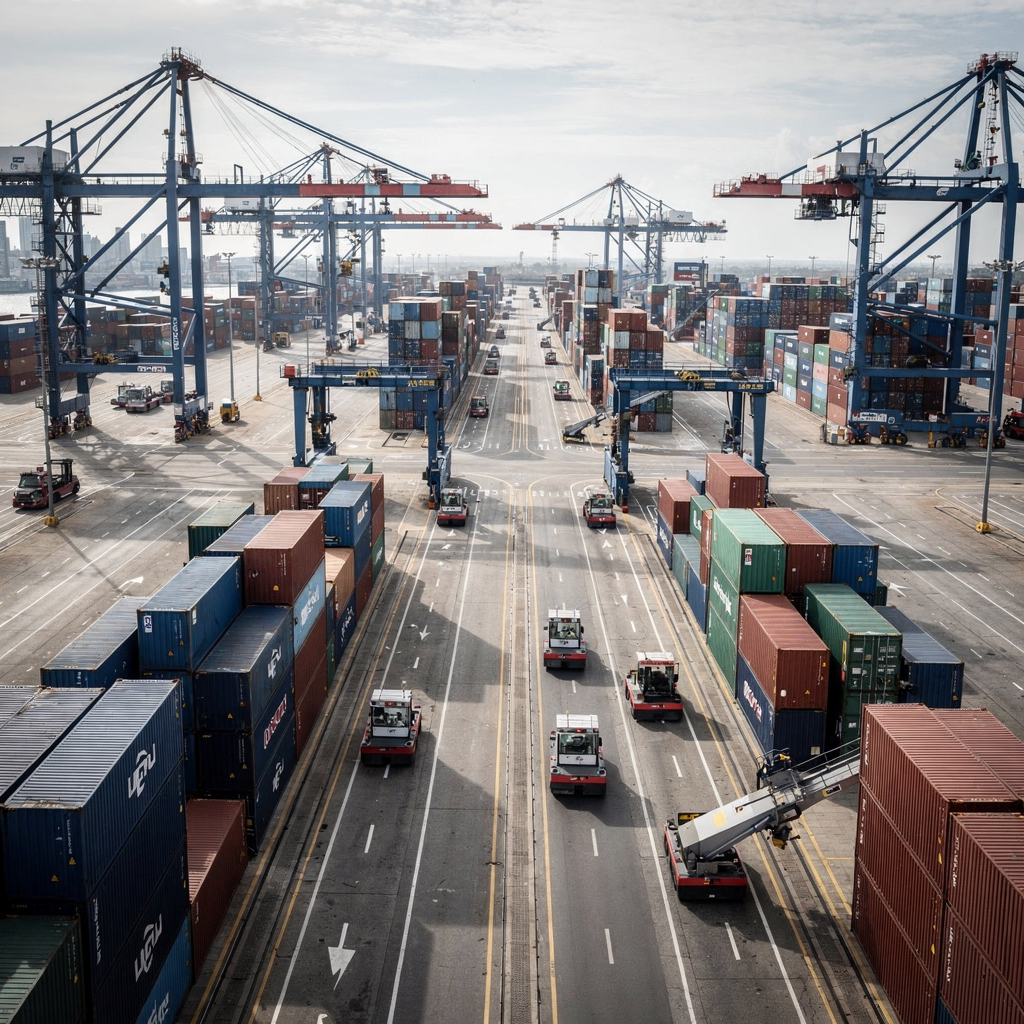
Automated guided vehicles can form the backbone of a turnkey dual-cycling setup when they feed quay cranes reliably. AGVs perform consistent runs between quay and stack, and they remove human variability in truck handoffs. Integrating automated guided vehicles with quay crane cycles requires routing algorithms that minimize empty moves and then align AGV arrivals with crane slots. A well-designed routing policy reduces the number of AGV trips per container and compresses the critical path for container transfer.
To maximize benefits, terminals must size fleets to match peak simultaneous demands at the quay. A too-small AGV fleet creates bottlenecks, and a too-large fleet wastes capital. Terminals often run cost vs benefit models to determine fleet size. Those models incorporate labour replacement, fuel or electricity costs, maintenance and the reduction in berth time. When AGVs reduce berth occupancy, operators may be able to increase vessel calls without expanding berth length. In one modeled deployment, AGV integration with double-cycling reduced turnaround by measurable margins while lowering landside carbon emissions.
Routing logic matters. A greedy algorithm might dispatch the nearest AGV to the next task, and that approach performs well when demand is stable. However, under variable arrivals and uncertain truck flows, terminals need an allocation algorithm that considers future tasks and current battery states. Terminals therefore use integrated scheduling problem solvers to coordinate AGVs, quay cranes and yard trucks. For advanced scheduling approaches that combine reinforcement learning and traditional heuristics, see this work on reinforcement learning in terminal operations reinforcement learning in terminal operations. Properly designed, AGVs improve the utilization of quay cranes, reduce labor costs, and reduce fuel use, and then they help terminals optimize TAT without adding physical space.
Balancing equipment deployment to reduce terminal time using simulation and integrated planning
Balanced deployment comes from modeling multiple resources together. Multi-resource models include quay cranes, AGVs and yard trucks, and then they capture interactions that single-resource planning misses. Integrated models help terminals formulate allocation and yard assignment problem instances while respecting berth allocation and quay crane constraints. By modeling these together, planners can find schedules that reduce idle minutes and improve utilization across the whole system.
Planners use both heuristic and exact optimisation methods. Exact methods prove optimality for small or constrained instances, and heuristics scale to large real-world terminals. A common flow is to run an exact solver on a simplified parameter set to find a lower bound, and then to run a heuristic that is fast and robust to uncertain arrivals. Stochastic elements like uncertain arrival times or landside delays require planners to test scenarios and to include buffer strategies. That approach helps terminals avoid cascading delays in the face of uncertain gate windows.
Simulation supports these choices. Terminals simulate single-cycling and double-cycling setups so they can compare metrics such as crane utilization, berth productivity and vessel turnaround time. Simulation studies repeatedly show that coordinated dual-cycling setups increase throughput and decrease ship idle minutes, and then they justify investment in software and training rather than in expensive civil works. For teams that want to explore multi-vessel crane scheduling and deeper optimization, this resource covers multi-vessel crane scheduling for deepsea container ports multi-vessel crane scheduling.
Finally, implementation should be phased. Start with pilot bays, collect data, tune the integrated model and then scale. Many terminals avoid extra infrastructure by instead optimizing their allocation and quay crane scheduling and by using modest automation in targeted lanes. When planners allocate resources carefully and use real-time decision support, they reduce operating time per move and then improve the overall flow without heavy investment.
FAQ
What is double-cycling and how does it differ from single-cycling?
Double-cycling overlaps loading and discharging so crane bays work on both flows at once. Single-cycling completes discharge first and then switches to loading, which often increases berth time.
How much can double cycling reduce ship berth time?
Research indicates roughly a 10% reduction in vessel turnaround time and about 20% fewer crane cycles in many implementations [study]. Results vary by terminal layout and coordination.
Do ports need more cranes to adopt double-cycling?
No. Many terminals achieve gains through coordination and scheduling without adding cranes. Integrated planning and better yard alignment often unlock capacity before capital expansion.
What role do tug allocation and deck sequencing play?
Tugs and deck sequencing ensure that ro-ro and trailer flows do not block each other, which is essential for dual-cycling in mixed operations. Proper allocation shortens idle minutes and smooths transitions.
Can automation like AGVs improve double-cycling outcomes?
Yes. Automated guided vehicles provide predictable transport between quay and yard and reduce variability. Proper routing and fleet sizing are key to realizing benefits.
Is dual-cycling better for the environment?
Yes. Shorter berth stays and fewer crane operating hours lower CO₂ and fuel use, and they allow ships to slow steam when schedules permit [study].
How do terminals test double-cycling before rollout?
Terminals simulate scenarios and then run pilot bays. Simulation lets teams compare single-cycling and double-cycling metrics such as utilization and berth occupancy before wider deployment.
What software or approaches help schedule resources?
Integrated models that jointly consider berth allocation and yard assignment and quay crane scheduling work best. Teams often combine heuristics with optimisation and then refine via simulation and real-time feeds.
How does better communication affect implementation?
Faster, clearer communication between vessel operations and terminal managers shortens decision cycles.
Where can I read more about quay crane productivity and yard stacking?
See practical resources on optimizing quay crane productivity and yard density prediction for deeper technical guidance quay crane productivity and yard density prediction.
our products
 stowAI
 stackAI
 jobAI
jobAI
Innovates vessel planning. Faster rotation time of ships, increased flexibility towards shipping lines and customers.
Build the stack in the most efficient way. Increase moves per hour by reducing shifters and increase crane efficiency.
Get the most out of your equipment. Increase moves per hour by minimising waste and delays.
stowAI
Innovates vessel planning. Faster rotation time of ships, increased flexibility towards shipping lines and customers.
stackAI
Build the stack in the most efficient way. Increase moves per hour by reducing shifters and increase crane efficiency.
jobAI
Get the most out of your equipment. Increase moves per hour by minimising waste and delays.