
Container Terminal Yard Layout and Flow
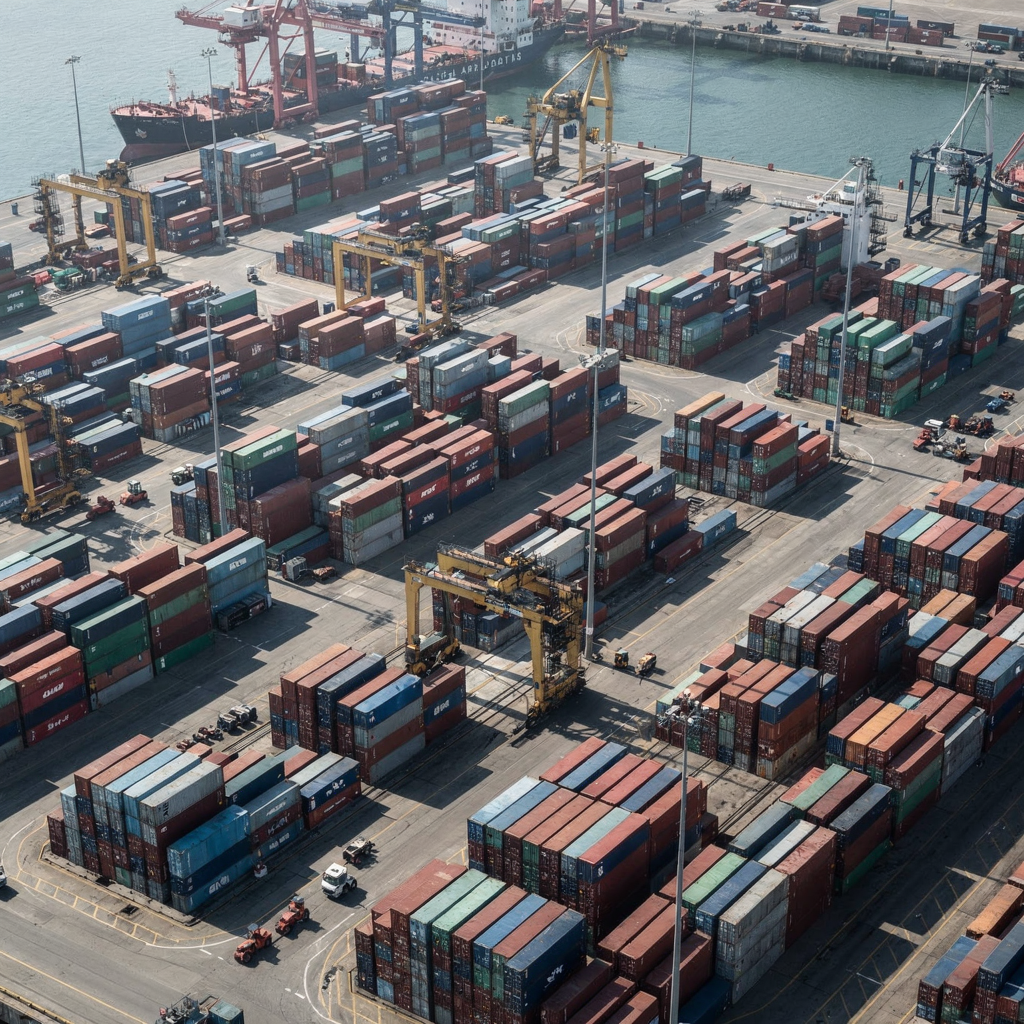
The container terminal yard is where flow, space, and equipment meet. A yard block consists of lanes, stacking areas, and buffer zones that hold, sort, and stage containers for loading and discharge. In practice, a medium block holds about 500 TEU across five rows and often uses a lane width of 12 m to give handling equipment room to operate. Good layout reduces transfer distances between quay cranes and trucks, which raises quay productivity and lowers energy use, and therefore lowers cost.
Start by mapping yard blocks and lanes. Mark stacking areas for import, export, transshipment, and chilled cargo. Add buffer zones near the gate and near the quay to absorb arrival variability. The terminal layout must align with quay positions and road access. A compact layout means shorter travel times for yard handlers and fewer empty trips. That helps move containers efficiently, and it helps the operator make consistent decisions under pressure.
Design choices influence operational metrics. For example, lane width, stack height limits, and block length affect how many containers a yard block can hold and how quickly a container can be reached. When planning storage density, balance slot count against accessibility. Increasing density often raises the number of rehandles and increases cycle times. A practical compromise keeps slots accessible while keeping occupancy high.
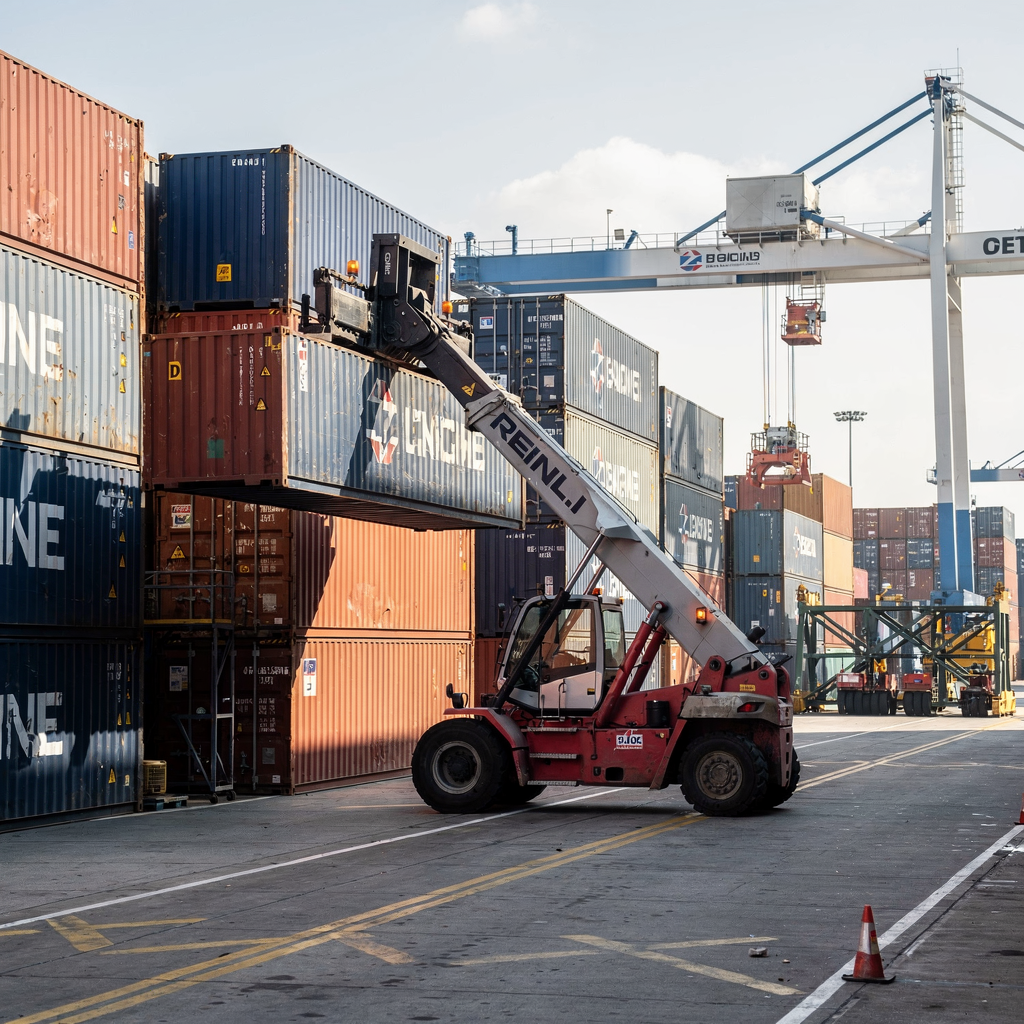
Layout also affects safety and handling equipment selection. For tight lanes, reach stackers replace larger container cranes; for long linear blocks, RTGs or gantry cranes work best. The terminal operating system must reflect the physical design so that allocation logic and routing are consistent with the physical terminal layout. For a deeper treatment of how terminal layout drives software integration, see this guide to terminal operating systems and TOS choices for 2025 best terminal operating systems.
During yard planning, consider how small changes ripple across the yard. A single narrow lane can force longer travel paths, so test multiple scenarios. Use a digital twin or simulation to verify choices before construction or reconfiguration. Many teams use discrete simulation to validate layout changes; see resources on simulation tools for terminal planning how to simulate container terminal operations. Practical layout thinking improves throughput and keeps every container on the right path.
Terminal Capacity, Container Yard and Optimization
Forecasting monthly TEU demand is the starting point for capacity work. Volumes vary, often by ±20% month-to-month, and these swings drive how many slots and handling hours you need. Planners use statistical forecasts to set staffing and slot allocations, and then test those assumptions in a simulated environment. Forecasted monthly TEU volumes were used in academic work to estimate resource needs and to stress test capacity assumptions forecasted monthly TEU throughput volumes.
Ground slot capacity is a core lever. Queuing models and optimization help calculate how many ground slots will minimize truck and vessel waiting time without creating excessive congestion inside the yard. A queuing approach shows the trade-off between space utilisation and delay, and it allows planners to quantify the marginal benefit of added slots ground slot capacity queuing model. In an observed case, a 10% increase in ground slots cut waiting times by roughly 15% after rebalancing allocation and workflows.
Optimization models assign slots and schedule moves to reduce rehandles and cross-yard travel. These models range from linear programming for simple allocation to mixed-integer formulations for complex constraints. Heuristics often support real-time decisions where exact optimization would be too slow. For terminals that need both planning and execution tools, study comparisons of simulation and TOS integration to pick the right stack of software simulation and optimisation tools for TOS.
When you integrate forecasts, queuing results, and optimization outcomes, you can plan investments more confidently. Use sensitivity analysis to test how much additional capacity you need under higher throughput or equipment downtime. This approach helps avoid overbuilding, and it prevents costly bottlenecks. In fact, formal performance studies of high-frequency ports quantify productivity gains from coordinated capacity planning performance analysis for a maritime port.
Finally, align yard capacity with staffing and equipment plans. The right number of container cranes and yard handlers reduces idle time and keeps moves per hour within target ranges. Smart capacity planning links the financial case to operational reality and ensures the terminal can react to demand swings with minimal service impact.
Drowning in a full terminal with replans, exceptions and last-minute changes?
Discover what AI-driven planning can do for your terminal
Model of Yard Operations Dynamics
Modeling yard flow requires a discrete-event approach to capture arrivals, handling moves, and dispatch decisions. Discrete simulation of container arrivals, yard crane moves, and truck dispatch lets planners test policies and understand bottlenecks. When you simulate, you can vary arrival patterns, equipment availability, and stack policies to see how the yard reacts. Many teams use Arena, AnyLogic, or Simio for such work because these tools let you mimic complex workflows and visualize outcomes.
Queuing theory helps to formalize service rates and waiting lines for cranes and gates. For example, yard crane service rates often average around 30 moves per hour with a coefficient of variation near 0.3 in many terminals, and that parameter shapes expected queue lengths and utilization. Use the queuing formulas as a sanity check before running full-scale simulation runs. The queuing approach also enables quick calculation of how arrival peaks translate into longer queues and higher utilisation.
Sensitivity analysis is crucial. Test how peak arrivals change crane utilisation and queue lengths. A single peak hour can drive utilisation from 60% to over 85%, and when utilization grows that much queue lengths typically explode non-linearly. Use scenario batches to quantify thresholds where additional cranes or temporary yard space become necessary. This helps you decide when to invest in equipment or when to adjust slot allocation rules.
Modern tools tie simulation outputs back into decision systems. For instance, a digital twin can run many simulated days and produce policy suggestions for stack placement and dispatch rules. Loadmaster.ai trains RL agents in a sandbox digital twin to learn policies that balance quay productivity and yard congestion, and that approach creates plans that adapt to future operations without needing extensive historical data. For guidance on which simulation software to select for capacity investment decisions, review terminal simulation tool comparisons terminal simulation software for capacity investment decisions.
Combine a discrete simulation with queuing analytics and optimization for robust planning. This layered approach helps you quantify risk and test guardrails before you change live operations. It also supports a move from firefighting to systematic control, so planners can focus on strategic choices rather than ad hoc fixes.
Optimize Stack Planning and Weight Distribution
Stack allocation strategies influence both efficiency and safety. You can choose fixed blocks for predictability or dynamic assignment for flexibility. Fixed blocks simplify retrieval logic and reduce the need to search across many stacks. Dynamic assignment, by contrast, improves space utilisation and reduces travel distances when demand patterns shift. A hybrid approach often works best: reserve some blocks for steady flows and use dynamic assignment for variable volumes.
Weight distribution matters for crane stability and safety margins. Balance stacks so the yard crane and handling equipment operate within rated limits. Poor distribution raises the risk of equipment stress and creates bottlenecks when heavy loads are concentrated in one area. Tracking centre-of-gravity deviation to within about ±0.5 m is a practical control target to maintain operational functionality and safety.
Heuristics and meta-heuristics like genetic algorithms can solve stacking allocation when the search space grows large. These approaches quickly produce near-optimal layouts that reduce relocations. For example, a stacking optimisation run that used heuristics reduced container relocations by about 25% in a pilot study. That improvement decreased idle time for container cranes and reduced truck queue time at the gate.
When you plan stacks, include constraints: max stack height, weight limits, hazardous cargo separation, and required access for fast-moving TEU. Use a scoring function that includes travel distance, rehandle risk, and expected dwell time. JobAI-style dispatching agents can then use that score to sequence work to protect future plans. Loadmaster.ai’s StackAI shows how learned policies can place and reshuffle to balance the yard and minimize travel, and that practical success stems from training on a tailored digital twin rather than copying past choices.
Finally, record a detailed container inventory that notes weight, length, and service type for each slot. That granular data lets optimization routines respect physical constraints and deliver safer, faster moves. Good stack planning reduces rehandles, prolongs equipment life, and makes the whole container flow more predictable.
Drowning in a full terminal with replans, exceptions and last-minute changes?
Discover what AI-driven planning can do for your terminal
Container Terminal Integration in Supply Chain
Linking the yard model to hinterland transport and vessel logistics creates a resilient flow. When the terminal model shares information with railway schedulers, trucking dispatch, and shipping companies, everyone benefits. Integrate the yard plan with vessel schedules and rail operations so the yard buffers the right containers at the right time. This reduces gate congestion and keeps berth productivity high.
Real-time interfaces are essential. A Terminal Operating System that provides tracking data and live update feeds enables seamless hand-offs between quay, yard, and gate. For terminals that want a deeper integration strategy, examine how simulation ties into TOS and how different systems interact TOS simulation integration examples. Real-time feeds let you adjust stack assignments, re-sequence moves, and redirect chassis or locomotives as conditions change.
Better visibility into the yard cuts buffer requirements. With accurate predictions, you can hold fewer containers in reserve and free up prime slots for immediate needs. This lowers average dwell time per TEU and reduces unnecessary handling. A synchronized approach to container handling between quay and hinterland also reduces vessel turnaround, which benefits shipping lines and port operators alike.
Automation and AI-based agents add value here. Closed-loop agents can monitor every container and propose moves to keep workload balanced, and these agents can act to protect quay productivity during peak vessel calls while shifting focus to yard flow when gates get busy. The result is fewer rehandles, more stable terminal performance, and a more predictable service for freight customers.
Practical integration requires governance. Define clear API contracts between systems, agree on data semantics, and monitor KPIs that reflect both terminal performance and wider supply chain impact. When the yard model becomes part of the broader logistics operations, the terminal becomes an active partner in the supply chain rather than a siloed storage area.
Container Metrics for Terminal Yard
Measure what matters to improve operations. Standard KPIs cover productivity, time, and balance. Key metrics include yard crane productivity, truck turnaround time, crane utilisation, and centre-of-gravity deviation for weight distribution. Typical yard crane productivity ranges from 25 to 35 moves per hour while truck turnaround typically runs between 60 and 120 minutes. Monitoring these figures helps you quantify the effect of layout, staffing, and equipment changes.
Crane utilisation targets often sit between 70% and 85%. If utilization is too high, queues balloon and service degrades. If utilization is too low, your equipment is underused and costs rise. Track utilisation continuously and use small experiments to find the sweet spot. Benchmark against peer terminals and adjust targets for local constraints like gate hours or sailing patterns.
Other useful indicators include the number of relocations per TEU, average travel distance per move, and the proportion of loaded and unloaded containers moved without rehandles. Record a detailed container ledger so you can trace particular container moves and quantify how allocation rules affect handling. This lets planners test policies in simulation and then deploy changes with confidence.
Continuous improvement follows a PDCA cycle. Plan a change, do a limited trial in simulation, check the measured impact on terminal performance, and act to roll out successful changes. Use experiment results to tune the digital twin and to train AI-based policies if you use reinforcement learning. For tools that support experimentation and equipment utilisation studies, review enterprise simulation options enterprise simulation tools for port logistics.
Finally, combine quantitative KPIs with operator feedback to maintain practical relevance. The best metrics reflect real-world constraints and help teams make decisions that move containers faster, safer, and more reliably.
FAQ
What is the difference between a yard block and a lane?
A yard block is a larger subdivision of the yard that contains multiple lanes and stacks. A lane is a linear strip inside a block where containers are stacked side by side and accessed by handling equipment.
How do I calculate ground slot capacity?
Use forecasted TEU demand, average dwell times, and service rates to estimate required slots. Applying queuing models helps balance space utilisation against expected delays so you can size slots to meet service targets.
Which simulation tools do terminals use to simulate yard flow?
Common tools include Arena, AnyLogic, and Simio, which support discrete-event simulation of container handling. For planners choosing software, reviews of terminal simulation tools can provide practical guidance and comparisons.
How can weight distribution be monitored in the yard?
Maintain a detailed container inventory that includes weight and placement, and compute center-of-gravity metrics for blocks. Automated checks and rules in the terminal operating system reduce the risk of unstable stacks.
What role do AI agents play in yard planning?
AI agents can learn policies that place and reshuffle to balance workload and protect future plans. Reinforcement learning agents train in a digital twin to propose actions that improve KPIs without requiring extensive historical data.
How will better yard planning affect vessel schedules?
Improved yard planning reduces waiting at the quay and speeds up loading and unload operations, which shortens vessel turnaround. Smoother yard flows also give shipping companies more predictable port calls and reduce berth delays.
Can small terminals benefit from stack optimization?
Yes. Even small terminals see reductions in rehandles and travel distance when stacks are planned optimally. Heuristics and simple optimization rules provide quick wins without heavy investment.
How do you test layout changes before implementation?
Run discrete simulation scenarios to evaluate travel times, utilizations, and queue lengths under different layouts. Digital twins let you test many scenarios quickly and quantify the impact on terminal performance.
What is the impact of forecast error on capacity planning?
Forecast errors can lead to over- or under-provisioning. Use sensitivity analysis to determine how much buffer or flexibility you need, and include contingency plans like temporary stacking zones to absorb surprises.
How do terminals integrate yard data with hinterland partners?
Terminals expose APIs and real-time feeds to share tracking data and expected readiness times for containers. This integration coordinates truck and rail arrivals, reduces gate queues, and improves overall supply chain visibility.
our products
 stowAI
 stackAI
 jobAI
jobAI
Innovates vessel planning. Faster rotation time of ships, increased flexibility towards shipping lines and customers.
Build the stack in the most efficient way. Increase moves per hour by reducing shifters and increase crane efficiency.
Get the most out of your equipment. Increase moves per hour by minimising waste and delays.
stowAI
Innovates vessel planning. Faster rotation time of ships, increased flexibility towards shipping lines and customers.
stackAI
Build the stack in the most efficient way. Increase moves per hour by reducing shifters and increase crane efficiency.
jobAI
Get the most out of your equipment. Increase moves per hour by minimising waste and delays.