
ai and automation in Modern Port Operations
AI and automation reshape how modern ports schedule vessels and handle container handling tasks. Artificial intelligence models forecast arrival windows, allocate berths, and manage yard moves with speed and consistency. For example, smart cranes and automated guided vehicles can cut turnaround times by up to 30-40% when coordinated with AI scheduling logic, reducing congestion and improving port efficiency (study). These gains matter because shorter vessel berthing and faster handoffs lower costs and improve service levels.
Ports integrate AI with 5G and IoT to enable real-time control and monitoring. Sensors stream telemetry and sensor data to edge compute nodes. Then, decision algorithms act within seconds to reroute an AGV or retask a crane. This approach supports a more scalable operating environment and reduces bottleneck risk. For a deeper primer on automation in terminals, see container terminal automation fundamentals (container terminal automation fundamentals).
Automation systems now include computer vision for yard status, AI-powered scheduling engines, and robotics that move containers autonomously. Together they streamline the flow from quay to stack. Terminal operators gain improved throughput while worker safety improves because heavy lifting and repetitive moves shift to machines. Data-driven scheduling also enables energy savings through smoother crane motion and fewer idle cycles.
Implementation follows a modular path. First, pilots prove performance and translate to a business case. Next, AI models expand to cover more operations and systems. Finally, integration with ERP, TMS and WMS allows automated decisions to reflect commercial constraints and service promises. Organizations that pair AI with pragmatic governance secure cost savings and long-term resilience. For applied research on quay and yard optimisation, readers can review smart algorithms and yard forecasting resources (terminal operations resilience).
Predictive Maintenance and management system for Port Equipment
AI provides predictive maintenance that keeps cranes and handling equipment running more reliably. By using machine learning on vibration and temperature telemetry, teams can forecast failures and schedule repairs before breakdowns occur. The use of predictive maintenance reduced downtime by about 25% in measured deployments, delivering clear cost savings and smoother throughput (whitepaper). Such reductions translate to fewer missed sailings and more predictable arrival windows.
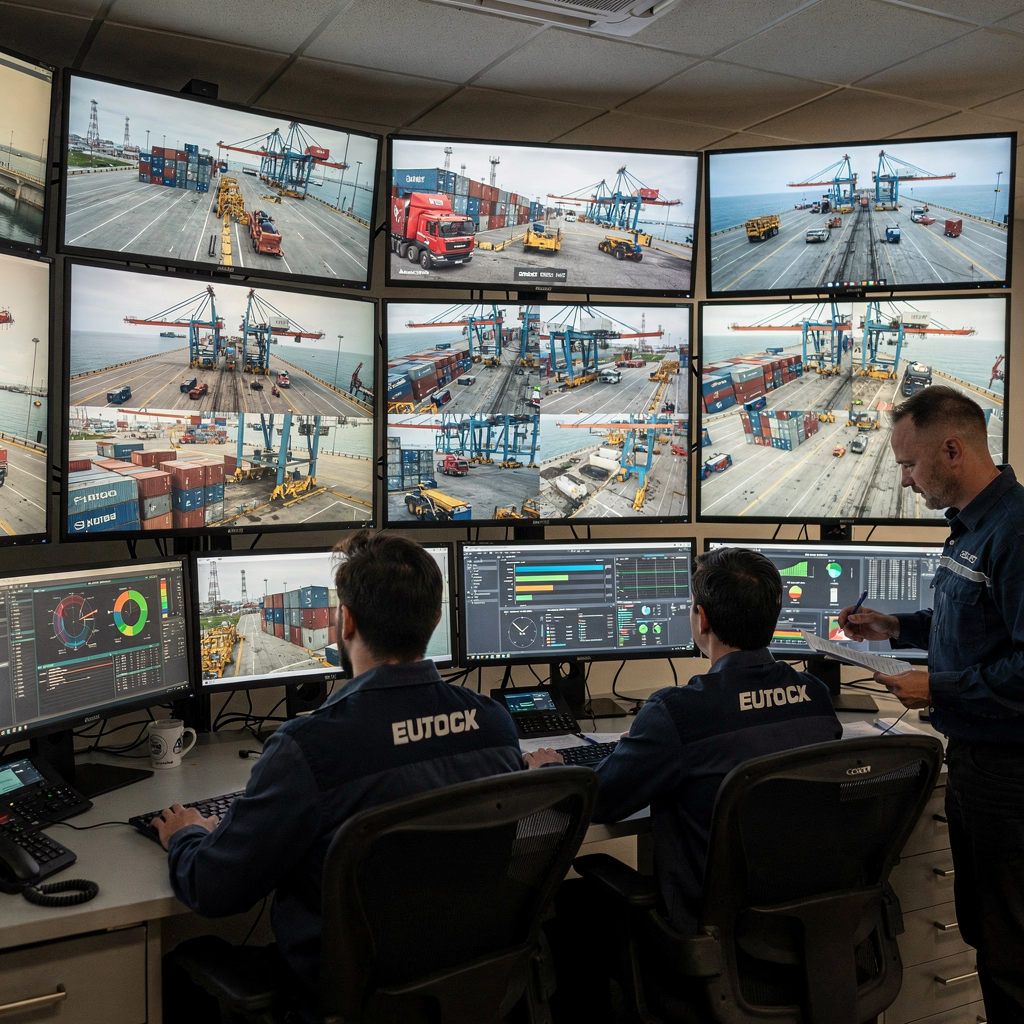
A modern management system displays alerts, health scores, and recommended actions on a single dashboard. Operators see the condition of each STS crane, RTG, and truck in real-time. They can prioritise work orders by impact and cost. The interface links to spare parts lists and ERP records, which speeds procurement and reduces lead times. This reduces mean time to repair and improves operational availability.
AI-powered models learn from historical repairs, usage patterns, and environmental factors. They produce a forecast of remaining useful life and an algorithmic suggestion for the next service. Teams then validate those suggestions and schedule intervention windows that minimise disruption. This workflow keeps units online longer and avoids emergency interventions that cause long delays.
For specialised approaches to crane maintenance and crane split optimisation, refer to predictive maintenance for STS cranes and optimisation studies (predictive maintenance for STS cranes). Additionally, organisations such as Rotterdam terminals have demonstrated how phased upgrades and targeted AI adoption reduce outage risk. We extract incident details from inbound messages, create structured tickets, and route them to maintenance crews, which accelerates response and reduces manual triage time.
Drowning in a full terminal with replans, exceptions and last-minute changes?
Discover what AI-driven planning can do for your terminal
Deploying ai-driven Digital Twin to transform supply chain
AI-driven digital twin models create a live simulation of terminal activity. A single digital twin mirrors quay cranes, yard blocks, gate flows, and hinterland links. Planners run scenarios to see how changes will affect vessel schedules and cargo flows. Using that model, some terminals achieved about 20% faster berth allocation and improved cargo planning, notably cutting waiting times and unnecessary moves (whitepaper). The digital twin provides a controlled setting to test policy changes and new workflows before field deployment.
Digital twin technology also helps translate terminal-level decisions to the wider supply chain. By connecting a twin to carriers and inland partners, the model forecasts impacts downstream. This helps to optimise the entire trade network and reduces wasted moves. A digital twin combines sensor feeds, data analytics, and optimisation routines to keep the model current. For a technical exploration of AI modules for port planning, see the work on automated container port planning (AI modules for automated container port planning).
The twin supports a dashboard-style management system where planners and terminal operators monitor KPIs. They can run what-if scenarios, simulate vessel berthing sequences, and measure ripple effects on the hinterland. The twin also integrates predictive analytics and machine learning to improve its forecasts over time. This active learning loop ensures that simulated outcomes match actual performance more closely with each iteration.
When port operators connect the digital twin with commercial systems and customs interfaces, they gain a complete picture of end-to-end flows. This visibility allows smarter decisions, reduces detention times, and improves customer service. The digital twin becomes a core tool in future-proof strategies that align terminal operations with broader supply chain objectives.
Overcoming disruption and legacy systems in Ports
Many ports face disruption from ageing cranes, siloed IT, and manual workflows. Legacy systems limit data sharing and slow down response. These problems increase the chance of prolonged outages and poor resource use. To modernise without excessive cost, ports need phased migration strategies. First, they create a clear audit of assets and interfaces. Second, they pilot AI components on non-critical systems. Third, they roll out integration layers that translate old formats into modern APIs.
This phased approach reduces operational disruption and preserves service continuity. One major European port reduced operational disruption by around 15% after targeted modernisation, including better data flows and software upgrades. That success came from combining hardware refreshes with smarter algorithms and staff training. Teams focused on organizational change as much as on technology. They redefined roles and improved decision rights to ensure adoption.
Legacy cranes and control systems require special handling. Where a full crane replacement proves too costly, operators add sensors and edge compute to monitor health. These additions enable predictive maintenance and improve situational awareness. They translate device-level signals into actionable alerts ready for teams to act on immediately. For methods that resolve conflicts between equipment pools and schedule changes, see real-time conflict resolution approaches (real-time conflict resolution).
Integrating AI with a clear governance model increases resilience. A focus on testable business cases and measurable outcomes helps maintain momentum. The upgrade path balances cost, safety, and future-proof capacity so terminals can thrive in a changing trade environment.
Drowning in a full terminal with replans, exceptions and last-minute changes?
Discover what AI-driven planning can do for your terminal
Building a multi-agent ecosystem with edi and warehouse management
Multi-agent frameworks let autonomous vehicles, cranes, and software agents coordinate work across a terminal. In such a framework, agents negotiate tasks, deconflict routes, and share state. This reduces idle time and increases stacking efficiency. Agents can also exchange messages using EDI standards to ensure seamless data exchange across carriers, terminals, and customs. EDI remains a pragmatic glue for transactional messages and manifests in ports that interoperate with many partners.
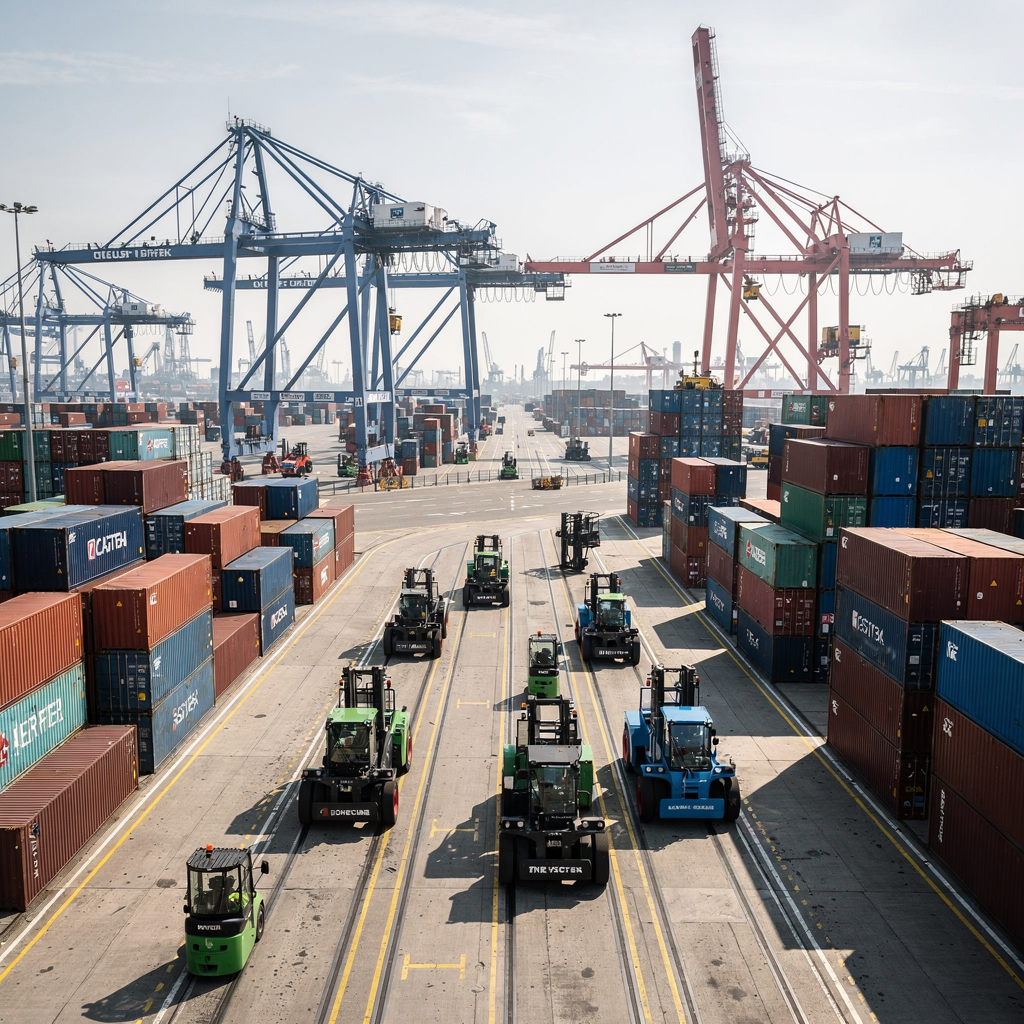
Warehouse management benefits from AI tools that optimise stacking and retrieval. By combining yard density forecasts and dynamic stowage planning, terminals can reduce container moves and increase throughput. Some AI routines boost container handling capacity and stacking efficiency by up to 50% in targeted yard automation projects (research). These gains lower operating costs and reduce energy consumption while improving service reliability.
Agentic control also helps manage complex handoffs to hinterland carriers and drayage fleets. Agents coordinate release windows, routing, and priority handling to smooth gate flows. This reduces dwell time and improves the predictability of pick-ups. Warehouse management systems that incorporate AI can autonomously assign slots, plan moves, and trigger replenishment events. They translate unstructured inputs, such as email instructions or purchase orders, into structured tasks.
We extract intent, pull data from ERP and WMS, and produce structured actions. That reduces the manual burden and helps terminals accelerate decision cycles. When combined with multi-agent orchestration, these capabilities help terminals deliver consistent and scalable service to customers and trade networks.
Future Trends to 2025: agentic AI in complex ecosystems
By 2025, agentic AI agents will become more common across terminals. These agents will act autonomously within rules, make adaptive decisions, and coordinate with humans. Agentic systems will manage vessel berthing, dynamic crane split adjustments, and inter-terminal transport flows. They will reduce human workload and improve decision speed in complex ecosystems where a single change cascades across many actors.
Ports will increasingly function as nodes inside wider trade networks. AI systems will connect terminals to hinterland rail and road operators, customs, and customers. Investments in digital infrastructure and 5G will support low-latency orchestration and enhance real-time visibility. Analysts forecast that smart port investments will exceed US$10 billion globally, reflecting the scale of transformation ahead (research).
Future deployments will also emphasise regulatory compliance and environmental performance. AI optimises vessel berthing schedules and yard moves to reduce fuel burn and energy consumption. It also supports monitoring systems that prevent contamination and ensure standards compliance. In the maritime industry, digital transformation will push terminals to adopt data-driven operating models and to redefine the relationship between humans and machines.
To keep pace, ports must address compute and data governance. They need scalable architectures that protect privacy while enabling analytics. Pilots from 2021 and 2024 show how phased rollouts reduce risk and accelerate measurable returns. Companies that combine strong technical foundations with clear business cases will attract funding and talent. As the ecosystem evolves, terminals that embrace AI adoption and partner across stakeholders will future-proof their operations and thrive.
FAQ
What is the role of AI in modern port operations?
AI automates scheduling, improves equipment health monitoring, and enhances security. It also supports data-driven decision-making to reduce turnaround times and improve port efficiency.
How much can AI reduce vessel turnaround times?
Studies show AI and smart automation can reduce turnaround times by up to 30-40% in some implementations (study). Results vary by terminal layout and existing systems.
What is predictive maintenance and how does it help ports?
Predictive maintenance uses models to forecast equipment failure and plan service before breakdowns. This approach can cut downtime by roughly 25% and lower repair costs (whitepaper).
What is a digital twin and why use one?
A digital twin is a live simulation of port processes that planners use to test scenarios. It helps optimise berth allocation and cargo flows while reducing risky field trials.
How do ports overcome legacy systems?
Ports use phased migration strategies that start with audits and pilots. They add sensors and integration layers to extend the life of legacy equipment while delivering modern capabilities.
What is a multi-agent ecosystem in a terminal?
A multi-agent ecosystem is a set of software and robotic agents that negotiate tasks and coordinate movements. It reduces conflicts and improves throughput when agents follow shared rules and standards like EDI.
How does EDI fit with AI systems?
EDI provides transactional consistency between carriers, terminals, and customs. AI systems use EDI messages to maintain accurate state and to automate routine exchanges.
Can AI improve warehouse management?
Yes. AI tools can optimise stacking, retrieval, and slot assignment, which increases yard density and stacking efficiency. These improvements reduce moves and costs.
What investment trends should ports expect toward 2025?
Analysts predict rising investment in smart port infrastructure and 5G, with global spending exceeding US$10 billion in coming years (research). Funding will target resilience and digital transformation.
By grounding responses in ERP and WMS data, it turns unstructured messages into actionable tasks and improves overall workflow.
our products
 stowAI
 stackAI
 jobAI
jobAI
Innovates vessel planning. Faster rotation time of ships, increased flexibility towards shipping lines and customers.
Build the stack in the most efficient way. Increase moves per hour by reducing shifters and increase crane efficiency.
Get the most out of your equipment. Increase moves per hour by minimising waste and delays.
stowAI
Innovates vessel planning. Faster rotation time of ships, increased flexibility towards shipping lines and customers.
stackAI
Build the stack in the most efficient way. Increase moves per hour by reducing shifters and increase crane efficiency.
jobAI
Get the most out of your equipment. Increase moves per hour by minimising waste and delays.