
literature review: Evolution of integrated scheduling optimisation in container terminals
This literature review traces how integrated scheduling evolved for the modern container terminal. Early work focused on individual equipment. Researchers studied QUAY CRANE coordination, truck moves, and YARD CRANE tasks. Those initial models targeted throughput and berth use. Then scholars realized that a single-focus plan missed cross-equipment effects. They expanded the scope to include AGV fleets and internal truck flows, and to combine berth and crane allocation. The field shifted from isolated CRANE models to MULTIPLE EQUIPMENT INTEGRATED SCHEDULING across the whole site. As a result, models started to link berth allocation and quay crane tasks with yard allocation and inter-terminal moves.
From about 2022 the literature began to add energy objectives. Researchers started to embed energy consumption metrics into the scheduling problem and to compare classic makespan objectives with energy-aware criteria. Pilot studies reported that smart integrated scheduling can lower energy use. For instance, adaptive scheduling that reduces crane repositioning and idle moves showed up to 20–30% savings in trials in a recent study on yard crane rescheduling. At the same time ports and terminal operators adopted automated systems and experimented with electric equipment, and these shifts made scheduling choices more impactful for energy.
Key findings in the literature highlight trade-offs. Integrated approaches improve flow and can cut total energy consumption. They also complicate the computational task and increase data needs. Studies used mixed integer programming and heuristics, and they tested simulation-based evaluation of scheduling schemes. Researchers linked models to port layouts and to storage yard policies, and they analyzed berth and quay interactions. The literature review shows that ports which pair scheduling with renewable energy and energy storage can reach higher savings, while terminals that focus only on throughput miss opportunities to reduce emission and fuel use reported recently. This comprehensive review highlights the move from isolated optimization to integrated scheduling that balances flow, time, and energy in container ports.
optimization objectives: Balancing container flow and energy consumption
Optimization in container terminal settings now balances multiple goals. Operators must manage makespan and throughput and also monitor energy consumption and emission. A robust schedule must meet handling targets and limit idling. Typical multi-objective criteria include makespan, total travel distance, and total energy consumption. Planners use weighting schemes to create a single objective or they apply Pareto methods to present trade-offs. In practice, a terminal will trade slightly higher completion time for much lower fuel burn, and that trade-off can be cost effective over months.
Designing the weight vector matters. One effective approach sets a primary target for unload and loading and a secondary target for energy. Another approach runs a multi-criteria algorithm and then selects solutions on an energy-versus-throughput front. Evolutionary algorithms such as NSGA-II produce a diverse set of trade-off solutions and therefore suit multi-objective decision making in ports. Exact optimization yields optimal schedules for small instances, while heuristics scale to large terminals. For instance, a scheduling framework might combine a mixed integer programming model for berth allocation and quay crane tasks with a heuristic for yard moves as reviewed in recent maritime optimization overviews.
Trade-off analysis also covers equipment allocation and charging windows for electric fleets. Planners consider time intervals for charging, energy supply limits, and renewable energy generation. They also include constraints for arrival time and ship arrival sequencing so that the schedule aligns with vessel plans and berth allocation. Simulation supports choice evaluation and reveals bottlenecks. For more on quay-centred improvements and their effect on yard flows see the detailed discussion on quay optimization in terminal operations here. Additionally, combining yard density forecasting and location assignment improves allocation and helps reduce unnecessary container handling as explained in a forecasting study. Thus, optimization links flow and energy consumption and yields practical scheduling schemes for modern container terminals.
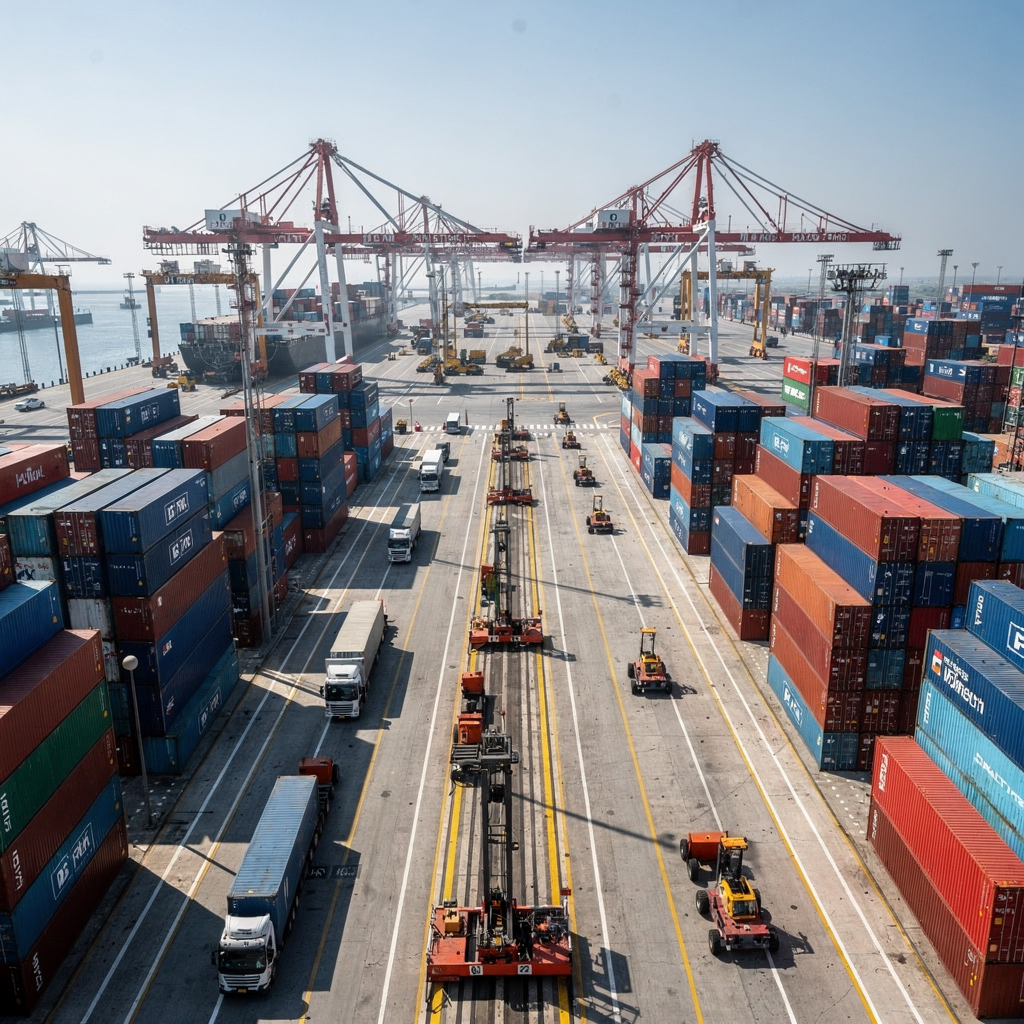
Drowning in a full terminal with replans, exceptions and last-minute changes?
Discover what AI-driven planning can do for your terminal
mathematical formulation: Models and solution techniques for scheduling
Mathematical models provide structure for complex scheduling problems in container terminal operations. A common approach is to define binary and integer variables for allocation of quay crane tasks, yard crane moves, and AGV trips. The model includes time intervals and constraints for resource capacity and safety spacing. Objective terms explicitly measure makespan and energy consumption through consumption rates per move and per idle period. Researchers often add energy terms to the programming model so the optimizer can minimize total energy consumption as well as delay and travel distance. One can express energy use with linear approximations or with piecewise functions when charging and energy storage matter.
For large terminals exact mixed integer programming models face computational limits. A mixed integer programming model helps test small scenarios and validate assumptions. Then heuristic and metaheuristic techniques scale to real terminals. Popular heuristics include greedy scheduling, local search, tabu search, and genetic algorithms, and metaheuristics like NSGA-II support multi-objective optimization. Simulation couples with these algorithms to evaluate stochastic arrival patterns and equipment breakdowns. Real-time adaptive algorithms use predictive analytics and short-horizon re-optimization to handle unpredictable job arrivals and to update the schedule when conditions change. This approach aligns with cooperative scheduling and reduces needless repositioning and idle time.
Computational advances let terminals run more detailed models. The scheduling model can include energy storage decisions and renewable energy generation profiles. Researchers incorporate charging windows, battery degradation and energy supply constraints for electric yard equipment. For scheduling in an automated container terminal, adaptive methods reassign tasks as jobs appear, and they adjust charging to avoid peak loads. To explore practical tools and decision support, see a discussion of AI decision support for port operations that links algorithms to operating systems. Overall, mathematical and computational methods let planners optimize both flow and energy use in terminals while keeping a clear focus on operational performance and robustness.
Energy-efficient strategies: Integrating renewable energy and charging policies
Energy management and energy systems integration matter for terminals that want to reduce total energy consumption and emission. One strategy schedules battery charging for electric yard cranes and AGVs to match renewable energy generation and to flatten peaks. Smart charging policies delay non-critical charges to periods of high solar or wind output. They also sequence charges to keep enough capacity available for urgent unload tasks. Terminals can schedule charging tasks with the same algorithm that assigns moves so the system treats charging as an operational activity, and not a separate maintenance job.
On-site renewable energy generation such as solar and wind helps. When renewable energy is available, the terminal can shift high-power charging to that window and reduce grid draws. Studies show that integrating renewable energy sources with scheduling yields measurable emission reductions and helps lower port energy bills in comparative research. To coordinate charging and moves, scheduling frameworks include energy storage, and they model energy supply and demand over time intervals. This allows the system to keep a buffer and to avoid sudden renewable shortfalls.
Smart charging policies also consider battery state and charging rates. They use cooperative scheduling to maintain service levels for container handling and to minimize downtime. For terminals with limited infrastructure, operators can optimize allocation of chargers and plan for opportunity charging during idle windows. The integrated scheduling of charging, moves, and berth tasks reduces travel and cutbacks in crane repositioning and therefore reduces total energy consumption. For practical scheduling schemes and AGV charging examples see applied approaches in AGV charging schedules here.
Drowning in a full terminal with replans, exceptions and last-minute changes?
Discover what AI-driven planning can do for your terminal
Case studies and results: Quantitative insights from automated terminals
Case studies of automated container terminals provide concrete numbers. Trials that combined smart scheduling and equipment electrification reported energy savings between 15% and 40% depending on scope and baseline technology as recent research documents. A focused study on yard crane rescheduling demonstrated up to 30% reductions in unnecessary movements and idle time by using adaptive rules and energy-aware objectives in a 2024 report. Those tests also reduced crane repositioning and improved crane scheduling in a container by lowering deadhead moves.
Reports show measurable operational benefits beyond energy. Terminals saw lower turnaround times and a more stable flow, and they reduced operational errors. For example, when a scheduling plan matched charging and job slots the yard crane and AGV fleet spent fewer minutes waiting for power. Simulation studies validated these gains before field deployment, and they also helped tune parameters for berth allocation, quay crane scheduling, and yard layouts. One port combined smart scheduling with renewable energy and energy storage and reduced grid draw during peaks, and the project achieved a marked drop in emission during busy weeks as the IMO-area analysis shows.
Lessons from real-world implementations emphasize the role of data, control, and training. Accurate forecasts for ship arrival and arrival time windows let the schedule be proactive. Investments in predictive maintenance for STS cranes and AGVs reduce unexpected breakdowns, and that stability improves schedule adherence. For guidance on predictive maintenance and crane uptime see practical modules on predictive maintenance for STS cranes here. Overall these case studies demonstrate that coordinated scheduling and renewable integration yield both energy and flow benefits, and they point to best practices for port authorities and terminal operators aiming to reduce energy consumption and emission while sustaining throughput.
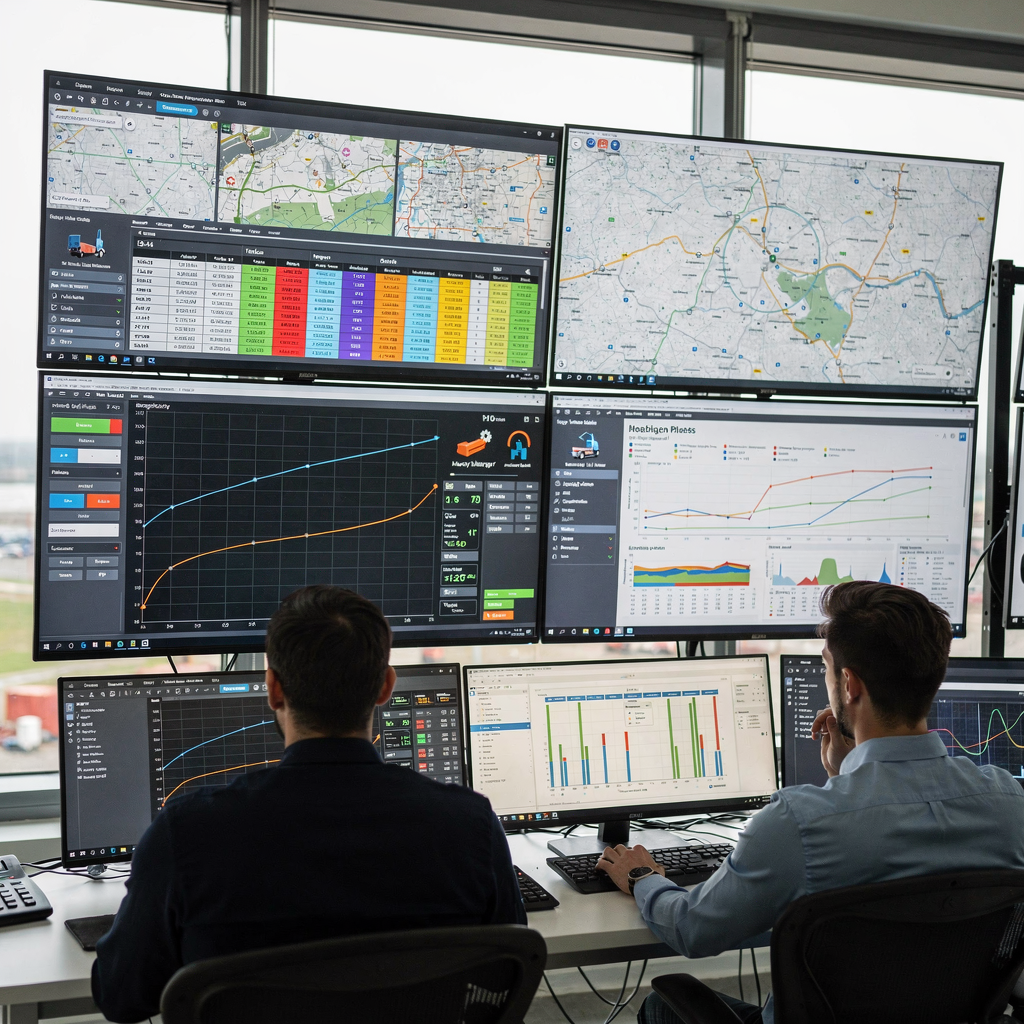
Future directions: AI-driven scheduling and decarbonisation challenges
Future research will push AI and machine learning further into port logistics and into the scheduling process. AI-driven algorithms can predict job arrivals, estimate breakdown risks, and propose dynamic reallocation that keeps flow high and reduces energy consumption. Reinforcement learning and hybrid optimization methods can fuse domain rules with learned policies to handle uncertainty and complex constraints. Researchers plan robust uncertainty models that capture variable container flows, weather impacts on renewable energy generation, and stochastic equipment availability.
Alignment with IMO decarbonisation targets and sustainable port policies will shape priorities. Port authorities and the port industry must coordinate infrastructure upgrades, renewable energy projects, and new equipment choices. Hydrogen energy and other alternative fuels also appear in strategy discussions, and terminals may include hydrogen bunkering in long-term energy planning for trucks and large equipment. Hybrid optimization methods that mix exact solvers and heuristics will tackle the larger, data-rich problems. These combined methods will allow terminals to balance competing objectives without overwhelming computational resources.
AI deployment also requires attention to human workflows. For example, when a scheduling change triggers hundreds of operational emails the result can be confusion. This reduces friction and helps planners trust algorithmic suggestions. In research, scholars will test integrated energy system designs and include energy storage and renewable energy generation in models. They will also explore cooperative scheduling across nearby container ports and across intermodal links so that the broader maritime transport chain shares benefits.
Finally, the community must address practical adoption barriers. Data quality, legacy systems, and governance can slow progress. Operational research must therefore combine rigorous optimization with pragmatic deployment strategies. The path forward will mix AI, predictive analytics, and stakeholder coordination. That approach will help terminals reduce total energy consumption, meet decarbonisation goals, and keep container flow efficient into the future.
FAQ
What is integrated scheduling optimisation for container terminals?
Integrated scheduling optimisation coordinates quay cranes, yard cranes, trucks, and AGVs to improve container flow and energy efficiency. It combines allocation of berth slots, crane tasks, and vehicle charging into a single planning approach so terminals can optimize throughput and reducing energy consumption.
How much energy reduction can integrated scheduling achieve?
Reported pilot studies show reductions in the range of 15% to 40% depending on the terminal and scope of changes. One recent study found up to 20–30% savings when rescheduling yard crane tasks and minimizing idle moves as documented.
What optimization methods apply to terminal scheduling?
Methods include mixed integer programming models for small instances and heuristics or metaheuristics for large problems, and multi-objective algorithms like NSGA-II for trade-off analysis. Hybrid approaches that combine exact solvers with simulation often perform well for real-world cases.
Can renewable energy help reduce port emissions?
Yes. Integrating renewable energy generation with charging schedules and energy storage can reduce grid draws and emission. Studies show that pairing smart scheduling with on-site renewable energy sources cuts emission and port energy costs as recent work reports.
How do terminals schedule charging for electric equipment?
Terminals include charging as part of the schedule, allocate time intervals for charging, and plan opportunity charges during idle windows. Smart charging policies align charging with renewable energy generation and avoid peak grid demand to minimize total energy consumption.
What role does AI play in future scheduling?
AI can predict job arrivals, model breakdown risks, and propose adaptive allocations. Machine learning algorithms support dynamic re-optimization and help terminals respond to uncertain container flows and changing energy supply.
How do operators balance throughput and energy goals?
They use multi-objective optimization, weighting schemes, or Pareto front analysis to find acceptable trade-offs between makespan and energy consumption. Simulation and scenario testing help choose schedules that balance service levels and costs.
What data does a scheduling model need?
Key inputs include ship arrival times, container lists, equipment locations, battery states, energy prices, and renewable generation forecasts. Accurate data improves schedule quality and reduces the need for emergency reallocation.
How can terminals manage change and communication?
Automation helps. When schedules change frequently, tools that automate the email lifecycle and route decisions reduce manual work and errors.
Where can I learn more about quay and yard integration?
Explore resources that cover quay optimization and yard forecasting and charging schedules. For example, detailed guides on quay optimization and AGV charging strategies provide applied methods and case examples: quay optimization explained, and AGV charging best practices.
our products
 stowAI
 stackAI
 jobAI
jobAI
Innovates vessel planning. Faster rotation time of ships, increased flexibility towards shipping lines and customers.
Build the stack in the most efficient way. Increase moves per hour by reducing shifters and increase crane efficiency.
Get the most out of your equipment. Increase moves per hour by minimising waste and delays.
stowAI
Innovates vessel planning. Faster rotation time of ships, increased flexibility towards shipping lines and customers.
stackAI
Build the stack in the most efficient way. Increase moves per hour by reducing shifters and increase crane efficiency.
jobAI
Get the most out of your equipment. Increase moves per hour by minimising waste and delays.