
problem description and stowage planning problem
Shortsea container terminals operate under tight schedules and limited storage. First, they must process frequent calls and fast turnarounds. Second, they must handle varying truck arrivals and feeder services. The problem description for dynamic operations centres on late-arriving containers that break a pre-planned stowage plan. For shortsea routes, a small delay can cascade across multiple sailings. For example, port congestion can increase vessel turnaround times by up to 20–30% [source]. Consequently, operators need flexible decision rules and fast replanning tools.
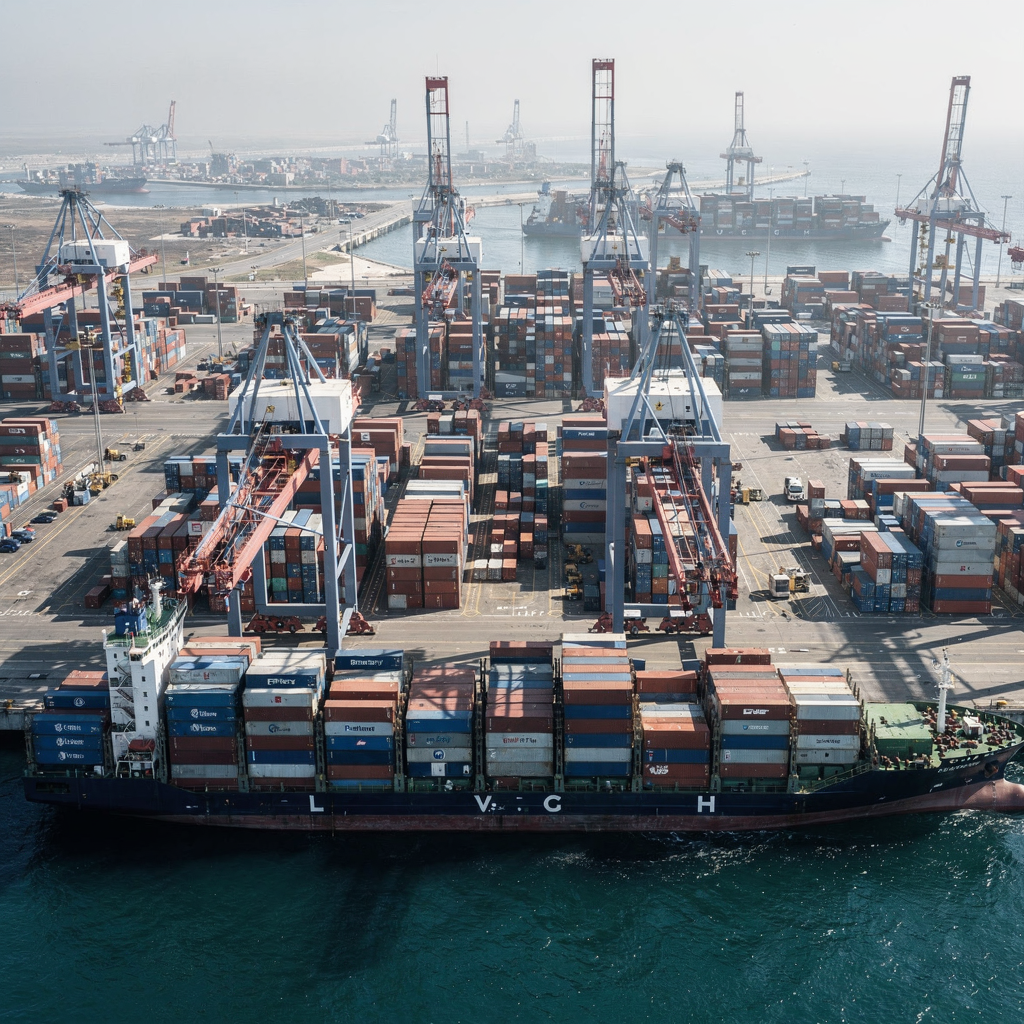
Pre-planned stowage aims to order containers by port call, minimize reshuffles, and keep the vessel stable. However, late arrivals force last-minute bay changes. These changes raise the number of container moves and create new crane cycles. Port teams then juggle BAY SEQUENCING, quay crane allocations, and yard positions. The stowage planning problem becomes dynamic when arrival times change after the master bay plan problem is frozen. Terminal staff must reassign container bay assignment and slot selection quickly so that cranes can still maintain productivity.
Key operational constraint types include vessel stability, weight distribution, maximum bay shifts per container, and handling equipment availability. Quay crane availability and yard crane cycles limit how fast a new plan can be implemented. Truck appointment system disruptions and unpredictable truck arrival times add further variability. In practice, the number of container moves must be minimized to limit costs and avoid blocking important export stacks.
For the operator, the objectives include maintain safety limits, minimize turnaround time and reduce the total number of extra shuffles. The problem of stowage planning must therefore balance practical limits on crane SWAPs and yard rehandling with the need to find a feasible solution quickly. Many terminals adopt simple local rules that are fast but suboptimal. Alternatively, some terminals invest in decision-support that can reassign slots in a short time window. For readers who want more on berth allocation and terminal-level scheduling impacts, see the discussion on berth allocation and terminal congestion here. Finally, this section sets up the operational constraints that follow in the next sections and frames ship stowage planning as a constrained, time-sensitive scheduling problem.
literature review and classification scheme
A compact literature review of dynamic stowage adjustment shows a broad mix of approaches. First, exact mixed integer programming models appear in academic work that targets small to medium instances. Second, heuristics and metaheuristics scale better to real-time needs. Third, real-time systems based on decision-support layers and data feeds are becoming more common. Studies on berth allocation and congestion stress that improved flexibility in container repositioning reduces unnecessary trips and congestion [source]. Meanwhile, research on shortsea shipping quantifies how late arrivals can affect up to 15–25% of volumes in busy corridors [source].
The classification scheme below sorts methods by computational philosophy. The classification scheme lists four groups. First, exact methods and mixed integer programming deliver provable optimality for small cases. Second, heuristics such as greedy insertion and local search give fast feasible solutions. Third, metaheuristics like tabu search, genetic operators, and simulated annealing aim to improve solution quality while respecting running time limits. Fourth, real-time systems integrate predictive data and automated replanning to act within operational constraints. This taxonomy helps terminals select an approach based on the total number of containers, number of time intervals and the acceptable running time for replanning.
Recent papers highlight gaps. For instance, many models assume deterministic arrivals. They then fail to account for uncertainty in truck arrival times or feeder delays. Also, few operational systems combine AI-driven arrival prediction with automatic email-based exception handling. Integrating automated message triage and structured context from workflow emails can accelerate decision-making. As a result, planners get timely updates that feed into the terminal decision-support layer and reduce manual lookup times.
On algorithms, research shows a trend from static optimization to hybrid metaheuristic plus predictive systems. For example, berth allocation research provides insights that apply to stowage plan adjustments [source]. Yet, the literature review also reveals limited work on integrating truck appointment system data and dynamic master bay plan problem updates in real time. The net result is a strong research base but ongoing practical gaps in real-time decision support and end-to-end integration.
Drowning in a full terminal with replans, exceptions and last-minute changes?
Discover what AI-driven planning can do for your terminal
stowage plan formulation
This section describes decision variables, objectives, and constraints for a dynamic stowage plan. Decision variables include container bay assignment, slot selection, and loading/unloading sequence. First, assign each container to a bay and tier. Second, order the sequence in which containers are loaded and unloaded at each port call. Third, allocate specific crane tasks to meet planned moves while respecting handling rules. The model must also model when a container is loaded and when the container is unloaded on arrival nodes.
The objectives reflect operational goals. One objective is to minimize the number of container moves and reshuffles. Another objective is to reduce vessel idle time and turnaround time. A further objective is to balance yard workload and to minimize operational costs associated with extra handling. In precise terms, the objective is to minimize the total number of extra rehandles while maintaining safety and service reliability. The objective function can combine weighted terms for reshuffles, crane idle time, and yard congestion. Doing so helps terminals find a trade-off between quick fixes and long-term yard stability.
Key constraint families include weight distribution and stability limits, crane capacity and reach, bay balance, and limits on maximum bay shifts per container. Additionally, crane scheduling and quay crane interference rules constrain parallel operations. For terminal planners, crane scheduling problem details matter when a new plan is pushed to quay teams. Yard crane sequencing and stack accessibility create further constraint interactions. A feasible solution must satisfy all safety and operational constraints while being implementable within a reasonable time window.
The programming model used for this formulation typically mixes binary assignment variables with integer sequence variables. For example, binary variables denote whether a container occupies a slot, while integer variables represent relative positions in a sequence. The programming formulation must also capture handling precedence so cranes do not deadlock. In practice, solving the full formulation to find optimal solution is hard for larger instances. Therefore, planners often use hybrid methods that generate a feasible solution quickly and then improve it as time permits. For additional context on vessel stability and software that supports these checks, see the vessel stability calculation software overview here.
mathematical model and mathematical formulation
We present a mixed-integer linear programming approach and discuss limits when operations require a fast replanning cycle. The mathematical model includes binary occupancy variables x_{c,s} that denote whether container c occupies slot s. Next, integer sequence variables y_{c,p} represent the position of container c in a crane plan for port p. The objective is to minimize a weighted sum of reshuffles, crane idle time and yard rehandling costs. Formally, the objective is to minimize Σ_weights * move_costs, where the weights reflect operational priorities. The objective is to minimize reshuffles while keeping service on time.
Key constraint sets include capacity constraints that ensure each slot holds at most one container. Another set enforces weight distribution across bays and the stability envelope for the vessel. Crane capacity constraints enforce the maximum moves per crane per shift. Precedence constraints ensure that containers that must be unloaded earlier are not blocked by later loads. Time window constraints bound when a container can be handled, and the model can denote the earliest and latest handling times. This mixed integer programming model uses linear constraints and binary variables and can be solved with mixed integer programming solvers for small to moderate instances.
However, computational limits appear quickly. Exact solvers struggle to find optimal solution for large instances within a reasonable time. For larger instances, column generation or decomposition may help. Still, results show that run times grow rapidly with the total number of containers and the number of port calls. Therefore, practitioners often rely on approximation and heuristics. In many tests, exact models provide a performance benchmark but do not scale to the real-time needs of shortsea terminals. The linear programming model relaxations can give bounds and guide heuristics.
To manage complexity, one can denote aggregated variables that represent groups of containers with similar discharge ports. Table 1 in many papers compares running time and objective value for exact and approximate methods. For practical use, the programming formulation must therefore be paired with a fast local search to produce a feasible solution within a short time window. In high-pressure port operations, planners need algorithms that are transparent and that operators can trust to implement changes without introducing negative impact to safety or schedule.
Drowning in a full terminal with replans, exceptions and last-minute changes?
Discover what AI-driven planning can do for your terminal
heuristic and rolling horizon
This chapter describes a genetic algorithm tailored to dynamic arrivals and a rolling horizon implementation that supports batch-wise replanning. First, rolling horizon divides the planning horizon into overlapping windows. Next, the system replans at fixed intervals so that new data are incorporated without reoptimizing the full horizon. This rolling horizon approach reduces computational burden and matches operational rhythms. The fixed number of time slots per batch and the number of time intervals determine batch size and update cadence.
The genetic algorithm adapts to the stowage planning problem by encoding bay assignments and loading sequences as chromosomes. Each chromosome represents a plan for the first several port calls. Crossover operators swap contiguous bay blocks, while mutation moves single containers between slots. A fitness function ranks chromosomes by weighted reshuffles, crane moves and yard imbalance. The algorithm calculates the fitness value for each candidate. The best individuals survive to the next generation and guide search towards good feasible solution candidates.
Compared to simple heuristics, the genetic algorithm often finds higher-quality plans. For medium instances, GA yields fewer reshuffles and better balance across yard operations. For very large instances, GA run time can be controlled by reducing population size or generation count. In practice, a hybrid design that uses greedy insertion to seed the initial population gives a good trade-off between running time and solution quality. Also, combining GA with tabu search local improvement on the best chromosomes improves results further. For terminals seeking examples of AI approaches to crane allocation, see AI approaches to quay crane scheduling here.

Rolling horizon also supports interruption handling for late-arriving containers. For example, when a single truck delay shifts a set of export boxes, the system replans the next two windows to maintain feasible crane tasks and to minimize the number of container moves. Results are shown in figure 6 in many case studies where GA plus rolling horizon reduces vessel idle time by roughly 10–15% compared to static plans [source]. In addition, hybrid GA designs let the system be able to find feasible solutions fast while improving allocation quality if more time is available.
stowage plan performance assessment and future outlook
Assessing stowage plan performance requires clear metrics and representative simulation. Key performance metrics include vessel turnaround reduction, container dwell time, number of crane moves, and yard crane utilization. For example, terminal congestions have been shown to increase container dwell time by an average of 12–18 hours [source]. Additionally, dynamic stowage plan adjustments reduce vessel idle time by approximately 10–15% in several experiments [source]. These statistics help quantify the operational benefits and the negative impact of slow replanning.
A simulation-based case study for a North European shortsea port can stress-test the methods. Set up a multimodal container terminal with feeder calls, truck appointments and a yard topology. Then, inject stochastic truck arrival times and feeder delays. Run the rolling horizon GA against a baseline greedy policy and collect metrics such as turnaround time, the number of container moves and crane idle minutes. Results are shown in figure 3 in published comparisons that contrast baseline and adaptive methods. Table 2 typically summarizes throughput and average objective value across scenarios.
Future research and practical directions for future include better AI-driven arrival prediction, blockchain-enabled data sharing for trusted manifests, and improved human–machine interfaces. For example, integrating machine learning predictions as state inputs for replanners improves early detection of late arrivals see example. Also, research directions should include more realistic coupling of crane scheduling and bay assignment so that the crane scheduling problem is not an afterthought. In the medium term, terminal operation resilience against disruptions benefits from end-to-end systems that combine predictive modeling, replanning algorithms and operational email automation. For further detail on simulation tools used for testing, see the container terminal simulation software overview here.
Directions for future research also include tighter integration between the master bay plan problem and truck appointment system signals. In sum, dynamic stowage plan adjustments reduce operational costs and improve reliable service when implemented alongside robust data flows and fast heuristics. Future research must also test scalability on large instances and validate human acceptability in live port operations. Those directions for future research will help terminals find optimal solutions and adopt automation without disrupting safety standards.
FAQ
What is a stowage plan and why does it matter?
A stowage plan assigns containers to bays and defines loading and unloading order. It matters because good planning reduces reshuffles, lowers crane moves, and shortens turnaround time.
How do late-arriving containers affect a container terminal?
Late arrivals force replanning and can increase the number of container moves. They also raise the risk of port congestion and can extend vessel turnaround time.
What is rolling horizon and how does it help?
Rolling horizon divides the horizon into overlapping intervals and replans frequently. It helps by keeping computation smaller and by incorporating new arrival information quickly.
Can heuristics find feasible solutions fast?
Yes. Heuristic methods are designed to produce feasible solution candidates under tight time limits. They trade some optimality for speed and reliability.
What role does a genetic algorithm play in stowage planning?
A genetic algorithm searches the space of bay assignments and sequences using crossover and mutation. It can improve plan quality over greedy heuristics while still producing plans fast enough for operational use.
How is vessel stability respected during replanning?
Stability constraints appear as weight distribution rules and caps in the model. Any proposed plan must satisfy those constraints before it is implemented on the quay.
What performance metrics should terminals track?
Terminals should measure vessel turnaround reduction, container dwell time, crane moves and yard crane utilization. These metrics quantify both efficiency and reliability improvements.
How does predictive data improve dynamic stowage planning?
Predictions on truck arrival times and feeder delays give replanners early warnings. As a result, replanning can be proactive rather than purely reactive.
Are exact methods practical for real terminals?
Exact mixed integer programming and linear programming models provide benchmarks and optimal solutions for small to moderate instances. For large instances, they often exceed reasonable time limits and heuristics are preferred.
How can operations teams reduce manual work during replanning?
Automating email triage and creating structured alerts helps operations get timely data.
our products
 stowAI
 stackAI
 jobAI
jobAI
Innovates vessel planning. Faster rotation time of ships, increased flexibility towards shipping lines and customers.
Build the stack in the most efficient way. Increase moves per hour by reducing shifters and increase crane efficiency.
Get the most out of your equipment. Increase moves per hour by minimising waste and delays.
stowAI
Innovates vessel planning. Faster rotation time of ships, increased flexibility towards shipping lines and customers.
stackAI
Build the stack in the most efficient way. Increase moves per hour by reducing shifters and increase crane efficiency.
jobAI
Get the most out of your equipment. Increase moves per hour by minimising waste and delays.