
Container shipping: Introducing dynamic internal transport replanning
Dynamic internal transport replanning adjusts the flow of equipment, vehicles, and staff inside a port to respond to unexpected events quickly. It matters for container shipping networks because these networks link vessels, terminals, and hinterland modes. The process uses sensors, tracking, and decision logic to change moves, routes, and allocation on the fly. First, it reduces local bottlenecks. Next, it protects downstream schedules. Then, it preserves interchange with rail and truck operators.
Key drivers of disruption include equipment failure, labour shortages, extreme weather, and major supply-chain shocks. For example, a crane outage can block container traffic for hours. Also, a labour strike can change yard priorities, and a typhoon can force berth closures. During global shocks, some ports reduced dwell times by 15–20% through improved internal transport coordination UNCTAD Review of Maritime Transport 2023. That gain shows the value of adaptive internal control.
Current performance metrics help measure resilience and throughput. The Global Container Port Performance Index ranks ports and reveals regional leaders in digital adoption. The World Bank reports East and Southeast Asian ports dominate the top 20, and that has links to digital replanning and automation World Bank Group. Average dwell times, crane productivity, and gate turn times also signal where to target improvement. Operators compare throughput, container dwell time, and vehicle utilisation to spot waste.
Dynamic replanning matters because disruptions occur frequently and in many forms. Ports must reassign cranes, swap jobs, and reroute yard vehicles with minimal delay. A practical system ties operational email, TMS, and ERP together. This reduces the time people spend tracking status and frees them to execute replanning tasks.
Optimization: Simulation methods for real-time decision making
Simulation frameworks let planners test replanning options without risking live operations. Discrete-event frameworks mimic job queues, and agent-based frameworks model individual trucks and drivers. Digital twin designs combine both and run faster than real time for what-if analysis. A good simulation model supports several scenarios and speeds up decisions. It also helps evaluate a formulation or algorithm before deployment.
Optimization techniques then steer the replanning choices. Linear programming provides clear assignment and routing rules for many problems. Meta-heuristics, like genetic algorithms or tabu search, find good solutions fast when the problem is nonconvex. Machine learning predicts congestion and suggests priority swaps, and a stochastic optimization model for repositioning addresses empty container flows. Combining approaches often produces the best results, and researchers call this a mixed programming approach or a dynamic programming approach when sequential decisions matter.
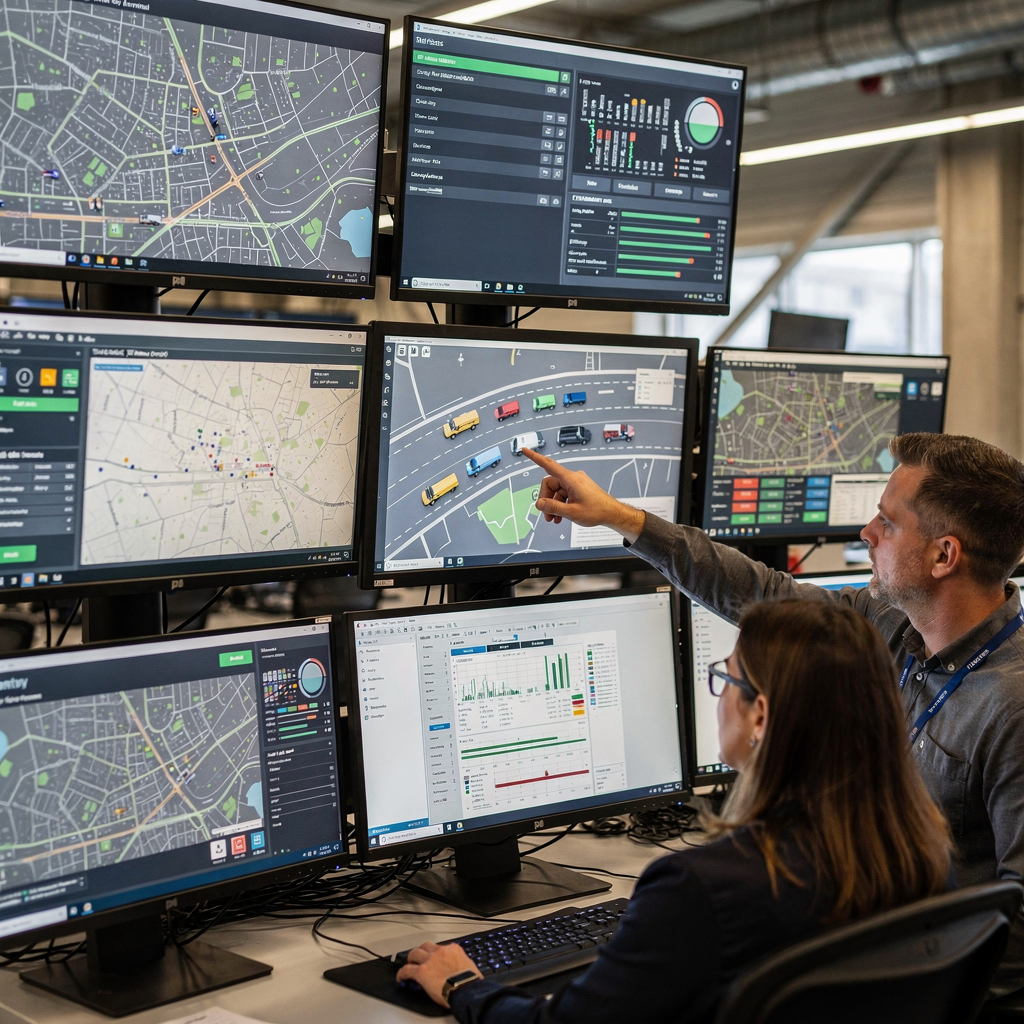
Performance indicators guide optimization. Throughput measures how many container vessels and container vessels moves finish in a time window. Container dwell time signals customer cost. Vehicle and crane utilisation show resource balance. Different optimization models aim to improve these metrics, and planners use simulation and live feeds to test trade-offs. For more on predicting yard congestion, see an applied example in AI-based yard prediction predicting yard congestion.
Practical system design must also address the empty container repositioning problem and empty container management. Tools that recommend how to reposition empty containers can avoid unnecessary empty containers on the network. Solutions link yard planning with vessel stowage and inland schedules. When planners integrate decision-support with real-time data, they shorten reaction times and keep freight moving.
Drowning in a full terminal with replans, exceptions and last-minute changes?
Discover what AI-driven planning can do for your terminal
Resilience: Building port resilience with dynamic replanning
Resilience in port operations means the ability to absorb shocks, recover quickly, and keep freight and services flowing. In a port, resilience links quay work, yard moves, and inland handoffs. It also ties to the reliability of feeder and shipping line schedules. Robustness and resilience overlap. Planners design systems to resist small faults and recover from big ones.
Real-time replanning reduces recovery time and downtime. For example, research shows dynamic replanning can cut downtime by 25–30% in intermodal contexts Intermodal Logistic Systems Under Multiple Disruptions. In addition, ports that improved internal transport coordination trimmed container dwell times by 15–20% during crises UNCTAD. Those statistics demonstrate measurable benefits from quick reallocation and guided sequencing.
Resilience of container transport rests on planning, redundancy, and intelligent allocation. A mix of spare cranes, flexible labour pools, and dynamic vehicle pooling helps. Also, better forecasting and a programmatic allocation of tasks enable faster schedule recovery. Practical policies include preauthorized diversion plans and automated triggers that move jobs when thresholds are hit. Systems that combine optimization, operator rules, and visual cues improve response quality.
Many related topics appear in the maritime resiliency literature and in reviews of port planning and operations. Scholars assess the effects of disruptions and test formulations under a set of scenarios. They also examine important canals in maintaining resilience and how hub ports route empty units. When planners simulate two dynamic scenarios, they find trade-offs between robustness and efficiency. This trade-off explains why investment in automation and training both matter.
Freight: Maintaining freight flow and supply-chain continuity
Internal transport disruptions directly affect freight movement. A slow yard can delay trucks, and delayed trucks tie up chassis and affect rail windows. These chokepoints amplify through a shipping network and raise costs. Freight carriers and shipping line partners track container status closely, and they reroute or reschedule when needed.
Dynamic replanning supports intermodal transfers and hinterland connections. For example, when a berth falls behind, a reroute of trucks and a revised gate allocation can smooth throughput. Systems that link terminal operating systems to trucking portals and rail schedules reduce the chance that containers are stranded. Real-time visibility also reduces the need for urgent manual emails by allowing automated updates to stakeholders. This keeps freight moving and reduces email-induced delays.
Statistics show the power of such coordination. Ports with advanced digital strategies often rank high in global container performance and recover faster during shocks World Bank. In addition, dynamic replanning can reduce downtime and speed schedule recovery. For cases involving empty containers, meeting empty container demand and proper planning of empty flows avoid cascading delays. The problem of empty container repositioning appears frequently in studies of container transportation and can be addressed by integrated forecasts and routing tools.
Mapping the impact clarifies risks. For instance, when containers are transported slowly among ports or across ports, shippers face missed connections. Thus, planners should include inland transport partners in their contingency rules. Tools for load balancing, prioritized loading and unloading, and adaptive gate slots help maintain freight transport reliability.
Drowning in a full terminal with replans, exceptions and last-minute changes?
Discover what AI-driven planning can do for your terminal
Case study: Dynamic replanning in practice at an East Asian port
This case study examines a leading deep-sea hub, Shanghai, and its response to a sudden crane outage during peak call volumes. The scenario began when the terminal lost two quay cranes early in a night shift. Vessel berths backed up, and trucks faced longer queues. The terminal activated its incident playbook and an automated replanning system to reallocate tasks across cranes and yard tractors.
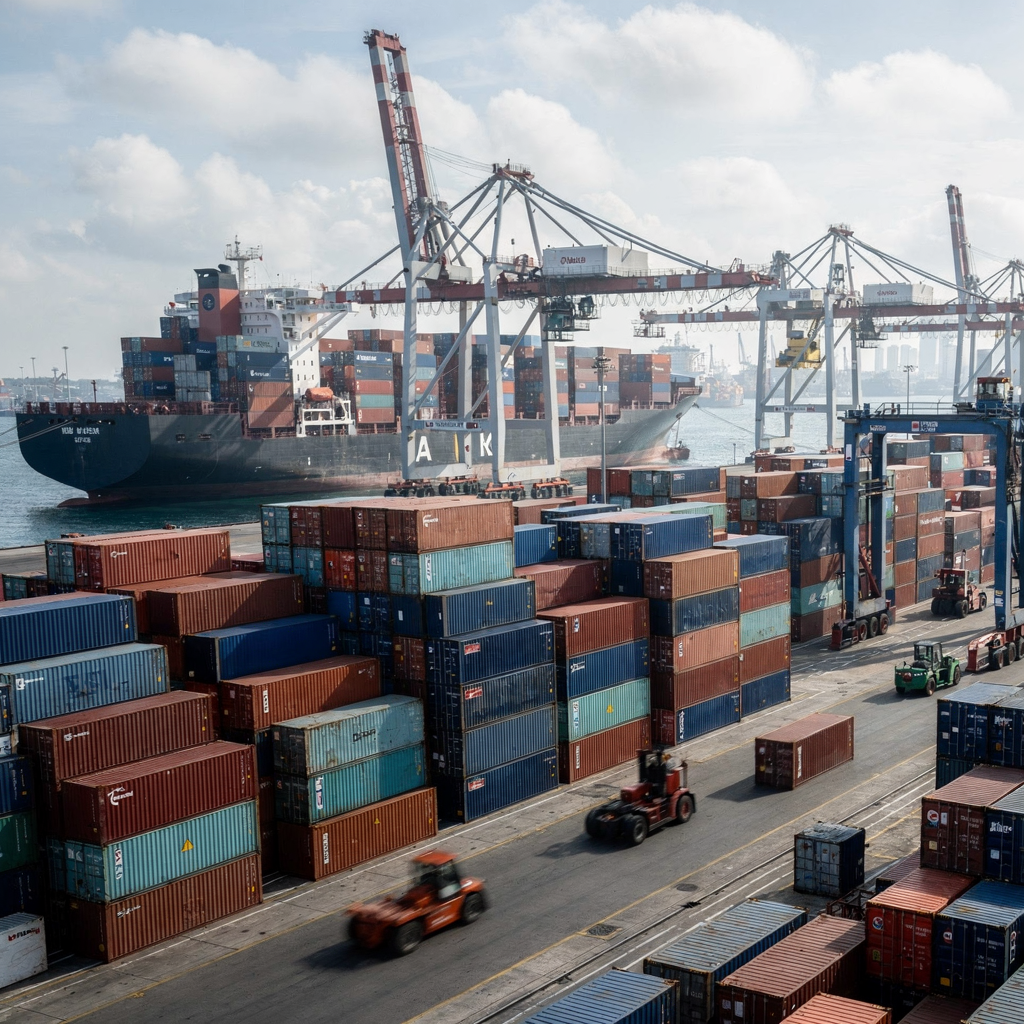
The response combined discrete-event simulation and machine learning to test diversion options. The operations team used a digital twin to simulate container flow and to trial an optimization model that re-sequenced yard moves. They prioritized import containers bound for rail and adjusted the allocation of vehicles to reduce stacking conflicts. The simulation model showed the shortest paths to clear bottlenecks, and the terminal then implemented the recommended plan.
Outcomes included faster throughput and fewer knock-on delays. The terminal recovered berth productivity within 12 hours and reduced additional dwell time by nearly 18% compared with a static plan. The approach improved vehicle utilisation and cut gate queues. The terminal also learned operational lessons about staffing and redundancy in quay work.
Lessons learned translate to broader actions. First, automated triggers that escalate to human supervisors save time. Second, linking email and operational data avoids miscommunication, which reduces manual triage. Third, planning for empty containers and reposition empty containers in advance reduces later pressure. This case study models a template that other hub ports can adapt. For more on improving quay crane productivity and operational efficiency, see applied work on quay crane productivity and operational efficiency in container ports.
Optimization and resilience: Future directions with AI and data integration
AI-driven decision-support systems offer promising future directions. They can combine streaming sensor data, historical trends, and optimization logic to propose allocation and rerouting in seconds. Advances in deep learning can predict yard congestion and recommend preventive moves. Combined with an event-driven API architecture, these systems can implement changes automatically when thresholds are crossed.
Digital twins and IoT improve continuous replanning. A twin that mirrors yard stacks and truck locations lets planners test changes before they hit operations. In addition, integrated systems help with the maritime repositioning of empty containers and with the problem of empty container repositioning that many networks face. They help decide when to reposition empty boxes and where to stage them for fast pickup.
Policy and investment needs remain. Authorities should support data standards, and terminals must invest in resilient communications. Funding for staff training and redundancy in critical assets improves robustness. Future research directions include better stochastic formulations and dynamic programming methods that handle uncertainty of port calls and variable labour availability. Researchers should also study containers under uncertain port disruptions and containers under possible port disruptions to generate robust policies. Finally, collaboration among shipping line partners, dry ports, and inland terminals will strengthen the transport network and the global container shipping system.
Adoption of these technologies creates measurable benefits, and operators that combine AI, simulation, and human oversight can reach higher service levels. This reduces human delay in decision loops and helps maintain a resilient maritime container ecosystem.
FAQ
What is dynamic internal transport replanning?
Dynamic internal transport replanning continually adjusts vehicle, equipment, and labour assignments inside a port. It uses data and algorithms to respond to unexpected events so operations continue with minimal delay.
How does simulation support replanning?
Simulation allows teams to test options without affecting live operations. Discrete-event, agent-based, and digital twin simulations reveal the impacts of rerouting and help select the best allocation strategy.
Which metrics show successful replanning?
Throughput, container dwell time, and vehicle utilisation are key. Improvements in these metrics signal better coordination and faster recovery after an incident.
Can replanning reduce downtime during port disruptions?
Yes, dynamic replanning can reduce downtime by roughly 25–30% in many intermodal scenarios, and it can shorten dwell time by up to 15–20% in some cases UNCTAD. Automated allocation and routing speed recovery.
How do empty containers factor into replanning?
Empty container management and the empty container repositioning problem require coordinated forecasts, allocation, and routing. Proper planning of empty flows avoids unnecessary empty containers and lowers costs.
What role do AI and email automation play?
AI improves prediction and decision speed, and email automation reduces manual tasks so teams act faster. For operations teams, automating the email lifecycle converts messages into structured tasks and quickens response.
Are there successful real-world examples?
Yes. Leading East and Southeast Asian ports have adopted digital replanning and often rank highly in global container performance World Bank. Case studies show measurable throughput gains.
What technologies should terminals invest in?
Terminals should invest in data acquisition, IoT, digital twins, and integrated optimization systems. They should also fund staff training and resilient communications to support those technologies.
How do ports coordinate with hinterland partners?
Terminals share gate slots, ETA data, and prioritized truck lists with rail and trucking partners. Integrated systems and clear escalation rules improve handoffs and reduce freight delays.
Where can I learn more about yard congestion and crane productivity?
Applied resources and case studies are available on operational optimisation topics, including predicting yard congestion predicting yard congestion and improving quay crane productivity optimizing quay crane productivity. These pages provide practical guidance and examples.
our products
 stowAI
 stackAI
 jobAI
jobAI
Innovates vessel planning. Faster rotation time of ships, increased flexibility towards shipping lines and customers.
Build the stack in the most efficient way. Increase moves per hour by reducing shifters and increase crane efficiency.
Get the most out of your equipment. Increase moves per hour by minimising waste and delays.
stowAI
Innovates vessel planning. Faster rotation time of ships, increased flexibility towards shipping lines and customers.
stackAI
Build the stack in the most efficient way. Increase moves per hour by reducing shifters and increase crane efficiency.
jobAI
Get the most out of your equipment. Increase moves per hour by minimising waste and delays.