
container: Introduction to Deep Reinforcement Learning in Port Logistics
Deep reinforcement learning is an AI approach that learns by trial and feedback. It suits complex control tasks. In container logistics it can optimize routing, pickup and drop sequences. The objective is clear. Reduce driving distances. Cut costs. Lower emissions. Also improve throughput. Furthermore enable safer automation. Deep reinforcement learning trains agents to choose actions that minimize a designed cost. In port contexts that cost often links to kilometers driven, idle time and energy use. Therefore the technique fits container handling decisions that involve many moving parts. For example, an agent can route a container truck to the closest stack. Next it can sequence quay crane moves to reduce container relocation. Real-world trials and research show gains. A terminal that integrates smart systems can cut handling times by up to 20% Improving the Performance of Dry and Maritime Ports by Increasing …. Also shifting inland moves from road alone to combined modes reduces logistics costs by 15–25% land access to sea ports | OECD. In addition, moving containers via short sea or inland waterways can cut CO₂ by up to 30% Cost Effectiveness Analysis in Short Sea Shipping – MDPI. Simulation plays a central role. It lets teams safely train agents at scale. Agents learn in virtual terminals before deployment. Then live systems receive a tested policy. Meanwhile digital twins and simulation optimization reduce risk. They help solve the routing problem and the scheduling problem. For operations teams, this reduces manual email queries and decision friction. It then frees planners to focus on strategy. The combined effect is faster decision loops. Finally this chapter frames the port operation challenge. It frames an optimization problem that is suited to DRL. It also sets expectations for the chapters that follow.
port: Building a Realistic Simulation Environment
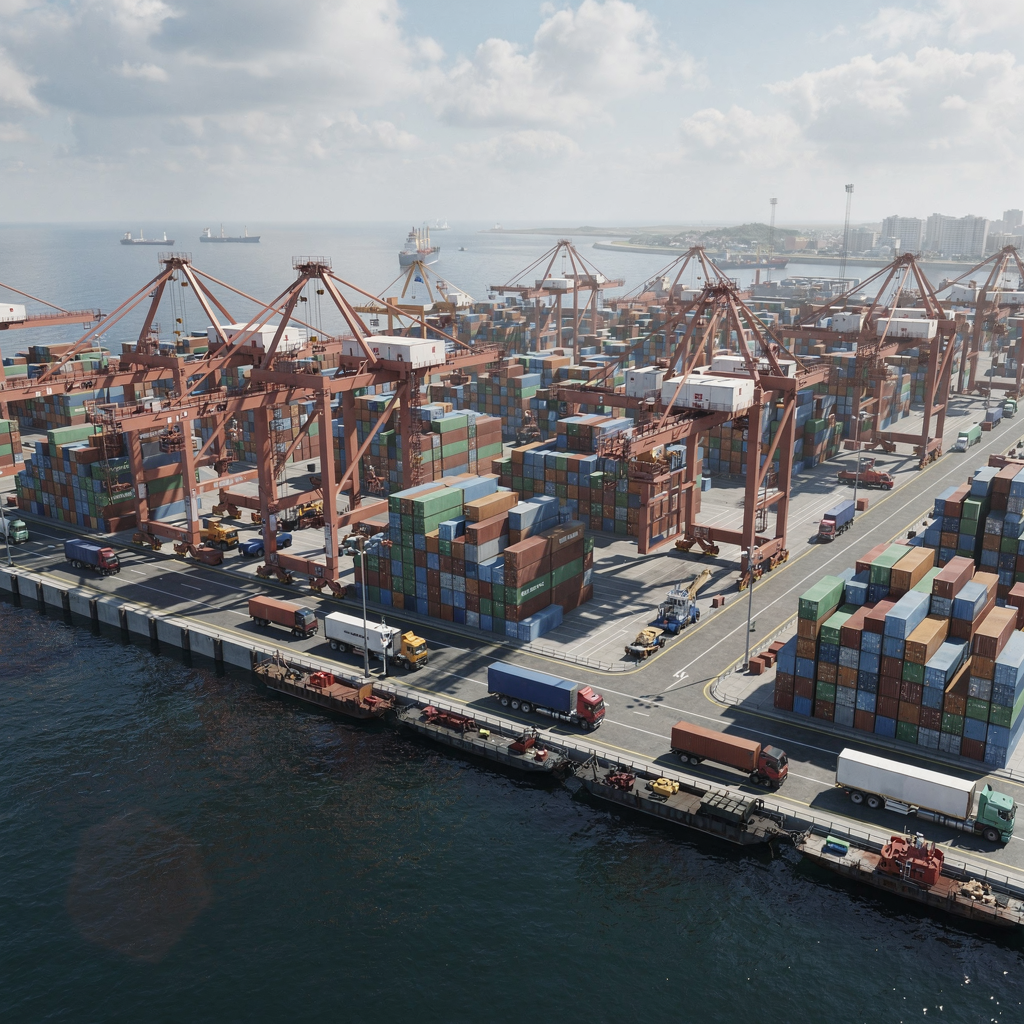
Creating a faithful simulation is essential. First, model the terminal layout. This includes quay cranes, stacks and gates. Next, specify distances and traffic flows. Also build distance matrices between quay cranes, stacks and gates. Include stochastic arrivals for vessels and trucks. In practical terms you must ingest container arrival patterns. You must also model vehicle speeds. Add operational constraints such as crane reach, lanes and traffic rules. Additionally, capture the complexity of the container transport chain. This includes export container and import container flows. Realistic random events matter too. For example, a quay crane failure or a gate delay should be part of the model. Then agents trained there become robust. Use spatial-attention methods to focus the agent on nearby containers. For that purpose frameworks such as Real2Sim help translate real-world sensor data into simulation inputs. Also consider integrating TOS data for better fidelity. Read more about simulation tools in our simulation software overview container terminal simulation software overview. Data requirements are non-trivial. You need timestamps for vessel berthing. You need container dimensions and weight classes. You also need patterns for container dwell time and empty container repositioning. In addition record chassis pools and container truck dispatch behavior. Include the inland container modes. Combined modal data helps study port areas and the hinterland. The simulation should support the optimization model you plan to use. It should also allow a learning-based neural combinatorial optimization strategy. This supports training for container relocation problem and the scheduling of container moves. Finally, validate the simulation with historical logs. Validate against gate timestamps and yard transactions. Then run stress tests to cover peak times. This reduces the gap between virtual training and performance in the real port.
Drowning in a full terminal with replans, exceptions and last-minute changes?
Discover what AI-driven planning can do for your terminal
container port: Designing DRL Agents and Reward Structures
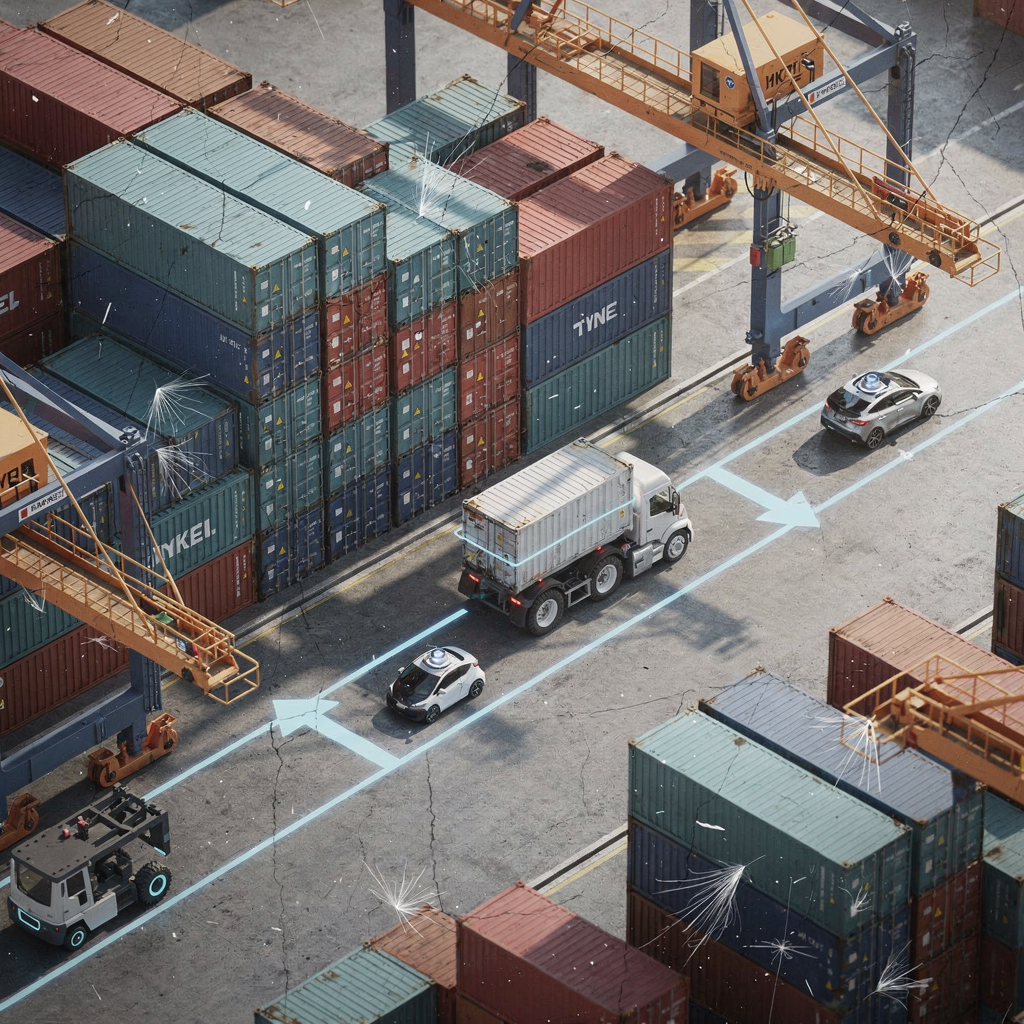
Designing agents starts with defining actor roles. Typical agent types include automated guided vehicles, container truck dispatchers and crane schedulers. Each agent controls decision variables. Examples include which container to pick, which lane to route a truck through, and which stack to access. Also agents may negotiate for shared lanes. The reward function directs the learning. Design it to minimize distance and waiting time. Include penalties for extra relocations and energy consumption. For instance, a reward term can subtract driven kilometres. Another term can subtract container dwell time. This yields a bi-objective optimization for integrated throughput and emissions. Use shaped rewards to guide early learning. Then anneal towards sparse, end-of-episode metrics. For example, reward per episode can combine total kilometres driven, mean waiting time, and energy used. Also include soft constraints for safety. That encourages agents to avoid collisions and unsafe routing. Training protocols matter. Use episodes that roughly match a vessel visit or a day in port. Each episode should include containers entering and leaving container terminals. Use exploration strategies such as epsilon-greedy or parameter noise. Also try curiosity-driven intrinsic rewards when observations are sparse. Network architecture can use deep neural convolutional blocks and attention layers. For combinatorial optimization tasks, use graph neural networks and pointer networks. A novel deep reinforcement learning-based neural combinatorial model can pick stacks efficiently for many containers. Also consider hybrid learning that combines imitation from historical TOS logs and reinforcement fine-tuning. This approach reduces sample inefficiency. Additionally, coordinate multiple agents with a centralized critic and decentralized actors. That helps with the complexity of the container transport and the routing problem. When done properly, the optimization method reduces container movements and idle time. It also supports automated and future container terminals that target both speed and sustainability.
container: Case Studies on Driving Distance Reduction
Benchmark simulations reveal tangible savings. In one synthetic study, agent policies cut haul distances by 15–25% when compared with rule-based dispatch. These results align with multimodal gains reported by OECD research land access to sea ports | OECD. Also terminals that adopt advanced TOS and integrated optimization note up to 20% faster handling times TOS study. A DRL policy typically reassigns tasks to nearby cranes and reroutes container trucks through less congested lanes. As a result, container truck loops shrink. Consequently some terminals report lower fuel burn and fewer gate queues. Compare DRL to heuristics. Heuristics often hard-code priorities. They do not adapt to bursty arrivals or stochastic vessel delays. DRL learns to trade off short-term moves for long-term gains. For example, temporarily delaying a stack move can avoid a costly relocation later. In practice this reduces container relocation problem instances. Also a DRL policy can help with empty container repositioning. It plans moves that reduce empty container miles. Case studies also show improved vessel turnaround. By shortening internal transfer distances, berth productivity increases. That helps reduce time in port for deep-sea vessel calls. For major terminals such as the port of rotterdam and port of hamburg, these methods fit local strategies. See related optimization logic in our guide container terminal optimization logic to reduce driving distances. Finally, combine DRL with robust optimization for safe rollout. Then you keep improvements even under unusual events.
Drowning in a full terminal with replans, exceptions and last-minute changes?
Discover what AI-driven planning can do for your terminal
port: Quantitative Impact on Efficiency and Sustainability
Quantitative metrics show clear benefits. Measure total kilometres driven as a primary KPI. Then track fuel consumption and CO₂ emissions. Studies confirm that modal shifts and optimized routing reduce emissions by up to 30% MDPI study on short sea shipping. In a terminal simulation that reduces driving distance by 20%, fuel savings scale roughly with vehicle fuel curves. This produces significant cost savings. For logistics costs the OECD reports 15–25% savings when modal choices are integrated OECD analysis. Also smarter routing reduces container handling and reduces container dwell time. That further cuts demurrage and storage charges. In numerical terms a 10% reduction in average dwell time can free yard capacity equivalent to several thousand TEU annually. Also the reduction in empty container miles lowers repositioning cost and congestion. Terminal operation efficiency improves. Port terminals see higher throughput per berth. This has a direct effect on the vessel schedule. Reduced port stay time for terminal operations vessels means more on-time departures. See our work on reducing port stay time reducing port stay time for terminal operations vessels. Operational savings also come from fewer truck queues. For terminals with automated container terminal equipment, fewer trips also extend equipment life. In addition port authorities can use these gains to plan future container terminals and to improve port areas and the hinterland links. Finally, these efficiency gains support sustainability goals. They align with port of rotterdam authority initiatives and with global decarbonisation targets.
container port: Deployment Challenges and Future Directions
Deployment brings technical hurdles. Simulation fidelity must match reality closely. Otherwise policies fail at scale. Also real-time data integration with TOS and tracking systems is needed. That adds engineering complexity. In practice port operator teams must connect telemetry, ERP and TMS feeds. They must also handle incomplete data. Staff training is required too. Operators and container terminal operators need to trust automated policies. Therefore explainability and human-AI collaboration are crucial. For human-in-the-loop planning see our piece on human-AI collaboration in terminal planning human-AI collaboration in terminal operations planning. Scalability is another issue. Multi-agent systems must coordinate across different terminals within a port. Also they must cope with peak vessel arrivals. Robust optimization and ensemble policies help. For the scheduling of container tasks, hybrid methods that combine learned policies with combinatorial optimization often work best. For instance, a learning-based neural combinatorial optimization strategy can propose candidate sequences, which a solver then refines. Future research directions include multi-agent coordination and integration with port operator workflows. Also explore deep reinforcement learning-based neural combinatorial models that can handle thousands of containers per episode. Testbeds should include realistic traffic and port congestion scenarios. There is also value in connecting DRL to broader multimodal planning. This spans inland container rail links, inland waterways, and short sea shipping. For example, integrated optimization models that include empty container repositioning and chassis pool optimization lower system costs. Finally, practical deployment benefits from products that reduce manual load. It therefore reduces the overhead of rule changes and escalations. That speeds adoption. Overall, a combined path of research, simulation and careful rollout can transform future container terminals and the efficiency of the port.
FAQ
What is deep reinforcement learning and why is it relevant to container logistics?
Deep reinforcement learning is a machine learning method where agents learn to make sequential decisions via reward signals. It is relevant because container logistics involves many sequential tasks, like routing trucks and scheduling cranes, which DRL can optimize for distance, time and energy.
How does simulation reduce risk when deploying AI in a container terminal?
Simulation allows agents to train on realistic scenarios without affecting live operations. It exposes policies to failures and peaks, which improves robustness before a real rollout.
Can DRL reduce driving distances in a real terminal?
Yes. Benchmark studies report distance reductions in the 15–25% range for optimized policies versus heuristics. The OECD and TOS studies support similar operational improvements when systems are integrated OECD, TOS study.
How do you measure environmental benefits from route optimization?
Measure fuel consumption and CO₂ emissions before and after optimization. Use vehicle fuel curves and miles driven. Studies show multimodal choices and optimized routing can lower emissions by up to 30% MDPI.
What data is required to build a realistic port simulation?
You need container arrival patterns, gate timestamps, vehicle speeds, crane performance metrics and yard layout. Also include modal connections and historical TOS logs for validation.
How do reward functions balance different goals?
Design composite rewards that weight distance, waiting time and energy. Start with shaped rewards for speed of learning and then move to end-of-episode KPIs for final tuning.
Are there tools to help translate terminal operations into simulation inputs?
Yes. Frameworks like Real2Sim and dedicated container terminal simulation software help convert sensor and TOS data into simulation environments. See our software overview for more context container terminal simulation software overview.
What are common deployment challenges for DRL in ports?
Challenges include simulation fidelity, real-time integration with TOS, staff training and scalability. Trust through explainability and staged rollouts helps overcome these challenges.
How can operators combine DRL with existing optimization methods?
Combine DRL policies with combinatorial solvers for refinement. Use hybrid approaches where DRL proposes sequences and solvers enforce hard constraints, creating robust optimization models.
How does this relate to broader port strategy and future container terminals?
Optimized routing and DRL support reduced port congestion and better hinterland integration. They also inform planning problem decisions for future container terminals and port areas and the hinterland development.
our products
 stowAI
 stackAI
 jobAI
jobAI
Innovates vessel planning. Faster rotation time of ships, increased flexibility towards shipping lines and customers.
Build the stack in the most efficient way. Increase moves per hour by reducing shifters and increase crane efficiency.
Get the most out of your equipment. Increase moves per hour by minimising waste and delays.
stowAI
Innovates vessel planning. Faster rotation time of ships, increased flexibility towards shipping lines and customers.
stackAI
Build the stack in the most efficient way. Increase moves per hour by reducing shifters and increase crane efficiency.
jobAI
Get the most out of your equipment. Increase moves per hour by minimising waste and delays.