
Port and Maritime Landscape: Challenges and Complexity
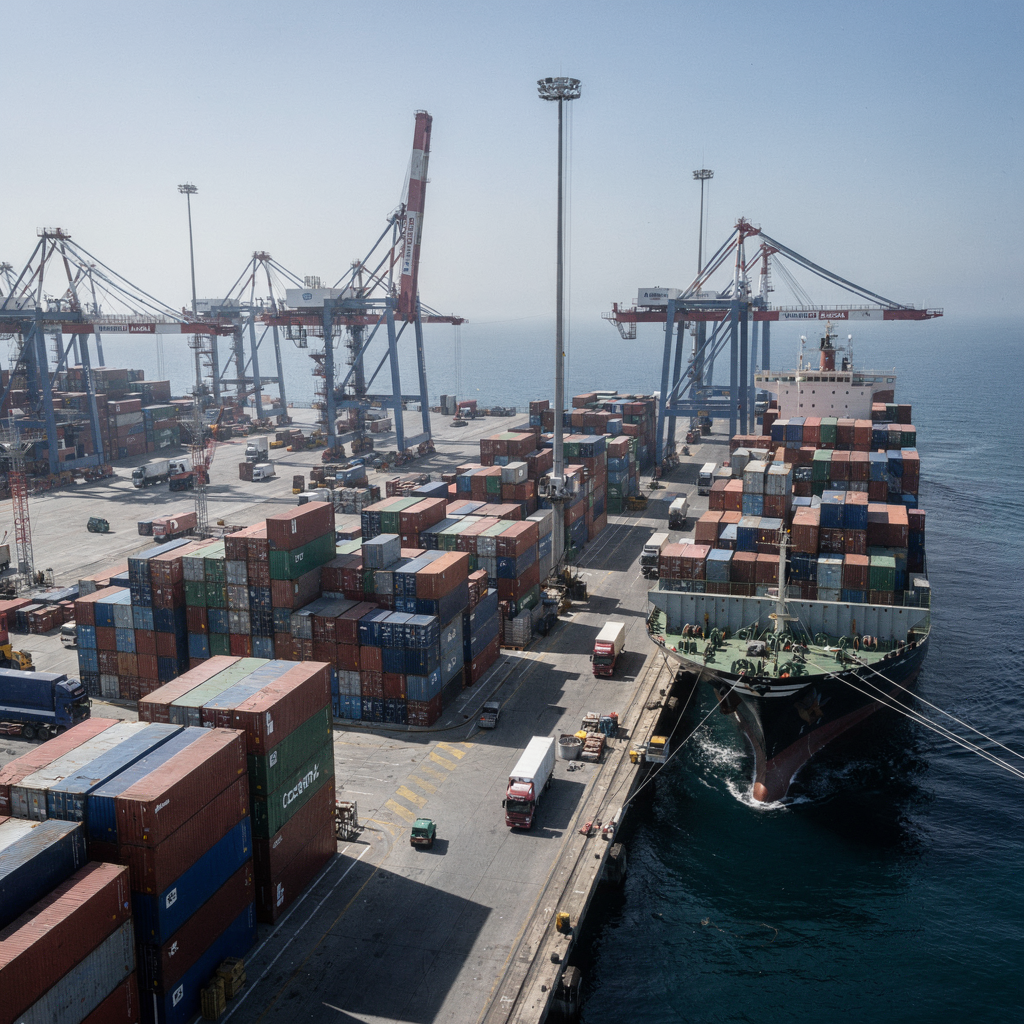
Container terminals bring together cranes, trucks, yard equipment, and IT systems to move SHIPPING CONTAINERS from ship to shore and back again. The PORT environment sees tight berths, crowded yards, and shifting vessel schedules multiple times per day. Many public and private STAKEHOLDERS take part, including terminal operators, PORT AUTHORITIES, customs officials, carriers, and logistics providers. Each actor uses its own tools. That diversity creates friction. Systems do not always communicate. That causes delays and extra cost.
Operational complexity grows when rules differ across jurisdictions. Paper forms still govern many IMPORT AND EXPORT flows. As a result, planners battle inconsistent declarations and missing documents. Those gaps slow the movement of GOODS and increase dwell time. The problem affects world trade and local economies. Small delays cascade into larger disruptions across GLOBAL SUPPLY CHAINS. Planners attempt to OPTIMIZE operations. They often lack the timely inputs that would let them plan effectively.
Digitalisation offers a path forward. Digital TOOLS can streamline DOCUMENT handoffs and provide REAL-TIME INFORMATION to decision makers. Standardized data and electronic processes help remove information silos. For example, ports that adopt clear DATA FORMATS reduce manual re-keying and errors. The move to real-time updates helps anticipate equipment failures and to plan around them. That improves key operational metrics like crane moves per hour and truck turnaround.
Stakeholder collaboration proves essential. Terminal operators, SHIPPING LINES, and CUSTOMS AUTHORITIES must agree on messages and timing. When they do, they create a SHARED UNDERSTANDING that supports operational planning and cargo handing. Loadmaster.ai trains reinforcement learning agents in a digital twin to handle dynamic vessel mixes and yard states and to OPTIMISE yard workload and crane productivity while preserving operational constraints. For deeper technical context on how terminals manage latency and data consistency with APIs, see our guide on managing latency and data consistency in deepsea container port API integrations (managing latency and data consistency).
Transition words: and, also, then, next, however, therefore, thus, meanwhile, similarly, finally, moreover, but, so, hence, consequently, additionally, furthermore, first, second, then, next, now, later, subsequently, finally.
Data Exchange Standards: ISO 18131:2025, DCSA APIs and UN/CEFACT
Clear rules for MESSAGE structure make electronic handoffs reliable. ISO 18131:2025 provides a unified architecture for ship-shore communication and helps to STANDARDIZE interactions between on-board equipment and port systems. ISO states that “ISO 18131:2025 marks a significant step towards unified, secure, and efficient ship-shore data communication” (ISO Launches ISO 18131:2025). The standard helps provide real-time port call information and aligns with broader moves to support PORT CALL OPTIMIZATION across busy hubs.
The Digital Container Shipping Association, or DCSA, produces API specifications that remove paper and digitise documents. Their work supports electronic data exchange and helps container shipping stakeholders shift from PDFs to machine readable messages. Industry reports note that DCSA API adoption led to a 30% reduction in document processing times and a 20% improvement in container dwell time at participating terminals (DCSA’s API standards). Those gains come from fewer touchpoints and faster boarding, manifests, and gate checks.
The United Nations Centre for Trade Facilitation and Electronic Business (UN/CEFACT) sets global guidance for trade facilitation and standard data models. Their recommendations around FACILITATION AND ELECTRONIC BUSINESS aim to enable seamless DATA EXCHANGE and to support SMART CONTAINERS and multimodal flows (Global Data Exchange Standards). UN/CEFACT promotes agreed DATA FORMATS and message payloads to reduce ambiguity in declarations and to speed customs clearance.
Standards enable secure data sharing and help harmonise legal requirements. They form the foundation that lets systems from different vendors INTEROPERATE. Adoption requires governance, version control, and clear APIs. For terminals looking to connect digital twins and TOS, our article on digital twin integration with container terminal operating systems shows practical integration approaches (digital twin integration).
Transition words: and, also, then, next, however, therefore, thus, meanwhile, similarly, finally, but, so, hence, consequently, additionally, first, second, next, finally.
Drowning in a full terminal with replans, exceptions and last-minute changes?
Discover what AI-driven planning can do for your terminal
Interoperability and Terminal Systems: Ensuring Seamless Operations
Interoperability means that systems exchange and understand messages without human translation. True INTEROPERABILITY reduces manual steps and avoids duplicate entries. Terminal Operating Systems (TOS) must accept standard payloads and translate them into executable tasks for cranes and trucks. A consistent INTERFACE ensures that a manifest from shipping lines maps cleanly to bay plans and gate checks. That reduces errors and improves operational planning.
Real-world examples show measurable gains. Terminals implementing DCSA-style APIs reported as much as a 30% cut in processing times, which speeds vessel turnaround and improves berth utilisation (DCSA’s API standards). Integration of AIS and other vessel feeds into terminal platforms lets planners predict berth windows and to sequence moves more accurately. Over 90% of major container ports now incorporate AIS data into planning tools, improving situational awareness for vessels and agents (Port Digitalization with Open Data).
Standardized messages also help with electronic customs clearance. Systems that share timely and accurate cargo data reduce inspections and allow just-in-time arrival patterns. The shift toward standardized data yields fewer rehandles and better yard balance. When TOS ingest real-time data, they can adapt pickup windows and allocate equipment more effectively. That leads to improved throughput and less congestion at the gate.
To handle complexity, terminals should plan API governance and test end-to-end flows. Loadmaster.ai’s RL agents work with TOS via APIs and can simulate millions of scenarios to optimise stowage and job allocation without relying on flawed historical models. For technical readers who want to see how AI ties into port operations and stowage planning, our piece on AI in port operations explores these integrations (AI in port operations).
Transition words: and, also, then, next, however, therefore, thus, meanwhile, similarly, finally, but, so, hence, consequently, additionally, first, second, next, finally.
Stakeholder Collaboration in Port Logistics: Roles and Benefits
Successful port operations depend on multiple stakeholders working in sync. Public and private stakeholders must align on message formats, timing, and responsibilities. That includes CUSTOMS AUTHORITIES, terminal operators, SHIPPING LINES, freight forwarders, and shippers. When everyone agrees on the same data model, the exchange of information becomes efficient and auditable. That shared understanding reduces disputes and supports smoother operational planning.
Collaboration unlocks tangible gains. Where standards are in place, terminals have seen improvements such as a 20% reduction in container dwell time due to faster clearance and coordinated pickups (DCSA’s API standards). Those savings translate into lower costs for shippers and better asset utilisation for carriers. Customs clearance moves more quickly when declarations match expected data formats and when inspectors can trust the payloads.
To get there, stakeholders must commit to governance and testing. Terminal OPERATORS should join industry forums and share testbeds for electronic data exchange. The TERMINAL INDUSTRY COMMITTEE 4.0 and similar bodies encourage harmonised approaches. Stakeholders to exchange consistent messages reduce the chance of errors and speed up cargo handling. When systems provide real-time visibility, planners make informed decision-making and they can react faster to exceptions.
Loadmaster.ai supports terminals by integrating with existing ERP and TOS platforms. Our agents provide closed-loop control to minimise rehandles and balance yard workload while ensuring that operators retain decision authority. For examples of tactical improvements, our article on reducing crane idle time caused by twistlock handling provides practical steps that terminal teams can apply (reducing crane idle time).
Transition words: and, also, then, next, however, therefore, thus, meanwhile, similarly, finally, but, so, hence, consequently, additionally, first, second, next, finally.

Drowning in a full terminal with replans, exceptions and last-minute changes?
Discover what AI-driven planning can do for your terminal
Smart Containers and Digital Innovation: Enabling Real-Time Visibility
SMART CONTAINERS carry sensors that report condition, location, and security events. The INTERNET OF THINGS and IOT devices in containers provide temperature, tilt, shock, and door-open alerts. That data supports real-time tracking and lets carriers and shippers monitor sensitive freight. When terminals ingest sensor feeds, they can plan for special handling and avoid spoilage.
Multimodal DATA FORMATS let information move from ship to truck to rail. SMART CONTAINERS and handheld devices send REAL-TIME DATA to terminal systems so that staff can prioritise moves. That real-time visibility supports supply chain management decisions and reduces dwell. It also helps avoid unnecessary rehandles and reduces energy use by preventing needless moves.
Standards for data sharing matter here. If a sensor vendor uses proprietary payloads, integration costs rise and visibility remains partial. Standardized DATA and agreed interfaces enable seamless data exchange and make condition monitoring scalable. Systems that seamlessly integrate sensor data with the TOS and the gate system can notify the correct team and schedule a just-in-time pickup for temperature-sensitive cargo. That JIT ARRIVAL behaviour reduces storage time and speeds onward movement.
Smart container data also supports audit trails for lading and customs processes. When terminals accept these feeds as part of electronic data exchange, they reduce manual inspections and speed clearance. That aligns with efforts to form the foundation for automated port call processes and to support sustainable operations. For practical guidance on handling special units, see our article on handling special containers in container terminals (handling special containers).
Transition words: and, also, then, next, however, therefore, thus, meanwhile, similarly, finally, but, so, hence, consequently, additionally, first, second, next, finally.
Future of Integrated Logistics and Terminal Digitalisation
The future of container operations will layer AI, automation, and standardized data to optimise flows. Reinforcement learning, like the agents developed by Loadmaster.ai, can adapt to new vessel mixes and yard states without heavy reliance on historical data. Those agents aim to OPTIMIZE quay productivity while balancing yard congestion and driving distance. They help terminals avoid firefighting and instead to plan proactively.
Technologies such as blockchain and ERP can provide provenance and contract automation for freight. Interfaces that accept standardized payloads let blockchain record events without duplicate effort. Vendors must design INTEROPERABLE connectors and APIs that respect governance and privacy. Standardized data across the supply chain and consistent DATA FORMATS let partners automate handoffs and speed decision-making across networks.
As synchromodal models grow, AI-driven analytics will help match capacity with demand. Systems can predict equipment failures and reallocate assets before outages occur. That improves resilience and supports sustainable operations by reducing empty runs. Industry groups like TERMINAL INDUSTRY COMMITTEE 4.0 will push alignment on messaging and testing. When standards align, terminals can safely provide real-time visibility to carriers, CUSTOMS AUTHORITIES, and shippers.
To unlock the full potential of a connected logistics ecosystem, organisations must invest in digital tools, governance, and training. Loadmaster.ai’s digital twin methodology permits safe validation of policies before deployment and lets terminals scale from pilot to full yard without risky learning on live assets. For further reading on planning architecture that supports next-generation terminals, see our post on next generation container terminal planning architecture (next generation planning architecture).
Transition words: and, also, then, next, however, therefore, thus, meanwhile, similarly, finally, but, so, hence, consequently, additionally, first, second, next, finally.
FAQ
What are data exchange standards and why do they matter in ports?
Data exchange standards define message structures and rules for electronic handoffs between systems. They matter because they reduce manual work, prevent errors, and speed customs and gate processing. Standards enable seamless communications among multiple stakeholders and support operational efficiency.
How does ISO 18131:2025 affect ship-shore communication?
ISO 18131:2025 provides a unified architecture for real-time ship-shore communication. It helps standardize interfaces so vessels and port systems can exchange operational and safety messages with less custom integration.
What benefits do DCSA APIs bring to container terminals?
DCSA APIs digitize document flows and reduce manual touchpoints. Industry reports show faster document processing and lower dwell times when terminals adopt these APIs, which helps vessels complete port calls sooner.
How do smart containers improve terminal operations?
Smart containers supply condition and location data via IOT sensors, enabling real-time tracking and better prioritisation. Terminals can use that data to route sensitive cargo faster and avoid spoilage or damage.
Can terminals integrate sensor data with a TOS?
Yes. Terminals can link sensor feeds to their TOS and gate systems if they agree on data formats and interfaces. Integration supports timely and accurate handling and helps reduce inspections and rehandles.
What role do customs authorities play in data exchange?
Customs authorities set documentation and compliance rules that terminals must meet. When customs accept electronic declarations, clearance speeds up and cargo moves through more quickly. Coordination with customs is essential for automated workflows.
How does Loadmaster.ai fit into terminal digitalisation?
Loadmaster.ai provides RL agents that operate within a terminal’s digital twin to optimise stowage, yard placements, and job allocation. The agents integrate with TOS and ERP via APIs, improving consistency and resilience without teaching bad historical habits.
Are there measurable gains from adopting standards?
Yes. Reports indicate reductions in document processing time and container dwell time after API adoption. Terminals that share standardized messages often see improved berth utilisation and lower operational costs.
What should terminals prioritise to enable seamless data exchange?
Terminals should prioritise API governance, agreed data formats, and cross-stakeholder testing. They should also invest in digital twins and integration testing to validate changes before they go live.
How will future technologies change port operations?
Future technologies like AI, automation, and distributed ledgers will support predictive maintenance, automated workflows, and trusted event records. Paired with standards, these innovations will help ports operate more sustainably and to support world trade.
our products
 stowAI
 stackAI
 jobAI
jobAI
Innovates vessel planning. Faster rotation time of ships, increased flexibility towards shipping lines and customers.
Build the stack in the most efficient way. Increase moves per hour by reducing shifters and increase crane efficiency.
Get the most out of your equipment. Increase moves per hour by minimising waste and delays.
stowAI
Innovates vessel planning. Faster rotation time of ships, increased flexibility towards shipping lines and customers.
stackAI
Build the stack in the most efficient way. Increase moves per hour by reducing shifters and increase crane efficiency.
jobAI
Get the most out of your equipment. Increase moves per hour by minimising waste and delays.