
Literature Review of Crane Operation in Container Terminal
The literature review on crane operation in modern container terminal settings spans scheduling, allocation, and control. First, researchers have compared sequential versus parallel workflows and measured how those choices affect service. A key finding shows parallel placement of cranes can raise productivity by roughly 15–25% compared to purely sequential handling; this is supported in thesis-level work on spatial layout and handling efficiency Assessing forecasted container throughput demand on optimal …. Second, studies quantify improvements in operational efficiency when time tracking and space optimization are applied; crane utilization improves from about 65% to more than 85% with targeted measures Improving the Performance of Dry and Maritime Ports …. Third, reviews highlight that data triangulation and predictive models reduce congestion at berth and in the storage yard Operations & supply chain management: principles and practice. These sources form the backbone of current best practice in berth allocation and quay crane scheduling problem research.
Comparing sequential and parallel quay crane operation reveals stark differences. Sequential crane operation assigns contiguous sections of the vessel to a single crane in turn. Parallel crane operation divides the vessel so multiple quay crane units operate simultaneously. Therefore, service time shrinks with parallel strategies because tasks overlap. As a result, vessel turnaround and berth occupancy may both improve. For this reason ports increasingly test multiple quay cranes working together and integrated scheduling models that consider coordination between quay and yard movements.
Baseline performance metrics for modern container terminals vary by geography and scale. Typical crane utilization, crane idle time, and container moves per hour are core indicators. For example, terminals using improved scheduling and storage strategies report lower crane idle time and higher container moves per hour. Furthermore, the literature review underlines that handling peak demand requires flexible resource allocation and integrated berth allocation and quay models. In practice, terminals use storage space allocation techniques and simulation experiments to set the number of quay cranes and the number of internal truck assignments. Also, those seeking deeper insight can read about optimizing quay crane productivity in container terminal environments through applied AI and analytics optimizing quay crane productivity in container terminals.
Furthermore additionally however therefore consequently meanwhile subsequently in addition.
Computational and Heuristic Methods for Port Deployment
Computational approaches to crane assignment often start with a mixed-integer linear programming model or a programming model that formalises resource constraints and objectives. These formulations capture berth allocation, quay crane assignment, and yard movements so that terminals can minimize the total service time and waiting times. Exact methods are powerful but scale poorly for real-world problem using dozens of vessel moves. As a consequence, hybrid approaches that blend exact methods with heuristic search are common in deployment in container settings.
Heuristic methods such as Tabu Search and simulated annealing are frequently applied to the quay crane assignment problem and the container relocation problem. Tabu Search explores neighborhoods while avoiding cycles. Simulated annealing accepts worse solutions early to escape local optima. Both methods are part of the toolkit for solving the scheduling problem under uncertainty. Also, search algorithm strategies complement evolutionary approaches, and they can be integrated with simulation to validate performance under stochastic arrivals and yard congestion.
Challenges in port deployment include berth allocation, yard constraints, mixed workloads, and real-time updates. Berth allocation problem complexity grows with vessel heterogeneity. Allocation and quay crane scheduling must respect quay crane operation constraints, the number of quay cranes available, and quay crane maintenance windows. Yard constraints affect storage yard sequencing and storage space allocation. Real-time events, like late vessel arrivals or equipment faults, force dynamic re-optimization. Adaptive or near-real-time reallocation is therefore required to limit crane idle time and to maintain high crane utilization. For further reading on predicting yard congestion and adaptive pool strategies, see research on predicting yard congestion in terminal operations predicting yard congestion in terminal operations.
Finally, computational and heuristic methods often feed an integrated scheduling system that balances short-term greedy moves with longer-term planning. In practice, terminals combine computational optimisation models with human oversight and decision support systems.
Furthermore additionally however therefore consequently meanwhile subsequently in addition.
Drowning in a full terminal with replans, exceptions and last-minute changes?
Discover what AI-driven planning can do for your terminal
Automated Container Terminal Design and Control
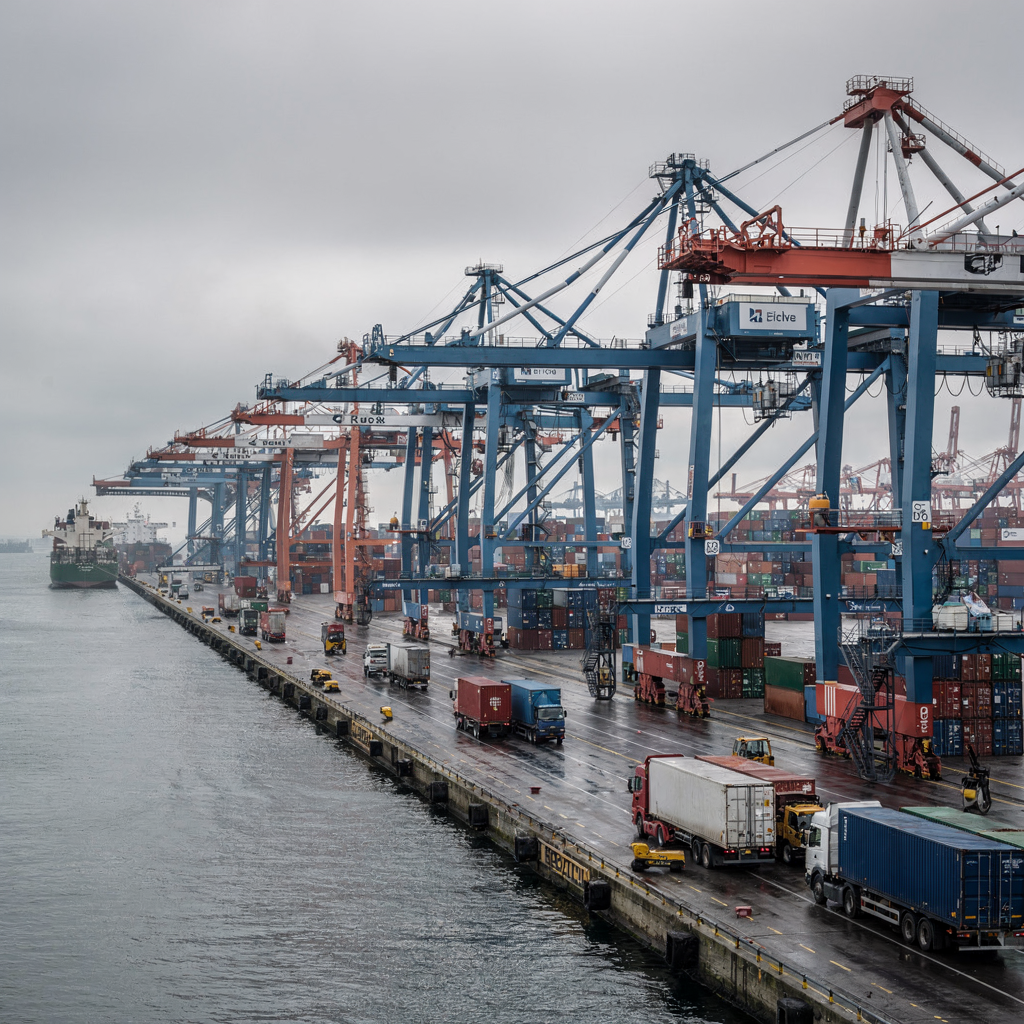
An automated container terminal integrates automated guided vehicles, automated stacking cranes, RMGs, and coordinated control software. In this setup, an automated container terminal emphasises minimal manual handling and deterministic movement patterns. AGVs move containers between quay and storage and automated stacking cranes manage dense yard stacking. These elements reduce errors and improve consistency in container handling. Also, terminals using automation report more predictable throughput and easier planning for quay crane scheduling.
Control systems synchronise quay crane, yard crane, and transport vehicle movements to prevent bottlenecks. Integration requires tight orchestration between the quay crane assignment problem and yard crane scheduling, and between the storage yard planner and internal truck dispatchers. Coordination between quay and yard ensures move containers between quay and yard stacks in the most efficient sequence. Gate flows and container loading and unloading operations have to be scheduled so that AGVs are neither starved nor idle.
The benefits of automation include reduced manual handling, improved safety, and consistent operational efficiency. Terminals using automation achieve higher utilization of equipment and often lower energy consumption per container move. Yet integration challenges remain. System interoperability, network latency, and software cutover are frequent hurdles. For TOS transitions and data consistency, terminals must plan carefully; see guidance on data consistency and cutover planning for TOS migrations in container terminals data consistency and cutover planning for TOS migrations.
Automation also changes job allocation and monitoring. Operators shift from manual moves to supervisory roles, while AI agents can manage repetitive email workflows and exception routing.
Furthermore additionally however therefore consequently meanwhile subsequently in addition.
Optimizing Container Allocation in Crane Scheduling
Allocation objectives in crane scheduling typically balance competing goals: minimize idle time, balance crane load, reduce congestion, and achieve high throughput. A clear objective is to minimize the total idle time and waiting times across quay cranes. Allocation models often include constraints for the number of quay cranes allocated to a vessel section and for quay crane maintenance slots. A practical model for the berth allocation will also consider yard stacking constraints and container relocation problem costs.
Models for quay and yard crane allocation range from exact mixed-integer formulations to greedy heuristics. A mixed-integer linear programming model can capture vehicle routing, resource allocation, and sequence-dependent setup times. However, planners still use simulation to validate results. Simulation helps measure container moves per hour and the impact on port container terminals under peak demand. Optimizing container flow between yard stacks and vessel sections reduces unnecessary reshuffles and lowers container transportation distances, which helps to minimize the total operational cost and to reduce energy consumption.
Illustratively, improving allocation and quay crane scheduling and optimizing container flow can reduce vessel turnaround by up to 20% and increase productivity by 15–25% in some terminals; these figures are documented in operational studies and port reports Improving the Performance of Dry and Maritime Ports … and in thesis-level analyses Assessing forecasted container throughput demand on optimal …. Expected performance gains also include faster vessel turnaround and higher container moves per hour when multiple quay cranes are coordinated with yard resources.
To explore implementation patterns, teams should consult case materials on optimizing yard stack density and job allocation strategies. For example, strategies for energy-efficient job allocation can align quay crane tasks with yard crane cycles to reduce crane idle time and to increase crane utilization energy-efficient job allocation in port operations.
Furthermore additionally however therefore consequently meanwhile subsequently in addition.
Drowning in a full terminal with replans, exceptions and last-minute changes?
Discover what AI-driven planning can do for your terminal
Genetic Algorithm and Algorithm Development for Crane Workload
A genetic algorithm is a popular metaheuristic used to solve complex assignment and scheduling problems at terminals. The method encodes candidate solutions as chromosomes. Each chromosome represents a sequence of crane tasks, quay crane positions, yard crane moves, and AGV dispatch orders. Fitness functions evaluate objectives such as minimize the total handling time, balance crane loads, and lower container relocation problem costs. Fitness metrics also include crane idle time, number of crane moves, and energy consumption per move.
Chromosome encoding varies by implementation. One approach uses task-based encoding where genes represent individual container loading and unloading operations. Another approach encodes timed windows and crane assignments so that the genetic operators preserve sequencing constraints. Crossover operators combine segments of two parents while respecting safety distances and the scheduling of quay crane operation. Mutation operators introduce small random swaps or time shifts that can fix local conflicts. Selection strategies include tournament selection, rank selection, and elitism to keep strong solutions in the population.
Comparative studies show genetic algorithm solutions often match or improve on solutions from simulated annealing and Tabu Search in terms of solution quality. Yet genetic algorithms can require more computational time when population sizes and simulation-based fitness evaluations grow. Therefore hybrid approaches are common; for instance, a genetic algorithm can provide diverse starting solutions that a local-search heuristic then refines. Transportation Research Part literature documents cases where hybrid heuristics and GA variants yielded measurable improvements in terminal operations and throughput Operations & supply chain management: principles and practice.
Practical deployment needs to respect scheduling under uncertainty and must integrate berth allocation and quay crane scheduling with yard crane scheduling. Also, algorithm development must be complemented by simulation validation. Developers often pair genetic algorithm routines with operational dashboards and decision support so planners can accept or override automated proposals. For more on improving gross crane rate with AI and analytics, explore applied frameworks at improving container port gross crane rate with AI.
Furthermore additionally however therefore consequently meanwhile subsequently in addition.
Transportation Research Part Findings on Crane Operation and Terminal Efficiency
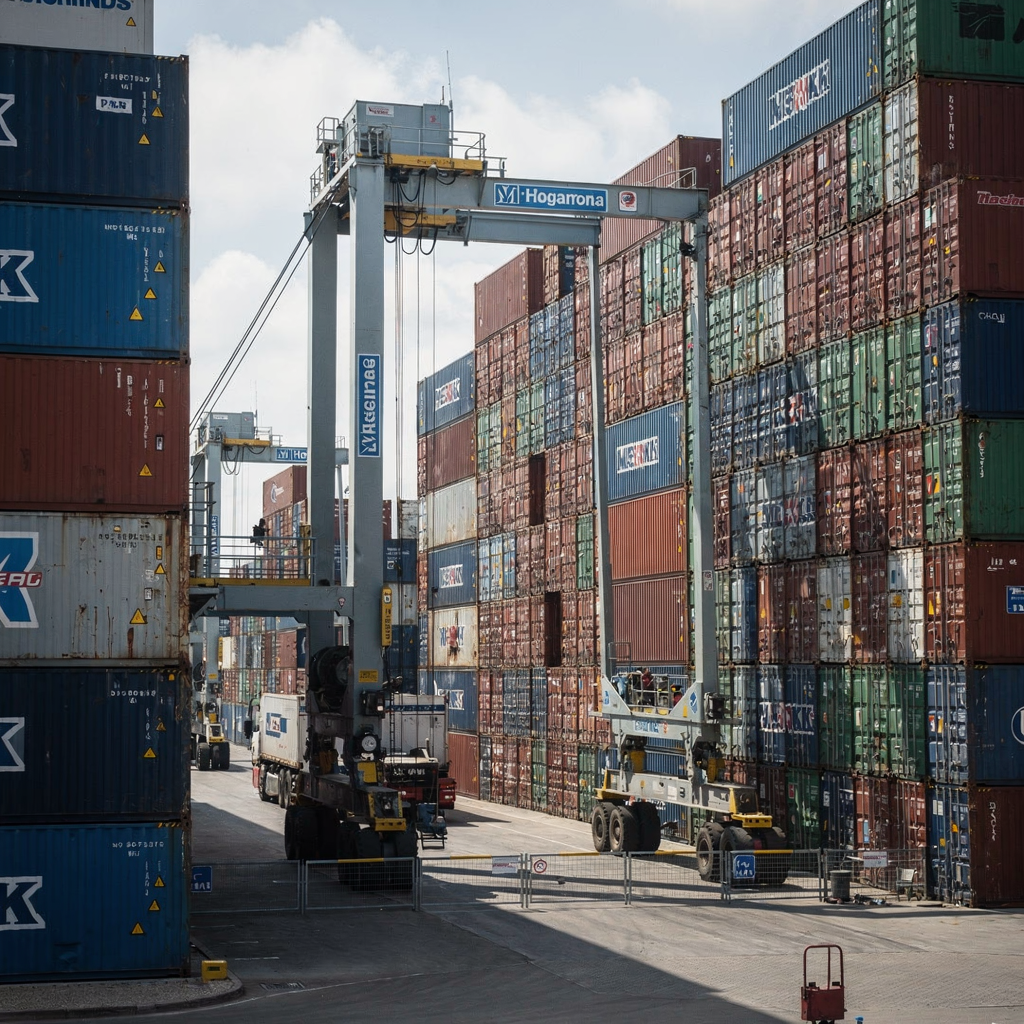
Transportation Research Part publications examine crane operation and terminal efficiency across many case studies. Recent papers detail integrated scheduling models that combine berth allocation and quay crane assignment and show measurable gains. One review notes that “time tracking of vessels, space optimization, development of loading and unloading lists, and optimization of container locations are essential to improving dry and maritime port performance” Improving the Performance of Dry and Maritime Ports …. That summary aligns with findings in Transportation Research Part articles that recommend integrated berth allocation and quay methods for better throughput.
Case studies include deployments of genetic algorithm and hybrid heuristics in major ports. These projects report productivity improvements in the 15–25% range, and vessel turnaround improvements approaching 20% in some conditions Assessing forecasted container throughput demand on optimal …. Additionally, policy-focused reports such as the International Transport Forum note the importance of workload balancing to handle mega-ships and rising container volumes: “The integration of dynamic scheduling and workload balancing among quay cranes is essential to accommodate the increasing size of mega-ships and the growing container volumes.” The Impact of Mega-Ships – International Transport Forum (ITF).
Future research directions include AI integration, hybrid heuristics, and greater use of real-time analytics. For example, work that combines prediction of yard congestion with dynamic equipment pooling can reduce equipment starvation and idle time. Readers interested in AI-driven models for yard density prediction or dynamic equipment pool allocation may find practical material at AI models for yard density prediction and dynamic equipment pool allocation based on real-time demand in container terminals. These studies illustrate how simulation, coupled with adaptive optimization, brings tangible operational efficiency.
Finally, transportation research highlights the value of transparent metrics and integrated scheduling tools. Such tools allow planners to test mixed-integer linear programming model formulations, experiment with simulated annealing, and use genetic algorithm variants to address the quay crane scheduling problem while keeping an eye on quay crane maintenance and the number of quay cranes deployed.
Furthermore additionally however therefore consequently meanwhile subsequently in addition.
FAQ
What is the difference between sequential and parallel quay crane operation?
Sequential operation assigns one crane to a contiguous section of the vessel at a time while parallel operation divides the ship so multiple quay crane units work simultaneously. Parallel strategies typically reduce service time and can improve throughput when coordination between quay crane and yard resources is strong.
How does a genetic algorithm help in crane scheduling?
A genetic algorithm encodes crane tasks as chromosomes and uses crossover and mutation to explore possible schedules. It evaluates solutions with a fitness function that balances objectives like minimizing crane idle time and minimizing the total handling time.
Can hybrid heuristics outperform standalone methods?
Yes. Hybrids mix global search from genetic algorithm with local improvement from heuristics such as simulated annealing or Tabu Search. This approach often yields better solution quality and faster convergence in complex scheduling problems.
What role do automated guided vehicles play in automated container terminals?
Automated guided vehicles move containers between quay and storage with predictable timing, which helps coordinate quay crane and yard crane activities. AGVs reduce manual handling and can improve safety and energy efficiency when integrated into control systems.
How significant are the productivity gains from optimized crane allocation?
Studies report productivity increases in the 15–25% range for terminals using parallel crane operation and optimized allocation. Vessel turnaround can improve by up to 20% with effective allocation and quay crane scheduling strategies, according to academic and industry sources source.
What is a quay crane assignment problem?
The quay crane assignment problem allocates quay crane resources to vessel sections and time windows to minimize service time and conflicts. It must consider constraints like safety separation, quay crane maintenance, and yard crane cycles.
How do terminals handle real-time disruptions?
Terminals use adaptive scheduling, rapid reallocation, and predictive analytics to respond to late arrivals or equipment faults. Real-time re-optimization is supported by short-run heuristics and decision support tools that present alternatives to planners.
Are there environmental benefits to optimizing crane schedules?
Yes. Optimized schedules can lower energy consumption by reducing idle running and unnecessary reshuffles. Energy-efficient job allocation aligns crane moves and AGV trips to minimize redundant travel and cuts emissions.
What is the container relocation problem and why does it matter?
The container relocation problem arises when containers must be moved within the storage yard to access priority cargo. Reducing such relocations saves moves, reduces crane idle time, and improves throughput.
How can operations teams reduce email-related delays during terminal deployment?
Operations teams can automate email triage and responses to expedite approvals and exception handling.
Furthermore additionally however therefore consequently meanwhile subsequently in addition.
our products
 stowAI
 stackAI
 jobAI
jobAI
Innovates vessel planning. Faster rotation time of ships, increased flexibility towards shipping lines and customers.
Build the stack in the most efficient way. Increase moves per hour by reducing shifters and increase crane efficiency.
Get the most out of your equipment. Increase moves per hour by minimising waste and delays.
stowAI
Innovates vessel planning. Faster rotation time of ships, increased flexibility towards shipping lines and customers.
stackAI
Build the stack in the most efficient way. Increase moves per hour by reducing shifters and increase crane efficiency.
jobAI
Get the most out of your equipment. Increase moves per hour by minimising waste and delays.