
container port terminal: Simulation System Foundations
A container port terminal depends on many linked processes. A container arrives. It is moved, stored, and later dispatched. Terminal staff, quay cranes, yard cranes, and trucks coordinate work. The container yard supports those flows. A clear definition helps. A container is a standardized cargo box that moves by sea, road, or rail. A terminal is the fenced facility where vessel berthing, container handling, and intermodal handover occur. Port and terminal operations include vessel scheduling, berth assignment, container storage, and gate processing. Each activity affects terminal throughput and costs.
To mirror live operations, modern terminals often build a digital twin. A digital twin of the terminal mirrors current states and can project future states under defined rules. Therefore, operators can test plans safely. For instance, a digital twin can simulate changes to stacking rules and show dwell-time reductions. Loadmaster.ai spins up a digital twin when it trains reinforcement learning agents, enabling policy search without risking live operations. This closed-loop approach moves teams from firefighting to proactive planning. It also creates explainable decision support and satisfies governance needs.
Key objectives are clear. First, maximise throughput by reducing idle time and aligning quay and yard moves. Second, cut dwell time at the yard and gate to lower inventory holding costs. Third, improve resource utilisation across quay cranes, yard cranes, and yard trucks. These goals require accurate inputs. Integration points include the terminal operating system and IoT telemetry. A TOS provides job lists and vessel plans. Meanwhile, GPS, RFID, and equipment sensors feed real-time telemetry to the digital twin and terminal operation dashboards. Linking the TOS to the digital twin allows scenario rollout with current constraints.
Additionally, terminals can use simulation to identify bottleneck locations, and to recommend changes to yard layout or shift patterns. For example, studies that predict arrival times use transfer logs and past movements to improve planning accuracy (Prediction and Analysis of Container Terminal Logistics Arrival Time). Also, operational evaluations show how data-driven simulation improves terminal performance (Operational performance evaluation of a container terminal using data). For more on building a digital twin, see our guide to building a digital twin of an inland terminal (building a digital twin of an inland terminal).
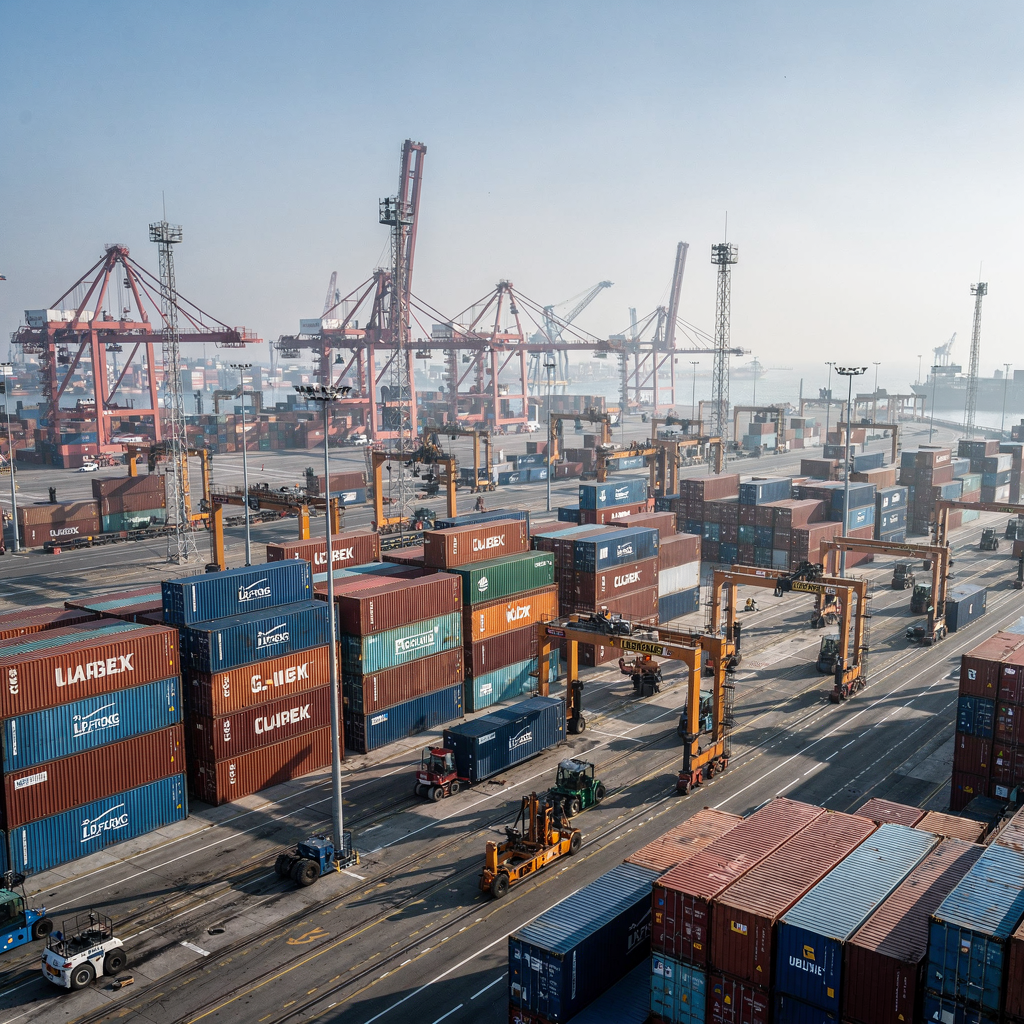
simulation model and digital twin: Building the Model
Choosing an appropriate simulation model is the first technical step. A discrete event approach captures time-stamped events such as vessel arrival and crane moves. An agent-based model represents individual equipment as decision-making agents. Often a hybrid fits best. For example, planners may use discrete event for berth and queueing and agent-based for AGV routing. The chosen simulation model must represent container flows, yard blocks, and type of equipment across the site. It must also represent container storage rules and intermodal handoffs.
Gathering data is critical. Historical data informs arrival patterns and vessel calls. However, Loadmaster.ai can generate experience in simulation when history is limited, which reduces cold-start risk. Use historical arrival data, stacking rules, and equipment profiles to define the model parameters. Then, calibrate the digital twin using current TOS outputs and live telemetry. This step ensures the simulation model developed reflects actual performance. You should validate outputs against recent moves, gate logs, and crane productivity reports. The process closes the loop: model, test, correct, and validate.
Calibration often relies on specialized tools. anylogic is a common platform for container and terminal modelling. For example, AnyLogic case studies show how a container yard planning and management system can be built with an integrated digital twin (Container Yard Planning and Management System Built with AnyLogic). Use anylogic simulation software or other port simulation software when you need GUI-based scenario builds. Meanwhile, a testbed for container yard planning can help teams trial yard rules before deployment. The simulator should support stochastic arrival patterns and maintenance windows to stress-test schedules.
Finally, document the digital twin modeling choices. Track assumptions, container flows, and control system logic. In addition, save a reference of stacking rules and container storage policies so the model stays reproducible. If you need techniques for optimizing TOS configuration and improving execution, read our guide to optimizing container terminal TOS configuration (optimizing container terminal TOS configuration for performance). This step helps ensure the model links back to operational reality.
Drowning in a full terminal with replans, exceptions and last-minute changes?
Discover what AI-driven planning can do for your terminal
system requirements and resource management: Ensuring Efficiency
Large-scale experiments and training require clear system requirements. A simulation run that trains RL agents or searches layout optimisation needs compute clusters, fast storage, and scalable networking. For planning runs, a workstation with multi-core CPU and sufficient RAM may suffice. For reinforcement learning, GPUs and distributed simulation support accelerate training. The documented system requirements should include CPU cores, GPU counts, memory, and persistent storage. Also include the required network bandwidth to stream simulation data and telemetry.
Resource management is central to terminal performance. Key metrics include quay-crane productivity, yard-truck utilization, and AGV throughput. Tracking these metrics lets planners spot imbalance early. For example, low quay-crane moves per hour paired with high yard truck wait time signals a misaligned dispatch policy. Similarly, yard crane idle time with high vehicle movement shows a yard layout or stacking rule issue. Define these metrics clearly in the control system and feed them into dashboards for continuous monitoring.
Interfacing with live data feeds is essential. GPS streams, RFID readers, and the terminal control centre feed live simulation data into the digital twin. Real-time ingestion supports both planning and execution modes. You can run batching simulation runs for strategic reviews, and switch to real-time simulation when operations change rapidly. This dual mode helps terminals balance planning and live dispatch. Our team often recommends TOS integration and tested APIs that allow the simulator to receive job lists from the terminal operating system and to push suggested adjustments back into operations.
Finally, describe the software components. Use simulation software that supports distributed simulation, data logging, and easy replay. Also ensure an operation system connector exists to share job-level data and that the platform supports anylogic support if needed. For more on capacity planning and digital twins in terminal operations, see our capacity planning guide (capacity planning using digital twins in terminal operations). This approach helps terminals translate simulation outcomes into real performance gains.
discrete event simulation for container terminal operations
The discrete event simulation approach advances time by jumping between events. Each event updates the state of the system. Examples include vessel arrival, quay-crane moves, truck dispatch, and stacking crane operations. The model schedules events, manages queues, and records time-stamped outcomes. Because events are discrete, the model scales efficiently for long horizon runs. Discrete event captures berth allocation, queue build-up, and service times with high fidelity.
In a discrete event simulation, model elements include berths, quay cranes, yard blocks, trucks, and stackers. The model must capture operational rules, such as quay-to-yard sequence and gate priorities. It should also represent rehandling logic and berth changes. Queue management, berth allocation, and yard rehandling rules often dominate terminal throughput. Therefore, modelling them faithfully is necessary to make meaningful decisions.
Critical events consist of vessel arrival and the start of discharge, quay-crane job completion, truck arrival at gate, and stacking crane placement. Each event may trigger downstream actions. For example, a delayed vessel reduces available quay time, which cascades into higher yard density. The discrete event approach lets you examine such chain reactions clearly, and supports scenario analysis such as peak-period stress-testing, equipment failure, and maintenance windows. Also, you can simulate contingency plans to reduce the impact of berth changes or crane breakdowns.
Use algorithms to manage queues and to choose next-job priorities. For instance, scheduling algorithms that prefer short-haul trucks can reduce gate dwell. Additionally, optimisation routines tune quay-crane sequences to lower rehandles. The model can report terminal throughput, container throughput per hour, and vehicle wait times. If you want to explore discrete event simulation tools, check our resource on container terminal simulation software (container terminal simulation software). The discrete event method remains a staple for planners who need reliable, explainable insights.
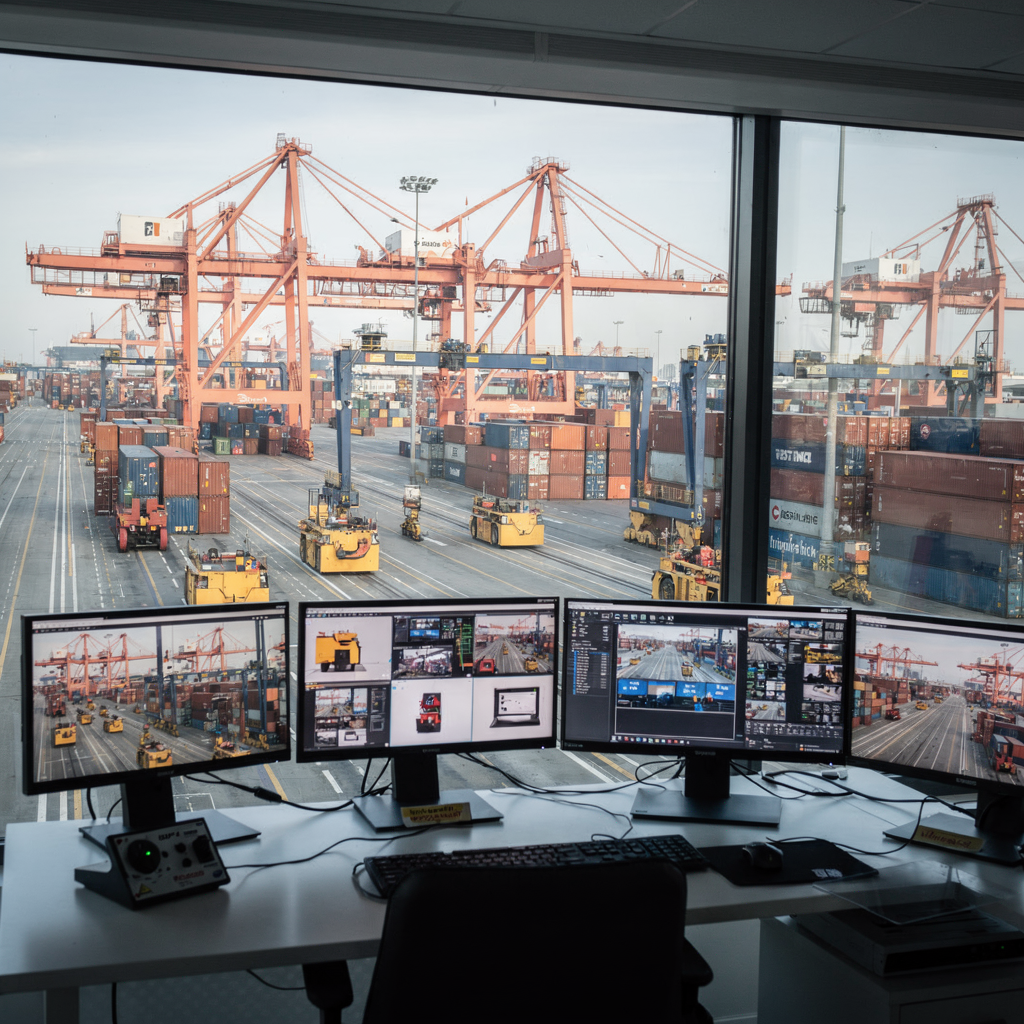
Drowning in a full terminal with replans, exceptions and last-minute changes?
Discover what AI-driven planning can do for your terminal
optimisation and optimization in the supply chain
The terms optimisation and optimization both appear in software descriptions. Use the spelling that fits your audience. In practice, both refer to the same mathematical routines that improve objective functions. In the terminal context, common objectives include minimising rehandles, maximising crane productivity, and balancing yard density. Effective optimization reduces unnecessary moves and shortens container dwell time.
Yard layout optimisation considers block sizes, lane widths, and stacking rules. Changes to block sizes can reduce travel distances for yard trucks. Similarly, changing stacking depth reduces rehandle risk but may increase land usage. Algorithms evaluate trade-offs. For instance, multi-objective optimization can find Pareto-efficient layouts that balance quay productivity against yard congestion. These algorithmic searches often use heuristics, integer programming, or RL-based policies trained in a digital twin.
Supply chain effects extend beyond the fence. Longer container dwell time inflates inventory holding and can delay import/export synchronisation with rail and road schedules. Therefore, terminals should include intermodal links in their planning models. Optimization routines help align vessel schedules, gate windows, and hinterland pickup slots. This coordination reduces bottleneck formation at ports of discharge and helps carriers improve vessel capacity utilization.
To reduce rehandling operations, algorithms may prioritise moves that protect future sequences. For example, a stacking rule that places containers according to expected retrieval time will lower rehandles. Similarly, job dispatch algorithms that coordinate quay, yard, and gate moves can reduce crane idle time and cut driving distances. Loadmaster.ai uses RL agents—StowAI, StackAI, and JobAI—to optimise these trade-offs inside a built sandbox. For readers who want to explore AI-native architectures, see our article on AI-native terminals (AI-native container terminals with multi-agent planning architectures).
case study: Automated container terminal with simulation results
This case study shows how simulation helped an automated container terminal to improve throughput. The terminal used AGVs, automated stacking cranes, and a tight berth schedule. The simulator included a container terminal digital twin and represented quay operations, yard operations, and gate flows. The simulation model developed captured container flows, equipment profiles, and stochastic arrival patterns. By using the digital twin, the team could test operational changes without disrupting live work.
The simulator setup included a digital twin, AGV routing logic, and crane sequencing. The simulation represented the terminal control system and accepted job inputs from the terminal operating system. During runs, the team introduced equipment failures and peak arrivals to stress-test policies. The training environment also functioned as a testbed for container yard planning and for testing yard planning and help predict outcomes under new rules. As the trial progressed, the digital twin modeling allowed the RL agents to learn policies that reduced rehandles.
Simulation results showed measurable gains. Throughput rose while rehandles fell. Crane utilization increased, and AGV throughput improved. The terminal reported reductions in carbon emissions because fewer unnecessary moves cut diesel and electricity use. External studies also note similar benefits; market reports project rapid growth in container yard services driven by automation and GPS adoption (A Beginner’s Guide To Smart Container Yard Management) and market analysis highlights demand for new container storage systems (Global Container Yard Services Market 2024-2028).
Lessons learnt included the need for robust data exchange standards, careful calibration of the digital twin, and progressive deployment. The case study shows how simulation can serve as a testbed for container yard planning and as a path to production. Next steps often include online refinement, TOS integration, and continuous monitoring. For more on operational risk and predictive planning, see our guide to operational risk assessment (operational risk assessment in port operations).
FAQ
What is a container yard simulation system?
A container yard simulation system is a software-driven model that represents container handling, storage, and movement inside a terminal. It helps planners test layout changes, dispatch rules, and equipment schedules before implementing them in live operations.
How does a digital twin differ from simple simulation?
A digital twin continuously mirrors live data and runs alongside operations, while simple simulation typically runs offline with historical inputs. The digital twin enables real-time what-if analysis and supports decision support during live disruptions.
Which simulation model should my terminal use?
Choice depends on goals. Discrete event is ideal for queueing and berth allocation. Agent-based fits well for routing and decentralized equipment control. A hybrid often provides the best fidelity for complex terminals.
Can simulation reduce container dwell time?
Yes. By testing stacking rules and dispatch strategies, simulation can highlight policies that reduce dwell time and improve container throughput. It also helps align gate and vessel schedules to avoid congestion.
What data do I need to build a digital twin?
Key inputs include historical arrival data, TOS job lists, equipment profiles, stacking rules, and live telemetry from GPS and RFID. Calibration against recent operations ensures the digital twin reflects current performance.
How do RL agents like those at Loadmaster.ai learn?
They train inside a digital twin by simulating millions of decisions and receiving rewards based on explainable KPIs. This approach lets agents find policies that outperform historical averages without being trained on flawed past data.
Is anylogic required to build terminal simulations?
AnyLogic is a popular choice and it supports rich modeling needs. However, other simulation software and custom platforms are also viable if they support distributed simulation and integration with the TOS.
What are common bottleneck causes in terminals?
Bottlenecks often arise from misaligned quay schedules, insufficient yard capacity, slow gate processing, or uncoordinated dispatch. Simulation identifies these weak points so that remediation can be targeted and tested.
Can simulation help with sustainability targets?
Yes. By reducing empty moves and improving route efficiency, simulation reduces energy use and emissions. Terminals can quantify carbon-emission reductions from alternative layouts and dispatch algorithms.
How do I integrate simulation with my terminal operating system?
Most integrations use APIs or EDI to exchange job lists and telemetry. The simulation platform should accept TOS inputs and offer a safe way to test suggested adjustments before they are pushed to live operations.
our products
 stowAI
 stackAI
 jobAI
jobAI
Innovates vessel planning. Faster rotation time of ships, increased flexibility towards shipping lines and customers.
Build the stack in the most efficient way. Increase moves per hour by reducing shifters and increase crane efficiency.
Get the most out of your equipment. Increase moves per hour by minimising waste and delays.
stowAI
Innovates vessel planning. Faster rotation time of ships, increased flexibility towards shipping lines and customers.
stackAI
Build the stack in the most efficient way. Increase moves per hour by reducing shifters and increase crane efficiency.
jobAI
Get the most out of your equipment. Increase moves per hour by minimising waste and delays.