
Terminal Management: Challenges and Goals
Terminal managers face daily pressure to run the terminal more efficiently, to reduce costs, and to keep schedules on track. Also, data silos hold back visibility and slow decision making. Hardware integration with cranes, scanners, and gate systems often fails to integrate cleanly, and manual processes still control many workflows. Therefore, planners spend time firefighting instead of planning, which raises operating costs and raises the risk of rehandles. In addition, legacy terminal management software can be rigid, so terminals cannot adapt to changing vessel mixes or peak surges. These issues affect the terminal’s bottom line and the broader supply chain by creating delays and unpredictability.
Goals for a modern terminal are clear. First, terminals want higher throughput and shorter turnaround times. Next, terminals need better visibility across yard management, quay, and gates. Then, terminals require smoother workflows and predictable resource allocation. For example, research shows that terminals implementing integrated TOS and ECS solutions have reported up to a 25% reduction in container handling time. Also, simulation-based testing has improved system accuracy by roughly 30% in some terminals. These quantitative drivers push terminals to adopt modern solutions that optimize operations at the container terminal.
Operational goals tie directly to measurable KPIs. For example, terminals track terminal productivity, crane moves per hour, and equipment utilization. Furthermore, terminals seek ways to improve resource utilization while cutting repositioning moves that cost time and fuel. Loadmaster.ai’s approach aligns with these aims by offering RL-trained agents that optimize multiple KPIs in a closed loop. Also, the system integrates with existing terminal operating system designed to work with APIs and telemetry, so planners gain AI support without ripping out their TOS. Ultimately, terminals that reduce rehandles and balance quay and yard workloads see steadier throughput and lower operating costs, and these gains benefit the entire port and supply chain ecosystem.
Terminal Operating System and TOS Explained
A terminal operating system is the critical operational system that coordinates vessel planning, yard moves, and gate activities. The core modules for a modern terminal operating system include yard management, vessel planning, and gate control. Also, additional modules often cover billing, maintenance scheduling, and labor allocation. A comprehensive terminal operating system connects these modules to deliver end-to-end visibility and to help terminal managers plan and manage container flows.
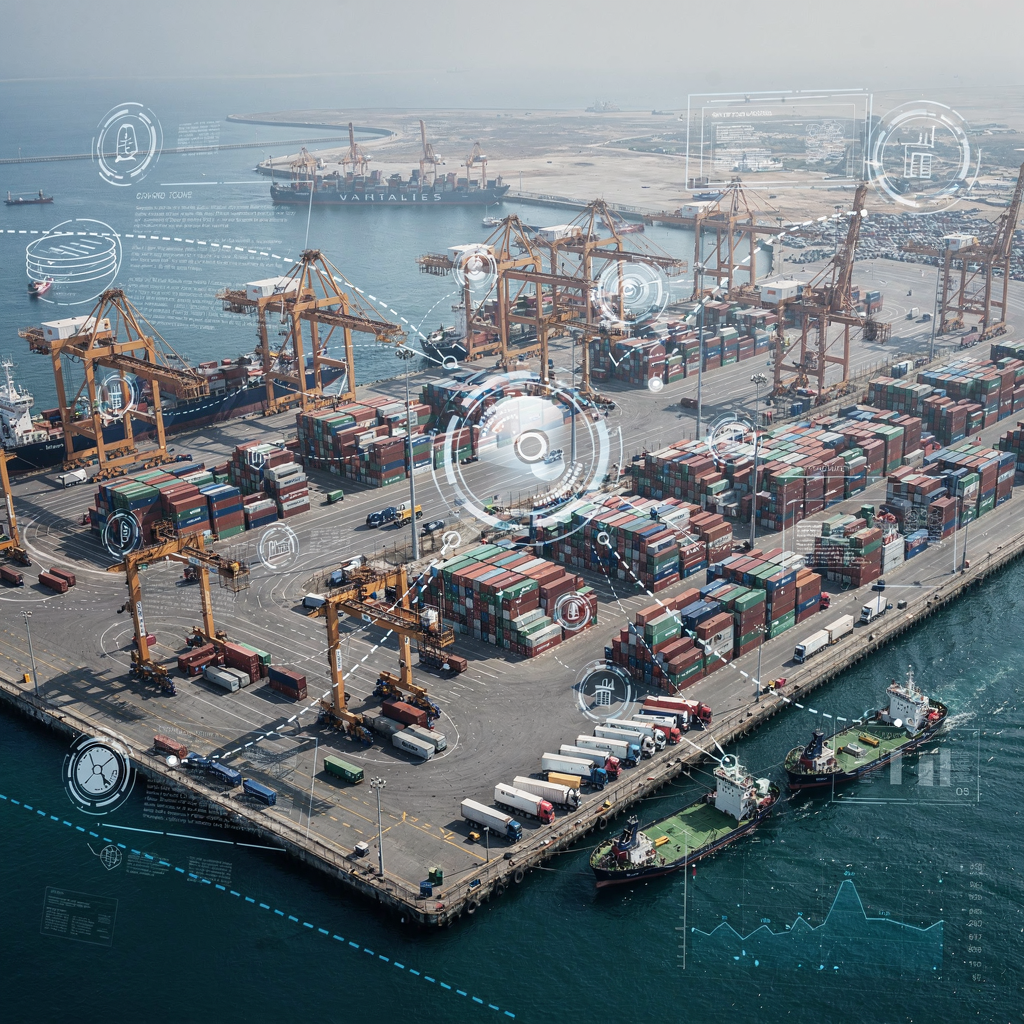
TOS platforms coordinate real-time tasks. For example, a real-time tos will route vehicles, sequence quay cranes, and assign yard blocks to avoid congestion. The TOS enables terminals to integrate automated equipment such as AGVs and quay cranes and to work with Equipment Control Systems for seamless execution. In fact, plan and monitoring of AGV driving routes within a TOS improves loading and unloading efficiency, a key factor in automated terminals (smart port digitalization research).
Performance metrics matter. Terminals track equipment utilisation, terminal productivity, gate throughput, and system response times. Also, managers watch container handling cycle times and yard occupancy. The terminal operating system designed for modern workflows should provide history for each container, container tracking, and container inventory reports. Additionally, the system architecture must accommodate cloud and edge deployments for scale. Many terminals now choose modular terminal operating system designs because modularity lets them add functions later and optimize integration with third-party business systems. For more on how specific TOS platforms compare, see a review of OPUS and other systems (OPUS Terminal Reviews).
Drowning in a full terminal with replans, exceptions and last-minute changes?
Discover what AI-driven planning can do for your terminal
Container Terminal Operating: Essential Features and Benefits
Real-time control features are essential for optimizing terminal workflows. Real-time monitoring, for example, enables dispatchers to react quickly to equipment failures or unexpected vessel delays. Also, AGV routing, crane optimisation, and yard dispatch logic reduce unnecessary moves and minimize driving distances. These features help optimize terminal operations and improve operational efficiencies across quay and yard. In many automated and mixed terminals, the combination of a robust terminal operating system and equipment control delivers measurable gains.
Cloud-based and modular designs make it easier to scale and update software. A lightweight and modular terminal operating approach allows terminals to add modules for gate automation or a PCS gateway without overhauling the entire system. For medium-sized container terminals, modular terminal operating system options lower upfront costs and provide flexible pathways to automation. Meanwhile, fully automated terminals often adopt integrated solutions that connect TOS, ECS, and AGV control for a cohesive workflow. The use of cloud and edge computing also strengthens ICT resilience, which addresses common implementation challenges found in academic reviews (challenges of implementing TOS).
Simulation and emulation capabilities are high-value. Terminals use simulation to test ship-call plans, to tune crane sequences, and to train operators. Testing, tuning, and training via emulation have been applied in more than twenty terminals and improved reliability and operator readiness (MDPI insights). Furthermore, simulation supports cold-start deployments by generating safe policies before live use. Loadmaster.ai leverages digital twins to train RL agents so the system does not depend on historical data that may embed past inefficiencies. As a result, terminals get an AI-driven layer that reduces rehandles, balances workloads, and improves terminal efficiency without requiring a clean dataset.
Container Terminal Operating System Alternatives
Choosing among tos alternatives requires clarity on features, integration, and long-term support. Top contenders include Navis N4, Tideworks, CyberLogitec OPUS, and INFORM OCTOPUS. Each of these platforms offers distinct strengths: Navis N4 often leads on market share and deep vessel planning features, Tideworks focuses on flexible integration, and OPUS Terminal is known for user-friendly workflows—see the OPUS Terminal overview for specifics (OPUS Terminal operating system). Also, INFORM OCTOPUS provides strong algorithmic yard planning for larger sites.
Key comparison points include API flexibility, automation integration, and data sharing via Port Community Systems. Modern tos platforms emphasize open APIs and middleware to integrate with container handling equipment and with third-party business systems. For example, integrating a TOS with a Port Community System enables better coordination with shipping lines and customs, which became important during the COVID-19 pandemic (research on PCS data sharing).
Adoption rates reflect the shift: over 70% of major terminals run advanced TOS platforms to boost productivity and visibility (industry reviews). Also, integrating AGVs through TOS control has been linked to yard throughput increases of roughly 20% in automated terminals. Alternatives range from lightweight and modular terminal operating solutions for smaller ports to leader in terminal operating systems that support complex multi-terminal sites and mixed operations. When evaluating tos alternatives, terminals should weigh system integration capabilities, the breadth of automation interfaces, and the vendor’s track record with similar port and terminal environments.
Drowning in a full terminal with replans, exceptions and last-minute changes?
Discover what AI-driven planning can do for your terminal
Compare the Best TOS Platforms: Logstar TOS, CommTrac TOS and Others
To compare the best terminals systems, review how each platform supports integration, uptime, and customization. Logstar TOS and CommTrac TOS are common choices in regional markets; Logstar has niche strengths in yard visualization, while CommTrac offers good gate and billing modules—see further details on Logstar and CommTrac for technical specifics (Logstar TOS, CommTrac TOS). Navis N4 and OPUS Terminal remain popular for their scalability. Also, other options like the Hogia terminal operating system and Oscar TOS serve specific regional needs, and each platform provides different extensions for automation and reporting (Hogia terminal operating system).
User feedback often highlights ease of integration as a primary concern. Terminals prefer systems that integrate with existing equipment telematics, with clear APIs for system integration, and with middleware that supports PCS gateways. For uptime, market leader in terminal operating systems typically provides robust SLAs and global support teams. Customisation remains a trade-off: deeper customization can solve local rules but may slow upgrades and increase system administration overhead. In contrast, modular terminal operating system designs can reduce long-term costs by enabling upgrades without heavy rework.
Performance data helps decision making. Terminals that deploy integrated TOS and ECS report up to a 25% reduction in container handling time and a 15% improvement in equipment utilisation (whitepaper on robotized terminals). Also, simulation has driven a 30% improvement in system accuracy during peaks in some terminals (testing and tuning study). These figures show why terminals choose a comprehensive terminal operating system that supports both planning and execution. For terminals seeking a clear comparison across brands, our comparison page offers a side-by-side view to compare the best solutions and match a platform to operational goals (best terminal operating systems 2025).
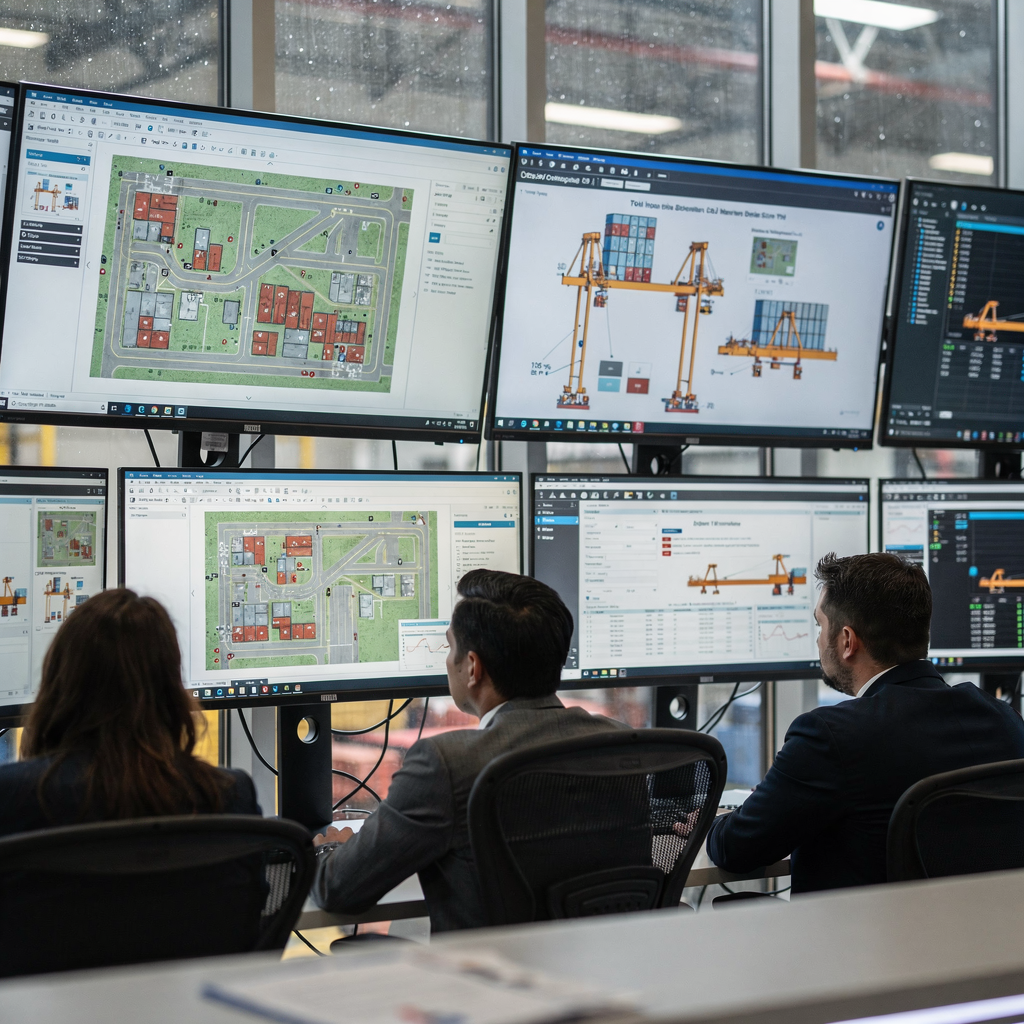
Best Terminal Operating Solutions for Container Terminal Management System
Choosing the best terminal operating solution depends on terminal size, automation level, and infrastructure. For small terminals, lightweight and modular terminal operating systems with cloud options lower costs and speed deployment. For medium-sized container ports, a modular system with good yard management and gate control offers balance. For fully automated or large multipurpose terminal sites, a robust terminal operating system with deep automation integration and a leader in terminal operating systems footprint makes sense. Also, look for vendors who provide a clear path to integrate AGVs, RTGs, and straddle carriers.
Emerging trends shape procurement choices. AI-driven analytics and reinforcement learning now allow terminals to optimize terminal workflows dynamically. Edge computing reduces latency for real-time tos actions. Furthermore, tighter PCS integration helps terminals coordinate with shipping lines and hinterland services. Loadmaster.ai provides RL agents like StowAI, StackAI, and JobAI that plug into existing TOS platforms to improve operational efficiencies and reduce rehandles without replacing the TOS. This TOS-agnostic integration supports rapid pilot deployments and scales across multiple terminal sites.
Decision criteria should include system architecture, API readiness, and support for simulation. System administrators and terminal managers need a plan for training, testing, and rollout. Also, pay attention to features such as container tracking, history for each container, and planning and management of container moves across quay and yard. For rail and container hubs, ensure the management system supports rail terminal schedules and mixed cargo flows. Finally, a decision-matrix helps map goals to vendor strengths: list priorities, score vendors on integration, automation readiness, and cost, then iterate with a pilot. If you want a practical starting point, review specialized product pages like our Navis N4 overview or OPUS Terminal deep dives to refine choices (Navis N4, OPUS Terminal).
FAQ
What is a terminal operating system and why does my terminal need one?
A terminal operating system coordinates vessel planning, yard management, and gate control so your terminal can run predictably and efficiently. It reduces manual paperwork and improves resource allocation, which helps reduce waiting times and rehandles.
How do modern TOS platforms improve container handling?
Modern TOS platforms optimize crane sequences, vehicle routing, and yard block assignments in real time to reduce moves and idle time. Also, simulation and AI can test plans before execution and improve operational efficiencies across the quay and yard.
Which TOS alternatives should I evaluate for a mid-size port?
Look at modular terminal operating systems that scale, such as Navis N4, Tideworks, and OPUS Terminal. Choose a system with solid API support and cloud options so you can grow features without big rework.
Can a TOS integrate with automated equipment like AGVs?
Yes, modern TOS solutions provide interfaces to integrate AGVs, quay cranes, and Equipment Control Systems, enabling coordinated real-time terminal operation. Integration reduces manual interventions and increases throughput in automated terminals.
How important is simulation when selecting a TOS?
Simulation matters because it lets you test plans and train teams without disrupting live operations. Simulation also supports cold-start deployments and improves system response times during peak periods.
What metrics should terminal managers track after TOS deployment?
Track terminal productivity, equipment utilisation, gate throughput, and container handling cycle times to measure impact. Also, monitor rehandles and yard occupancy to see if the system reduces unnecessary moves.
Are cloud-based TOS solutions secure for critical operations?
Yes, cloud-based systems can be secure when they follow industry best practices and provide on-premise or hybrid options for sensitive data. Also, choose vendors that offer SLAs and compliance with regional regulations.
How can AI improve a terminal without replacing the TOS?
AI modules can augment your existing TOS by optimizing planning and execution decisions and by running in a sandbox digital twin first. Loadmaster.ai, for example, trains agents in simulation and then integrates via APIs to improve decision quality without replacing the TOS.
What are common challenges when implementing a new TOS?
Challenges include scanner and sensor integration, ICT infrastructure gaps, and the need to align operational rules with the new system. Also, training staff and validating performance through simulation are necessary to avoid rollout issues.
How do I choose between a market leader and a lightweight vendor?
Decide based on scale, automation plans, and available IT resources. A market leader may offer fuller features and global support, while a lightweight vendor can provide faster deployment and lower cost for smaller sites.
our products
 stowAI
 stackAI
 jobAI
jobAI
Innovates vessel planning. Faster rotation time of ships, increased flexibility towards shipping lines and customers.
Build the stack in the most efficient way. Increase moves per hour by reducing shifters and increase crane efficiency.
Get the most out of your equipment. Increase moves per hour by minimising waste and delays.
stowAI
Innovates vessel planning. Faster rotation time of ships, increased flexibility towards shipping lines and customers.
stackAI
Build the stack in the most efficient way. Increase moves per hour by reducing shifters and increase crane efficiency.
jobAI
Get the most out of your equipment. Increase moves per hour by minimising waste and delays.