
Automation in Container Terminal: Enhancing Safety and Efficiency
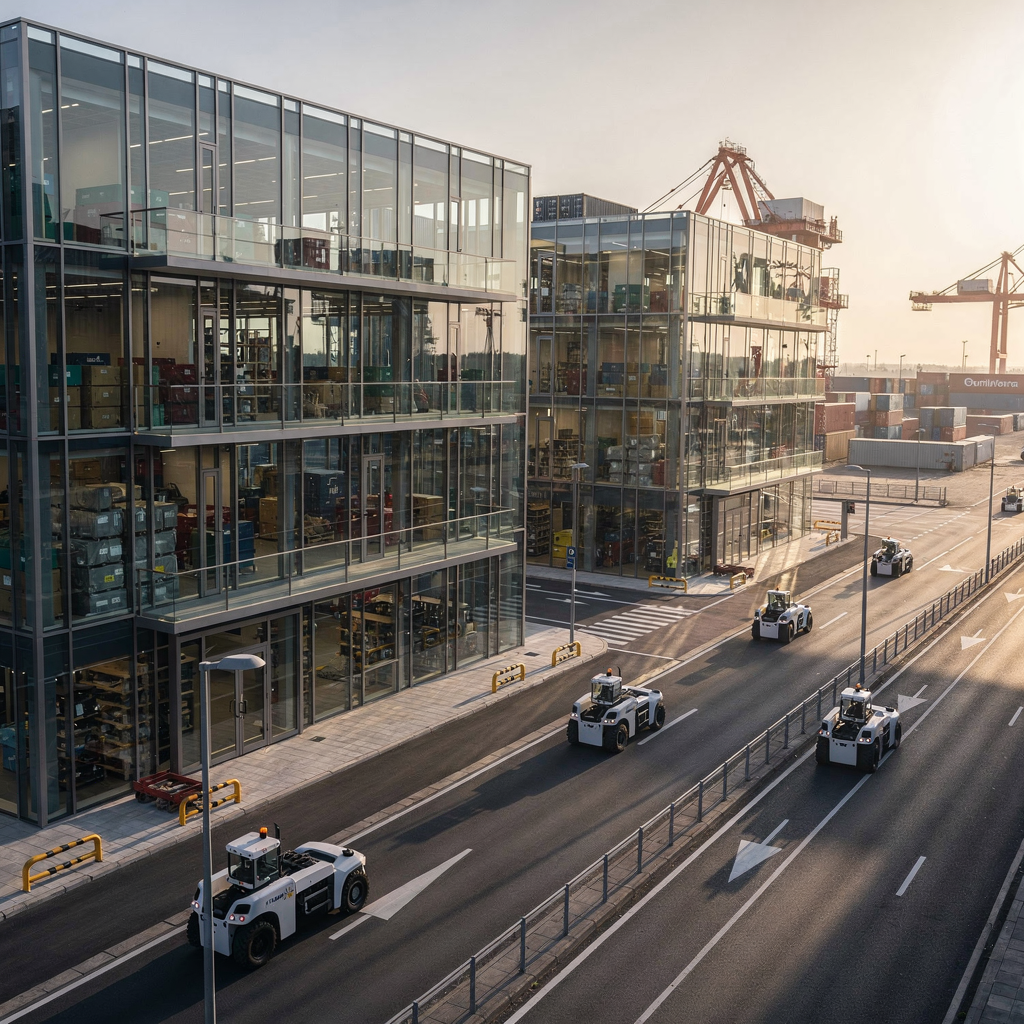
Automation reshapes how a container terminal reduces risk and moves cargo. First, terminals automate repetitive and hazardous tasks to lower exposure to heavy machinery and reduce workplace accidents. For example, studies show that automation can cut workplace accidents by up to 70% when terminals automate core movement tasks (source). Second, automated guided vehicle and agvs remove drivers from congested lanes and limit human interaction with lifting machinery. Third, remote-controlled crane and automated stacking crane systems replace risky manual operations and improve operational predictability.
Automated guided vehicle deployments reduce collision exposure and streamline routing between quay and yard. In this way, terminals can optimize traffic flow and mitigate bottlenecks. Also, a TOS integration that supports automated fleets is essential. A tightly integrated terminal operating system reduces errors at handoffs and helps operators see the full workflow. Loadmaster.ai uses RL agents to automate planning and execution so planners can stop firefighting and start proactive planning. Our StowAI and JobAI agents learn robust policies in a digital twin and then integrate with a live tos to ensure safe execution without relying on historical mistakes. Learn more about how autonomous terminals evolve in our review of the future of autonomous container terminals (future of autonomous container terminals).
Automation also enables better real-time visibility and safety checks. Advanced sensor arrays combined with software solutions give clear detection of hazardous zones and unauthorized access. For instance, real-time monitoring systems feed alerts to operators and dispatchers so they can act quickly. Additionally, automation supports scheduled inspection and predictive maintenance that prevents machinery failures and fatal accidents. Finally, terminals that automate with a safety-first design often see improved throughput and fewer accidents caused by manual errors. As one industry source notes, “Safety procedures only become truly effective when integrated into daily practice, not just documented” (source). That principle guides how terminals integrate automation into everyday work.
Terminal Operations Optimization: Streamline and Enhance Efficiency
Optimizing terminal operations reduces congestion and lowers the chance of hazardous interactions. First, berth and quay crane allocation must be planned to avoid clustering and excessive travel. Proper schedules cut waiting times and reduce the number of times cargo and machinery crowd the same space. Second, dynamic scheduling models help terminals handle peak traffic. These models allow planners to adapt quickly when vessel arrival times shift or gate operations spike. Third, operational planning that balances yard planning and quay tasks improves both safety and throughput.
Terminals can optimize berth assignments by combining analytics with simulation. For example, data-driven allocation can reduce crane idle time and thus cut the risk of unsafe crane moves. Research shows that optimizing berth-and-quay-crane allocation helps reduce congestion and improve operational efficiency (study). In practice, terminals automate scheduling loops and use decision support to enforce safety buffers around cranes and stacking areas. A terminal operator may adjust sequences to avoid moves that increase rehandles or create hazardous stacking patterns.
Loadmaster.ai’s StackAI augments yard planning by suggesting placements that minimize driving distance and preserve future plan safety. This approach helps terminals reduce rehandles and cut unnecessary equipment movement. For deeper technical integration, see our guidance on optimizing container terminal tos configuration for performance (TOS configuration). That resource explains how a TOS must provide the telemetry and command interfaces that let automation and operators coordinate.
Finally, streamlining gate operations and routing reduces idle trucks and crane interruptions. When gate queues shorten, the yard becomes safer and less congested. Terminals that optimize operations in this manner can improve throughput while reducing the risk of accidents. This is a practical step that helps terminals achieve both efficiency and safety.
Drowning in a full terminal with replans, exceptions and last-minute changes?
Discover what AI-driven planning can do for your terminal
Safety Protocols and Protocol for Real-time Hazard Control
Formalised safety protocols must move beyond written manuals to daily practice. Training alone cannot close the gap. Supervisors and terminal operators need structured drills and immediate feedback loops. In short, safety protocols should be living processes. To reinforce effective safety, terminals schedule short, frequent drills. They also embed checklists into shift handovers and operator screens. This constant attention to safety creates a habit of compliance and quick corrective action.
Real-time monitoring systems are central to early hazard detection. Cameras, sensors, and telemetry feed continuous data to a central dashboard. When a hazard appears, automated alerts notify the relevant operator. Then, dispatchers and supervisors can stop unsafe moves. Real-time tracking of containers and equipment improves situational awareness. For instance, software solutions that provide real-time visibility lower incidents by identifying near-miss patterns before an accident occurs (source). These systems also record audit trails for later safety analysis.
Continuous training and drills reinforce protocol adherence. Operators practice emergency stops, exclusion zone responses, and correct inspection procedures. Furthermore, terminals run tabletop scenarios that test operational planning and decision rules. Loadmaster.ai supports operator learning by simulating alternative plans in a digital twin so teams can see trade-offs without risking live operations. This hands-on rehearsal helps operators improve safety practices and apply them under pressure. Also, integrating safety checks into the terminal operating system reduces missed steps. When a tos enforces safety controls, compliance rises and risky deviations fall.
Good protocols also define when to escalate. Clear thresholds for pausing an operation or initiating an inspection help crews act quickly. These steps mitigate hazardous situations and reduce the risk of accidents and fatal accidents. Above all, combining practical steps with monitoring systems and routine drills creates a resilient safety culture across the supply chain.
rfid Tracking to Improve Safety in Container Terminal
RFID provides precise location data for assets and people. As a result, terminals can prevent unauthorised access to danger zones and control movement around cranes and stacking areas. RFID tags on chassis, forklifts, and critical handling equipment trigger zone-based rules. For example, when tagged equipment approaches an exclusion zone, the system can slow vehicles or lock out certain operations. This immediate response reduces workplace accidents and helps terminals maintain safe distances between machinery and personnel.
Automated alerts are another advantage. When a container or piece of equipment crosses into a restricted area, the system can notify the operator and the duty supervisor. These alerts shorten response times and reduce near-miss events. In practice, terminals that integrate rfid with monitoring systems see faster incident responses and clearer incident audits. Such systems also feed data to maintenance teams for inspection scheduling and predictive upkeep.
RFID enables better gate operations and faster clearance of freight. With accurate identification, terminals streamline truck routing and reduce gate-side dwell. Less queuing at gates reduces yard congestion and the chance of collision near the terminal entrance. Also, RFID supports efficient inventory checks. Yard planning improves when staff know exactly where each container sits. Terminals can then automate pick instructions and reduce unnecessary forklift moves.
Finally, RFID helps terminals comply with safety protocols and safety controls. Systems can automatically disable certain crane functions when people enter a hazardous area. They can also log operator presence during sensitive lifts. Together, RFID and automation improve the speed and reliability of safety checks. Terminals can significantly reduce near misses and accidents caused by human error by applying these connected controls. For more on digital twins and system integration that leverage tracking data, see our work on digital twin integration with container terminal operating systems (digital twin integration).
Drowning in a full terminal with replans, exceptions and last-minute changes?
Discover what AI-driven planning can do for your terminal
Enhancing Container Handling: Safety and Efficiency in Container
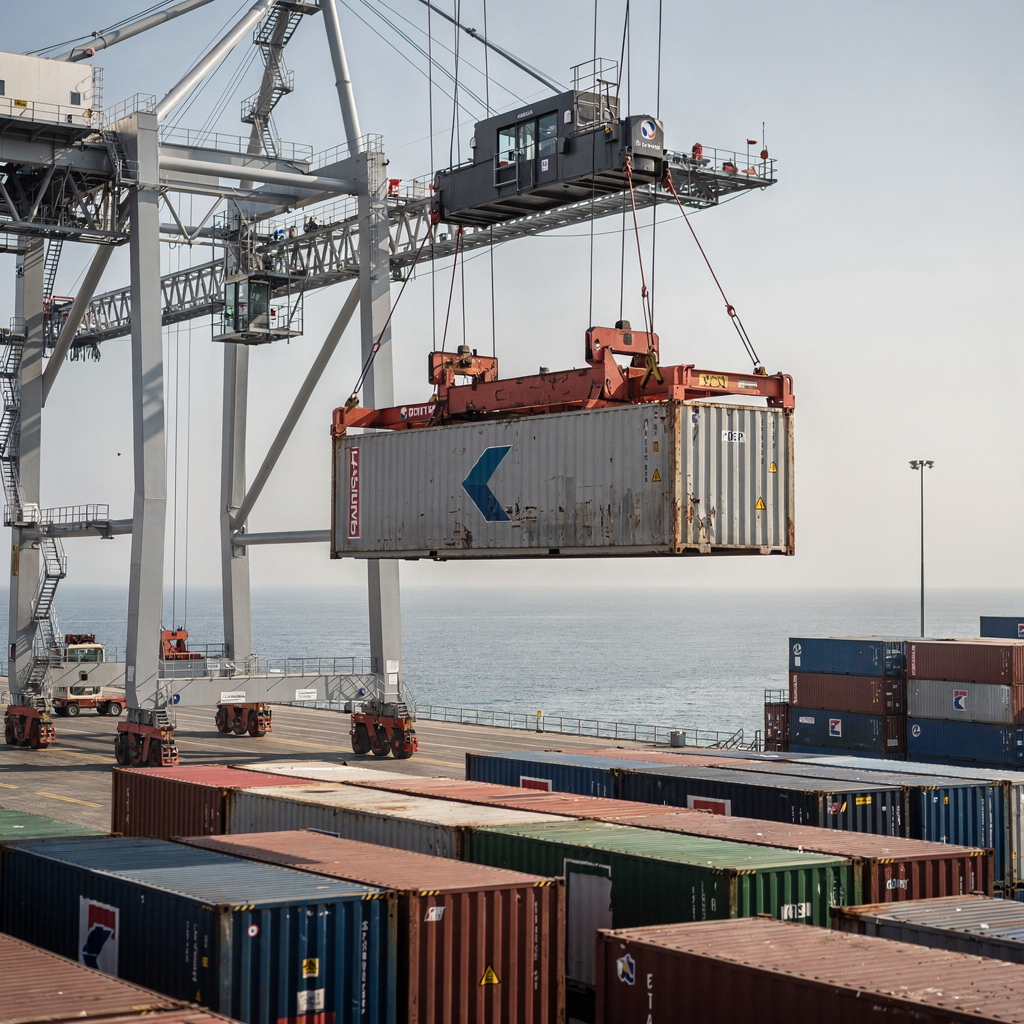
Automated cranes with load-sway control reduce dangerous oscillations during lifts. These cranes improve pick accuracy and lower the chance of dropped loads. Terminals that upgrade handling equipment to include automated stacking and anti-sway systems often see fewer handling-related injuries. For instance, some terminals reported up to a 50% reduction in handling-related injuries after modernising their crane control and stacking logic. Such gains arise because automated control systems keep lifts smooth and predictable.
Digital twins and simulation let teams test complex handling sequences before executing them live. By simulating moves, planners can optimize sequences that reduce rehandles and short-haul travel. This improves operational efficiency and reduces fatigue on equipment and people. Loadmaster.ai uses reinforcement learning within a digital twin so agents learn safe, high-performing handling sequences without risky trials in the yard. This approach helps terminals automate decision-making and protect future plans.
Pairing automated cranes with operator oversight creates a hybrid model that balances automation and human judgment. Operators maintain authority to intervene, while automation handles routine precision tasks. This hybrid model protects operators from monotonous work and reduces human error. Additionally, planned inspection and sensor-driven maintenance schedules keep handling equipment reliable. Regular inspection intervals cut the chance of machinery failure during lifts and lower the risk of fatal accidents.
Finally, training that focuses on both automated and manual handling keeps crews competent. Operators learn to work with assistive technology and to fallback safely to manual control when required. These combined investments in equipment, simulation, and people reduce the risk of accidents caused by improper lifts. They also streamline moves, increase crane productivity, and enhance container handling across the yard.
Data-Driven Optimization to Enhance Safety and Streamline Terminal Operations
Big data analytics transform how terminals predict risk and schedule maintenance. Predictive maintenance models flag components that need inspection before failure. That avoids sudden breakdowns that could create hazardous workarounds. For example, applying data science to container terminal operations has improved throughput and safety by enabling predictive maintenance and dynamic risk assessment (research). These insights let operator teams prioritize inspections and direct resources where they matter most.
Key performance indicators must connect safety outcomes with operational metrics. Metrics such as moves per crane hour, time-in-yard, and near-miss frequency show how operational choices affect safety. Terminals that optimize by balancing these KPIs achieve better efficiency and safety. Loadmaster.ai’s RL agents optimize multiple KPIs concurrently so terminals can balance quay productivity against yard congestion and driving distance. This multi-objective control prevents the single-minded pursuit of throughput that can increase risk.
Continuous improvement relies on a data loop: collect, analyze, act, and measure. Real-time dashboards and monitoring systems supply the data. Then, analytics point to interventions that reduce the risk of accidents. After interventions, teams measure results and refine plans. In this way, data-driven optimization creates a stable cycle of improvement. Terminals can reduce rehandles, cut unnecessary travel, and lower incident rates while they improve efficiency.
Finally, integrating analytics with the operational planning layer and the tos creates seamless execution. When the operational plan feeds live telemetry back into analytics, systems learn faster. That improves decision-making during disruptions and across the supply chain. For deeper practical guidance on using data for maintenance and planning, see our article on using data to predict equipment maintenance in inland container terminals (predictive maintenance). By link ing data, simulation, and execution, terminals can optimize operations and reduce the risk of accidents.
FAQ
What safety benefits does automation bring to a container terminal?
Automation reduces direct human exposure to heavy lifts and congested zones. It also standardizes repetitive tasks, which lowers the rate of workplace accidents and improves consistency across shifts.
How do AGVs and automated guided vehicle systems prevent collisions?
AGVs operate on predefined routes and use sensors to detect obstacles, which reduces human error and unpredictable driving. Additionally, AGVs can be paused or rerouted instantly by the control system when a hazard is detected.
Can data analytics really prevent equipment failures?
Yes. Predictive maintenance uses sensor data and analytics to forecast failures before they occur. As a result, teams schedule inspections and repairs proactively and avoid unplanned downtime.
What role does RFID play in terminal safety?
RFID enables precise location tracking of containers, equipment, and personnel. With that visibility, terminals automate alerts, control access to hazardous zones, and speed incident response.
How should terminals convert safety procedures into daily practice?
They should embed protocols into shift checklists, training drills, and operator interfaces. Also, real-time monitoring and a supportive safety culture encourage adherence to procedures.
Do digital twins improve safety during planning?
Digital twins let planners test sequences and run simulations without real-world risk. They reveal unsafe interactions and allow teams to refine plans before execution.
How do terminals measure the success of safety programs?
They track KPIs such as near-miss reports, accident frequency, crane moves per hour, and maintenance-related incidents. These metrics link operational choices to safety outcomes.
What is the balance between automation and operator control?
A hybrid model keeps operators in supervisory roles while automation handles routine precision tasks. Operators retain authority to intervene and manage exceptions.
How can terminals ensure their TOS supports safety improvements?
The TOS must expose telemetry and execution controls, enforce safety checks, and integrate with monitoring systems. Optimizing TOS configuration helps automate safety workflows and reduces manual errors.
How quickly can a terminal see safety gains after implementing these strategies?
Some terminals see measurable improvements within months, especially where automation and real-time monitoring are deployed. However, achieving sustained gains requires ongoing training, data-driven adjustments, and consistent enforcement of safety protocols.
our products
 stowAI
 stackAI
 jobAI
jobAI
Innovates vessel planning. Faster rotation time of ships, increased flexibility towards shipping lines and customers.
Build the stack in the most efficient way. Increase moves per hour by reducing shifters and increase crane efficiency.
Get the most out of your equipment. Increase moves per hour by minimising waste and delays.
stowAI
Innovates vessel planning. Faster rotation time of ships, increased flexibility towards shipping lines and customers.
stackAI
Build the stack in the most efficient way. Increase moves per hour by reducing shifters and increase crane efficiency.
jobAI
Get the most out of your equipment. Increase moves per hour by minimising waste and delays.