
Root causes of port congestion and terminal inefficiency
First, define what we mean by congestion in a practical way. Port congestion describes a situation where arrivals, departures, and yard activity exceed a facility’s handling capacity. As a result, the movement of goods slows and the entire supply chain feels the effect. For example, truck turnaround times can rise sharply, with studies showing truck turnaround up to 50% longer when peak demand overwhelms gate capacity (cardiff thesis). Next, container dwell times can increase by 20–30%, which raises storage costs and wastes yard space (Maersk). Clearly, port congestion has become a contributor to port congestion and broader logistical strain across maritime logistics.
Second, identify the root causes of port congestion. Peak periods of arrivals and departures compress available resources. Paperwork delays and inefficient digital flows create administrative slowdowns. Limited gate capacity, narrow lanes, and undersized yard layouts act as physical bottlenecks. Also, traffic congestion outside the terminal and incomplete documentation from truck drivers create queues that extend onto public roads. These causes of congestion combine, and congestion creates cascading operational inefficiencies.
Next, quantify the cost. Port operational delays translate into demurrage and detention fees, higher fuel consumption, and increased operational expenses for carriers and shippers. In a busy marine terminal, reduced throughput of even 10–15% can cripple economies of scale for vessel calls and increase shipment uncertainty (research issues in freight). Also, longer wait times for truck drivers harm workforce retention and add idle periods for equipment, which raises idle hours for cranes and tractors.
Then, note human and systemic contributors. Manual checks, inconsistent document validation, and dependence on individual operator experience create unpredictable outcomes. For example, when terminal operators rely on tribal knowledge rather than robust systems, performance drops during staff transitions. Finally, poor inventory management and a lack of coordinated arrival segmentation amplify the problem during peak periods. To reduce port congestion, terminals need coordinated strategies that help alleviate demand spikes and avoid delays across the entire supply chain.
Terminal operating system and operating systems overview
First, explain what a terminal operating system does. A terminal operating system (TOS) manages scheduling, resource allocation, yard planning, and documentation flows. It tracks containers, assigns equipment, and sequences moves to maximize quay productivity while keeping yard congestion in check. For many terminals, a modern TOS sits at the heart of digital operations and connects vessel plans with gate arrivals and yard placement. In practice, TOS functionality can help reduce gate congestion and improve overall terminal throughput.
Second, distinguish TOS from general operating systems in IT environments. Unlike generic operating systems, a TOS understands container handling and marine terminal constraints. It enforces business rules such as berth windows, crane splits, and safety rules. Additionally, a TOS interacts with equipment telemetry and with electronic data interchange. That said, systems can help only when they are integrated and not isolated. Therefore, ports need TOS modules that link to yard control systems, gate system devices, and container tracking feeds.
Next, highlight AI and real-time data integration. Real-time data from gates, trucks, and cranes allows a TOS to make dynamic decisions. For instance, integrating real-time data on yard density and truck arrivals enables smarter resource allocation and helps avoid common bottleneck scenarios. Loadmaster.ai uses reinforcement learning agents that work with a TOS to automate planning and reduce rehandles. That approach lets terminals automate complex trade-offs across quay productivity, yard congestion, and driving distance without being stuck in historical averages. Finally, when a TOS combines predictive analytics, AI-based sequencing, and live telemetry, it can proactively smooth peaks and minimize queues at the gate.
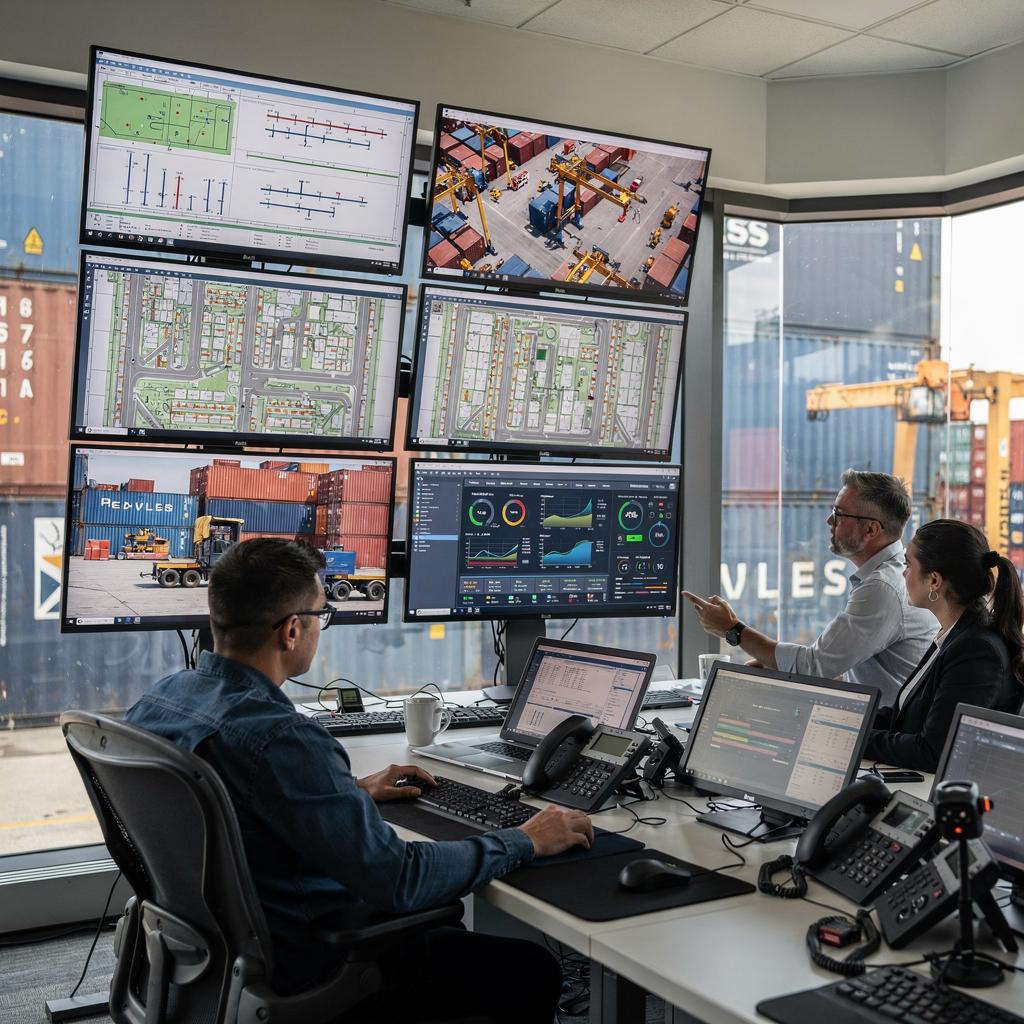
Drowning in a full terminal with replans, exceptions and last-minute changes?
Discover what AI-driven planning can do for your terminal
Container terminal gate congestion: Key challenges
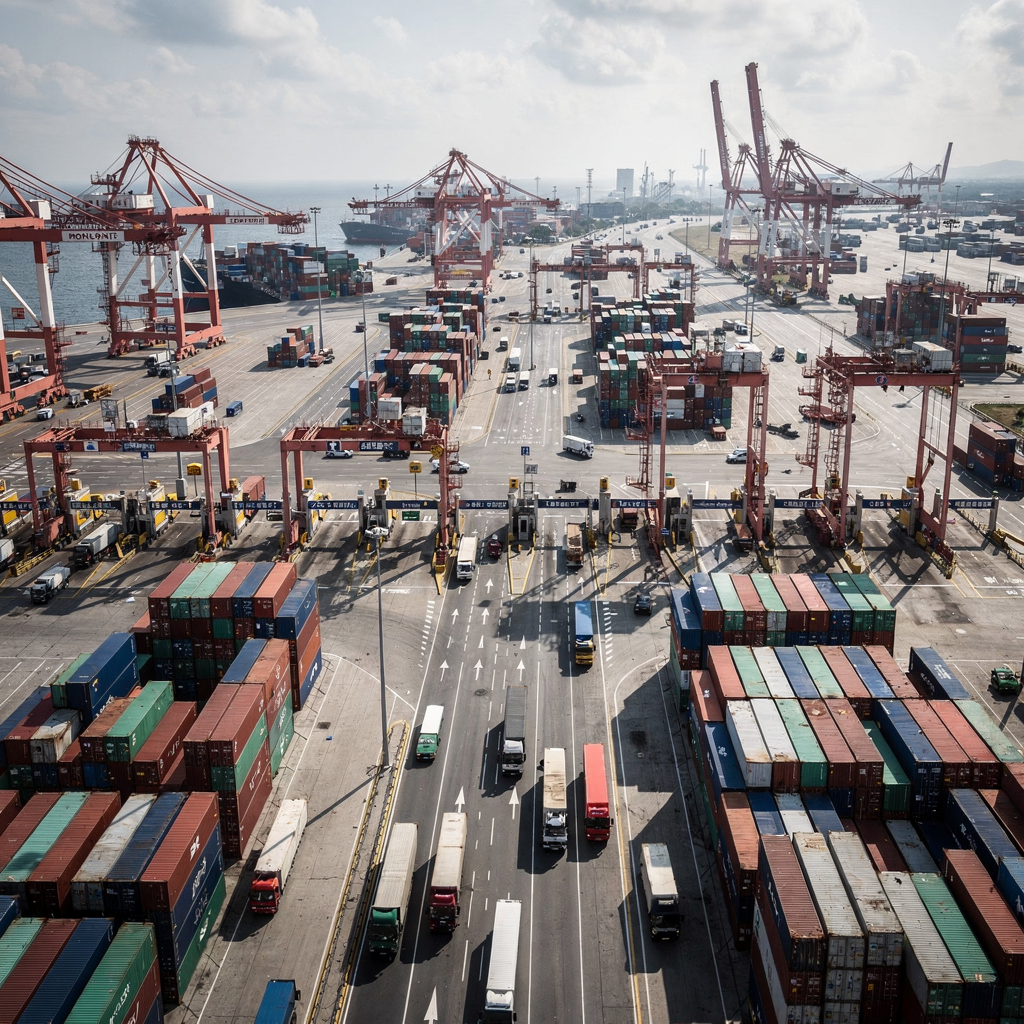
First, map a typical gate workflow. Truck drivers arrive with paperwork and electronic manifests. The gate system verifies identity, container number, and release authorization. Next, an operator authorizes the move and directs the truck into the terminal. Then, the container is moved from the gate to a yard slot or to a quay crane for loading. Delays can occur at any step, and a single hold-up creates a queue outside the gate.
Second, list typical bottlenecks. Slow document checks, mismatched data between shipping lines and terminals, and manual seals inspections cause frequent stops. Also, limited gate lanes and insufficient staff during peak windows lead to queues that slow truck drivers and block access roads. In many ports, inefficient booking systems and no-shows create unpredictable arrival patterns that compound congestion. Indeed, port congestion often originates from disconnected systems and uncoordinated arrivals that overload gate capacity.
Next, quantify the impact. Gate congestion raises demurrage charges and reduces terminal throughput. Studies show that port congestion can increase dwell times by 20–30%, which directly increases storage costs and operational expenses for carriers (Maersk). Additionally, busy terminals report throughput reductions of up to 15% during severe congestion periods (TRB). These figures show how costly delays can be for the entire supply chains and for shippers who need consistent arrival and departure windows.
Then, examine human error and manual checks. Manual gate inspections introduce variability and human error. For example, incorrect container numbers or misplaced documentation force manual reconciliations that hold up entire lanes. Also, inconsistent operational rules across shifts create unpredictable queue patterns. Terminal automation and better operating systems reduce that exposure, therefore they help minimize mistakes while raising productivity and reducing idle time for cranes and trucks.
Gate operations optimization in smart port environments
First, introduce smart port concepts. A smart port uses IoT tags on trucks, automatic container identification, and real-time tracking to connect physical flows with digital decision-making. For example, tags on trucks and gates let terminals track arrival and departure times with accuracy, which helps manage queue length. In addition, smart port features improve air quality by reducing idle trucks and lowering increased fuel consumption that happens during long waits.
Second, describe optimisation tools. Digital documentation and electronic release reduce paperwork delays and avoid delays at the gate. Predictive analytics provide congestion forecasts and suggest sequencing to avoid peak overlaps. Real-time dashboards show yard density and berth status so a TOS can reassign tasks to reduce bottleneck formation. Also, arrival segmentation and appointment systems smooth peak periods and help terminals avoid spikes that overwhelm gate lanes. These strategies to optimize gate operations help alleviate congestion and improve overall terminal performance.
Next, list process improvements that deliver quick wins. Extended gate hours and staggered appointment windows spread demand beyond narrow peak periods. Additionally, checkpoints outside the main gate let drivers complete administrative steps before entering, which cuts queue times. Implementing digital pre-clearance and standardized electronic manifests greatly helps avoid last-minute rejections. For more advanced implementations, terminals can integrate inter-terminal truck tracking systems to streamline trucker routes and reduce traffic congestion around busy yards (inter-terminal truck tracking).
Then, note environmental and operational benefits. Reducing IDLE time at gates lowers fuel consumption and improves air quality near terminals. Also, better sequencing increases throughput and reduces operational inefficiencies in quay and yard operations. For terminals looking to scale, combining smart port hardware with improved TOS modules and AI agents helps automate routine choices while preserving operator control.
Drowning in a full terminal with replans, exceptions and last-minute changes?
Discover what AI-driven planning can do for your terminal
Case study: Reduce port congestion with automation and TOS
First, present the case study context. Rotterdam faced chronic peaks and long queues at its terminal gates, and operators sought solutions that could reduce bottlenecks while protecting quay productivity. The project combined advanced TOS upgrades, terminal automation of gate processes, and tighter coordination with carriers. After deployment, the terminal saw measurable improvements in gate throughput and reduced detention fees.
Second, show concrete results. The upgraded terminal operating system shortened wait times at the gate and raised daily truck throughput. For instance, the port reported shorter truck turnaround and a visible drop in demurrage, which helped reduce costs for shippers and carriers. Also, automation of the gate system reduced manual checks and improved data accuracy, which cut the number of rejected arrivals and helped avoid delays. Those improvements support the idea that systems can help when combined with process change and operator training.
Next, extract best practices for phased implementation. First, start with a pilot in a single gate lane. Second, integrate a TOS upgrade that supports real-time data and links with external shipping lines. Third, deploy automation in stages, and use simulation to test outcomes before full rollout. Tools like digital twins and simulation-based capacity planning allow terminals to test policies safely; see resources on using simulation for capacity planning (simulation for capacity planning). Importantly, Loadmaster.ai’s multi-agent AI approach can be trained in a sandbox environment to optimize trade-offs between quay cranes and yard moves without needing clean historical data.
Then, list lessons learned. Coordination with truck drivers and carriers is essential, and appointment systems should be enforced with clear incentives. Also, adding more physical lanes helps, but only when paired with smarter scheduling; otherwise, additional lanes can quickly fill and become a new bottleneck. Finally, leadership must invest in change management so terminal operators adopt new digital workflows and improve efficiency across shifts.
Container handling: Terminal operating and operating systems to tackle inefficiency
First, link yard operations with gate processes. Container handling flows start at the gate and end at the berth or export stack, and any disconnect reduces throughput. A TOS that synchronizes yard placement, crane schedules, and gate reservations removes unnecessary trips and rehandles. For that reason, integrating terminal operating with yard control helps minimize driving distances and balance equipment workload. Also, policies that prioritize near-term moves while protecting future plans can reduce rehandles and keep cranes productive.
Second, recommend integrated systems for end-to-end visibility. Combining TOS capabilities with real-time analytics and AI-driven planning provides a single view of arrival and departure lists, yard occupancy, and berth allocation. Additionally, integration supports resource allocation decisions that protect quay performance while easing gate pressure. For terminals looking to scale AI across port operations, multi-agent approaches coordinate stowage, yard placement, and job scheduling to optimize multiple KPIs simultaneously (multi-agent AI).
Next, advise on KPIs and continuous monitoring. Key performance indicators should include turnaround times, moves per crane hour, queue length at peak periods, and container dwell. Monitoring these KPIs in real-time enables rapid responses that reduce bottleneck formation. Also, continuous modelling and what-if analytics let teams tweak allocation and scheduling policies without risking day-to-day operations; see guidance on real-time replanning capabilities (real-time replanning).
Then, give operational recommendations. First, use appointment systems and extended gate hours when needed. Second, deploy tags on trucks and automatic identification to cut manual checks. Third, align berth windows with crane planning to avoid idle periods and protect quay productivity. Finally, measure results and iterate, because improving operational efficiency is an ongoing task. If implemented correctly, these strategies help reduce port congestion, reduce costs, and improve overall terminal resilience so the entire supply chain benefits.
FAQ
What causes port congestion at container terminals?
Port congestion often stems from mismatched arrivals, limited gate capacity, and paperwork delays. Also, peak periods and uncoordinated carrier schedules can overwhelm terminal resources and create bottlenecks.
How does a terminal operating system help reduce congestion?
A TOS schedules moves, controls yard placement, and coordinates equipment to improve operational efficiency. In addition, a modern TOS linked with real-time data can dynamically reallocate resources to minimize queues and idle time.
Can automation really reduce wait times for truck drivers?
Yes. Automated gate systems and digital pre-clearance cut manual processing and speed verification. Consequently, wait times fall and truck drivers spend less time in queues.
What role does real-time data play in gate operations?
Real-time data informs dynamic decision-making about yard density, gate arrivals, and berth status. Therefore, terminals can predict congestion and adjust resource allocation before queues form.
Is expanding physical gate lanes enough to fix congestion?
Expanding lanes helps but is not a complete solution. Without better scheduling and TOS-driven allocation, new lanes can fill quickly and create new bottlenecks.
How do appointment systems affect terminal performance?
Appointment systems stagger truck arrivals and smooth peak periods. As a result, they reduce the length of queues and improve throughput when enforced alongside digital pre-clearance.
What quick wins can terminals implement to reduce bottlenecks?
Quick wins include digital documentation, pre-clearance checkpoints, and extended gate hours. Also, tagging trucks and automating container identification can immediately reduce manual checks.
How does automation impact operational expenses and fuel consumption?
Automation reduces idle times and unnecessary vehicle movements, so it lowers fuel consumption and operational expenses. Moreover, it improves air quality by shortening queues and cutting emissions near the yard.
Why is simulation useful before rolling out new gate policies?
Simulation creates a safe environment to test operational changes and measure effects on throughput and turnaround times. Using a digital twin avoids costly disruptions while validating new policies.
How can smaller terminals adopt these practices without large IT budgets?
Smaller terminals can start with staged upgrades: adopt digital pre-clearance, implement appointment systems, and add basic tags on trucks. Over time, integrating a TOS and selective automation provides larger benefits and helps minimize long-term costs.
our products
 stowAI
 stackAI
 jobAI
jobAI
Innovates vessel planning. Faster rotation time of ships, increased flexibility towards shipping lines and customers.
Build the stack in the most efficient way. Increase moves per hour by reducing shifters and increase crane efficiency.
Get the most out of your equipment. Increase moves per hour by minimising waste and delays.
stowAI
Innovates vessel planning. Faster rotation time of ships, increased flexibility towards shipping lines and customers.
stackAI
Build the stack in the most efficient way. Increase moves per hour by reducing shifters and increase crane efficiency.
jobAI
Get the most out of your equipment. Increase moves per hour by minimising waste and delays.