
Container Characteristics: Impact on Equipment Selection
First, container TYPE and DIMENSIONS drive the choice of handling equipment. For example, TEUs and FEUs differ in length. Therefore, crane reach and lift capacity must suit both sizes. Also, the design of container affects spreader settings and the required reach of ship-to-shore crane. In practice, terminal planners check the design of container and the capacity of a container to confirm compatibility. Next, container WEIGHT and distribution change vehicle selection. Heavy loads force different settings on straddle carriers and AGVs. As a result, operators must confirm container weight before assigning moves. This reduces the risk of equipment overload and damage.
Additionally, special containers need bespoke handling. Reefers require power points and cooling monitoring. Tank containers and hazardous cargo need tailored lifts and segregation areas. For guidance on special lifts and planning, readers can consult our note on handling special containers in container terminals (handling special containers). Also, many terminals maintain dedicated REEFER stacks and reinforced surfaces. Consequently, planning includes slotting these containers close to power and truck lanes.
Moreover, the mix of container types affects stacking policies. Tall stacks block visibility and slow yard crane cycles. Thus, automated stacking or adjusted block heights can reduce rehandles. Also, reach stackers and straddle carriers differ in footprint and speed. For example, reach stackers offer flexible stacking in congested yards. In contrast, straddle carriers work well in wide terminal layouts with long transfer runs. Therefore, the design of yard areas and container locations must match the chosen equipment.
Finally, the planning team must balance many trade-offs. They match container characteristics with crane productivity goals and berth planning windows. They also coordinate with workforce planning and vessel planning to ensure safe lifts. For insights on stowage choices that affect crane work, see our guide to stowage planning (stowage planning). Loadmaster.ai uses reinforcement learning agents that account for container type, weight, and special handling needs when recommending QC and yard allocations. This approach helps terminals choose the right handling equipment and reach the right balance between speed and safety.
Container Terminal Planning: Goals and Key Metrics
Container terminal planning defines measurable aims. First, terminals set targets for vessel turnaround times. The goal often moves from multi-day calls to single-day calls. For example, many terminals work to reduce calls from 48 h to under 24 h through optimal QC allocation. Next, planners track crane productivity. Top terminals aim for 30+ moves per hour per quay crane; this benchmark helps compare performance and set staffing levels Key Findings On Terminal Productivity Performance Across Ports. Also, container dwell time is a key KPI. Better planning and terminal automation can cut dwell time by 20–30%, which frees yard capacity and speeds the container flow Container Terminal Automation and its Benefits explained.
Furthermore, throughput and yard density work together. High yard density increases stacking containers and raises rehandle risk. Therefore, planners track container storage and stacking carefully. They use indicators like average stack height and percentage of full stacks. Additionally, terminal capacity planning uses digital twins to model different scenarios. For a technical treatment of capacity models, see our article on capacity planning using digital twins in terminal operations (capacity planning using digital twins).
Also, port and intermodal links affect metrics. When ships arrive at the port later than planned, berth windows slip and berth planning must adapt. Consequently, operations planning includes reserve capacity for peaks and delays. Terminal operators must also consider gate throughput. Peak gate demand can increase dwell time and erode crane productivity. In short, the job of any terminal is to balance quay work, yard operations, and gate flow. Hence, successful terminals measure KPIs across all these domains, and they use planning software and operational planning to keep performance stable.
Finally, the right targets allow terminals to optimize labor and assets. For example, improved allocation of quay cranes and yard crane shifts reduces idle time. Also, integrating predictive maintenance with planning software lowers unexpected downtime. Terminals that combine solid targets with smart tools see measurable gains in terminal efficiency and container throughput.
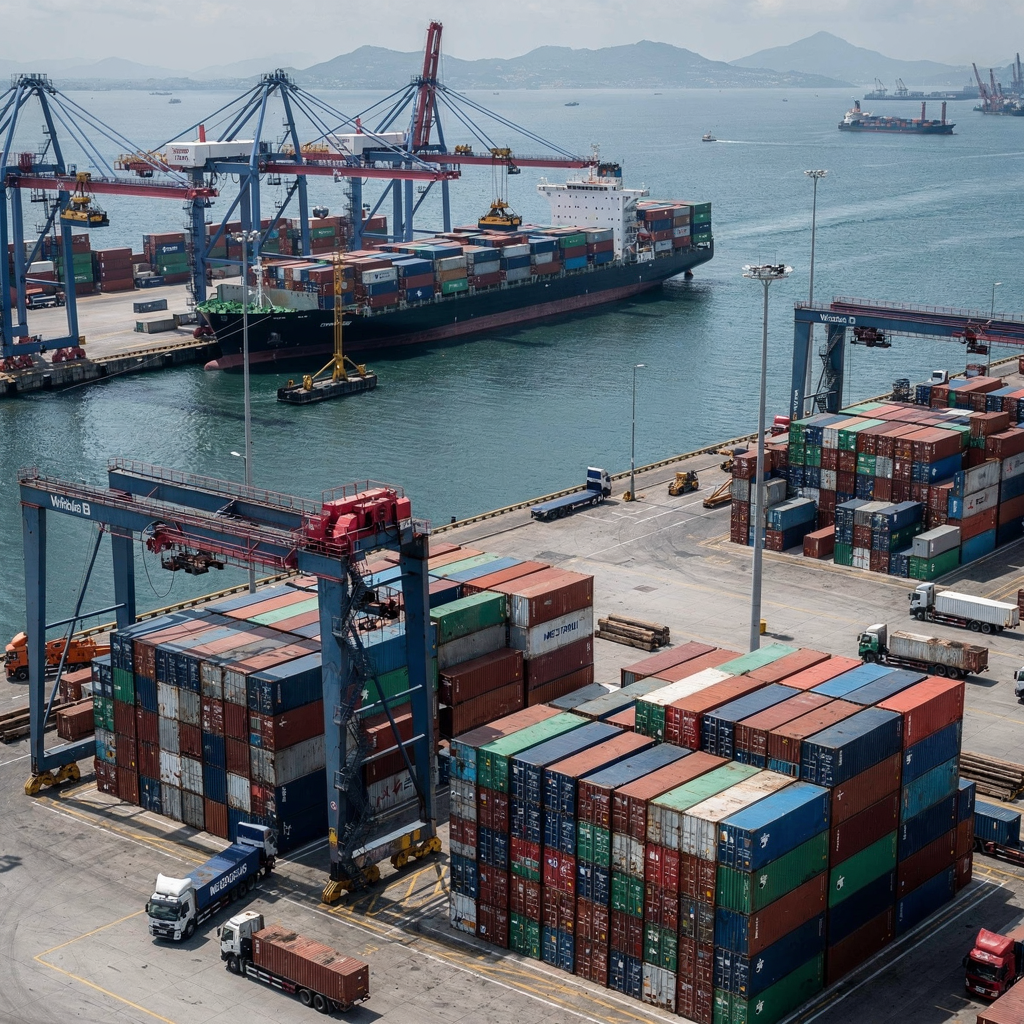
Drowning in a full terminal with replans, exceptions and last-minute changes?
Discover what AI-driven planning can do for your terminal
Terminal Operation: Scheduling and Resource Management
Quay crane assignment must align with vessel operations and berth planning. Planners allocate QCs to ships to minimize crossing and shifters. First, they create a shift roster that covers expected peak moves. Then, they reserve windows for maintenance. This prevents unexpected stoppages during critical unload cycles. Moreover, teams use quay and berth data to phase crane movements smoothly. For complex stow plans they often coordinate with vessel planning tools. To learn more about vessel-focused decisions, review our material on vessel planning and stowage (vessel planning and stowage).
Yard crane dispatch must prioritise retrievals efficiently. For example, when trucks and trains require specific containers, the yard crane sequence must minimise walking and shifters. Also, yard management systems send real-time job queues to yard crews. They reduce conflicts between stacking and retrieval. Consequently, terminals using automated signals manage peak gate waves better. In parallel, tractor and straddle carriers follow optimized routes. They aim to move containers with minimum empty travel, which reduces fuel use and emissions. This also supports broader port logistics targets.
Furthermore, terminals must match equipment to tasks. When container cranes work at full rate, trucks must deliver and collect containers without delay. Coordinated scheduling therefore matters. Terminal equipment like reach stackers and straddle carriers require different parking and charging plans. Also, deployment must consider workforce planning. Skilled operators and maintenance crews need clear shifts. As a result, terminals that blend strong scheduling with real-time dispatch reduce idle time and improve productivity.
Finally, technology helps. Terminal operating systems and planning software give supervisors visibility. They allow quick reallocation of cranes when vessels change ETA. This cuts the firefighting that occurs in many ports. Loadmaster.ai’s multi-agent approach shows how closed-loop decision-making can stabilise daily operations. It helps terminal operators balance quay productivity against yard congestion, and it minimises unnecessary rehandles while keeping moves moving.
Operations Planning: Models and Real-Time Data Integration
Static vs dynamic planning presents a clear choice. Static plans use historical rules and fixed allocations. They work in stable conditions. However, most terminals face frequent disruption. Therefore, dynamic planning that adapts in real time gives better outcomes. For instance, dynamic operations planning can react to sudden volume surges and optimise allocation on the fly. An industry study noted that “Dynamic operations planning integrated with the quotation-booking process allows terminals to adapt quickly to changing conditions, maximizing equipment utilization and profitability” dynamic operations planning quote.
Predictive analytics enhance planning further. They forecast arrival patterns and equipment demand. For example, forecasting tools predict peaks in container flow and advise pre-positioning of yard crane capacity. Also, predictive maintenance reduces unexpected breakdowns. In fact, terminal operating systems that integrate telemetry show equipment health and schedule repairs before failure. Konecranes reports that TOS integration can reduce idle time by about 15–25%, which directly improves throughput Container Terminal Operating System (TOS).
Moreover, integration with booking systems smooths gate and berth alignment. When shipping lines update ETAs, the system reallocates quay cranes and gate slots accordingly. This reduces waiting for trucks at terminal gates. Also, better data links speed decision cycles and lower manual errors. For terminals exploring a digital twin route, our article on digital twin integration with container terminal operating systems offers practical steps (digital twin integration).
Finally, modern approaches combine multiple models. They mix simulation, optimization, and reinforcement learning. Closed-loop agents run many simulated trials and learn robust policies without relying on imperfect history. Loadmaster.ai trains RL agents in a sandbox digital twin and deploys them with operational guardrails. This method helps terminals adapt to new vessel mixes and avoid brittle rules. As a result, terminals can handle uncertainty with less firefighting and more predictable performance.
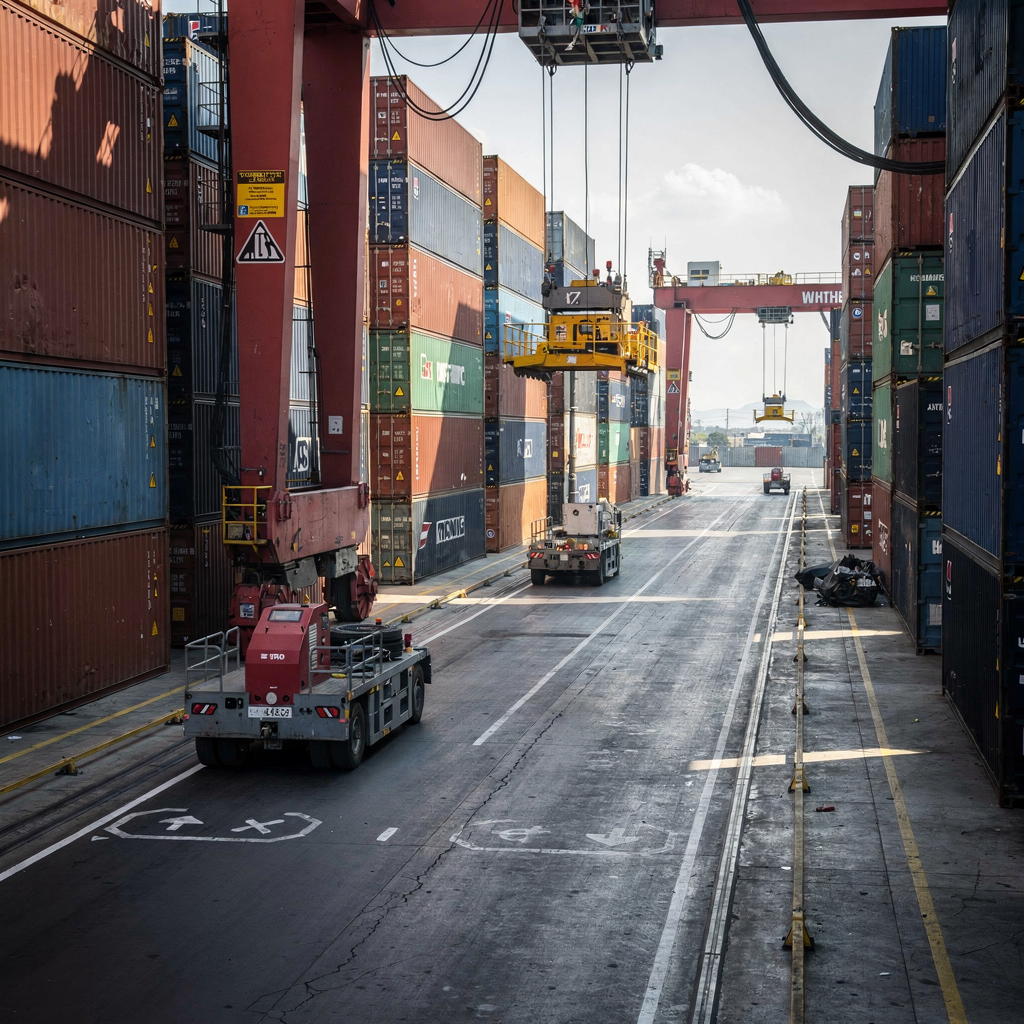
Drowning in a full terminal with replans, exceptions and last-minute changes?
Discover what AI-driven planning can do for your terminal
Optimize Throughput: Leveraging Terminal Operating Systems
Terminal operating systems provide essential control. They offer automated scheduling, KPI dashboards, and exception alerts. First, the TOS centralises information on vessels, gates, and yard status. Then, it issues tasks to cranes and trucks. Also, the TOS captures billing events so terminals capture revenue for all moves. For a practical framework on configuring a TOS for performance, see our guide on optimizing container terminal TOS configuration (optimizing TOS configuration).
Furthermore, good TOS implementations reduce idle time. Industry data suggest integrated systems cut equipment idle time by about 15–25% through better deployment TOS reduces idle time. Also, automation in handling technology helps lower dwell and labour costs. Automated stacking cranes and AGVs contribute in fully automated yards. For example, terminals that automate core flows often report around 20% lower operating costs, particularly in labour and fuel.
Additionally, terminal operating systems support planning software and operations planning. They feed live telemetry to planners and to AI agents. Loadmaster.ai integrates with TOS via APIs to run closed-loop allocation agents. Our JobAI coordinates moves across quay, yard, and gate to cut wait times. Also, StowAI and StackAI align vessel planning with yard placement to minimize rehandles and balance workloads. Consequently, terminals gain more predictable throughput and better terminal efficiency.
Finally, smart use of the TOS connects to the wider supply chain and port logistics. Integration with shipping lines and hinterland partners smooths intermodal handoffs. Thus, terminals can optimize resource allocation to reduce turnaround times. When the TOS acts as the source of truth, terminals can scale complex operations while protecting service levels and maintaining safe, compliant work.
Terminal Yard Layout: Space Management and Equipment Flow
Block stacking and lane stacking present trade-offs. Block stacking gives high yard density. However, it raises the risk of rehandles. Lane stacking offers faster access. But it uses more space. Terminal layout choices therefore affect stacking containers, equipment routing, and yard operations. Terminals often choose a hybrid approach. In addition, automated stacking systems must match stack footprints. For terminals exploring automated stacking, careful design of terminal layout and stack heights matters.
Traffic lanes and parking bays shape equipment flow. Clear lanes reduce conflicts between straddle carriers, tractors, and reach stackers. Also, well-placed parking reduces driving distances and idle time. For terminals aiming to lower energy use, shorter driving routes matter. In practice, planners map the yard to minimise travel while preserving safe separation. Terminal yard design also includes buffer zones and maintenance stands. These areas allow quick swaps when an asset breaks down.
Maintenance stands and buffer zones preserve availability. They give crews a place to refuel and repair without blocking operations. Also, buffer zones near quay and gates smooth temporary surges. For instance, when a vessel unload spikes, a short buffer reduces immediate pressure on yard cranes. Moreover, yard management systems track container locations and predict congestion spots. This improves retrieval speed and supports stowage planning. For technical steps on reach stacker job prioritisation and reducing rehandles, see our reach stacker guide (reach stacker prioritisation).
Finally, terminal capacity relies on coordinated layout and equipment selection. Yard planning must consider container terminal design, terminal processes, and the expected container throughput. Smart ports design the terminal yard to match handling systems, terminal assets, and operational planning rules. As a result, the yard becomes an enabler of higher throughput and lower operating cost, not a bottleneck that limits berth productivity.
FAQ
What determines the choice of quay cranes for a terminal?
The primary factors include ship sizes, container type mix, and berth depth. Also, planners consider reach, lift capacity, and expected crane productivity to match vessel operations.
How do terminals reduce container dwell time?
Terminals reduce dwell time by improving gate processing, aligning truck slots with vessel schedules, and optimizing yard retrieval. Additionally, automation and better stacking policies can cut dwell time by 20–30% Container Terminal Automation and its Benefits explained.
Why is real-time data integration important for operations planning?
Real-time data let planners adapt to ETA changes, equipment faults, and gate surges quickly. Therefore, dynamic planning reduces firefighting and improves allocation of terminal equipment.
What role do yard management systems play?
Yard management systems track container locations and queue jobs for yard crane dispatch. They help prioritise retrievals to match truck and rail departures and to minimize rehandles.
Can automation replace human planners?
Automation can augment planners but not entirely replace them in most terminals today. Systems and AI agents support decision-making, reduce errors, and handle routine reallocations, while humans manage exceptions.
How do terminals handle special containers like reefers or tanks?
Terminals assign dedicated stacks, power points, and handling protocols for reefers and tank containers. Specialized handling equipment and trained crews ensure safe, compliant moves. For more on this topic, see our guide to handling special containers (handling special containers).
What metrics define crane productivity?
Moves per hour per quay crane is a common metric. Top-performing terminals target 30+ moves per hour per quay crane productivity benchmark. Other metrics include crane idle time and effective working windows.
How does Loadmaster.ai improve terminal performance?
Loadmaster.ai trains RL agents in a digital twin to optimise QC planning, yard placement, and dispatcher jobs. The approach reduces rehandles, balances workloads, and makes performance consistent across shifts.
What are common yard layout choices and their trade-offs?
Block stacking maximises density but increases rehandles. Lane stacking improves accessibility but lowers capacity. Many terminals use hybrid designs to balance density and speed.
How do terminals integrate booking systems with operations?
Terminals integrate booking and ETA feeds into the TOS to align berth planning and gate slots. This reduces truck waiting and synchronises vessel planning with yard operations. For details on system integrations and digital twin approaches, see our article on digital twin integration with container terminal operating systems (digital twin integration).
our products
 stowAI
 stackAI
 jobAI
jobAI
Innovates vessel planning. Faster rotation time of ships, increased flexibility towards shipping lines and customers.
Build the stack in the most efficient way. Increase moves per hour by reducing shifters and increase crane efficiency.
Get the most out of your equipment. Increase moves per hour by minimising waste and delays.
stowAI
Innovates vessel planning. Faster rotation time of ships, increased flexibility towards shipping lines and customers.
stackAI
Build the stack in the most efficient way. Increase moves per hour by reducing shifters and increase crane efficiency.
jobAI
Get the most out of your equipment. Increase moves per hour by minimising waste and delays.