
container terminal operations and port capacity challenges
First, rising volumes of global trade push TERMINAL teams to handle more TEUs without expanding footprints. Next, ports face simultaneous pressure at gates, quayside and yards as shipping lines call with larger vessels and tighter schedules. Also, congestion at gates and quayside creates costly DELAY and higher demurrage fees. For example, recent intermodal data highlights growth trends that increase pressure on existing infrastructure and sequencing across the supply chain The Ultimate Guide To Latest Intermodal Container Stats In 2025. Therefore, terminals must rethink how they plan and operate that flow.
Traditional planning methods rely on rule-based spreadsheets and manual sequencing. As a result, they struggle to balance vessel schedules, yard space and equipment availability in a dynamic environment. In practice, that imbalance causes domino effects. For instance, a late vessel arrival can cascade into truck queues, longer truck turnaround and an uptick in demurrage. Also, uneven crane allocation lengthens vessel turnaround and reduces overall PORT OPERATIONS efficiency.
Furthermore, terminal OPERATIONS require coordination among multiple stakeholders. These include shipping lines, truck operators, rail carriers and customs. Each stakeholder needs clear visibility. Also, terminal operators must make quick allocation decisions about cranes, yard handlers and gate lanes. Yet they often lack unified decision support and real-time inputs. Consequently, errors in container placement and misrouted moves increase unnecessary handling and costs.
Therefore, operators now look to advanced decision support systems to optimize capacity planning. Also, they seek solutions that combine historical performance, vessel schedules and live equipment status. For terminals that adopt such tools, the aim is to reduce truck dwell, improve container handling and free constrained yard space. Additionally, linking gate optimization and quay crane productivity helps reduce delays and smooth container traffic. For readers who want examples of gate and quay improvements, see container terminal gate optimization and optimizing quay crane productivity for deeper context container terminal gate optimization explained and optimizing quay crane productivity in container terminals.
Finally, the current challenge is operational, not only physical. In short, TERMINAL OPERATIONS must run smarter so ports and terminal complexes can manage growing cargo volumes without always building new acreage. Also, improved visibility into yard operation and cargo flows helps terminal operators plan capacity more accurately. Thus, optimization becomes the route to handling growth while limiting capital spend and reducing DELAY across the ecosystem.
ai-driven optimization in container terminal capacity planning
First, AI transforms capacity planning by ingesting large, diverse feeds about vessel ETAs, container volumes and equipment availability. Then, AI algorithms process that real-time data to produce schedules that better match demand with supply. Also, predictive analytics forecast busy windows and suggest optimal moves before congestion appears. For example, terminals deploying AI-driven scheduling report measurable throughput gains in the 10–15% range, which allows existing infrastructure to handle more cargo without major expansion The Ultimate Guide To Latest Intermodal Container Stats In 2025. In addition, industry studies show equipment utilization gains of 12–18% when allocation follows AI recommendations Decoding Demurrage and Enhancing Shipping Logistics With AI.
Next, AI in container terminal planning uses predictive models to allocate cranes, trucks and yard handlers. Also, these models simulate alternative schedules and score them on throughput and cost. As a result, terminal operators choose sequences that minimize moves and reduce idle equipment. Similarly, AI-based solutions can optimize the shift roster to match peak demand and lower overtime. In practice, that reduces operating cost and improves customer satisfaction.
Additionally, advanced AI systems integrate real-time events with historical patterns to spot trends and anomalies. For instance, machine learning models can identify repeat causes of congestion and then propose enduring fixes. Also, these models support capacity planning by showing when storage density needs to be increased or when empty container pools need rebalancing. The integration of AI with the existing terminal operating system enables this unified view and faster decision-making while preserving TOS governance.
Furthermore, combining AI with digital twins and simulation lets planners test “what if” scenarios. For example, an AI-driven simulation can assess the impact of a late arrival, then recommend a re-sequence that limits vessel dwell and truck queues. Also, human planners retain control through configurable rules, while AI provides actionable options. For more on how AI models predict yard density and support dynamic equipment allocation see related resources on yard density prediction and dynamic equipment pool allocation AI models for deepsea container port yard density prediction and dynamic equipment pool allocation.
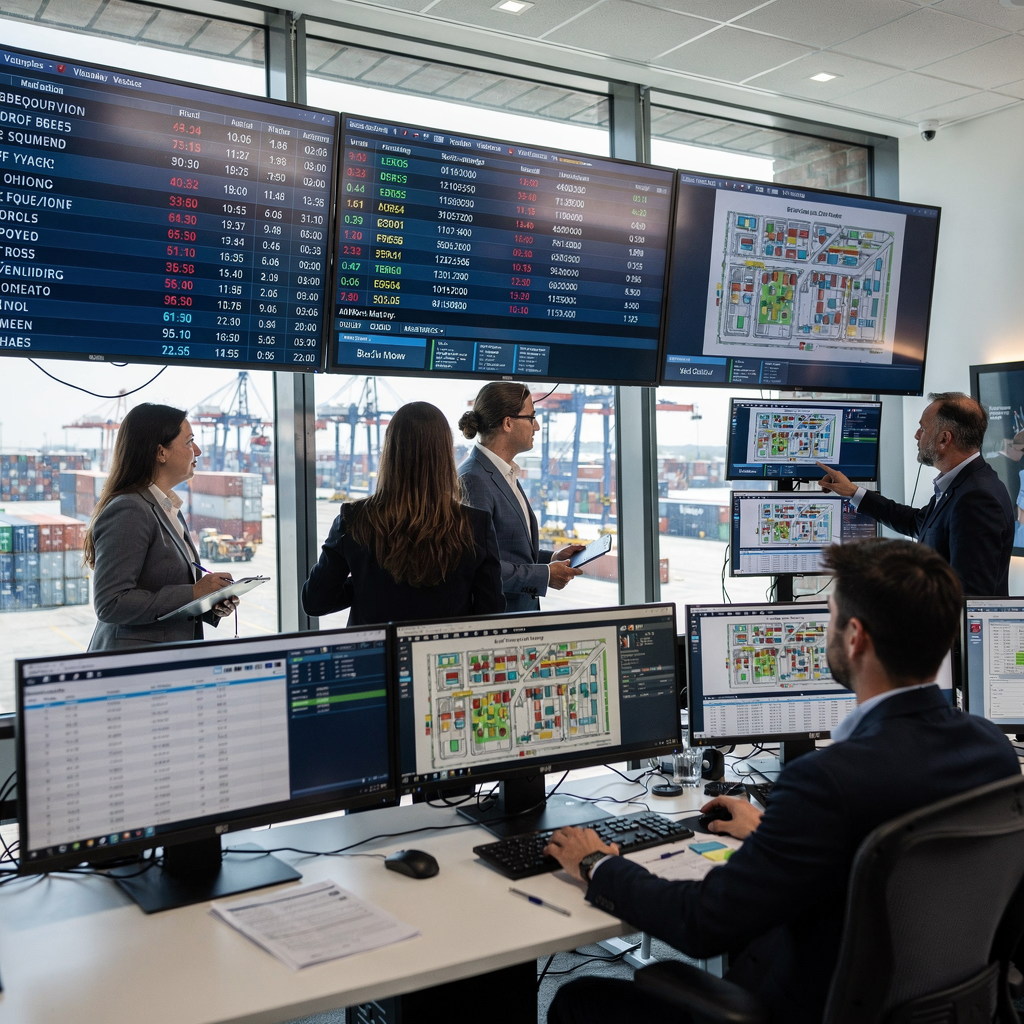
Finally, AI in container planning does not replace operators. Instead, it augments operator decisions and speeds execution. Also, AI-driven recommendations reduce cognitive load on staff so they can focus on exceptions. In short, AI helps to optimize container flow, maximize throughput and make capacity planning far more resilient.
Drowning in a full terminal with replans, exceptions and last-minute changes?
Discover what AI-driven planning can do for your terminal
real-time yard operation and container stacking with artificial intelligence
First, real-time sensors and IoT devices provide continuous feeds from cranes, RTGs and gate scanners. Next, AI systems fuse that real-time data with historical data to maintain an accurate yard map. Also, that visibility helps planners optimize container stacking, reduce needless moves and create space for incoming vessels. For example, intelligent container stacking reduces relocation moves by grouping containers based on planned retrieval windows and avoidable shuffles. In this way, terminals free up critical space while minimizing equipment hours.
Additionally, real-time yard operation management supports faster decisions at the lane, block and stack level. AI algorithms evaluate container handling priorities and suggest the best lane for incoming export boxes. Also, AI flags potentially conflicting moves so yard planners can reorder tasks to maintain flow. Consequently, terminals experience fewer bottlenecks and shorter truck queues at peak times.
Moreover, predictive alerts let staff re-route containers before congestion forms. For instance, when the AI detects a rising density trend in a block, it recommends alternative stacking to avoid stacking too deep. Also, early warnings help avoid dangerous stacking heights and reduce the risk of rework. As a result, container yard throughput remains stable even as traffic spikes.
Furthermore, combining AI with automated container handling equipment and guided drivers accelerates execution. Also, semi-autonomous moves guided by AI produce consistent results and protect against human errors in busy shifts. For those exploring yard congestion models, predicting yard congestion in terminal operations offers examples of algorithms and metrics used in deployment predicting yard congestion in terminal operations.
Finally, IoT-driven visibility enhances collaboration among stakeholders. For example, gate operators, vessel planners and truck dispatchers all see synchronized yard states. Also, linking this visibility with email automation tools reduces manual coordination. As a result, staff respond faster and errors in container placement drop. Overall, real-time yard operation combined with AI delivers smarter STACK control, steadier throughput and higher utilization of yard assets.
implementing ai and ai implementation in container port systems
First, successful AI implementation begins with data. Also, data quality and consistency determine model accuracy. Therefore, terminals must clean, standardize and timestamp key feeds before AI rollout. Next, integration matters: AI must integrate with existing terminal operating system and with other operational tools for seamless decision flow. For example, planners should see AI recommendations inside their familiar TOS screens rather than switching tools. In addition, event-driven API architectures can support this real-time exchange and ease deployment event-driven API architectures for container terminals.
Moreover, system interoperability presents challenges. Terminal systems vary by vendor and by local workflow. Also, historical integrations are often brittle and require rework. Therefore, IT and business teams must define clear integration paths and a robust cutover plan. For those preparing migrations, data consistency and cutover planning for TOS migrations outlines typical risks and mitigations data consistency and cutover planning for TOS migrations. Additionally, phased roll-outs reduce exposure. Start with non-critical blocks, then expand as confidence grows.
Next, people and change management matter. Training terminal operators, supervisors and planners ensures that AI recommendations get accepted and used. Also, governance must define who overrides AI and how feedback improves models. For example, an operator should be able to flag poor recommendations so the algorithm learns. In addition, involving stakeholders early—stevedores, trucker associations and rail partners—ensures smoother adoption and shared rules across the ecosystem.
Furthermore, measure success with clear KPIs. Track throughput, moves per hour, equipment utilization and demurrage reductions. For instance, many terminals measure TURNAROUND improvements and reduced DELAY to justify ongoing investment. Likewise, integrate AI monitoring to detect model drift and schedule retraining. Also, keep a secure, auditable trail of decisions for compliance and review.
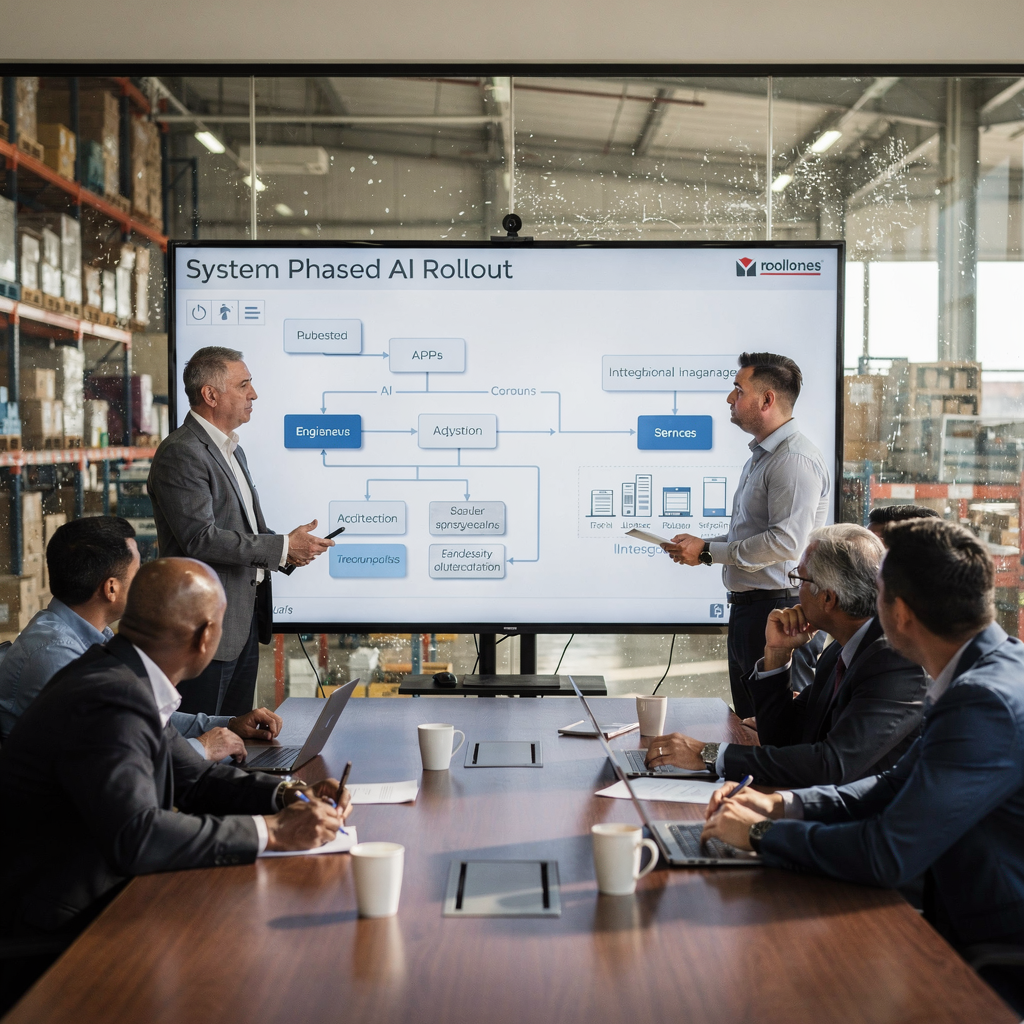
Finally, IT should preserve control. Use role-based access, logging and an approval pipeline for model changes. Also, align AI deployment with business rules so systems remain predictable. In short, thoughtful integration, structured rollout and strong governance achieve practical AI benefits for ports and terminal operations.
Drowning in a full terminal with replans, exceptions and last-minute changes?
Discover what AI-driven planning can do for your terminal
benefits of ai in container terminal logistics and optimization
First, AI delivers measurable financial gains. For example, AI-based planning has helped terminals lower demurrage costs by up to 20–30% through smoother container flows and reduced dwell Decoding Demurrage and Enhancing Shipping Logistics With AI. Also, AI optimization enables higher throughput—often reported in the 10–15% range—so terminals use existing infrastructure more effectively The Ultimate Guide To Latest Intermodal Container Stats In 2025. In addition, terminal productivity gains of 8–12% moves per hour have been observed after AI integration, helping ports handle peak surges without dramatic staff increases Decoding Demurrage and Enhancing Shipping Logistics With AI.
Next, equipment utilization improves. AI-driven allocation raises utilization by 12–18% for cranes and yard handlers, which reduces idle time and lowers operating cost. Also, better allocation reduces unnecessary container movements and keeps quay productivity high. As a result, terminal operators can plan maintenance windows more predictably and avoid costly overtime.
Additionally, AI increases visibility and decision speed. Real-time and historical data feed models that spot patterns in the logistics supply and trigger pre-emptive actions. For instance, predictive alerts can re-sequence work to avoid condensation of loads in a single block. Also, the use of machine learning models helps to spot anomalies and errors in container documentation or tracking before they cause a DELAY. Furthermore, logistics experts report that combining prediction with human oversight improves customer satisfaction by ensuring more reliable delivery windows How AI is Transforming Global Freight Forecasting – SEKO Logistics.
Moreover, environmental and operational advantages emerge. AI enables green scheduling and energy-efficient job allocation, which reduces fuel and power consumption during peak shifts. Also, better stacking and fewer moves lower crane fuel use and emissions. For more on energy-aware allocation, see resources on energy-efficient job allocation in port operations energy-efficient job allocation in port operations.
Finally, AI-based solutions improve resilience. When disruptions occur, such as weather or berth delays, advanced AI systems propose recovery sequences that limit knock-on effects. Also, operators retain control through configurable rules while AI suggests optimized responses. In sum, AI helps terminals reduce demurrage, increase throughput and improve operational predictability—so ports and logistics partners gain both cost and service benefits.
future of maritime logistics: ai in container terminal and stack utilization
First, the future of maritime logistics will include wider adoption of digital twin and autonomous systems. Also, digital twin models create a living replica of the yard and quay so planners can simulate stress cases before real events. Next, autonomous yard vehicles and automated container handling promise additional efficiency and lower labor exposure in repetitive moves. In addition, advanced AI and machine learning will coordinate mixed fleets of manned and automated assets.
Furthermore, stack utilization will advance through better predictive stack planning and precision retrieval. AI continues to improve by learning from prior seasons and spotting patterns in the logistics supply. Also, the integration of AI with container tracking and real-time sensors will reduce errors in container identification and minimize rehandles. As a result, terminals can increase density without sacrificing throughput or safety.
Moreover, green scheduling will become mainstream. AI can schedule work to flatten power peaks, reduce diesel generator spikes and align heavy moves with renewable availability. Also, better planning reduces empty container repositioning and optimizes empty container pools to minimize wasted moves. Overall, these changes support both operational and sustainability goals for global port operations.
Next, competitive edge will come from combining decision support systems with human expertise. For example, ports that blend AI prediction with experienced operator judgment will see faster, more accurate responses to disruptions. Also, collaborative ecosystems that allow data sharing across carriers, terminals and inland transport will yield system-wide improvements for the logistics supply chain.
Finally, practical steps forward include focused AI trials, clear KPIs and investment in human-AI collaboration. For a pragmatic view on teaming humans and AI in planning, consider human-AI collaboration in terminal operations planning human-AI collaboration in terminal operations planning. Also, operational email automation can magnify the impact of AI by speeding communications about exceptions and reassignments. In short, AI-powered ports that pair advanced tools, skilled staff and strong governance will gain a lasting competitive edge in the future of container terminals and maritime logistics.
FAQ
How does AI reduce demurrage costs at a terminal?
AI reduces demurrage by forecasting container flows and recommending stacking patterns that speed retrieval. Also, predictive scheduling minimizes truck queues and reduces the days containers sit in the yard, which lowers demurrage fees.
What types of data do AI models use for capacity planning?
AI models use vessel ETAs, gate transactions, equipment telemetry and container volumes, plus historical patterns to predict demand. In addition, real-time status from cranes and yard handlers improves accuracy of recommendations.
Can AI work with existing terminal operating systems?
Yes, AI can integrate with a terminal operating system through APIs and event-driven architectures. Also, careful integration preserves governance while enabling real-time and historical data exchange for unified decision-making.
What performance gains can terminals expect from AI?
Terminals often report throughput increases of 10–15% and equipment utilization gains of 12–18%. Also, moves per hour and overall terminal productivity commonly improve by single-digit percentages, which add up quickly at scale source and source.
How do sensors and IoT help yard operation?
Sensors and IoT provide real-time visibility into container locations, equipment state and stacking density. Also, this data feeds AI so it can recommend moves that reduce relocations and free space proactively.
What are the main challenges in implementing AI at a port?
Main challenges include data quality, system interoperability and change management among staff and stakeholders. Also, terminals must define clear metrics and phase rollouts to mitigate risk.
Will AI replace terminal operators?
No, AI augments operators by automating routine planning and surfacing optimal choices. Also, human judgment remains crucial for exceptions, safety decisions and stakeholder coordination.
How does AI support environmental goals?
AI supports green scheduling and energy-efficient job allocation, which reduce fuel use and emissions by minimizing moves and optimizing equipment use. Also, AI can align heavy operations with renewable energy availability to lower carbon intensity.
Are there off-the-shelf AI solutions for container terminals?
Yes, vendors provide AI-driven planning platforms and modules for gate, quay and yard optimization. Also, many solutions allow phased deployment so terminals can pilot specific capabilities and measure impact.
How can email automation complement AI in terminal operations?
Email automation speeds operational communication by routing exceptions, drafting replies and attaching context from ERP, TOS and other systems. Also, this reduces manual triage so teams act faster on AI recommendations and maintain smoother operations.
our products
 stowAI
 stackAI
 jobAI
jobAI
Innovates vessel planning. Faster rotation time of ships, increased flexibility towards shipping lines and customers.
Build the stack in the most efficient way. Increase moves per hour by reducing shifters and increase crane efficiency.
Get the most out of your equipment. Increase moves per hour by minimising waste and delays.
stowAI
Innovates vessel planning. Faster rotation time of ships, increased flexibility towards shipping lines and customers.
stackAI
Build the stack in the most efficient way. Increase moves per hour by reducing shifters and increase crane efficiency.
jobAI
Get the most out of your equipment. Increase moves per hour by minimising waste and delays.