
Container demand forecasting and capacity assessment
Accurate demand forecasting anchors effective terminal planning. Therefore, teams should combine historical arrival patterns, trade routes, and external indicators to predict annual TEU forecasts and peak season variability. For example, ports that apply multipliers to historical flows can better plan berth expansion and equipment purchases, and the Port Planning and Investment Toolkit explains how multipliers inform capacity choices Port Planning and Investment Toolkit – MODULE 1. Additionally, long data collection windows reveal arrival patterns and berth occupancy rates, which helps verify assumptions and drive the right investment timing Monographs on Port Management – UNCTAD.
Forecasts must report model accuracy rates and include peak-season sensitivity scenarios. Thus, planners track metrics such as annual TEU forecasts, peak month TEU, and forecast error percentages. With this data, terminal planners can choose the right footprint for new quay and yard extensions. For ports handling significant transhipment, the models should also capture short-term swings in vessel calls and cargo mix. Next, teams should stress-test predictions against extreme events. Simulation and scenario analysis help verify how robust a plan remains under demand shocks.
Artificial Intelligence and predictive analytics now play an important role. For instance, machine learning can uncover seasonal patterns that a human schedule might miss, and the field shows growing use cases in port operations machine learning use-cases in port operations. However, supervised models require clean history. Loadmaster.ai uses reinforcement learning agents to train policies in a digital twin, which allows cold-start planning without depending on historic errors. Consequently, planners gain a way to produce realistic planning decisions even with limited data.
Capacity assessment must include berth space analysis. Effective berth allocation and quay crane placement depend on understanding vessel mixes. For example, larger container vessels need longer quayside availability. Therefore, design choices should reflect local trade lanes, import and export splits, and the share of empty container repositioning. Finally, maintain a rolling forecast and update it frequently. That practice reduces surprises and keeps berth allocation aligned with true demand.
Container Terminal layout and infrastructure best practices
Quay length and berth spacing drive many downstream decisions. Terminals need enough berth space to host the largest vessels that call the port, while also leaving room for smaller feeder calls. Therefore, designers evaluate the vessel mix and plan quays to avoid frequent vessel relocations. In practice, an optimal layout balances berth density with safe vessel maneuvering margins and effective gangway and pilotage access. The UNCTAD resource on port metrics provides context for long-term berth occupancy targets and layout trade-offs Monographs on Port Management – UNCTAD.
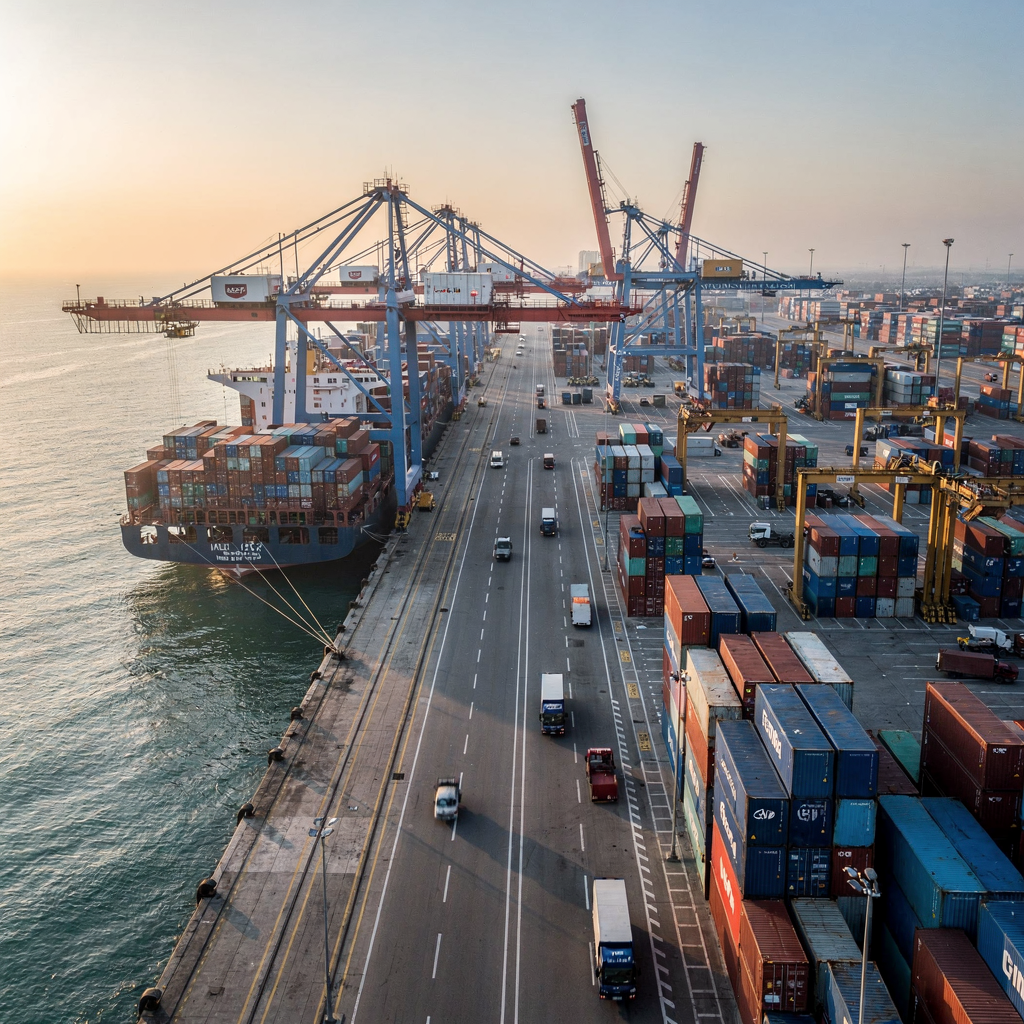
Crane density is another critical variable. Typical quay crane productivity ranges from 25 to 40 TEU/hour depending on handling technology and operational practice, and adding one crane can reduce service time by about 10–15% in many cases Enhancing Terminal Productivity Analysis. Therefore, planners must weigh productivity gains against operational costs. For example, increasing the number of ship-to-shore crane units improves throughput, but it raises staff, maintenance, and power costs. The choice of container cranes also ties into the broader terminal system and terminal layouts.
Terminal specialisation reduces cross-terminal delays and eases cargo handling. When terminals segregate by vessel type—deepsea, feeder, or RORO—they streamline operations and reduce dwell time. For wider efficiency gains, ports adopt mixed handling equipment strategies. These might include automated stacking cranes in a semi-automated yard, rubber-tired gantry cranes for flexible blocks, or reach stackers for intermodal feeder flows. If a terminal handles heavy inland moves, planners should consider intermodal connectivity early. Good design reduces truck turn times, shortens driving distances, and protects storage space.
Finally, think about the footprint of the site. A compact footprint with high stack heights accelerates retrieval but can increase rehandles. Conversely, sprawling yards increase truck travel. Use a balanced layout. You can also explore retrofit paths to increase terminal automation or to evolve into an automated container terminal while keeping operations safe and executable. For more on yard-equipment trade-offs and deployment, see Loadmaster.ai guidance on equipment deployment optimizing yard equipment deployment.
Drowning in a full terminal with replans, exceptions and last-minute changes?
Discover what AI-driven planning can do for your terminal
Terminal Planning integration with crane scheduling and yard operations
Holistic resource allocation drives lower idle times and higher crane productivity. Planners must synchronise vessel arrivals, crane rosters, and yard moves. Therefore, a coordinated plan reduces queues and minimizes unnecessary handling. In practice, operations planning ties berth allocation with stowage planning and the allocation of yard slots. The berth allocation problem is often multi-objective and requires careful trade-offs between quay throughput and yard congestion.
A Terminal Operating System, or tos, now forms the operational backbone. A live TOS supplies real-time positions for cranes, tracking for container flow, and gate statuses. With such data, dispatchers can execute dynamic schedules that adapt to delays and equipment idling. Loadmaster.ai complements a TOS by training closed-loop agents that can execute and re-optimize plans in real time. That approach moves teams from firefighting to forward-looking control.
Dynamic scheduling algorithms reduce idle time by reassigning tasks when conditions change. For example, algorithms can shift a crane to a different bay when a vessel berth delay threatens to cause queuing. They can also adjust the unloading sequence of containers to prioritize export loads or reduce rehandles. A well-integrated plan also assigns yard crane and straddle carriers to match quay output. Moreover, systems should account for yard crane travel and battery swap times, and for external constraints at terminal gates.
Practical implementation requires clear planning decisions and governance. Terminal operators should set KPI weights that balance quay productivity, yard congestion, and driving distance. Then they should let optimisation tools explore trade-offs. For terminals that want to test policy alternatives, real-time replanning strategies can be piloted in a sandbox before live deployment real-time container terminal replanning strategies. Finally, include contingency rules for breakdowns and peak surges so that the schedule can adapt without human-only firefighting.
Berth Planning strategies to reduce vessel wait times and manage congestion
Berth planning aims to minimize vessel wait time and to keep berth utilisation within effective bands. Efficient terminals target berth utilisation between 70% and 85%, because rates above 85% typically lead to congestion and higher waiting times Monographs on Port Management – UNCTAD. Therefore, planners use long-term occupancy analysis to set utilisation targets and to guide expansion decisions. The berth planner needs clear rules for prioritisation and slot reservations to keep the operation predictable.
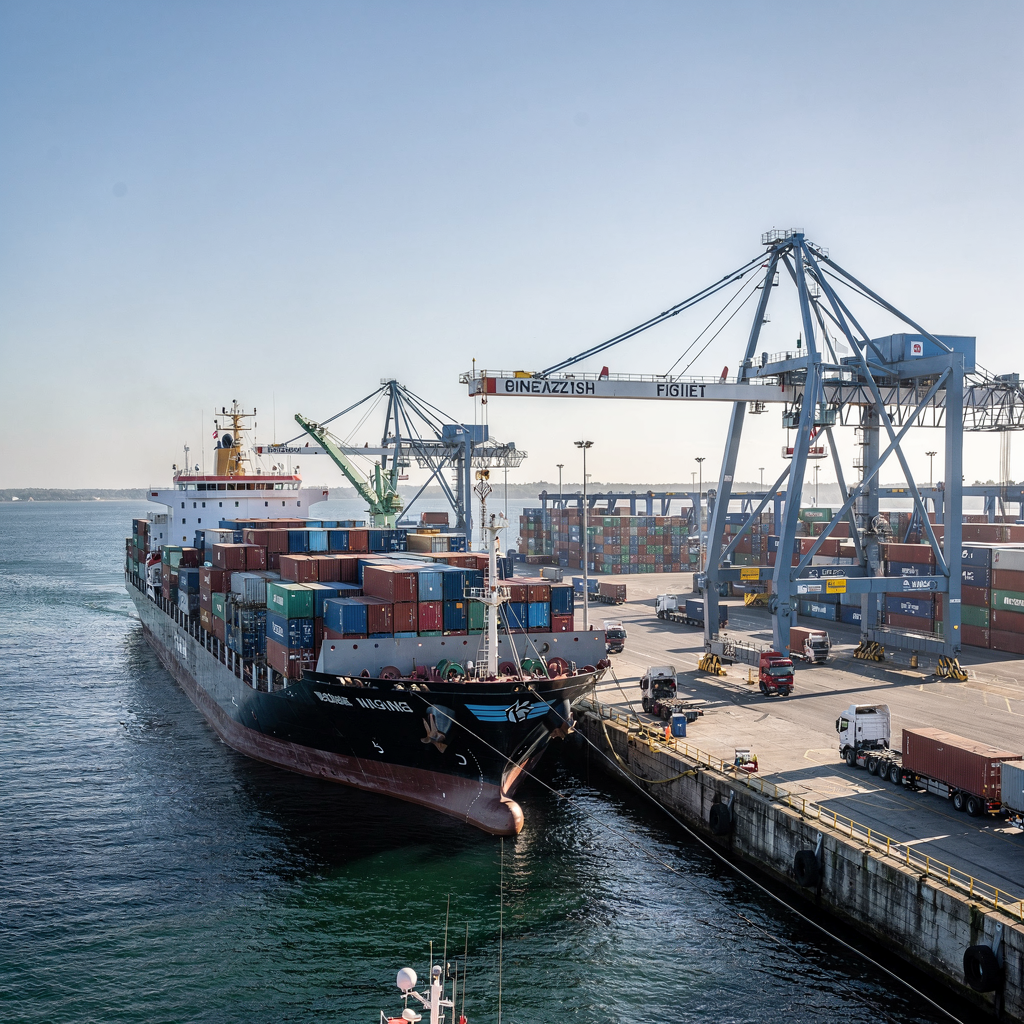
Allocation rules help resolve the berth allocation problem quickly. For example, terminals may prioritise based on vessel size, service level agreements, or specific slot requests from shipping lines. Such rules speed decision-making. They also reduce idle berth time and improve overall turnaround times. Importantly, the allocation system must include provisions for transhipment calls and for discharge-heavy vessels that require more yard space and specialized stowage planning.
Contingency planning addresses disruptions. When a storm or equipment failure affects the schedule, the system should reroute incoming vessel calls or reassign cranes dynamically. This requires clear communication channels with shipping lines, pilots, and hinterland partners. The World Bank notes that “Sound policies and partnerships are key to aligning terminal capacity with market demand” which underlines the need for stakeholder coordination Container Terminal Concession Guidelines – World Bank Document.
Finally, planning must measure and address bottleneck sources. A calibrated simulation can reveal whether quay crane shortages, gate congestion, or limited storage space cause delays. Use those insights to target investments in handling equipment, terminal gates, or yard stacking methods. Also, consider technology that verifies container conditions and predicts equipment maintenance needs to prevent avoidable crane downtime. For more on predictive maintenance for cranes, terminals can review case studies that cut downtime and protect throughput predictive maintenance to reduce crane downtime.
Drowning in a full terminal with replans, exceptions and last-minute changes?
Discover what AI-driven planning can do for your terminal
Simulation models for crane and berth operations
Simulation gives planners a safe environment to test optimisation strategies. Discrete-event simulation and digital twins model the interactions between cranes, trucks, and stacks. Consequently, planners can run “what-if” scenarios that stress the system under peak demand, equipment failure, and atypical vessel mixes. Digital twins also let teams observe the downstream impact of a single planning decision over weeks, which helps validate policies before they go live.
Model calibration matters. Use real terminal performance data such as crane moves per hour, average turnaround times, and stacking cycles to tune parameters. For instance, a calibrated model will reflect realistic crane productivity bands—often between 25 and 40 TEU/hour depending on tech and staffing Enhancing Terminal Productivity Analysis. Calibration also requires measuring dwell time, gate processing time, and retrieval times from the stacks. Capturing those flows lets simulations reveal hidden bottleneck chains.
Digital twins support reinforcement learning experiments. Loadmaster.ai trains agents within a twin to search for multi-objective policies that surpass past practice. The agents learn to balance quay productivity, yard congestion, and operational costs while respecting hard constraints. This method avoids the downsides of training exclusively on historical data. As a result, planners can validate new strategies and ensure they remain executable with current container handling equipment and terminal processes.
Finally, simulation helps justify investments. When a model shows that adding one ship-to-shore crane reduces vessel service time by a measurable margin, decision-makers gain evidence for CAPEX. Similarly, simulations can verify whether automated stacking cranes or additional rubber-tired gantry cranes will lower rehandles and shorten truck loops. Use these outputs to prioritize upgrades that yield the best return on investment and to plan phased adoption of terminal automation and automated container terminal capabilities.
Maritime stakeholder coordination and technology adoption
Effective stakeholder coordination reduces uncertainty across the supply chain. Ports should foster strong communication between shipping lines, terminal operators, and hinterland carriers. For example, clear pre-advice on Estimated Time of Arrival helps a berth planner sequence calls to match shore crane availability. Therefore, develop operational protocols and data exchange standards to ensure everyone shares expectations.
Adoption of automation improves consistency and reduces dependence on tribal knowledge. Automated guided vehicles, automated stacking cranes, and fully automated quay systems can lift productivity while reducing variability. That said, each technology requires integration with existing terminal system components and careful change management. Terminals often phase automation to retain flexibility, and semi-automated setups can provide immediate gains in handling technology without full-scale disruption.
Public-private partnerships and policy frameworks support capacity alignment. The World Bank guidance highlights the value of partnerships to match terminal capacity with market demand Container Terminal Concession Guidelines – World Bank Document. In practice, procurement and staffing policies should incentivize investments in port automation and modern container handling. Meanwhile, terminals should require that system vendors support open APIs and integration with TOS platforms to avoid vendor lock-in.
Lastly, training and governance ensure that advanced tools deliver consistent gains. Technologies such as artificial intelligence and closed-loop optimisation must operate with guardrails. Loadmaster.ai embeds explainable KPIs and audit trails so AI-driven recommendations remain transparent and auditable. This approach builds trust, which helps shipping lines and terminal operators accept AI-assisted decisions and execute them reliably.
FAQ
What is berth planning and why does it matter?
Berth planning assigns quay space to incoming vessels with the goal of minimizing waiting times and maximizing throughput. It matters because efficient berth planning reduces congestion, shortens turnaround times, and improves the predictability of terminal operations.
How does crane density affect vessel turnaround?
Crane density directly impacts how quickly a vessel can be loaded or unloaded. Adding one quay crane can often cut service time by roughly 10–15%, which improves berth availability and reduces queues.
What role does predictive analytics play in forecasting container demand?
Predictive analytics combines historical data with external signals to forecast TEU volumes, peak variability, and model accuracy rates. As a result, planners can make informed infrastructure and staffing decisions and reduce forecast errors.
Can simulation verify investment choices for terminals?
Yes. Discrete-event simulation and digital twins let planners test “what-if” scenarios and quantify the benefits of new cranes, yard automation, or layout changes. These models help validate CAPEX decisions before rollout.
How do terminals reduce bottlenecks between quay and yard?
Terminals reduce bottlenecks by synchronizing quay crane schedules with yard moves, optimizing the unloading sequence of containers, and using dynamic scheduling to adjust to delays. Integrated TOS and real-time replanning tools support these actions.
What is the berth allocation problem (bap)?
The berth allocation problem, or bap, is the challenge of assigning limited berth space to multiple vessels while balancing priorities like vessel size and service agreements. Optimization approaches and priority rules help solve the bap efficiently.
How do modern container terminals handle peak demand surges?
They use contingency plans that include dynamic reassignments of cranes, temporary slot reservations, and pre-agreed protocols with shipping lines. Additionally, simulations and AI agents can prepare robust plans to absorb short-term peaks.
What technologies support terminal automation?
Technologies include automated stacking cranes, automated guided vehicles, rubber-tired gantry cranes, and advanced TOS platforms. Together they raise consistency and reduce human-driven variability in terminal processes.
How can terminals balance quay productivity with yard congestion?
Terminals balance these objectives by setting multi-objective KPIs and using optimisation tools that explore trade-offs. Reinforcement learning agents can propose policies that protect the quay during peaks while shifting emphasis to yard flow when needed.
Where can I learn more about real-time replanning for terminals?
Loadmaster.ai publishes resources on replanning strategies and live operations. For a practical overview, see the guide on real-time container terminal replanning strategies real-time container terminal replanning strategies.
our products
 stowAI
 stackAI
 jobAI
jobAI
Innovates vessel planning. Faster rotation time of ships, increased flexibility towards shipping lines and customers.
Build the stack in the most efficient way. Increase moves per hour by reducing shifters and increase crane efficiency.
Get the most out of your equipment. Increase moves per hour by minimising waste and delays.
stowAI
Innovates vessel planning. Faster rotation time of ships, increased flexibility towards shipping lines and customers.
stackAI
Build the stack in the most efficient way. Increase moves per hour by reducing shifters and increase crane efficiency.
jobAI
Get the most out of your equipment. Increase moves per hour by minimising waste and delays.