
automated container terminal market size
The automated container terminal market size draws attention from port planners, investors, and terminal operators. In 2023 the terminal market size was valued at approximately USD 2.5 billion, and that value frames current industry discussion. Industry observers link that figure to rising automation investments and to shifts in global trade patterns, and analysts point to both equipment and software spending as drivers. For context, the smart port segment that includes terminal systems and digital services is forecast to expand rapidly; one market study outlines ambitious growth expectations for ports that adopt digital tools and that upgrade terminal infrastructure Smart Port Market: Revolutionary Growth & Future Insights 2025.
Historical growth since 2018 shows several key milestones. First, pilots of automated stacking cranes and automated rail-mounted gantry cranes moved from trials to scaled deployments in 2019 and 2020. Second, the adoption of automated container terminals accelerated after 2020 as operators sought throughput resilience. Third, the implementation of automated container terminal systems broadened to include yard management, gate automation, and integrated terminal operating system upgrades. Terminal investments followed waves of private terminal operators renewing leases and of public ports seeking competitive edge. Industry commentary highlights that ports have been investing in technology to help cargo flow more efficiently and reliably, reduce waiting times for drayage carriers, and update operational workflows Maritime Logistics: Automate & Innovate.
Compare this niche to the broader smart port software segment and the difference is clear. The terminal segment blends heavy equipment controls, like crane automation, with enterprise software, such as yard management systems and terminal operating system upgrades. As a result, market research and market data often separate hardware-driven terminal automation from cloud-based orchestration solutions. That separation matters when operators plan upgrades. For example, a terminal may invest in automated guided vehicles alongside new software stack modules for gate operations. If you want implementation details on yard workflows, see our piece on container terminal housekeeping strategies for peak hours housekeeping strategies for peak hours. Finally, this chapter frames the size question: the terminal segment is substantial, expanding, and central to port competitiveness, and the market overview supports deeper analysis of cost, capacity, and operational impact.
forecast
The forecast for the automated container terminal market projects steady expansion. Analysts expect a compound annual growth rate of around 10% between 2023 and 2028, and that pace would push the sector toward USD 5–6 billion by 2028. This projection combines equipment upgrades and software subscriptions, and it assumes continued investment in advanced automation and in digital port services. Several reports highlight a similar outlook, and a McKinsey analysis warns that while ports accelerate automation, financial payback remains complex Automation in logistics: Big opportunity, bigger uncertainty.
Drivers of the forecast are straightforward. First, digitalisation of terminal operations boosts capacity and enables predictive analytics, and that improves berth and yard planning. Second, global trade volumes and larger container ships put pressure on terminal throughput, and automation helps meet those demands. Third, sustainability mandates encourage energy-efficient job allocation, lower emissions, and electrified equipment that requires smart charging and scheduling. Together, these drivers shape a terminal market that is expected to adopt more software-led orchestration and more equipment automation.
We can break down forecast assumptions. The growth of the automated container segment assumes incremental adoption across existing terminals and greenfield projects that specify automation from day one. The degree of automation in new terminal builds often trends toward remote-operated or fully automated solutions, while legacy terminals adopt semi-automated container terminals upgrades. The growth rate also reflects vendor competition and declining per-unit costs for sensors, AI models, and communications hardware. For insight into predictive techniques that inform these projections, review how predictive analytics are applied in container port logistics predictive analytics in container port logistics.
Finally, the market forecast depends on policy, labor agreements, and interoperability standards. If ports standardize data models and if terminal operators share best practices, adoption will accelerate and the terminal automation market size will grow faster than conservative estimates suggest. If barriers persist, ROI timelines could extend, and the forecast would need revision. Therefore, stakeholders should monitor both macro trade data and localized pilot results to validate the projection path.
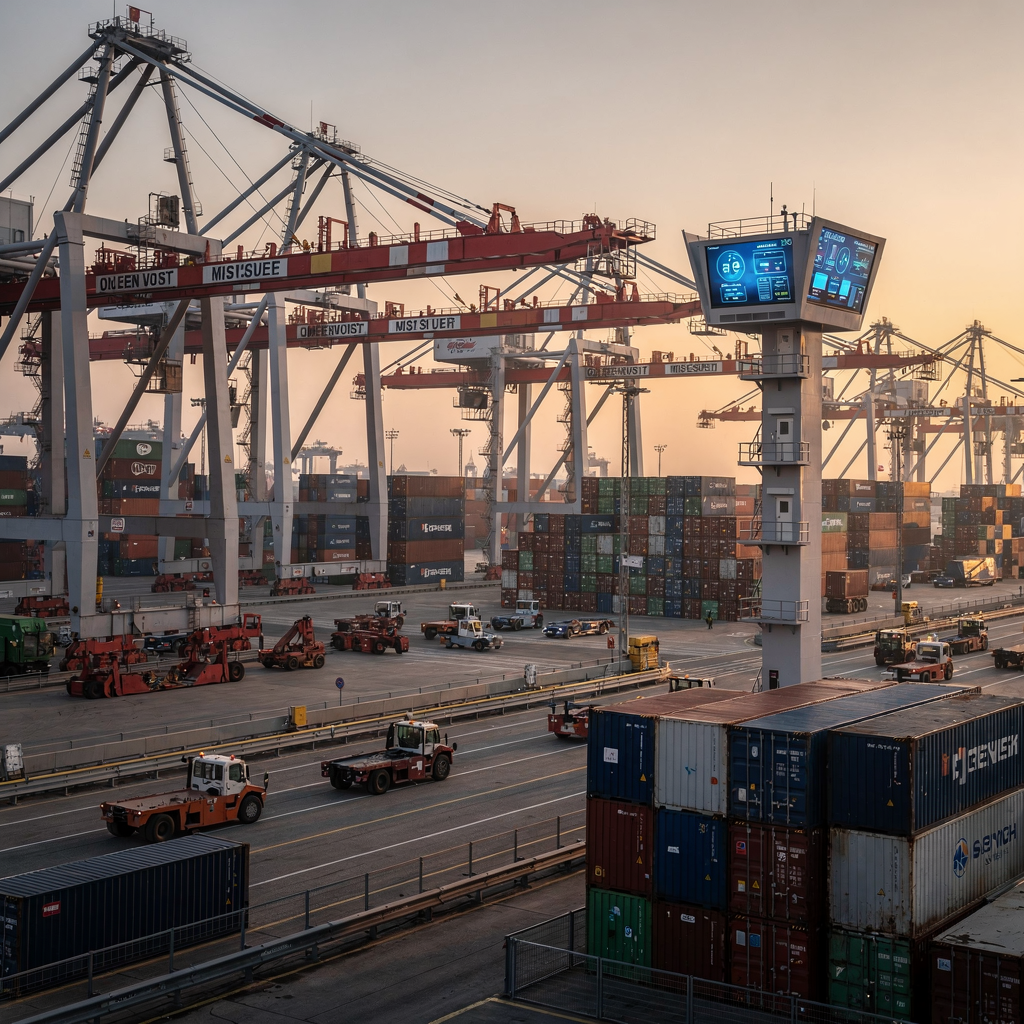
Drowning in a full terminal with replans, exceptions and last-minute changes?
Discover what AI-driven planning can do for your terminal
automated container terminal market insights
Market insights reveal tangible benefits from automation. Efficiency gains show up in yard management, gate operations, and equipment control. For yard planning, improved slotting and optimized stack density reduce repositioning work, and the result is faster retrieval and fewer moves. Gate operations become faster when digital verification, pre-arrival booking, and automated gate lanes reduce dwell time. Equipment control improves because software orchestrates crane cycles, and it synchronizes quay crane and yard crane activity to reduce idle time.
Cost savings follow efficiency. Reduced labour expenses appear where terminals adopt automated guided vehicles and where remote control reduces cabin-only roles. Also, minimised human error lowers damage, and it reduces paperwork rework. These savings support investments in automation technologies, and they help justify the larger upfront CAPEX. Still, ports must model staffing changes and training costs to measure net benefits. A McKinsey report notes that ports are accelerating adoption but that financial outcomes vary, so careful cost modelling remains essential automation adoption and ROI.
Technological enablers include AI, IoT, and predictive analytics. AI improves decision support for resource allocation, and IoT streams machine and environmental data for health monitoring. Predictive analytics forecast container throughput and yard congestion so operators can preempt bottlenecks. These innovations integrate with terminal systems like the terminal operating system and with sensor networks on cranes and vehicles. For hands-on research into digital twins and real-time optimisation, see work on AI and smart port digital twins for inland container terminals AI and smart port digital twins.
In practice, operators bundle solutions. A modern deployment may pair automated stacking cranes with software that schedules moves and that tracks container position. Vendors and players in the market offer modular services, and they support phased rollouts. For example, a terminal may first implement gate automation and then add yard orchestration and autonomous crane controls. That staged approach reduces disruption and yields early operational wins.
Also, email and operational communication create bottlenecks even in automated operations. For example, operations teams still handle hundreds of inbound emails that require manual data lookup and routing. Integrating such tools with terminal automation environments improves responsiveness and preserves human oversight where needed.
market segmentation
The market is segmented by degree of automation, by software functionality, and by deployment model. The degree of automation categorizes terminals as partial, remote-operated, or fully automated. Semi-automated container terminals remain widespread because they balance cost and control. At the same time, investments in fully automated terminals continue where volume and labor conditions support a full automation move. The market is segmented into fleets of automated guided vehicles, into automated stacking cranes, and into specialized control suites. That segmentation helps vendors target solutions, and it helps terminal operators phase upgrades.
By software functionality, the market is categorized into yard management systems, equipment control modules, and gate automation. Yard management systems focus on slotting, density, and retrieval sequencing. Equipment control modules generate crane motion directives, and they integrate safety systems. Gate automation streamlines truck processing and supports pre-advice workflows. In practice, terminals combine these modules with a terminal operating system to form a complete operations stack. For technical work on gate processing, consult our article on container terminal gate optimization explained gate optimization explained.
By deployment model, offerings arrive as on-premises suites or as cloud-based solutions. On-premises installations appeal when low-latency control is critical and when operators prefer direct hardware integration. Cloud-based solutions provide rapid updates, elastic compute for AI models, and easier integrations across multiple terminals. The market report often notes hybrid models as a pragmatic middle way, and many players in the market now offer both options.
Additional segmentation factors include terminal size, region, and operator model. New container terminal projects may specify advanced automation from the start, while legacy terminals select modules for retrofit. The market is divided between greenfield automation and retrofit deployments, and that mix shapes vendor roadmaps. Overall, the market analysis shows clear segment choices that align with operational risk tolerance, with capital availability, and with strategic ambitions.
Drowning in a full terminal with replans, exceptions and last-minute changes?
Discover what AI-driven planning can do for your terminal
regional analysis
Asia-Pacific is leading the adoption of automated solutions and is leading the adoption of automated terminal equipment and software. Major ports in East and Southeast Asia account for large shares of new automation projects, and investment levels there outpace other regions. Regional regulators and trade growth support investments, and private terminal operators in Asia often pursue full automation to handle large container ships and dense throughput. The largest market share for terminal automation investment sits in this region, and infrastructure plans there continue to prioritize capacity and speed.
Europe shows different dynamics. Regulatory drivers, data privacy rules, and collaborative technology partnerships shape adoption. European ports focus on sustainability, and they trial electrified equipment with intelligent charging. Technology vendors partner with terminal operators and academic centers to pilot digital twins and energy-efficient job allocation. For insights on energy policies and job allocation, see research on energy-efficient job allocation in port operations energy-efficient job allocation in port operations. Europe also experiments with interoperability standards to make multi-terminal chains work more smoothly.
North America and Latin America show growth corridors and pilot projects. North American terminals pilot remote-operated cranes and automated container handling solutions while facing labor negotiations that affect rollout timelines. Latin America adopts automation selectively at high-traffic container ports, and pilots often focus on gate automation and yard density optimization. Both regions see interest in cloud-based orchestration and in connecting port data to national logistics networks.
Regional analysis must consider ship sizes and call patterns. Large container ships and concentrated hub calls push port operators to automate to maintain berth productivity. When ports handle large container ships they need sophisticated coordination between quay cranes and yard equipment. For tactical optimization of quay crane productivity, review our guide on optimizing quay crane productivity in container terminals optimizing quay crane productivity. Overall, regional differences create varied adoption rates, but interest in automation remains global.
automated container terminal market outlook
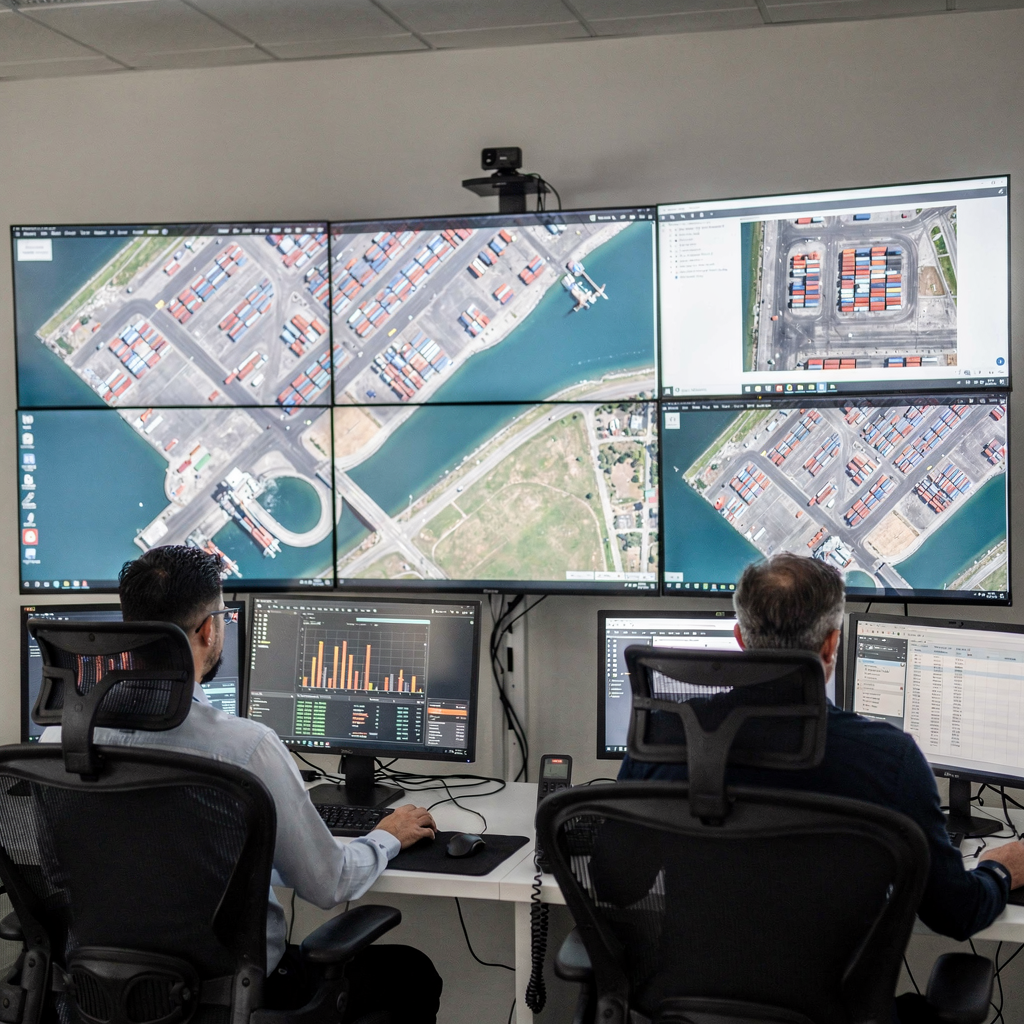
The market outlook highlights emerging trends and strategic priorities. Autonomous cranes and digital twins appear across pilot programs, and they promise better simulation and real-time optimisation. Autonomous cranes reduce operator exposure to hazardous tasks, and digital twins let operators test scenarios before live changes. Real-time optimisation layers AI models over terminal systems so that schedules adapt to vessel delays and to truck arrival variance.
Operators aim to link automation modules to existing terminal systems, and they plan phased upgrades to reduce risk during cutover. Software vendors prioritize interoperability and robust APIs, and they offer tools for data consistency and cutover planning for TOS migrations data consistency and cutover planning. Vendors also emphasize measurable SLAs so terminal managers can track uplift in container throughput and in gross crane rate.
Anticipated challenges remain. ROI complexities persist because initial costs are high and because productivity gains vary by site. Interoperability between vendors and between legacy terminal infrastructure can slow rollouts. Cybersecurity is a major concern since terminal systems face increased exposure once they connect to cloud services and to wider IT networks. To address these issues, ports must adopt strong governance, incident response, and secure communication protocols.
Other market forces include the growth of the automated container and the increasing focus on full automation when volumes justify it. The adoption of automated container terminals depends on clear business cases and on regulatory clarity. Some terminals will remain semi-automated for years, and others will convert to fully automated container terminal operations. If you want deeper technical research into yard congestion prediction and planning, explore our predictive yard congestion article predicting yard congestion in terminal operations.
In short, the market outlook is balanced: there is strong momentum, and there are clear obstacles. Vendors that offer modular, secure, and AI-driven solutions will likely lead, and terminal operators that prioritize integration and operational training will capture the most value.
FAQ
What is the current automated container terminal market size?
The automated container terminal market size in 2023 was approximately USD 2.5 billion. This figure reflects combined spending on equipment, software, and integration across terminals worldwide.
What growth forecast applies to automated terminals?
Analysts forecast a CAGR near 10% for the segment between 2023 and 2028. That growth would raise the market toward an estimated USD 5–6 billion by 2028 if adoption continues and investment levels hold.
Which regions lead adoption of terminal automation?
Asia-Pacific leads adoption and investment in automation, driven by high throughput and large container port projects. Europe follows with strong pilots focused on sustainability, and North and Latin America show selective growth and pilot programs.
What are common automation technologies used in terminals?
Common solutions include automated stacking cranes, automated guided vehicles, AI-based scheduling, and IoT sensors for predictive maintenance. These technologies integrate with the terminal operating system to improve coordination.
How do terminals measure ROI from automation?
Terminals measure ROI using metrics such as container throughput, gross crane rate, gate dwell time, and total moves per container. They also track reductions in labor hours and in incident-related costs to evaluate financial performance.
Are fully automated terminals common?
Fully automated terminals exist in major hubs but are not yet the global norm. Many operators choose semi-automated upgrades or remote-operated solutions as transitional steps toward full automation.
What are the main risks when implementing automated systems?
Main risks include high upfront costs, integration challenges with legacy equipment, and cybersecurity exposure. Operators mitigate these risks through phased rollouts and by adopting robust governance and security practices.
How does automation impact port staffing?
Automation shifts staff roles from manual handling to system supervision, maintenance, and analytics.
Can small terminals adopt automation affordably?
Smaller terminals can adopt modular solutions such as gate automation or yard management systems to gain benefits without large capital expense. Cloud-based offerings also lower entry barriers for software-driven automation.
How do I learn more about terminal automation best practices?
Read detailed guides and case studies focused on gate optimization, yard planning, and predictive analytics to learn practical approaches. Our site includes technical pieces on AI and smart port digital twins, on gate optimization, and on data consistency for TOS migrations that provide actionable steps for operators.
our products
 stowAI
 stackAI
 jobAI
jobAI
Innovates vessel planning. Faster rotation time of ships, increased flexibility towards shipping lines and customers.
Build the stack in the most efficient way. Increase moves per hour by reducing shifters and increase crane efficiency.
Get the most out of your equipment. Increase moves per hour by minimising waste and delays.
stowAI
Innovates vessel planning. Faster rotation time of ships, increased flexibility towards shipping lines and customers.
stackAI
Build the stack in the most efficient way. Increase moves per hour by reducing shifters and increase crane efficiency.
jobAI
Get the most out of your equipment. Increase moves per hour by minimising waste and delays.