
container terminals: Definition and Strategic Role
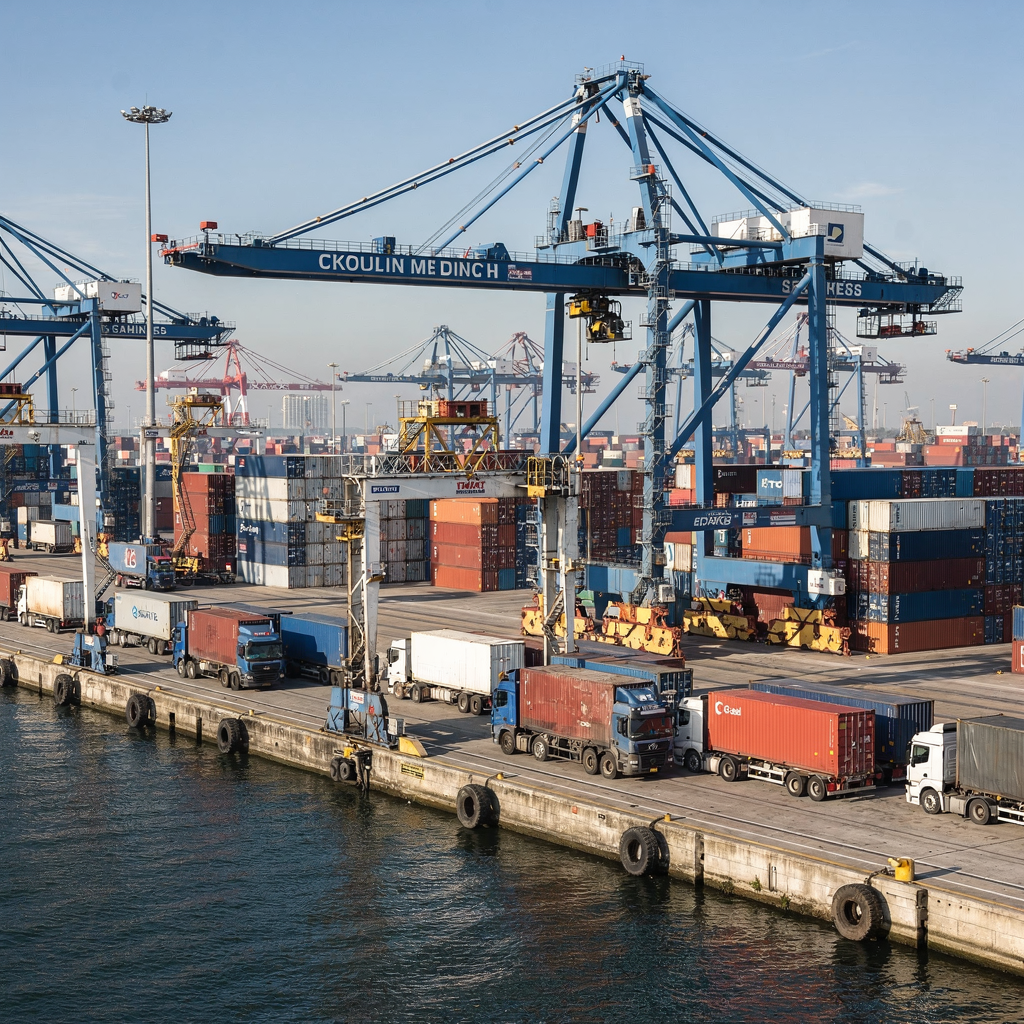
Container terminals form the junctions where shipping containers change mode. They link ocean carriers, road trucks, and inland rail. First, they handle loading, unloading, temporary storage, and handover. Next, they manage customs, gate processing, and documentation. Also, they affect global trade flows and supply chain resilience. For example, a single delay can ripple across multiple supply chains and increase costs for shipping lines and shippers. Therefore, ports invest in systems to reduce delays and improve throughput.
There are three main types of terminal. Deep-sea terminals serve large ocean-going vessels at major ports. Feeder terminals collect and distribute boxes on smaller ships. Inland terminals, including rail-connected hubs, move containers inland. Each type supports different vessel sizes and traffic patterns. For greenfield projects, planners often design for future scale. For retrofits, teams balance new equipment and legacy systems. Port terminals vary in scale from regional feeders to global transshipment hubs.
Terminal operators range from private concessionaires to state-owned companies. Large terminal operators manage many terminals worldwide. They adopt investments to remain competitive and to manage one million TEUs or more in some cases. Also, port authorities play a role in permitting, tariff setting, and infrastructure planning. They coordinate berth allocation and deepwater access. For more on berth scheduling and allocation, see a practical analysis of the berth allocation problem in terminal operations.
Today, full automation at terminals remains rare. Only about 4% of the world’s ports are fully automated, which equates to roughly 53 container terminals globally. However, many ports use semi-automated systems or deploy new equipment in phases. Also, an increasing number of terminals are testing automated cargo solutions for specific flows. For example, some cargo terminals run automated gate systems alongside manual gates. Thus, operators can pilot systems and measure improved outcomes before wider rollouts.
Terminals face trade-offs. Initial capital is high. Yet operational efficiency and customer satisfaction can improve. Terminal operators must weigh operational costs and future demand. In many cases, terminal operations planning systems work alongside real-time TOS data. Also, operators can consult resources on yard planning and optimization to support decisions. See our practical guide to yard planning software for small inland container terminals for approaches that scale from small hubs to major terminals.
automation: Core Technologies and Equipment
Automation in container terminals brings together machines, software, and networks. Key machines include automated guided vehicles, automated stacking cranes, and automated quay cranes. These systems coordinate to move shipping containers from quayside to stacking yard. Also, gantry cranes and RMGS operate in different modes depending on layout. For horizontal transfers between the quay and the yard, designers choose between AGVs and truck-based transfers. In many designs, AGVs reduce the need for truck drivers and cut gate congestion.
Automated guided vehicles follow set paths. Also, they receive commands from a central Terminal Operating System. agvs operate using local sensors, route maps, and wireless links. They reduce manual handling and lower human error. Automated stacking cranes anchor yard automation. They lift and place containers in precise slots. asc s work in tandem with yard planning systems to increase yard density. In addition, ship-to-shore crane automation improves quayside cycle time. For a deeper look at reducing driving distances and improving crane productivity, read the analysis on deepsea container port optimization logic to reduce driving distances.
These machines run on real-time data feeds. Sensors report position, load, and status continually. Also, radio frequency identification and cameras add verification. A Terminal Operating System sends job orders. Then automated equipment executes the tasks. This chain lowers cycle time and improves productivity. Some terminals report up to a 30% increase in throughput efficiency versus conventional terminals. Therefore, automation delivers clear operational gains when implemented well.
However, installing automated systems involves technical choices. Designers must select control protocols, safety zones, and fallback procedures. They must also plan for interoperability across suppliers. Also, they must define cybersecurity controls to protect operational systems. For example, planners often create segmented networks for control traffic and for business systems. In the end, good design aligns hardware choices with operational goals and budget constraints. The long-term goal is reduced operating expenses and a more predictable flow of containers through the terminal.
Drowning in a full terminal with replans, exceptions and last-minute changes?
Discover what AI-driven planning can do for your terminal
port automation: Impact on Ship-to-Shore Operations
Port automation reshapes ship-to-shore workflows. Automated ship-to-shore crane systems speed lifts. They use precise positioning and automated spreader control. As a result, cranes handle more moves per hour with fewer errors. Also, robotics and assistance systems reduce the need for manual signalers on the quay. Those gains shrink turnaround times. Reduced turnaround times increase vessel utilization for shipping lines. Consequently, ports can attract more calls and improve berth productivity.
Leading ports provide useful examples. The Port of Rotterdam and Singapore have adopted automated elements and advanced systems. The Port of Rotterdam supports mixed operations and automated flows at selected terminals. For lessons on crane split and stowage planning impacts, the work on impact of stowage planning on crane split explains trade-offs for deepsea operations. Also, some terminals were designed as the first fully automated container terminal in their region. These terminals show how automation streamlines quayside moves and container pickup procedures.
Retrofitting existing terminals poses challenges. Older terminals often use manual processes and legacy control systems. Upgrading requires changes in port infrastructure, berth arrangements, and yard layout. Also, teams must phase new equipment to avoid major service disruptions. Retrofit projects may include upgrading gate systems, installing AGV lanes, and adding automated stacking cranes. Each retrofit step must integrate with existing operational systems. For planning systems that help manage conflicts between equipment pools and schedules, see real-time conflict resolution strategies at real-time conflict resolution between equipment pools.
Finally, port automation affects many stakeholders. Dockworkers and longshore may see new roles. Truck drivers and intermodal partners adjust to new pickup rules. Port authorities must balance investment with broader economic goals. So, automation becomes both a technical upgrade and a social transition. Planners need clear stakeholder engagement and phased change management. In many cases, semi-automated steps ease the transition while still delivering gains in turnaround times and customer satisfaction.
container terminal automation: Integrating TOS and Digital Platforms
Terminal Operating Systems form the digital core of modern terminals. A TOS schedules moves, tracks containers, and allocates equipment. It handles gate systems, berth plans, and yard management. Also, it provides the data feed for supervisory control. For ports choosing between cloud and on-premise systems, a comparison of cloud-based versus on-premise TOS helps weigh trade-offs. The choice affects latency, security, and upgrade cycles.
Digital integration links TOS with automated equipment and planning systems. Sensors, cameras, and control servers exchange messages in real time. Also, advanced systems use machine learning inputs for dynamic decisions. For instance, predictive models inform berth and yard planning. They reduce conflicts and lower rehandles. Data Envelopment Analysis and other benchmarking tools measure gains. For benchmarking methods, see research on efficiency models and DEA that quantify returns from automation here.
Integration raises technical and organizational questions. Systems must agree on message formats, timestamps, and security. Also, teams must run rigorous tests before full deployment. For example, email workflows often require deep data grounding across ERP and TMS to be automated safely. Likewise, a TOS must ground decisions in accurate operational data. Our AI agents automate the full email lifecycle so ops teams can focus on execution rather than manual triage.
Effective integration supports KPI tracking and continuous improvement. Also, it allows terminals to measure operational efficiency and to adjust in real time. With consistent data, terminal operators can model investments and forecast returns. Yet McKinsey notes that many ports are “not yet recouping their costs” due to operational complexities and integration challenges source. Therefore, digital readiness is critical. A recent analysis argues that “the successful adoption of automation depends heavily on the terminal’s ability to interface automated equipment with its TOS” source. Thus, investment must match a realistic integration plan and training for teams who operate the systems.
Drowning in a full terminal with replans, exceptions and last-minute changes?
Discover what AI-driven planning can do for your terminal
yard automation: Optimising Container Storage and Retrieval
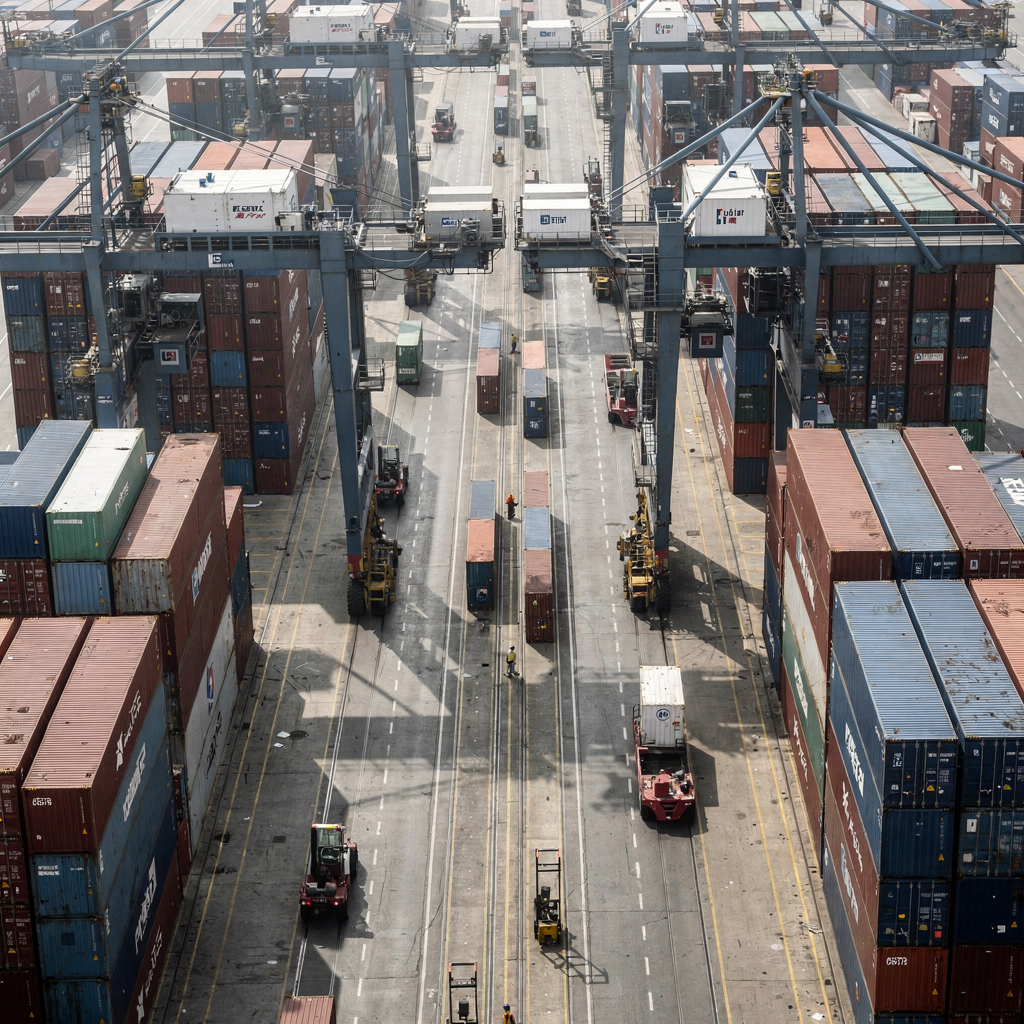
Yard automation transforms how terminals stack and store containers. Automated stacking cranes and rail-mounted gantry cranes manage dense stacks. They lift precisely and store containers in planned slots. Also, automated yard systems reduce truck turnaround by guiding drivers to correct bays. Yard planning integrates with gate systems to streamline container pickup. This approach cuts unnecessary moves and reduces operating expenses.
Automated stacking cranes improve yard density. They place containers closer together with consistent spacing. Also, remote control and automation reduce onsite hazards. Straddle carriers and straddle carriers alternatives vary by yard type. Some terminals use straddle carriers for flexible handling, while others choose RMGS for high-density stacks. Each choice affects yard throughput, safety, and job design for port workers. For software and algorithms that assign locations and minimize rehandles, see smart algorithms for container location assignment at smart algorithms.
Case studies show real benefits. A major European terminal that invested in yard automation increased yard utilization significantly. Also, it cut container rehandles and improved safety incident rates. The terminal moved toward a mix of automated and manual flows to balance cost and flexibility. For terminals that manage shortsea and deepsea flows, dynamic stowage plan adjustment can reduce conflicts and last-minute moves. See techniques on dynamic stowage plan adjustment.
Yard management systems must coordinate closely with the TOS. They require accurate visibility for truck drivers, gate staff, and rail operators. Also, they rely on sensors to confirm container pickup and verification. Advanced yard density forecasting models help terminals plan peak periods and staffing. For practical tools, review the work on advanced yard density forecasting. In short, yard automation boosts operations, but success depends on integration, planning, and clear procedures for dockworkers and gate staff.
automate: Investment, Integration and Workforce Considerations
Automate decisions require careful financial planning. Automation projects are capital-intensive. The initial investment often includes new equipment, software, and infrastructure. Terminal operators must compare upfront costs with long-term operating savings. Also, they often model five- to ten-year returns. McKinsey has cautioned that many ports are accelerating adoption yet are “not yet recouping their costs” because integration and operational complexity add expense source. Therefore, realistic business cases are essential.
Systems integration is a major cost driver. New equipment must interoperate with legacy control systems and with terminal operations software. Also, planners must adopt standards for messaging and data formats. Cybersecurity becomes a priority when control networks connect to enterprise systems. For projects that retrofit existing quays, design teams choose between staged retrofit and phased replacements. A measured retrofit can limit disruption yet still deliver measurable gains.
Longshoremen, dockworkers, and truck drivers face new roles. Some roles shift from heavy manual work to remote operation and supervision. Also, training programs are essential to reskill staff. Terminals often pair automation deployment with certified training, safety drills, and revised job descriptions. For example, longshore teams may retrain as TOS operators or equipment supervisors. Also, job rotations and apprenticeships can reduce job losses and preserve institutional knowledge.
Operational processes must change too. Manual processes give way to automated cargo handling and digital handoffs. Gate systems, yard planning, and planning systems coordinate to reduce handoffs that cause delay. In the terminal context, similar automation of operational systems and communications can reduce human error and increase traceability. Thus, automation becomes part of a broader digital modernization that includes people, processes, and technology.
Finally, ports must monitor social and regulatory impacts. Port authorities and terminal operators should engage unions early. Also, they should communicate expected timelines and support measures. When done well, automation can improve safety, reduce human error, and keep terminals competitive. For those designing projects, a careful balance of capital, training, and phased integration produces the best outcomes.
FAQ
What is the difference between a deep-sea terminal and an inland terminal?
A deep-sea terminal handles large ocean-going vessels and focuses on transshipment and international trade. An inland terminal connects to the hinterland by rail or road and supports distribution and feeder services for shipping containers.
How common are fully automated container terminals today?
Only a small share of global terminals are fully automated. About 4% of ports are fully automated, representing roughly 53 terminals worldwide. Many more operate semi-automated systems or pilot new equipment.
What are the main benefits of automated stacking cranes?
Automated stacking cranes increase yard density and improve stacking accuracy. They reduce rehandles and lower safety risks, which leads to better yard utilization and operational efficiency.
Do automated guided vehicles eliminate the need for truck drivers?
agvs reduce the reliance on truck drivers for horizontal transfers, particularly in greenfield or fully-automated terminals. However, many terminals still use truck drivers for external moves and mixed-mode operations.
How does a Terminal Operating System support automation?
A TOS schedules container moves, allocates equipment, and manages gate and yard workflows. It supplies the control commands and data that automated equipment needs to operate reliably and to reduce human error.
Are automation projects cost-effective?
Automation can improve productivity and reduce operating expenses over time, with some terminals reporting up to a 30% increase in throughput efficiency. However, the initial investment is capital-intensive and integration complexity can delay payback.
Can existing terminals be retrofitted for automation?
Yes. Many terminals choose a staged retrofit approach to install new equipment and systems. Retrofits require careful planning to integrate new equipment with legacy systems and to minimize service disruption.
Automation shifts roles toward supervision, remote operation, and technical maintenance. Training programs and reskilling are important to help longshoremen and dockworkers transition and to limit job losses.
How important is cybersecurity for automated terminals?
Cybersecurity is critical because control networks interact with enterprise systems. Terminals must implement segmented networks, secure messaging, and rigorous access controls to protect operational systems.
Where can I learn more about yard optimization and planning systems?
There are practical resources and case studies available that cover yard planning software, forecasting models, and AI-assisted planning. For example, review guides on advanced yard density forecasting and yard planning software for small inland terminals at LoadMaster’s resources linked above.
our products
 stowAI
 stackAI
 jobAI
jobAI
Innovates vessel planning. Faster rotation time of ships, increased flexibility towards shipping lines and customers.
Build the stack in the most efficient way. Increase moves per hour by reducing shifters and increase crane efficiency.
Get the most out of your equipment. Increase moves per hour by minimising waste and delays.
stowAI
Innovates vessel planning. Faster rotation time of ships, increased flexibility towards shipping lines and customers.
stackAI
Build the stack in the most efficient way. Increase moves per hour by reducing shifters and increase crane efficiency.
jobAI
Get the most out of your equipment. Increase moves per hour by minimising waste and delays.