
digital twin is a virtual representation for terminal operations
First, a clear definition helps. A digital twin is a virtual model of quay cranes, yard trucks, storage yards and gate systems. In practice, the digital twin is a virtual replica of the physical terminal layout and equipment. It mirrors flows of CONTAINER TERMINAL cargo, equipment status, and human tasks. In this way, planners and terminal operators can see current states, test changes, and make faster choices. For terminals facing unpredictable vessel mixes and fluctuating demand, this virtual replica reduces uncertainty. Also, the digital twin links sensors and IOT feeds to provide continuous updates. As a result, the model reflects conditions in real-time and supports scenario testing.
Next, contrast with older approaches. Traditional models rely on static spreadsheets and rules. They use historical averages and manual schedules. By contrast, a digital twin combines real-time data, big data histories, and AI-driven policies to simulate operations. For example, Loadmaster.ai spins up a digital twin of a site to train RL agents against explainable KPIs. This approach produces policies that can adapt to new patterns without relying on past mistakes. It helps terminals optimize crane assignments and reduce rehandles. It also improves operational efficiency and sustainability through lower energy use and fewer idle movements.
For context, research shows clear gains. A study found that a Digital Twin implementation improved operational efficiency by up to 15-20%. Also, case studies report container handling times cut by up to 25%. Therefore, terminals can optimize berth use and yard stacking with more confidence. In particular, digital twin technology enables simulation and learning that static models cannot. Finally, discover how digital twin technology to link a terminal operating system and equipment telemetry helps execution. For practical guidance, see our page on digital twin integration with container terminal operating systems.
terminal connectivity and port operations: streamline and improve efficiency
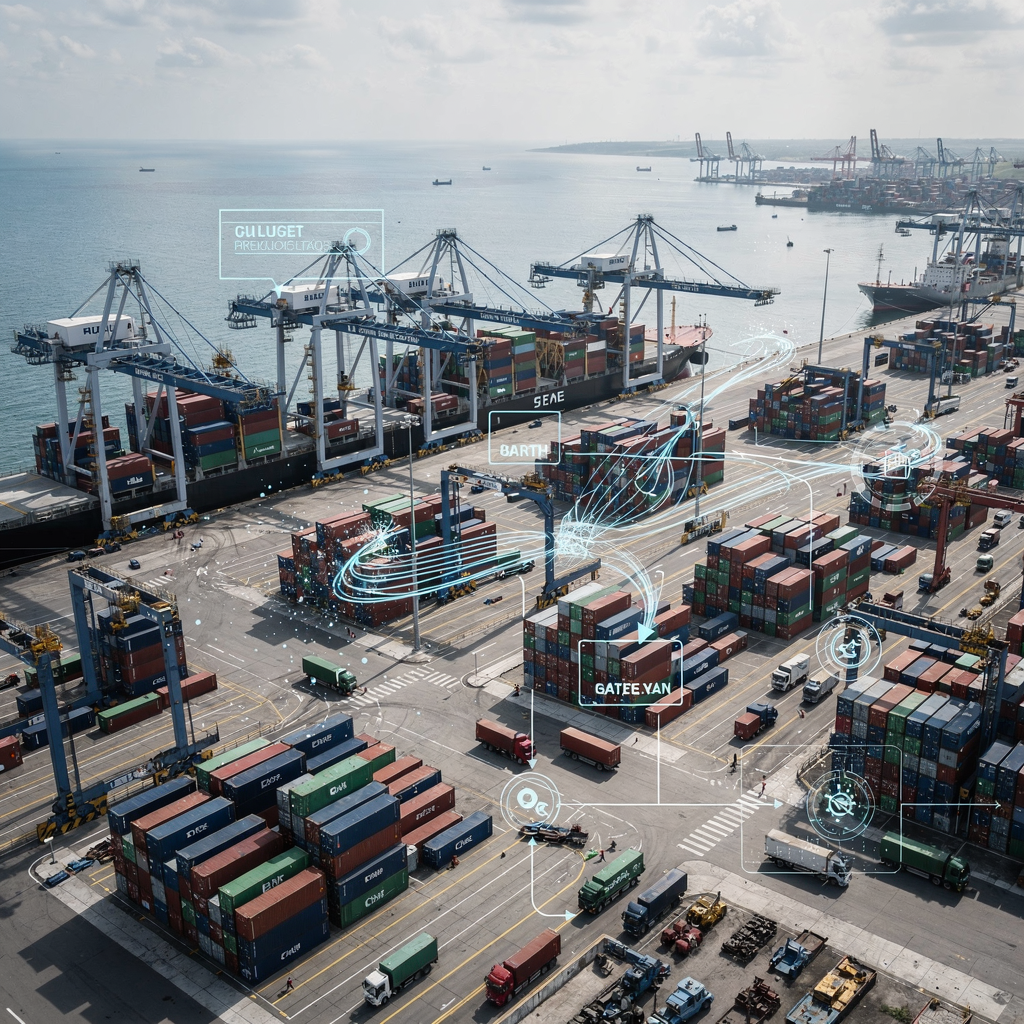
Connecting berth management, yard planning and gate sequencing in one model reduces hand-offs and delays. First, a unified model removes silos. Then, planners can view interactions across quay, yard and gate. This helps to streamline operations and to cut waiting. For example, dynamic resource allocation across cranes and trucks can cut idle time by up to 20%. In practice, operators coordinate assignments in the digital twin and send optimized plans to the terminal operating system. The result is fewer conflicts and faster vessel processing.
Also, linking systems improves throughput. Research shows improved throughput and lower vessel turnaround in terminals that use integrated simulation and analytics. For instance, ports that adopt Digital Twin frameworks report faster berth scheduling and reduced stacking conflicts. A joint model also allows port operators to reassign resources mid-shift. Consequently, cranes move to where demand is highest. At the same time, trucks receive priority slots to avoid yard congestion. This reduces driving distance and saves energy.
Furthermore, connectivity supports resilience. With connected models, a delay at one berth triggers automatic rescheduling across the yard. This capability improves port efficiency and helps stakeholders maintain service levels. For terminals that need deeper technical guidance on fleet and execution layers, our article on synchronizing fleet management and TOS execution layers explains integration details. In sum, connected digital twin models streamline operations, improve resource management, and drive measurable cost savings. They also support a shift from firefighting to planned control. Finally, when terminals integrate massive amounts of data from sensors and IOT, they gain a continuous view of activity that turns planning into action.
Drowning in a full terminal with replans, exceptions and last-minute changes?
Discover what AI-driven planning can do for your terminal
using digital twins with AI for predictive forecast
Using AI modules inside the digital twin enables forecasting and automated decisions. First, AI models learn from historical records and live feeds. Then, reinforcement learning agents test millions of policies in simulation. For example, Loadmaster.ai trains agents inside the digital twin so they can optimize multi-objective KPIs without relying on past, imperfect history. This approach creates policies that handle new vessel mixes and unusual yard states.
Also, predictive analytics modules forecast peak demand, yard congestion and labour needs. They identify when stacking density will exceed safe limits. They flag when gate throughput will spike. As a result, planners can move equipment preemptively. Moreover, predictive models help forecast equipment failures before they happen. This supports predictive maintenance and reduces unexpected downtime. Research links Digital Twins and AI to lower energy use and better capacity utilization; a study combining a digital twin with reinforcement learning showed a 12% reduction in energy consumption.
Next, scenario testing is straightforward. Teams can simulate equipment failure, extreme weather, or a surge of containers. They can then test rules for loading and unloading, berth reassignments, and truck prioritization. This testing helps preserve throughput during disruptions. In turn, port operators gain confidence in contingency plans. Finally, real-time data streams feed the model so forecasts stay current. For more on training agents and planning architecture, read our overview of the next-generation container terminal planning architecture. Together, AI and simulation in a digital twin deliver better forecasts, faster decisions, and stronger resilience for maritime logistics.
smart ports: crane management to streamline operations and reduce processing times
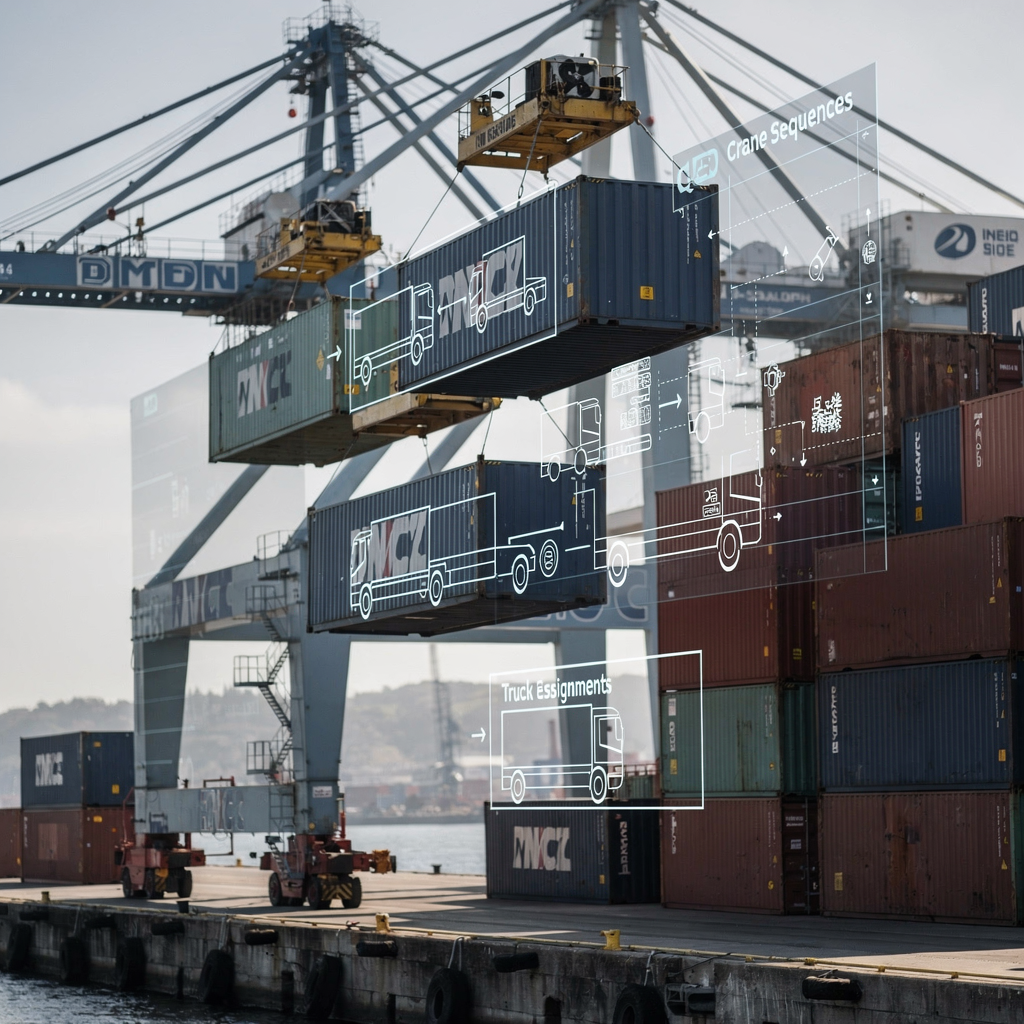
Crane management is a clear use case for the digital twin. First, the model shows crane availability, positions, and maintenance status. Secondly, simulation helps to optimize crane sequencing and to minimize safety margins without adding risk. For example, automated container handling combined with digital twins has reduced processing times by up to 25% in some terminals. This improvement boosts crane productivity and increases moves per hour.
Also, integration with yard maps and truck scheduling creates seamless end-to-end flow. The digital twin optimizes crane moves alongside yard placements and truck slots. It reduces driving distances for yard trucks and balances RTG workloads. Consequently, terminals improve container terminal performance and reduce overtime costs. Furthermore, the model supports maintenance management by detecting wear patterns early. That helps to schedule repairs during low-impact windows and to keep cranes online when demand peaks.
In a practical use case, digital twin-driven sequencing reduced unnecessary shifters and cut average cycle times. The operator saw fewer rehandles and improved safety. Ports that adopt these practices also see energy efficiency gains and lower emissions. In addition, digital twin technology links directly to terminal operating system commands so execution remains synchronized with the plan. If you want a deep dive on crane allocation and job automation, see our analysis of rail-mounted gantry crane job allocation automation. Overall, smart ports that combine simulation, AI, and connected telemetry can streamline operations and improve port efficiency across the quay and yard.
Drowning in a full terminal with replans, exceptions and last-minute changes?
Discover what AI-driven planning can do for your terminal
container terminal logistics use cases: improving capacity and cost savings
Real-world use cases show how using digital twins drives capacity gains and cost savings. First, berth planning benefits from end-to-end simulation. Planners can test berth scheduling rules against live arrival patterns. Next, yard stacking algorithms place containers to protect future moves and to minimize reshuffles. Gate throughput models reduce queuing and lower truck turnaround. Together, these measures improve shipping capacity and reduce idle time.
Also, predictive maintenance of cranes and vehicles cuts downtime. Studies link digital twin and AI approaches to a 12% reduction in energy consumption during port activities, which reflects better equipment utilization and lower costs (study). In addition, fewer rehandles lower labour needs. This reduces overtime and produces measurable cost savings on staff and fuel. For example, terminals that adopt RL-based policies often see more consistent performance across shifts. That reduces reliance on individual planner experience and stabilizes KPIs.
Other use cases include inventory management, automated guided vehicles routing, and dynamic berth scheduling. The digital twin can also model container storage strategies to avoid congestion and to save space. Furthermore, combining simulation with blockchain technology for documentation improves traceability across the supply chain. For terminals eager to test a sandbox digital twin, Loadmaster.ai provides a path: we create a simulated terminal, train agents, and then deploy guarded policies that integrate with your TOS. For more on predicting equipment workstreams, explore our post on using data to predict equipment maintenance in inland container terminals. Overall, these logistics operations use cases show that digital solutions deliver both operational gains and long-term sustainable operations.
port connectivity with digital twin for resilient logistics
Linking multiple terminals through connected digital twins increases resilience across the port cluster. First, shared models help balance traffic and share resources when one terminal is congested. Then, operators can reroute calls or reassign cranes to relieve strain. For instance, a regional network of digital twins can reforecast capacity in real time and apply load-sharing rules. This capability supports continuity during disruptions.
Also, resilience features enable rapid rerouting during equipment failure, labour shortages, or extreme weather. A combined model recalculates berth schedules, updates truck windows, and reprioritizes yard moves. Consequently, supply chain partners benefit from more predictable service. In addition, the projected growth of AI in logistics at a CAGR of 40.5% through 2027 indicates a rising adoption of connected digital ports. This trend points toward broader integration and shared planning solutions across global trade lanes.
Next, adoption steps matter. Start by building a robust data pipeline that provides real-time data from sensors and IOT. Then, create a sandbox digital twin for scenario testing. After that, deploy staged AI policies with operational guardrails. Loadmaster.ai follows this path: cold-start simulation, policy training, and safe rollout. Finally, connected digital twins can improve port and terminal collaboration, support resilience, and reduce systemic costs. They also help terminals reach sustainability goals while they continue transforming operations and improving port efficiency.
FAQ
What is a digital twin and how does it differ from a simulation?
A digital twin is a live virtual representation of physical assets and processes that receives continuous updates from sensors and IOT. By contrast, a simulation is often static or episodic; it tests scenarios without continuous synchronization. The digital twin supports real-time decision-making and acts as a virtual replica for ongoing operations.
How can a digital twin help improve terminal throughput?
Digital twins allow operators to simulate berth schedules, crane sequences and yard stacking to find bottlenecks before they occur. They also enable AI-driven policies that optimize moves and reduce rehandles, which together increase throughput.
Are there proven savings from using digital twin technology in ports?
Yes. Studies show efficiency gains of 15-20% and container handling time reductions up to 25% in some cases (research, case studies). In addition, combining digital twins with reinforcement learning has cut energy use by about 12% in research scenarios.
What role does AI play inside a digital twin?
AI provides learning, forecasting and automated decision-making inside the model. For example, reinforcement learning agents can discover policies for crane allocation, stack placement, and dispatcher coordination. This reduces reliance on historic rules and improves adaptability.
Can digital twins support predictive maintenance?
Yes. Digital twins that ingest equipment telemetry and sensor data can flag wear patterns and predict failures. That enables predictive maintenance, which lowers downtime and reduces repair costs.
How do digital twins connect with existing terminal operating systems?
Digital twins typically integrate via APIs and telemetry feeds to the terminal operating system, enabling synchronous plan execution and feedback loops. For practical integration patterns, see our guide on digital twin integration with container terminal operating systems.
Are digital twins only for large ports?
No. Both large and smaller terminals can benefit. A sandbox digital twin can be scaled to match terminal layout and traffic. Loadmaster.ai, for example, can build a site-specific model from day one and train agents without extensive historical data.
How do digital twins contribute to sustainable operations?
By optimizing moves, reducing idle time, and cutting unnecessary travel, digital twins lower energy consumption and emissions. Research and implementations have shown measurable energy and operational efficiency gains when AI and simulation are combined.
What data sources feed a digital twin?
Typical feeds include sensors on cranes and trucks, IOT devices in the yard, TOS transactions, and external vessel arrival notices. These real-time data streams keep the model current and actionable.
How should a terminal start implementing connected digital twins?
Begin with a pilot that models a single berth block or yard area and connect key sensors and TOS data. Then, test scenarios and deploy AI policies in a sandbox. For more detail on planning architecture, see our article on planning architecture.
our products
 stowAI
 stackAI
 jobAI
jobAI
Innovates vessel planning. Faster rotation time of ships, increased flexibility towards shipping lines and customers.
Build the stack in the most efficient way. Increase moves per hour by reducing shifters and increase crane efficiency.
Get the most out of your equipment. Increase moves per hour by minimising waste and delays.
stowAI
Innovates vessel planning. Faster rotation time of ships, increased flexibility towards shipping lines and customers.
stackAI
Build the stack in the most efficient way. Increase moves per hour by reducing shifters and increase crane efficiency.
jobAI
Get the most out of your equipment. Increase moves per hour by minimising waste and delays.