
container stowage fundamentals in maritime logistics
Container stowage refers to the planned placement of containers on a vessel to protect safety and maintain vessel stability. It involves arranging units by weight, contents, destination, and handling priority. Planners consider centre of gravity, stack patterns, and the interaction between stacks and vessel motions. The arrangement prevents containers from shifting and helps prevent structural strain. Proper stowage is essential for the safety of the cargo and for the ship.
Weight distribution plays a central role. Heavy units go low and close to the centreline to control the vertical and transverse centre of gravity. This reduces roll and limits list. In contrast, poor distribution raises the centre of gravity. That can reduce stability and increase the risk of cargo shift and even capsizing in extreme conditions. For that reason planners must calculate weight and stack patterns accurately before loading.
Stack patterns affect how loads transfer between containers and lashing points. Container stacks are designed to share vertical and lateral load through twistlocks and lashing gear. A coherent stack pattern makes securing simpler and more effective. If stacks are irregular, personnel must add supplementary lashings or reposition containers. This adds time and raises the chance of cargo damage.
Poor stowage also harms manoeuvrability and fuel usage. The wrong arrangement can increase wind profile and drag. It can force ballast adjustments or speed limits, which raise fuel consumption and port dwell. Terminal planners who follow recommended stowage metrics reduce fuel burn and save time during berthing and departure. For more on how stowage ties into planning tools, see this primer on stowage planning fundamentals for port operations.
Finally, container stowage is a team task that involves the vessel crew, the terminal planner, and the dispatcher. It also involves securing devices and a clear lashing strategy. Applying straightforward rules helps prevent dangerous outcomes in rough seas and helps maintain operational efficiency at the port.
Overview of lashing equipment and container lashing methods
Lashing equipment includes a range of hardware used to hold containers in place during ocean voyages. Common items are twist locks, lashing rods, turnbuckles, chains, and wires. Twist locks lock container corners to one another and to deck fittings. Chains and wires absorb shock and resist uplift. Lashing rods and turnbuckles provide tension control. The elastic properties of chains, wires and synthetic slings influence how loads are shared and how energy from ship motions is dissipated. The role of elasticity is explicitly noted in guidance where the procedure “includes the elastic properties of the lashings” to make force estimates realistic Guidance to Cargo Securing Manual.
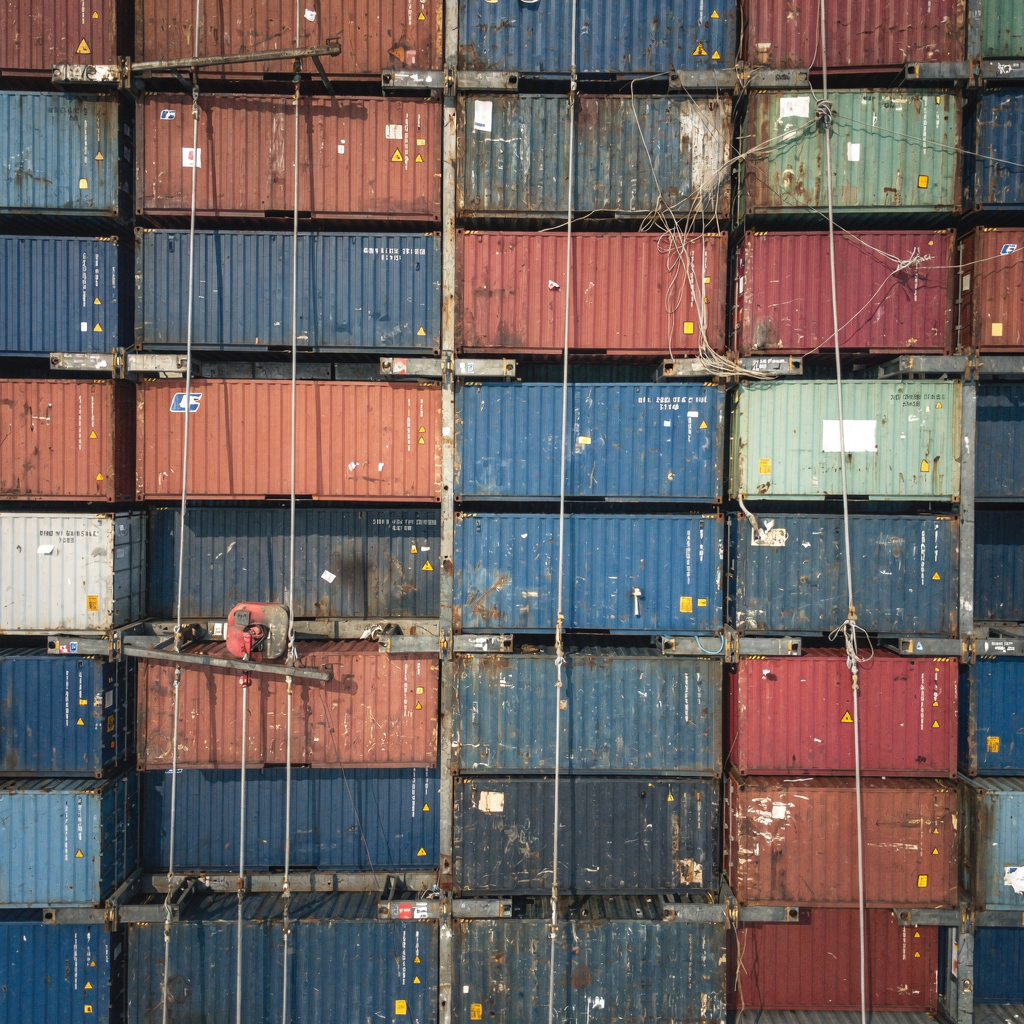
There are standardised and semi- or non-standardised methods. Standardised methods use approved schemes and certified hardware with predictable behaviour. Semi- and non-standardised schemes adapt to unusual loads, odd-size units, or special cargo. Semi-standard solutions require careful engineering and extra checks. In semi-standard cases the lashing plan must take elastic behaviour and non-linear load paths into account to avoid overloading any single element.
Material choice affects durability and performance. Steel chains resist abrasion and have low elastic stretch. Wires and synthetic slings have more give and can reduce peak forces on corner castings. Regular inspection falls under routine maintenance. Inspectors look for corrosion, wear, deformation, broken strands, and seized twist locks. Maintain records and replace parts when wear exceeds manufacturer limits. A solid inspection routine helps reduce the risk of containers from moving and helps prevent cargo damage.
Operators must ensure that the lashing and the selection of devices match expected voyage conditions. For example, lashings that are tight on calm days may over-tension when the ship rolls in rough seas. Conversely, too-flexible components may allow harmful movement. To balance these trade-offs, implement checklists and training for personnel involved. Good practice will ensure that the lashing is effective while remaining flexible enough to accommodate dynamic loads. Follow recommended service intervals and validate tension after initial sail-away.
Drowning in a full terminal with replans, exceptions and last-minute changes?
Discover what AI-driven planning can do for your terminal
calculate lashing forces: cargo analysis and tension factors
Calculating lashing forces begins with assessing the weight of the cargo and the anticipated environmental loading. Start by determining the weight of the cargo and the centre of gravity for each stack. Then distribute weights to match vessel limits. Basic formulas for longitudinal, transverse and vertical forces use inertia and acceleration terms. A simplified approach for a horizontal force uses F = m · a, where m is mass and a is the acceleration from ship motions and wind. For design work engineers combine that with coefficients for angle and lashing geometry to get realistic tensions.
The forces acting on the cargo include wind pressure, wave-induced acceleration, pitch and roll accelerations, and slamming events. Wind creates lateral pressure that acts on the exposed container surface. Wave action and ship motion produce accelerations that translate into inertial forces. Pitch and roll change directions frequently, so lashings see alternating tension and release. For a detailed study on how modern models predict forces under billowing conditions, see the Rolling Cargo Management research that applies deep reinforcement learning to predict and mitigate roll-induced loads Rolling Cargo Management Using a Deep Reinforcement Learning Approach.
Elastic behaviour of lashings modifies peak tensions. Elastic components elongate and absorb energy, which reduces instantaneous peak loads on twist locks and corner castings. Design calculations must therefore include elastic stiffness and pre-tension. Guidance documentation recommends adding safety factors and checking alternate load paths. The recommended practice in the industry shows that including elasticity produces more realistic and safer estimates DNV guidance.
Practically, planners compute lashing tensions for each stack based on expected accelerations and geometry. They then compare those tensions to the Working Load Limits of lashing gear and to the rated capacities of securing points on deck. For complex vessels and routes, advanced models and AI can improve predictions. Research shows that multimodal deep learning and AutoML approaches can increase prediction accuracy by more than 15% to 20% compared with older methods, which reduces over- or under-securing and helps reduce terminal handling time Lashing Force Prediction Model with Multimodal Deep Learning.
Finally, always apply safety factors. Typical practice uses factors to account for uncertainties in ocean conditions and in the elastic response of lashings. Include vertical checks for uplift, since vertical resistance is limited by the lashing arrangement and the hatch or deck fittings. A balanced calculation of lashing and vertical components helps prevent preventing movement and reduce the risk of containers going overboard.
Designing a comprehensive lashing plan for loading operations
Developing a lashing plan starts with clear data. Gather the weight of the cargo, container types, destinations, and the vessel route. Next, mark securing points and note hatch and deck constraints. The plan defines which stacks receive more reinforcement and which can rely on standard lashing. Steps include risk assessment, assigning hardware, and sequencing the loading operation so that heavier units are accessible for early securing.
A practical workflow is: (1) verify cargo weights and center of gravity; (2) draft a stow that satisfies trim and stability; (3) assign lashings and twist locks per stack; (4) sequence loading so that securing can occur as the cargo is landed. Integration with the vessel plan helps avoid rehandles. Loadmaster.ai’s StowAI and JobAI approaches show how automated planning can support this process by proposing executable sequences that reduce rehandles while retaining stability and crane productivity. Learn more about AI-assisted approaches in vessel planning at AI-assisted vessel planning for shortsea container terminals.
Address contingency measures early. For example, plan for additional lashings if the voyage is expected to cross storm-prone ocean zones. Include spare hardware in manifests. Assign responsibilities to the operator and the vessel crew for post-sail checks. The implementation phase should include inspection checkpoints immediately after sail-away and at regular intervals on passage. The aim is to ensure the safety and to reduce the risk of cargo damage during transit.
Logistics constraints such as port slot windows, crane availability and yard congestion affect the lashing plan. Planners must accommodate these constraints while keeping safety margins. Digital tools can simulate loading sequences to validate timing and resource needs. For terminals aiming to optimize stacking and yard flow, there are proven strategies to reduce rehandles and balance yard workloads; see our guide on optimizing container stacking in terminals for operational tactics.
Finally, the lashing plan must be documented and communicated to all stakeholders. The document should list hardware types, tension targets, and the person responsible for final verification. This clear record helps auditors and inspectors and makes it simpler to validate any changes made during the voyage.
Drowning in a full terminal with replans, exceptions and last-minute changes?
Discover what AI-driven planning can do for your terminal
Leveraging software and 3d simulations for secure stowage
Modern tools help planners predict forces and visualise securing arrangements. AI-driven prediction models and AutoML help refine lashing force calculation and the broader stowage layout. These tools run many scenarios quickly and can surface weak points in a plan. A practical benefit is that they can reduce terminal handling time and help prevent cargo but also damage to vessel fittings. Studies report measurable gains when predictive models are combined with stowage rules Lashing Force Prediction Model.
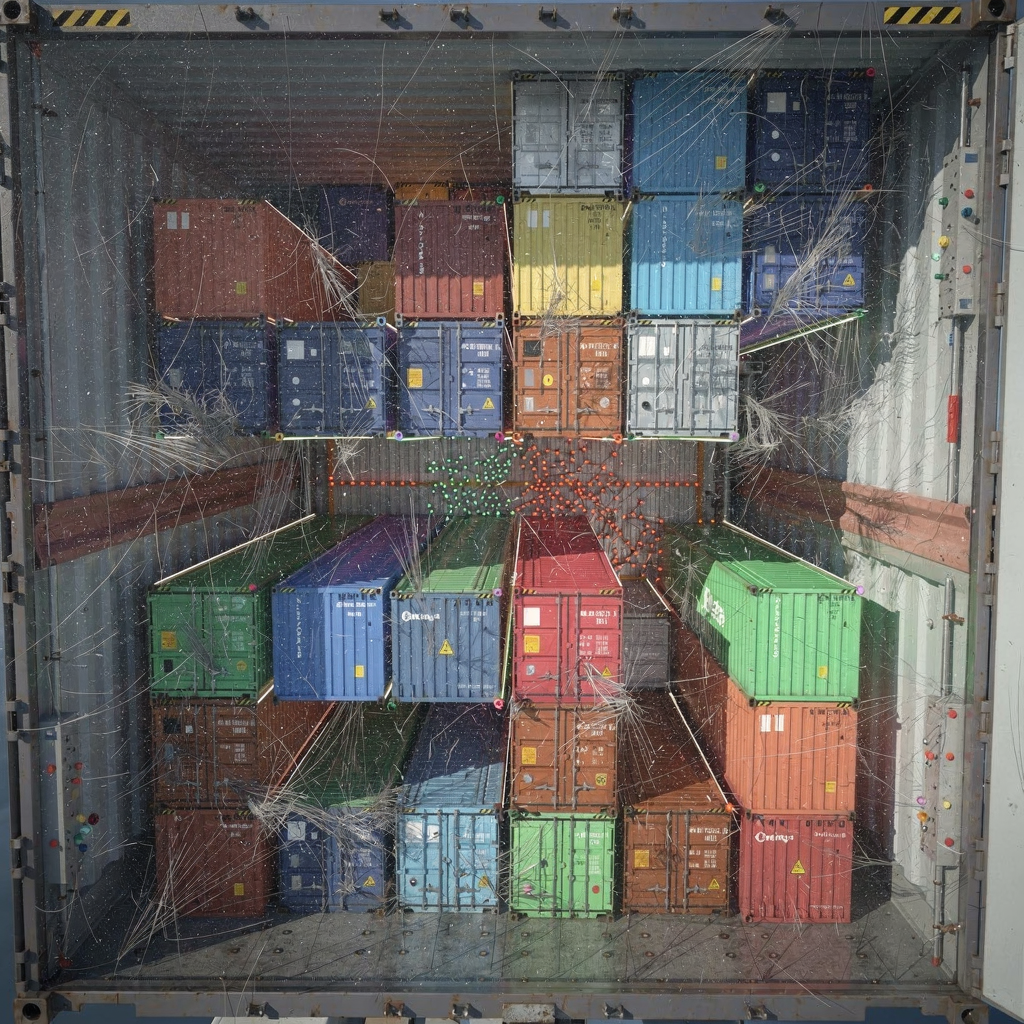
One software option can simulate accelerations, wind loads, and the elastic response of lashings, and then recommend tension values. The digital twin approach also lets operators simulate many loading sequences before execution. Loadmaster.ai trains reinforcement learning agents in a sandbox twin, where the agents learn policies without relying on historical errors. That method helps planners automate decisions and reduce rehandles while protecting the plan’s executability. See the platform’s approach to reducing idle time and improving quay productivity in our documentation on container-terminal berth and crane planning.
3d visualisation tools let planners and the vessel crew inspect securing arrangements and detect clashes. They allow teams to validate that twist locks and rods are in place, and that there is adequate access for inspection. Simulation can also show whether container stacks will overload a single line of fittings. When a model flags a hazard, planners can change the arrangement and simulate again. This iterative loop improves operational efficiency and provides evidence for audits.
AI models can automate repetitive checks and flag rare conditions. However, automation must have guardrails. Explainable AI and constraints keep the plan within regulatory and engineering limits. When combined with operator oversight, AI helps deliver safer outcomes. The result is a lashing plan that is robust, validated, and trackable. This blend of human judgement and machine speed improves terminal throughput while ensuring safe and efficient transport.
adhere to regulations to secure container transport
Adherence to international maritime rules and local guidelines is mandatory for safe voyages. The SOLAS convention and IMO guidelines set minimum requirements for cargo securing and weight declarations. For example, regulations require verified gross mass for containers and documented cargo securing procedures. The phrase “Cargo on ships is secured against the forces of wind, waves and the motions of the ship” captures the intent of these rules and is explained in industry reports LASHING@SEA – Safety4Sea.
Create a compliance checklist that covers hardware certification, inspection records, and verified weights. Personnel involved must receive training in cargo securing and in the application of approved securing manuals. The checklist should also require that the planner, the operator and the vessel master confirm the arrangement before sail-away. Regular audits ensure adherence and help prevent accident and cargo damage. Training should include best practices for tensioning, inspection, and emergency measures.
Documentation is critical. Keep records of the lashing plan, certificates for twist locks and chains, and inspection reports. Auditors expect traceability and evidence that the plan was followed. To validate decisions, include simulation outputs and any third-party calculations that support the lashing choice. Recommend periodic third-party reviews for non-standard arrangements.
Finally, promote a culture that values safety and compliance. Practical rules help ensure the safety of the cargo and of the crew. Applying the principles from guidance documents and from terminal automation projects reduces the risk that containers will shift or go overboard. The combination of training, clear documentation, and technology creates a safer, auditable system for maritime transport.
FAQ
What is a lashing plan and why is it needed?
A lashing plan lists how containers will be secured for a voyage, which hardware will be used, and who is responsible for checks. It is needed to prevent containers from moving, to protect the vessel, and to comply with international rules.
How do you calculate lashing forces?
Calculations start with the mass of the container and the expected accelerations from wind and waves, using F = m · a as a basic principle. Engineers add coefficients for geometry and elasticity and then apply safety factors to size hardware.
What role do elastic lashings play?
Elastic components absorb energy and reduce peak loads, which can protect twist locks and corner castings. Including elastic behaviour in the calculation provides more realistic tensions and reduces the chance of sudden failures.
How often should lashing equipment be inspected?
Inspection intervals depend on usage and the manufacturer, but routine checks before sail-away and periodic inspections in port are standard. Inspectors look for corrosion, broken strands, deformation, and seized locks.
Can software replace human planners?
Software can automate calculations and run many scenarios, and it can propose executable sequences, but human oversight remains essential. Combining AI tools with operator checks yields better, auditable decisions.
What regulations govern container lashing?
SOLAS and IMO guidelines set minimum requirements, including verified gross mass and documented securing procedures. Local port authorities may add rules that must be followed as well.
How do wind and waves affect lashings?
Wind applies lateral pressure and increases drag, while waves produce accelerations that change direction and magnitude. Both create alternating loads that the lashing system must resist without failure.
What is the difference between standardised and semi-standardised lashing?
Standardised lashing follows approved schemes with certified parts and predictable load paths. Semi-standardised lashing adapts to unusual cargo or container sizes and requires additional engineering and documentation.
How can terminals reduce rehandles while keeping safety?
Better planning of sequences and stacks, and the use of AI-assisted planning tools, can reduce rehandles. Simulation and stow validation before execution also help maintain safety without extra moves.
When should I call an expert for a non-standard load?
If the cargo has an unusual shape, weight distribution, or if the planned route includes severe weather, bring in a cargo securing specialist. A specialist can design a non-standard arrangement and provide the necessary calculations and certificates.
our products
 stowAI
 stackAI
 jobAI
jobAI
Innovates vessel planning. Faster rotation time of ships, increased flexibility towards shipping lines and customers.
Build the stack in the most efficient way. Increase moves per hour by reducing shifters and increase crane efficiency.
Get the most out of your equipment. Increase moves per hour by minimising waste and delays.
stowAI
Innovates vessel planning. Faster rotation time of ships, increased flexibility towards shipping lines and customers.
stackAI
Build the stack in the most efficient way. Increase moves per hour by reducing shifters and increase crane efficiency.
jobAI
Get the most out of your equipment. Increase moves per hour by minimising waste and delays.