
Building a digital twin of an inland container terminal
digital twin and container terminal: foundations and benefits
A digital twin is a digital replica of a physical system that runs alongside operations. The digital twin is a virtual and the twin is a virtual representation that ties sensors, models, and users together in one view. In an inland container terminal the digital twin maps yard layout, berth access, gates, stacking rules, equipment, and workforce. It links the physical layer to analytics so planners can visualize flows and make informed choices. The digital twin concept helps teams test operational strategies without interrupting live work.
Core inputs include IoT telemetry and data from sensors, yard telemetry, terminal operating system records, environmental feeds, and historical data for profiling. Those data sources feed a decision support system that supports scheduling, resource allocation, and contingency plans. Real-time data from sensors feeds status updates, while historical data supports baseline performance comparisons. Stakeholders then get a comprehensive view of capacity and delays and can prioritize actions in minutes.
Benefits are measurable. Studies show that digital twin implementations can reduce downtime by up to 30% (research on resilient ports), and digital twin models can identify energy savings of roughly 15% through smarter equipment scheduling (sustainability assessment). The framework of the digital twin also supports resilience planning and recovery analysis, as “the digital twin for a container terminal enables detailed recovery analysis and operational resilience” (UNCORRECTED PROOF). In practice an integrated digital approach reduces idle time, speeds up container throughput, and lowers costs.
For teams starting out, a clear design of digital twin helps. First, map physical assets and sensors. Next, connect the terminal system and the terminal operating system. Then, validate models with short pilots and scale when metrics improve. Loadmaster.ai uses a sandbox digital twin to train RL agents so teams can see policy improvements before go-live. This stepwise method helps avoid common pitfalls while making the effort data-driven.
Drowning in a full terminal with replans, exceptions and last-minute changes?
Discover what AI-driven planning can do for your terminal
digital twin technologies for port and terminal yard integration
Digital twin technologies combine BIM, IoT networks, and AI analytics to form a live mirror of terminal work. BIM supplies the detailed geometry and infrastructure metadata. IoT networks deliver telemetry from RTGs, AGVs, yard cranes, and gates. AI then interprets telemetry and suggests actions. Together these elements create an integrated digital environment for planning and control. This architecture mirrors ports and terminals that modernize yard control and berth planning.
At the equipment level integration links the yard cranes and quay crane systems to the terminal control system and the TOS. Automated container terminal elements like AGVs and RTGs stream status and faults into the digital twin model. The model ingests those events and issues short-horizon schedules to reduce rehandles. For example, yard throughput gains emerge when the digital twin application rebalances space and move sequences. Pilot projects have shown reduced idle time and higher moves per hour when the twin coordinates quay and yard tasks.
Operators tie the digital twin system to existing container handling platforms through APIs and EDI. That enables real-time command and feedback loops. An integrated digital twin also improves visualization and operator situational awareness. For teams that need deeper integration, see our overview of digital twin integration with container terminal operating systems which explains API patterns and deployment choices (integration guide).
Security and governance must accompany these technologies. A clear data ownership policy, strong identity controls, and encrypted telemetry prevent leakage. Loadmaster.ai designs safe-by-default deployment patterns that align with EU AI Act thinking and operational governance. The result is a robust and auditable path from pilot to production.
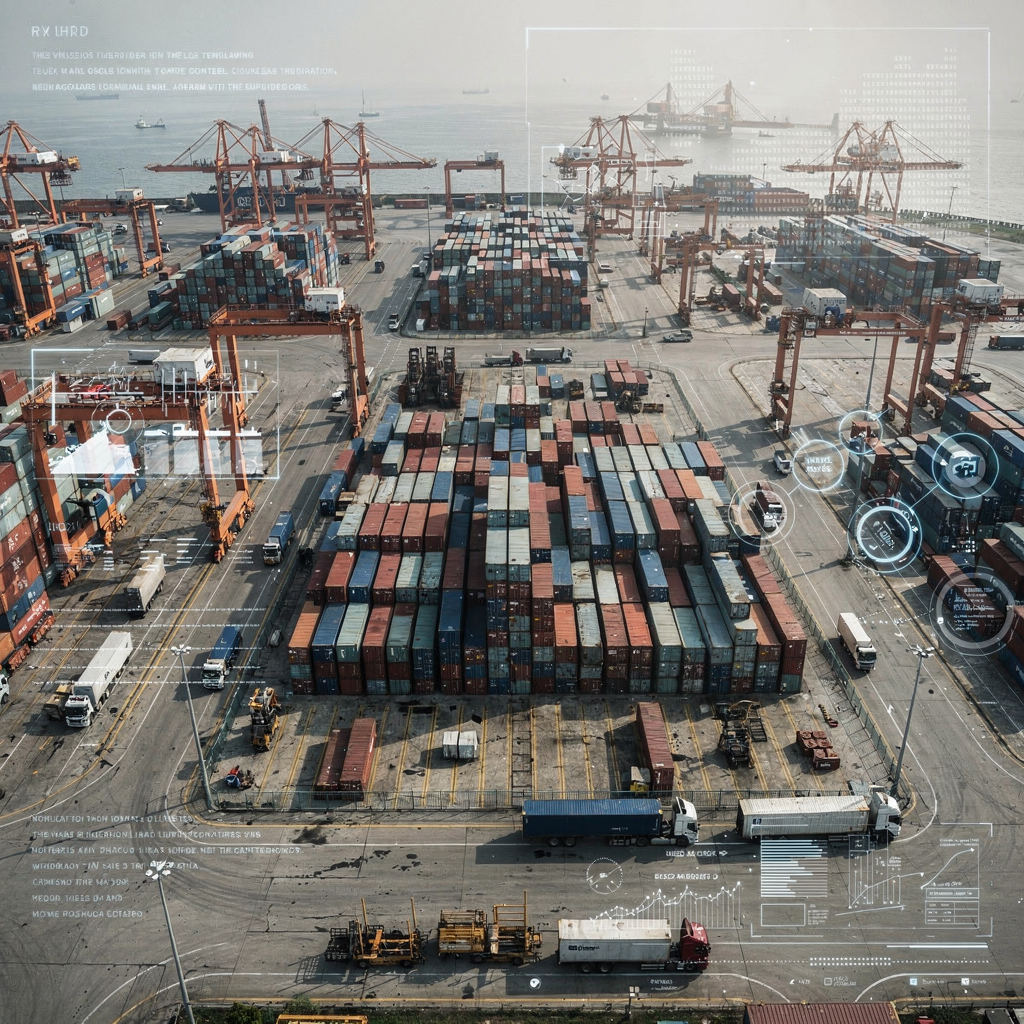
Real-time simulation and AI forecast for logistics optimization
Real-time simulation underpins adaptive logistics and enables fast decisions. A real-time simulator models vessel calls, gate flows, and yard moves. The simulator consumes real-time telemetry and operational data and produces scheduling actions. When events change—like a delayed train or sudden peak in gate arrivals—the simulator re-plans and offers alternative sequences. These dynamic adjustments cut waiting time and protect berth utilization.
AI plays two roles. First, artificial intelligence models forecast arrivals and resource needs. Second, reinforcement learning agents explore planning policies in the simulated environment. Forecast models predict vessel and truck arrival windows and feed a gate appointment planner. These forecasts reduce uncertainty and inform stacking and chassis allocation. For background on simulation tools for inland sites see our software overview (simulation software).
Practical examples include reducing queue lengths and balancing crane workloads. The decision support system uses simulation results and twin data to score schedules. Then the system suggests assignments that minimize driving distance and rehandles. Loadmaster.ai trains StowAI, StackAI, and JobAI agents inside a digital twin so they can learn without historical data. This method avoids the pitfall that traditional models face when historical data are sparse, biased, or incomplete.
Dashboards use javascript to render live heat maps, KPIs, and predicted congestion. That helps planners visualize backlog and adjust gates. Together, real-time tools and AI deliver optimized plans that improve container throughput and lower energy consumption by enabling smarter equipment use. The combination of live simulation and forecast-driven planning moves terminals from firefighting to proactive operations.
Drowning in a full terminal with replans, exceptions and last-minute changes?
Discover what AI-driven planning can do for your terminal
maritime operations management with crane and quay crane digital twins
Crane digital twins extend condition monitoring into predictive maintenance. A quay crane twin models structural loads, cycle counts, hydraulic performance, and control feedback. By tracking load cycles and fuel use, the twin alerts maintenance teams before failures occur. This predictive insight reduces unplanned downtime and increases crane availability for vessel handling.
Crane performance analytics calculate utilization, mean time between stops, and risk of overloads. The analytics blend sensor input, operational data, and modeling to give actionable alerts. You can then schedule maintenance windows at low-impact times and preserve throughput. A quay crane twin that links to a decision support system lets operators sequence moves based on both equipment health and vessel priorities.
Synchronization between quay cranes and yard cranes brings smoother maritime cycles. When a quay crane slows, the yard crane sequences adjust automatically so containers do not block the gate. That reduces truck waiting time and avoids pile-ups. In complex operations, the digital counterpart coordinates multiple cranes to align pick-and-drop patterns and to minimize yard congestion.
Operational teams benefit from case study evidence and published best practices that show improved cycle times and lower repair costs. For terminals that manage rail transfers and intermodal flows, the crane twin also interacts with the intermodal terminal planner so that all horizons align. For further reading on predicting maintenance from telemetry see our piece on using data to predict equipment maintenance in inland container terminals (predictive maintenance).
simulate port terminal processes to enhance throughput
To simulate terminal processes you build a virtual representation of a physical yard and then run scenarios. Simulation covers stacking, de-stuffing, gate operations, and internal transfers. The digital twin model captures rules for container handling, equipment speed profiles, and human interactions. Running what-if scenarios highlights bottleneck locations and reveals where small changes yield big gains.
Typically planners run a set of trials to find optimal stacking rules and gate windows. The simulation results show rehandle rates, average dwell, and container throughput under different mixes. With those outputs, teams can recommend process adjustments such as altered gate shifts, dedicated lanes for priority cargo, or changes in yard crane assignment. These changes reduce the chance that one failure cascades across the yard.
Common bottleneck findings include gate processing, insufficient stacking depth, and uneven yard crane workload. Addressing these areas often involves moving a small fraction of containers or adding short-term equipment during peaks. The twin lets you test these moves and measure impact before committing resources. That lowers risk and accelerates measurable improvements.
For operators working toward full digital transformation, the simulated tests form the basis for operational playbooks and training. Loadmaster.ai uses sim-trained RL agents that learn policies for stowage and rehandling, then validate them in the sandbox twin. This practice both reduces rehandles and stabilizes performance across shifts. After pilot validation, terminals typically scale changes and see improved throughput within weeks.
digitalization and digital twin integration strategy for container terminal operations
A practical digitalization roadmap splits work into pilot, scale-up, and full deployment phases. Start with a small block or a single berth and build a minimal digital twin. Validate metrics and refine models. Next expand to terminal yard areas and integrate with the terminal operating system. Finally deploy across the terminal and connect hinterland partners for end-to-end visibility.
Governance matters. Set policies for data ownership, access, and retention. Secure telemetry, protect interfaces, and include privacy controls. A control system that enforces roles and approvals keeps operators confident and supports auditability. Change management is equally important. Train users, collect feedback, and iterate dashboards so teams adopt new workflows quickly.
Trends point to AI-driven optimization, more integration with hinterland logistics, and stronger sustainability metrics. In future research, digital twins will tie into broader supply chain networks and support multi-terminal coordination. The proposed a digital twin approach that couples reinforcement learning with live operations will create adaptive policies that respond to evolving traffic patterns.
Operational strategies should include staged KPIs and guardrails. Use measurable targets for reduced waiting time and lower energy consumption, and link them to contractual SLAs. A useful path is to deploy an automated container terminal pilot, validate gains, then scale. Loadmaster.ai offers a closed-loop approach: we spin up a digital twin, train RL agents against explainable KPIs, and deliver multi-objective control that balances quay productivity with yard congestion. This method avoids over-reliance on historical data while producing stable, repeatable gains.
FAQ
What exactly is a digital twin for a container terminal?
A digital twin is a virtual representation that models physical assets, processes, and workflows in a terminal. It connects sensors, the terminal operating system, and analytics so teams can test changes without touching live operations.
How do digital twins reduce downtime?
Digital twins enable predictive maintenance and faster recovery planning through continuous monitoring and scenario testing. Studies report up to 30% reduction in downtime when a twin supports resilience planning (source).
Can a small inland terminal start with a digital twin?
Yes. Start with a pilot block or a single gate to validate assumptions and metrics. That phased approach reduces risk and helps teams learn before wider roll-out.
Do digital twins require lots of historical data?
No. Modern methods including reinforcement learning can train agents in simulation without heavy reliance on historical data. This cold-start readiness helps terminals that lack clean history.
How does AI improve stacking and stowage?
AI models forecast arrivals and suggest placement strategies to minimize rehandles and travel distance. Reinforcement learning agents can learn non-intuitive policies that balance multiple KPIs and adapt to changing mixes.
Will a digital twin improve sustainability?
Yes. By optimizing equipment schedules and routing, a twin can reduce energy consumption. Research shows potential energy savings of around 15% through optimized operations (study).
How do you integrate a twin with existing TOS?
Integration uses APIs and EDI to exchange tasks, position data, and status updates with the TOS. For technical patterns and best practices, review integration guides that explain synchronization and latency handling (integration guide).
What security measures are necessary?
Apply role-based access, encrypted telemetry, and robust authentication between the twin and equipment. Governance must also define data ownership and retention policies to support audits and compliance.
Can digital twins coordinate quay and yard cranes?
Yes. A coordinated twin sequences quay crane and yard crane moves to avoid conflicts and reduce truck waiting time. That synchronisation lowers dwell and keeps maritime cycles efficient.
Where can I learn more about simulation tools for inland terminals?
Start with industry overviews and software comparisons that explain modeling assumptions and interfaces. Our inland container terminal simulation software overview provides practical guidance on tools and selection criteria (software overview).
our products
 stowAI
 stackAI
 jobAI
jobAI
Innovates vessel planning. Faster rotation time of ships, increased flexibility towards shipping lines and customers.
Build the stack in the most efficient way. Increase moves per hour by reducing shifters and increase crane efficiency.
Get the most out of your equipment. Increase moves per hour by minimising waste and delays.
stowAI
Innovates vessel planning. Faster rotation time of ships, increased flexibility towards shipping lines and customers.
stackAI
Build the stack in the most efficient way. Increase moves per hour by reducing shifters and increase crane efficiency.
jobAI
Get the most out of your equipment. Increase moves per hour by minimising waste and delays.