
terminal operating system 2026: Overview of TOS in Modern Ports
A terminal operating system coordinates the many moving parts of a port and makes day-to-day decisions faster. In 2026 the modern TOS must do more than record moves. It must provide real-time visibility, support equipment control, and offer advanced analytics that help terminal planners make proactive choices. Automation and AI now drive optimization across quay cranes, yard stacks, and gate flows, and they change how terminals measure success. Recent forecasts expect the Terminal Management System market to grow at an 8–10% CAGR over the next decade, which confirms increasing demand for automation and operational tools (market forecast).
Terminals that adopt advanced terminal operating system features report concrete gains. For example, some ports see up to a 25% increase in throughput and a 15% cut in turnaround time when they use an integrated platform that ties quay, yard, and gate together (efficiency study). These numbers matter because they translate directly into lower berth idle time and better resource utilization, and they help ports compete for liner calls and freight. Additionally, modern TOS now embed predictive maintenance and IoT links so equipment downtime drops, and total cost of ownership falls.
Technology trends for 2026 include tighter AI-driven automation, deeper IoT integration, and more powerful real-time monitoring. Terminals expect systems to integrate with existing enterprise systems and with external systems such as customs systems and ERP systems, and this drives demand for robust EDI integration and extensible APIs. As one vendor put it, “Our Terminal Operating System empowers terminals to not only manage container flow efficiently but also to anticipate bottlenecks before they occur” (vendor quote). For terminals planning upgrades, consider reading about how simulation helps capacity planning to test changes before live deployment (using simulation for capacity planning).
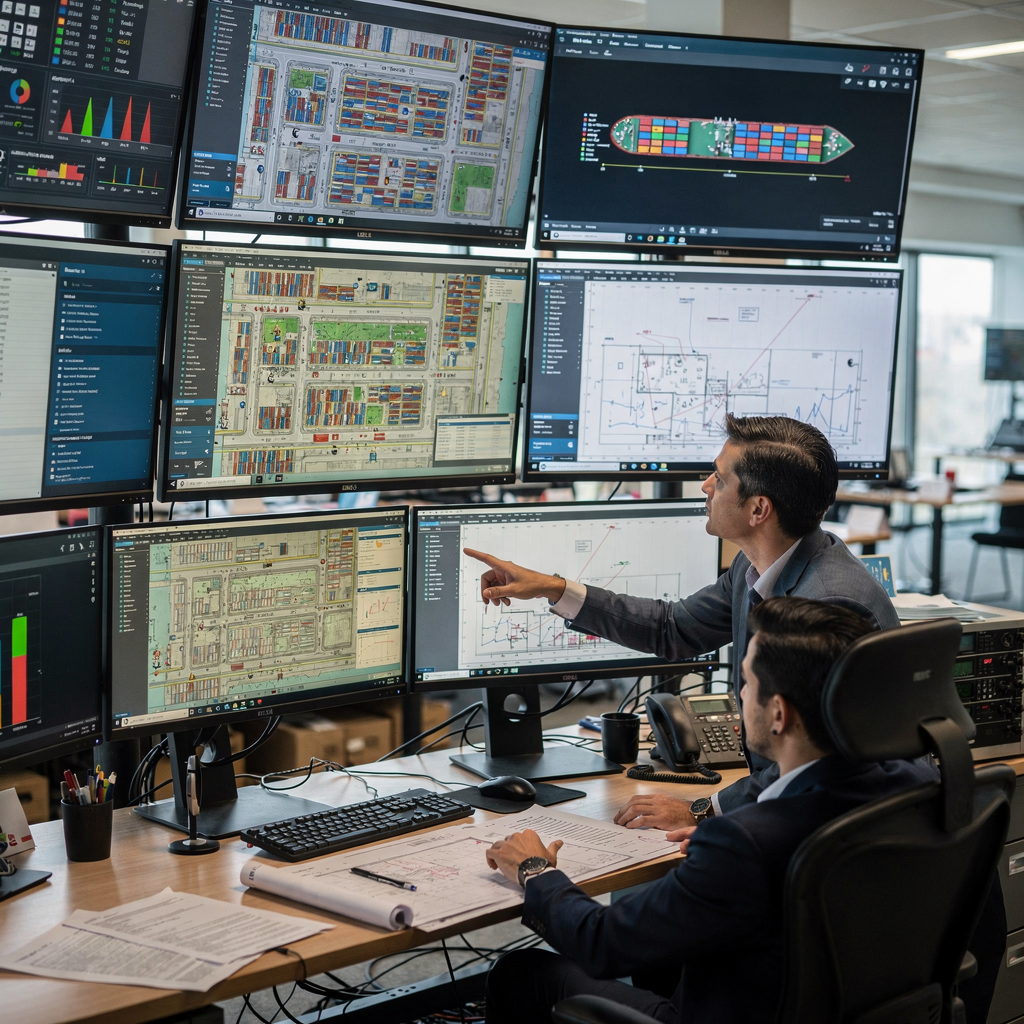
container terminal operating system and intermodal types of terminal
A container terminal operating system focuses on vessel scheduling, yard management, and gate control. It links gate scanners, RTG and straddle crane telemetry, and EDI flows to reduce manual handovers. The planning and management of container moves requires accurate sequencing for quay cranes, detailed slotting for yard stacks, and fast gate turn routines for trucks. For short-term decision making terminals need real-time visibility and for longer-term planning they need models that simulate peaks and vessel mixes. If you want applied examples, see how real-time replanning capabilities are used to adapt during peak events (real-time replanning).
Intermodal connectivity matters because cargo rarely moves by one mode alone. Rail, road, and inland ports must exchange data to avoid dwell time and missed connections. The TOS integrates with container shipping liner solutions, with rail manifests, and with inland terminal hubs so that the entire workflow stays coherent. A modern TOS offers role-based interfaces for marine and rail terminal operators and provides tools to coordinate handovers between modes. This reduces rehandles and keeps freight moving through the network.
Types of terminal vary. There are coastal container terminals, inland container terminals, RoRo terminals, bulk terminals, and multipurpose terminal sites that handle mixed flows. A single multi-purpose terminal will need a comprehensive terminal operating system that supports various types of cargo and mixed equipment fleets. For example, multipurpose terminal operations depend on resource utilization across cranes, conveyors, and berths. Terminals that wish to streamline processes should consider systems that allow flexible yard management while supporting customs systems, equipment control systems, and EDI integration. For operators looking for gate and congestion solutions see the guide on container terminal gate congestion solutions (gate congestion solutions).
Drowning in a full terminal with replans, exceptions and last-minute changes?
Discover what AI-driven planning can do for your terminal
best terminal operating system: list of best terminal operating and top terminal operating picks
Choosing the best terminal operating system depends on scale, service mix, and goals. Below is a curated list of top terminal operating picks for 2026, assembled to cover on-prem and cloud models, and to include systems focused on RoRo, intermodal, and fully automated yards. The list of best terminal operating includes enterprise-grade systems and niche solutions that excel in specific workflows:
1) NAVIS — a widely adopted comprehensive terminal operating system known for high configurability and deep enterprise systems integration. NAVIS remains a strong choice for large deepsea terminals that require mature equipment control and complex gate logic. 2) iPortman / POS style platforms — end-to-end systems that handle vessel, berth, and yard in a single suite. 3) Envision’s container terminal operating system — built for automation and scheduling. 4) Opus Terminal — modular architecture and customisation that fits mixed fleets and helps terminals scale. 5) Logstar terminal operating system / Logstar TOS — a compact option for small and medium sized container operations. 6) Hogia TOS — a RoRo-specialised product with strong stakeholder collaboration features. 7) Oscar TOS — AI-powered stacking and predictive analytics for yard balance. 8) CommTrac TOS — focused on intermodal flows and user-friendly execution. These picks reflect market variety so terminal operators can match tools to business models.
Compare performance metrics when you evaluate vendors. Terminals using advanced terminal operating system features report throughput increases up to 25% and turnaround time reductions of roughly 15% in documented studies (efficiency gains). Automation also cuts manual labour costs by as much as 30% and reduces container misplacement by about 40% in some implementations (detailed metrics). When you evaluate the best terminal operating system consider predictive maintenance, dynamic berth allocation, and advanced reporting dashboards that provide both real-time and historical analytics. For deeper reading on equipment cycle time reduction tactics consult the Loadmaster guide on equipment cycle time reduction techniques (equipment cycle time reduction).
compare the best tos platforms: compare the top terminal operating on-prem and cloud-based
On-premises TOS and cloud-based terminal operating system offerings both have trade-offs. On-prem deployments give you direct control over data residency and tight network isolation, and they fit terminals with strict compliance needs. Conversely, cloud-based software reduces upfront hardware costs, accelerates deployment, and scales elastically when throughput spikes occur. A cloud-based terminal operating system can be more scalable and faster to update, while an on-prem kit can be preferable where latency and regulatory control are non-negotiable.
Total cost of ownership depends on licence model, integration effort, and ongoing support. Cloud-hosted systems often lower capital expenditure but may incur subscription fees that accumulate. On-prem systems demand higher initial deployment effort, longer implementation time, and heavier system integration to connect to existing enterprise systems, customs systems, and ERP systems. To compare the top terminal operating options calculate lifecycle costs, expected gains in resource utilization, and savings from reduced rehandles and labour.
Security and compliance are central. Data residency rules, EU AI Act readiness, and audit trails matter for terminals that share sensitive booking or customs data. Some vendors emphasize hybrid patterns that keep critical telemetry on-site while using cloud analytics for heavy model training. The choice should reflect your IT strategy and your regulatory constraints. If you need faster iteration and want to test AI policies in a sandbox before roll-out, consider solutions and pilots that offer safe deployment patterns; for example, Loadmaster.ai trains RL agents in a digital twin before live go‑live to ensure safe, explainable changes to planning logic (scaling AI across port operations).
Drowning in a full terminal with replans, exceptions and last-minute changes?
Discover what AI-driven planning can do for your terminal
opus terminal, hogia tos, oscar tos and commtrac tos: Leading solutions in 2026
Opus Terminal is a modern, modular platform that allows terminals to add modules as they grow. With a modular design Opus Terminal fits mixed equipment fleets and supports custom workflows that span quay, yard, and gate. Terminals can integrate Opus with existing enterprise systems and with equipment control systems, which makes it easier to roll out selective features without replacing the entire stack. Opus Terminal also offers role-based views so vessel planners and yard strategists see tailored dashboards.
Hogia TOS targets RoRo and complex roll-based cargo. It provides a collaboration platform that keeps shipping lines, terminal planners, and road carriers aligned. Hogia TOS supports intermodal handovers and vessel loading patterns specific to RoRo stowage. The system also integrates with customs systems and EDI integration layers so that paperwork and manifests move faster, which reduces gate dwell.
Oscar TOS emphasizes AI for container stacking and predictive analytics. Oscar TOS uses machine learning to forecast yard imbalance and then suggests reshuffles that reduce travel distances and rehandles. The platform links with real-time monitoring streams and with equipment telemetry so that lift cycles and crane idle time are visible. For operators wanting advanced system features like predictive maintenance and dynamic yard slotting, Oscar TOS is a top contender.
CommTrac TOS focuses on intermodal efficiency and user-friendly execution. It supports rail integration and inland port workflows, and it is built to connect to container shipping liner solutions and to road carriers. CommTrac TOS enables terminals to route cargo through multimodal corridors and to measure throughput by mode. Across all four products, terminals should test how the platform integrates with existing enterprise systems, with ERP systems, and how it supports system integration efforts. When selecting, remember to compare the top terminal operating suites for deployment time, training resources, and how the software streamlines planning and execution for marine and rail terminal operators.
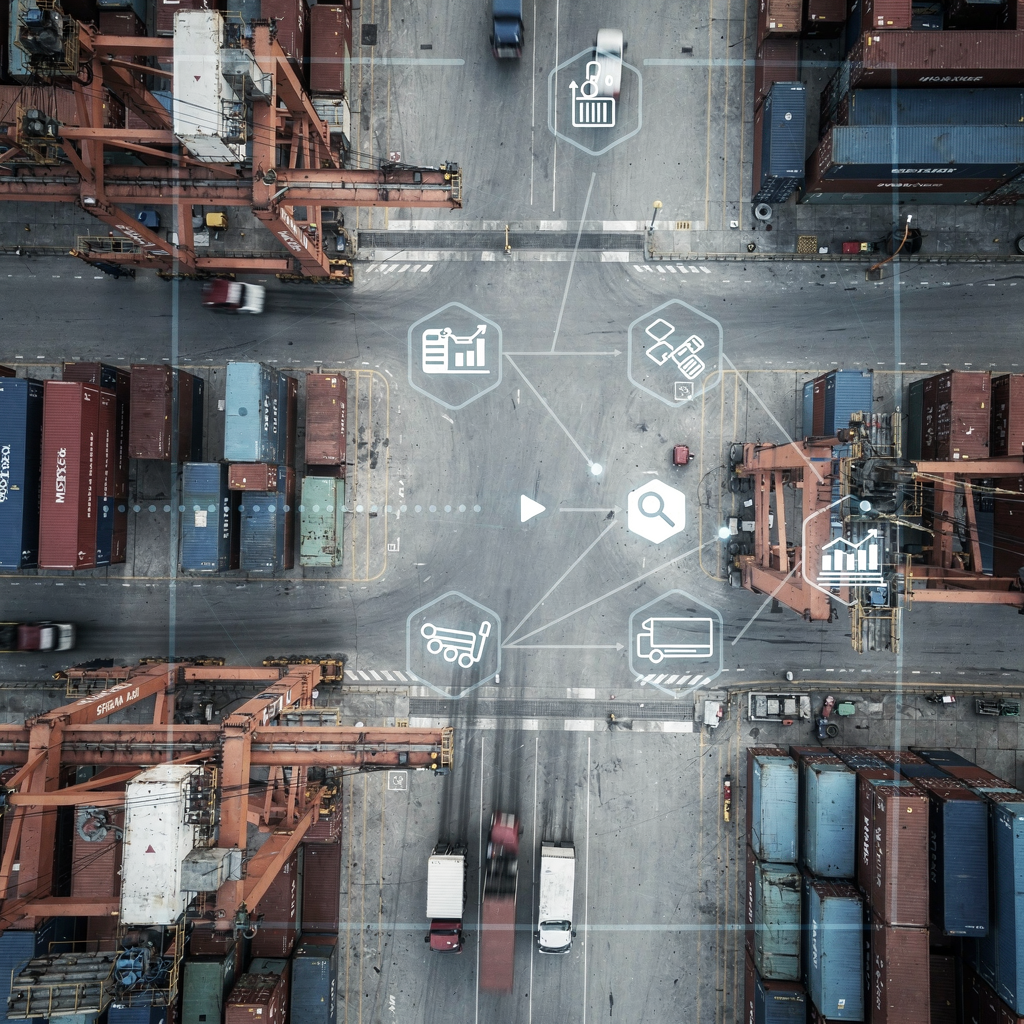
terminal container and tos demos: Selecting the best terminal operating
Selecting a TOS starts with structured trials and with free demos. When you request free demos insist on scenarios that mirror your busiest days and your worst disruptions. Good trials include peak vessel rotations, gate surges, and simulated equipment failures so vendors can show how the software responds. A demo must test planning modules, yard management features, EDI integration, and equipment control links. Also test the vendor’s training resources and the available support during and after deployment.
Use a checklist when you evaluate vendors. First, verify feature coverage: does the TOS offers berth allocation, job dispatch, and real-time monitoring of crane cycles? Second, test integrations: does the vendor support EDI integration, customs systems, and existing enterprise systems? Third, stress test the UI: can planners and dispatchers access required views with low latency? Fourth, confirm rollout approach: ask about deployment time, cloud or on-prem delivery, and how the vendor handles system integration. Fifth, measure measurable KPIs in the pilot: moves per hour, average turnaround time, and resource utilization. Loadmaster.ai customers often pair their TOS with reinforcement learning agents to improve planning decisions, which reduces rehandles and evens workloads across shifts.
Finally, consider governance and safety. A robust vendor will provide audit trails and explainable decision logic, which helps with compliance and with operator trust. If you need hands-on methods for planning robustness and for collision prevention, consult specialist guides on collision prevention systems and on real-time replanning so you know what to expect in full-scale operations (collision prevention systems). When selecting, always align the software decision to your operational goals so you gain sustained ROI rather than temporary gains.
FAQ
What is a terminal operating system and why is it important?
A terminal operating system is management software that coordinates quay, yard, and gate activities. It is important because it reduces manual work, improves real-time visibility, and helps terminals increase throughput while lowering costs.
How does a container terminal operating system differ from general port software?
A container terminal operating system focuses specifically on container moves, yard stacks, vessel planning, and gate control. General port software may include broader functions, but a container terminal TOS optimizes moves and provides detailed yard management and equipment control features.
Which types of terminal are supported by modern TOS platforms?
Modern TOS platforms support coastal container terminals, inland container terminals, RoRo terminals, bulk and multi-purpose terminals. Many solutions provide modules to handle mixed flows and various types of cargo efficiently.
What metrics should I evaluate during a demo or free trial?
Measure moves per hour, turnaround time, pier productivity, and resource utilization during a demo. Also track system response under gate surges, and the platform’s ability to streamline workflow and to prevent rehandles.
Are cloud-based terminal operating systems secure enough for sensitive data?
Yes, many cloud-based terminal operating system vendors provide strong security controls, data residency options, and compliance support. Nonetheless, some terminals choose on-prem deployments when strict latency or regulatory constraints apply.
Can a TOS integrate with existing ERP systems and customs systems?
Most leading TOS platforms provide APIs and EDI integration to connect with ERP systems and with customs systems. Proper system integration reduces manual re-entry and improves the flow of booking and manifest data.
How much productivity improvement can a terminal expect after upgrading its TOS?
Terminals often see throughput improvements in the range of 15–25% and reduced turnaround time after implementing advanced systems. Results vary by terminal complexity, automation level, and how the change is managed operationally (study).
What is the role of AI in modern TOS platforms?
AI helps with predictive analytics, container stacking suggestions, and schedule optimization. Reinforcement learning can go further by training agents in a digital twin to optimize multi-objective KPIs before a live rollout.
Which vendors are notable in 2026 for terminal software?
Notable names include NAVIS, Opus Terminal, Hogia TOS, Oscar TOS, CommTrac TOS, and Envision’s container terminal operating system. Each has strengths in different workflows and scales.
How should terminal operators prepare for implementation?
Plan for staged deployment, test with realistic scenarios, and ensure integration with existing enterprise systems. Also build training programs for staff and use pilot metrics to validate gains before full rollout.
our products
 stowAI
 stackAI
 jobAI
jobAI
Innovates vessel planning. Faster rotation time of ships, increased flexibility towards shipping lines and customers.
Build the stack in the most efficient way. Increase moves per hour by reducing shifters and increase crane efficiency.
Get the most out of your equipment. Increase moves per hour by minimising waste and delays.
stowAI
Innovates vessel planning. Faster rotation time of ships, increased flexibility towards shipping lines and customers.
stackAI
Build the stack in the most efficient way. Increase moves per hour by reducing shifters and increase crane efficiency.
jobAI
Get the most out of your equipment. Increase moves per hour by minimising waste and delays.