
Optimization: Defining goals and metrics
Optimization of port operations begins with clear goals and measurable metrics. For any port, the first targets are waiting time, berth utilisation, and turnaround time. These KPIs drive decisions and investment. Terminal managers monitor waiting time to reduce fuel burn and emission. For example, studies report that vessel waiting times at congested ports can rise by 30–50% when congestion worsens. That statistic influences berth planning and resource allocation directly.
Quantitative impacts are persuasive. Congestion-related delays increase operational costs by roughly 20–25% for terminal operators, and global container throughput grows about 4–5% annually. Those figures justify investment in optimization tools and in staff training. Port authorities and terminal operators set targets for berth utilisation and for turnaround time. They also track cost per move and per TEU, and they monitor berth assignments that minimize idle quay crane time.
Data sources matter. Accurate AIS feeds give arrival times. Terminal operating systems capture moves per hour and crane status. Weather and tide information affect time window availability for deep draft calls. Together, these sources feed predictive models and support a model for berth allocation or an optimization model that runs nightly or in real time. Port managers use integrated berth dashboards to view the available berth, to track pilotage slots, and to detect conflicts early.
Performance frameworks also include continuous improvement loops. First, terminals set baseline targets. Next, they collect data and run simulation optimization or an optimization algorithm. Then, they score outcomes and refine policies. This cycle reduces waiting time and improves berth utilisation. It also supports better port management and clearer communication with carriers, pilots, and hinterland partners.
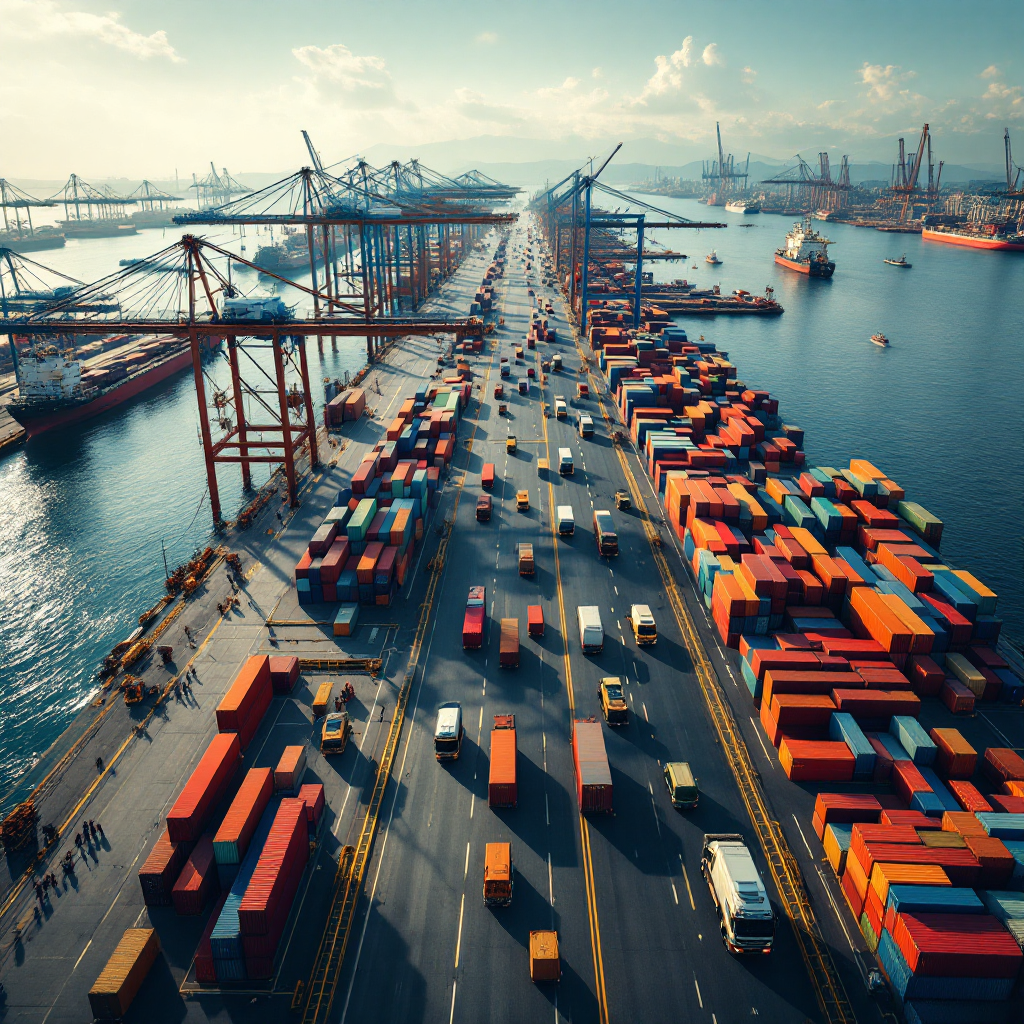
Port call optimization: Harnessing real-time data and AI
Port call optimization depends on real-time data and on AI. Modern port systems ingest AIS, terminal operating system feeds, and mooring updates. They then apply machine learning models for dynamic scheduling. Deep Q-network and reinforcement learning approaches have shown promise for the dynamic berth allocation problem and for reducing waiting time under uncertainty. For instance, research on discrete dynamic berth allocation highlights how a DQN-based model adapts to uncertain arrivals and variable load capacities in experiments. That research supports building more resilient port call systems.
AI models improve arrival predictions and cargo volume forecasts. They integrate ETA adjustments, container counts, and yard capacity. Then, the models propose a port call plan that balances quay crane workloads, yard stacking, and hinterland pickup windows. Integration reduces hand-offs and speeds replies to shipping lines. The platform reads arrival updates, matches them to terminal KPIs, and drafts or routes decision-ready messages to planners. That lowers clerical load and shortens response cycles.
Practical case studies show benefits. A Pyomo-based MILP implemented in a Malaysian port demonstrated measurable berth allocation improvements and throughput gains; the authors report efficiency improvements up to 18% in simulation using Pyomo. Another port applied adaptive scheduling and cut peak-time congestion by prioritising calls that freed yard capacity faster. Those projects link to the broader field of transportation research and show how port call optimization connects to hinterland transport, rail bookings, and truck appointment systems.
To implement port call improvements, teams combine ML forecasts with rule-based policies. They simulate scenarios and they test allocation strategies before live roll-out. Tools that support this work include real-time dashboards, automated alerts, and integrated schedule change propagation. For further reading on machine learning use cases in port operations, see detailed examples of AI-based workload balancing and real-time replanning strategies from industry resources, which help teams move from pilot to production and to speed optimization across the port.
Drowning in a full terminal with replans, exceptions and last-minute changes?
Discover what AI-driven planning can do for your terminal
Berth: Managing capacity and physical constraints
Berth management requires attention to physical details and to operational flow. A berth has length, depth, crane coverage, and tidal constraints. Those characteristics set which ships can dock and when. Deep draft vessels need specific tidal windows. Shorter vessels can occupy flexible slots. Planners must account for crane availability and for quay crane scheduling to avoid idle time and to ensure high berth utilisation.
Congestion affects waiting time significantly. At busy container terminals, waiting time can grow 30–50%, and that worsens fuel consumption and schedule reliability as documented. That rise in waiting time increases cost per call and stresses port staff. It also amplifies downstream delays like missed rail lifts or late truck deliveries. To manage capacity, terminals group similar vessel types and calls. For example, grouping feeder and mainline calls can reduce crane changeover. Grouping reduces interference between deep-draft calls and smaller regional ships.
Operators use strategies such as planning of berth with time window constraints, and grouping, and cross-docking to maximise throughput. The continuous berth allocation problem and the discrete berth allocation problem both capture these constraints in mathematical form. Planners may run a model for continuous berth allocation when arrivals vary and when speed optimization matters. They may instead use discrete models when schedules are rigid. Both approaches generate effective berth assignments that respect tidal windows and crane coverage.
Managing a berth also means coordinating shore power or on-dock services. Optimization of shore power for plugged-in vessels reduces emissions and can factor into assignment decisions when environmental policy is enforced. Terminals must also consider empty container repositioning when allocating space, since empty moves consume yard capacity and affect quay crane productivity. Good berth planning balances berth and yard constraints, and it integrates quay crane scheduling with yard workflow to reduce total port dwell time.
Berth allocation problem: Mathematical and heuristic solutions
The berth allocation problem sits at the intersection of optimisation theory and port practice. Researchers frame it as an MILP, as integer programming, or as a rectangle packing problem with arrival time constraints. Static versions assume known arrivals and they suit MILP and integer programming solvers. For dynamic and stochastic settings, planners apply a robust optimization model or a stochastic berth allocation problem formulation to handle uncertainty.
Heuristics and metaheuristic algorithms offer practical speed. Local search, particle swarm optimization, ant colony optimization, and bee colony optimization have all been tested for the allocation problem in container terminals. These methods trade off optimality for computation time. They yield near-optimal solutions fast, and they work well when the scheduling problem updates frequently. For continuous berth allocation problem instances, heuristics manage the continuous placement of berths along a quay while respecting vessel length and time window constraints.
Metaheuristics combine with domain-specific rules to solve the berth allocation planning problem and the berth allocation problem considering quay crane interactions. Advanced solutions link berth allocation and quay crane: simultaneous berth and quay crane scheduling reduces crane idle time and speeds vessel turnaround. Researchers have also combined local search with rectangle-packing to optimise berth layout and to sequence arrivals efficiently in classic studies.
Deep reinforcement learning is emerging as a method for the dynamic berth allocation problem and for discrete dynamic berth allocation. These models learn policies that re-allocate berths when ETAs shift. They may embed an optimization algorithm as a baseline and they then improve over time. When uncertainty is high, RL agents can propose resilient allocation strategies that reduce waiting time and crane rework. For teams that need to produce fast decisions, combining MILP for planning and RL for reactivity gives a practical hybrid approach to a hard scheduling problem.
Drowning in a full terminal with replans, exceptions and last-minute changes?
Discover what AI-driven planning can do for your terminal
Port call process: From vessel arrival to departure
The port call process includes scheduling berthing slots, pilotage, mooring, cargo operations, and departure clearance. A successful port call requires clear roles for pilot, terminal planner, and carrier agent. Efficient scheduling ensures pilot availability matches the assigned berth and time window. That reduces unnecessary holding and it shortens overall port stay.
On quay, coordination is crucial. Quay cranes must align with yard planners and with hinterland transport. Quay crane scheduling dictates how fast containers move from vessel to stack. Delays in crane deployment produce bottlenecks in yard stacking and in truck hand-over. To address this, ports use simultaneous berth and quay crane planning and they form allocation and quay crane scheduling sequences that minimise cranes’ idle periods and truck wait time.
Bottlenecks often appear at the hand-over from quay to hinterland. If trucks queue at gate lanes, container dwell time grows. That reduces available berth capacity indirectly. Solutions include appointment systems, better yard crane cycles, and coordinated truck windows. Digital tools and integrated berth allocation and quay crane assignment systems help by sharing ETAs with carriers and with truck operators. For operational teams, automation of routine emails and status updates cuts friction.
To run a successful port call, teams must combine physical resources and information flow. They must standardise processes for speed and for consistency. They should monitor key indicators and adjust schedules to reflect real-time conditions. Doing so reduces waiting time and creates a better port experience for carriers and for hinterland partners.

Effective port call optimization: Best practices and policy levers
Effective port call optimization mixes technology, policy, and process design. Integrated terminal planning is central. Teams synchronise berth, crane, and yard schedules so that allocation strategies align with daily operational realities. Integrated berth planning and integrated berth allocation approaches reduce cascading delays. A coordinated plan also supports faster empty container repositioning and better use of quay crane assignment and scheduling.
Policy levers can shape behaviour. Congestion pricing, priority rules, and incentive schemes smooth peaks. For example, priority rules that reward quick yard turn reduce quay crane idle time. Congestion pricing at peak hours can shift calls and lower peak berth occupancy. Studies show policy levers can reduce peak occupancy by 10–20% when paired with operational reforms in recorded analyses.
Digitalisation supports proactive choices. Real-time dashboards, automated alerts, and simulation optimization let planners test scenarios before committing. Simulation optimization and robust optimization model techniques make plans resilient to ETA errors. For terminal operators interested in yard tactics, our internal resources discuss container-terminal KPI approaches and real-time replanning strategies; these resources explain how to translate models into on-the-ground changes and provide links to AI-based workload balancing case studies.
Best practices also emphasise governance. Port authorities should set clear berth allocation policy and should support transparency in berth assignments. Sharing ETA updates and berth assignments reduces conflicts. Combining policy and technology yields a better port. When teams apply allocation strategies, robust berth allocation models, and clear port management practices together, ports report lower waiting time, improved throughput, and higher customer satisfaction.
FAQ
What is berth allocation and scheduling?
Berth allocation and scheduling is the process of assigning berths and times to arriving vessels. It balances quay crane capacity, berth length, and time window constraints to reduce waiting time and improve turnaround.
How does port call optimization reduce vessel waiting time?
Port call optimization uses real-time data and predictive models to align pilotage, mooring, and quay crane availability with vessel ETAs. This coordination shortens queues and reduces idle berth time, which lowers waiting time.
What is the berth allocation problem?
The berth allocation problem requires assigning vessels to berth positions and time slots to minimise conflicts and delays. Solutions include MILP, heuristics, and reinforcement learning for dynamic re-allocation.
Can AI solve the dynamic berth allocation problem?
Yes. AI, including deep reinforcement learning and DQN models, can learn policies for dynamic re-allocation under uncertainty. These approaches complement MILP and local search methods to handle real-time changes.
What data sources are essential for effective port call optimization?
Essential sources include AIS feeds for ship tracking, terminal operating system data for crane and yard status, and weather and tide information for safe berthing. Combining these inputs improves prediction accuracy.
How do terminals handle quay crane scheduling problems?
Terminals create quay crane scheduling plans that sequence lifts and balance crane workloads. They may use simultaneous berth and quay crane planning to reduce cranes’ idle time and speed discharge cycles.
What policies help manage congestion at ports?
Congestion pricing, priority rules, and incentives for off-peak calls can smooth demand. Port authorities also enforce appointment systems and promote better yard operations to ease bottlenecks.
How does integrated berth allocation improve container terminal operations?
Integrated berth allocation coordinates berth, yard, and crane schedules so moves align end-to-end. That synchronisation reduces hand-offs and improves throughput in container terminal management.
What role can automation play in port operations?
Automation speeds routine tasks, including scheduling updates and stakeholder communication. Tools that automate the email lifecycle and that ground replies in operational systems reduce manual work and errors.
Where can I find more resources on port scheduling and planning?
Research articles and industry reports provide models and case studies on berth planning, the scheduling problem, and simulation optimization. For practical guides, see resources on container-terminal KPIs and on real-time container terminal replanning strategies provided by industry specialists.
our products
 stowAI
 stackAI
 jobAI
jobAI
Innovates vessel planning. Faster rotation time of ships, increased flexibility towards shipping lines and customers.
Build the stack in the most efficient way. Increase moves per hour by reducing shifters and increase crane efficiency.
Get the most out of your equipment. Increase moves per hour by minimising waste and delays.
stowAI
Innovates vessel planning. Faster rotation time of ships, increased flexibility towards shipping lines and customers.
stackAI
Build the stack in the most efficient way. Increase moves per hour by reducing shifters and increase crane efficiency.
jobAI
Get the most out of your equipment. Increase moves per hour by minimising waste and delays.