
Term Analysis: The Role of Barge Terminals in Container Supply Chains
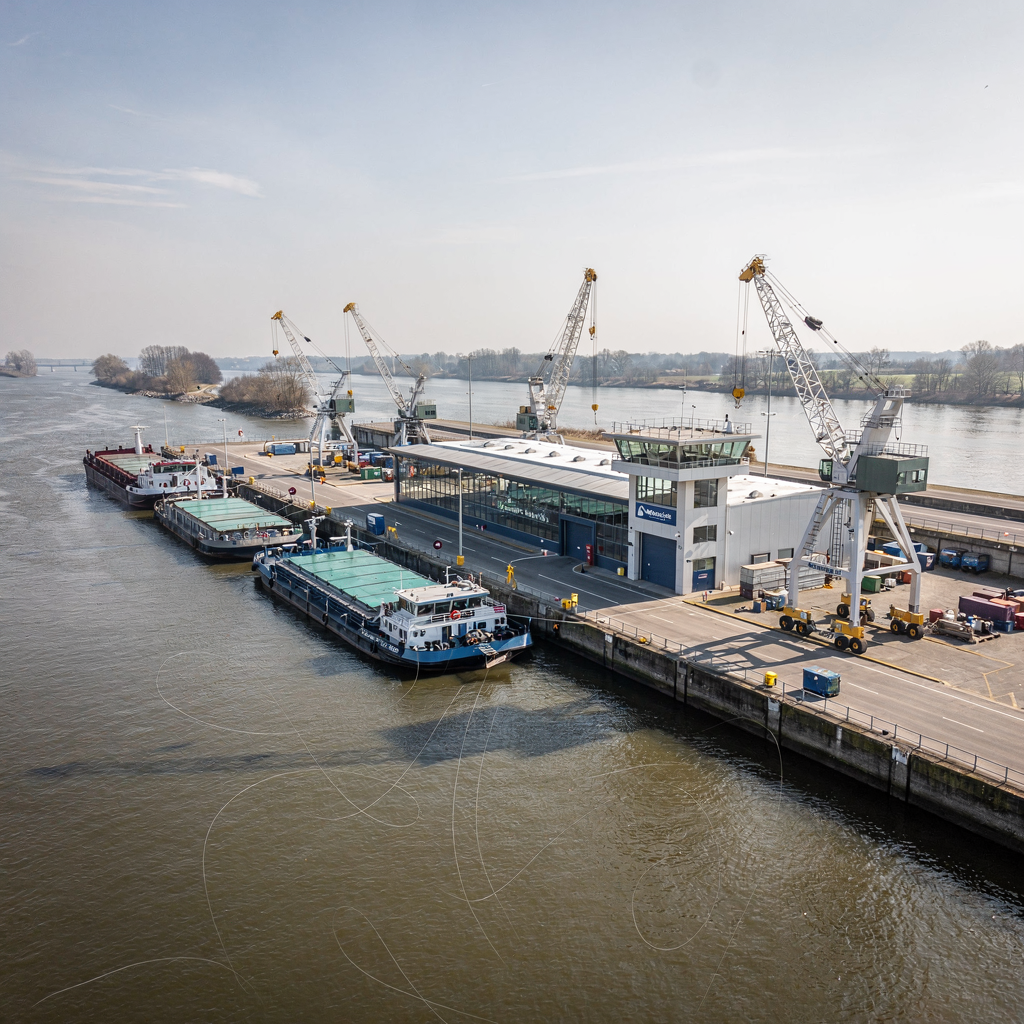
Barge terminals act as specialized hubs that move containers between seaports and inland destinations. They connect waterways to rail and road, and they reduce long truck hauls. In practice, a barge terminal handles loading, discharging, short-term stacking, and transshipment onto trucks and trains. This supports intermodal chains that serve cities, industrial parks, and hinterland depots. Planners must account for tide windows, crane cycles, and gate hours. For that reason, good planning pays off quickly.
When operators improve barge throughput, they ease pressure at major seaports. For example, studies show that better inland handling can raise intermodal freight movement efficiency by roughly 12%. That shift lowers road congestion and cuts emissions by moving volume from trucks to barges. Ports and terminal managers therefore gain resilience and cost savings when they coordinate barge schedules with vessel calls and rail slots.
Clearly, the physical footprint and the equipment mix matter. A compact layout shortens driving distances. Shorter internal trips reduce fuel burn and improve crane productivity. In turn, operators can reduce turnaround time and increase throughput. Operators seeking concrete methods can read a targeted example on optimizing stowage for inland discharge patterns in our guidance on optimizing stowage for multiple discharge ports in inland container terminals.
Finally, the role of barge terminals within the wider supply chain is strategic. They take pressure off roadway distribution and enable quieter, cleaner flows. For ports that wish to strengthen hinterland links, investing in barge capacity and coordinated schedules delivers measurable performance gains and a clear environmental benefit.
Review of Automation and Digital Integration
Automation and digital tools change how barge terminals operate. Automated barge handling systems and floating container terminals speed up transfers and standardize moves. Advanced scheduling platforms reduce human error and improve predictability. In practice, automation can increase throughput by 15–20% and cut labor costs up to 30% when applied to barge operations, as reported in recent studies on inland waterway system design and port productivity analyses from Antwerp.
Automation comes in many forms. For example, automated cranes and yard trucks take repetitive moves. Floating terminals add flexibility where land is scarce. Digital platforms then coordinate all resources. These platforms schedule lift sequences, visualize yard states, and predict conflicts before they happen. The Port of Antwerp report notes that “optimizing terminal operations through digital integration not only boosts productivity but also aligns with sustainable transport goals by shifting freight from road to waterways” [Port of Antwerp report]. That quote highlights how tech links performance with policy goals.
At Loadmaster.ai, we apply RL-driven agents to these problems. We spin up a digital twin and train policies with millions of simulated episodes. This method avoids overfitting to past mistakes and it delivers executable plans for quay, yard, and gate. For practical yard housekeeping and reshuffle examples, see our analysis of automated container terminal housekeeping and stack shuffling. Across deployments, terminals saw fewer rehandles and steadier daily performance. Therefore, automation and digital integration offer a strong path to measurable gains.
Drowning in a full terminal with replans, exceptions and last-minute changes?
Discover what AI-driven planning can do for your terminal
Literature Insights on Terminal Layout and Equipment Utilisation
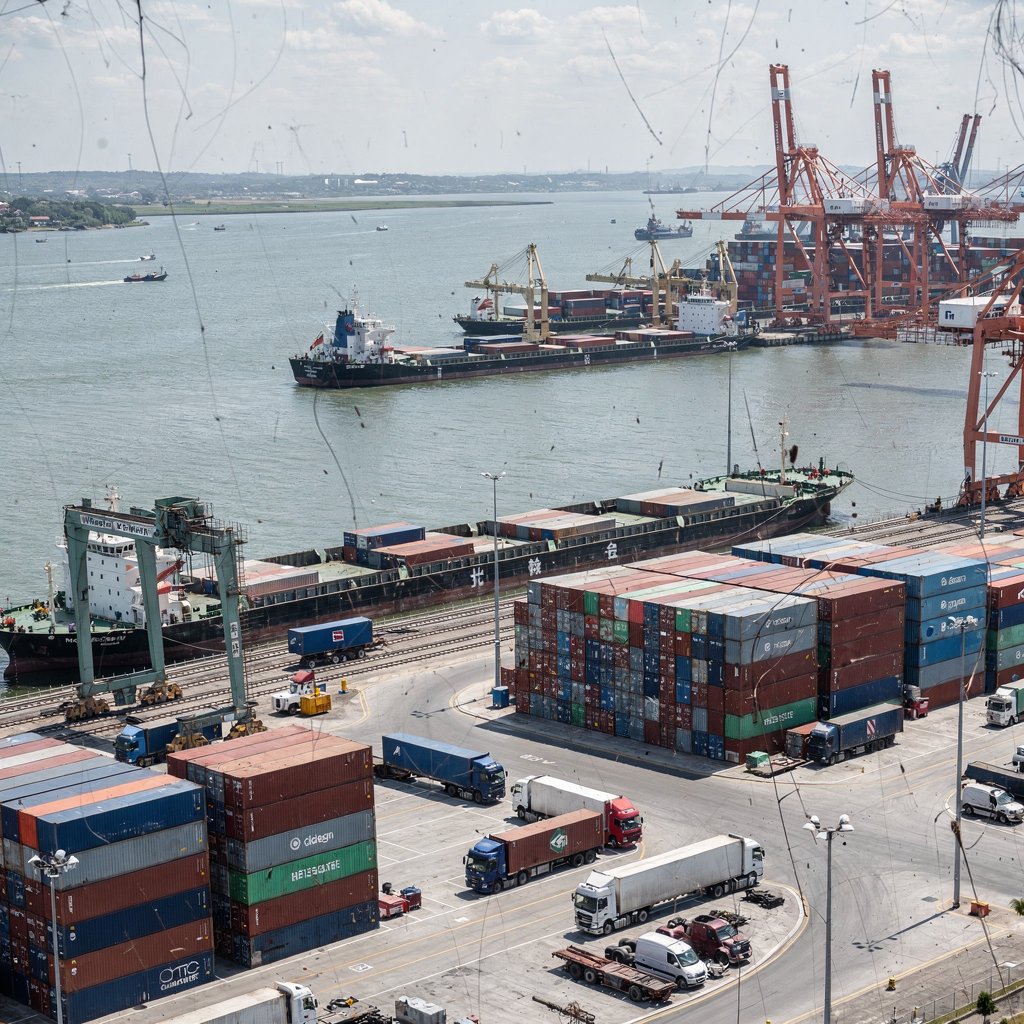
Academic and industry papers show clear links between layout, crane placement, and truck routing. Simulation studies indicate that optimal yard design and equipment allocation can yield 15–25% efficiency improvements in container handling. Researchers often model yard blocks, crane reach, and truck circulations to reduce needless moves and waiting times. These models quantify trade-offs, and they suggest rules for stacking density, lane widths, and quay crane spacing.
One practical target is to reduce average internal travel distances for yard trucks. Shorter trips cut fuel use and human hours. Another goal is to balance workload across RTGs or straddle carriers. If planners spread lifts evenly, they avoid chronic bottlenecks. In this context, the term utilization appears when discussing equipment performance metrics. Balanced load avoids underused cranes and overloaded blocks. Terminal planners therefore manage both space and motion. They set stacking policies that limit reshuffles when containers with early departure dates sit deep in the yard.
Simulation and discrete-event experiments in the literature test alternative layouts and crane sequences. These studies demonstrate measurable gains when operators adopt best practices. For example, separating import and export stacking zones often reduces handling loops. Likewise, dedicating fast lanes for priority moves shortens dwell time. For readers wanting a technical dive into yard equipment deployment and workload balancing, Loadmaster.ai publishes applied studies on optimizing yard equipment deployment and on AI-based workload balancing for wide-span yard cranes. These resources highlight methods that terminals can adopt with existing assets.
Overall, the literature promotes a pragmatic mix of rules, local experiments, and targeted investments. The best practice is to test layouts in a digital twin first, then refine rules with real traffic. This approach reduces risk and shows the value of small, staged changes that yield steady productivity uplifts.
Maritime Model for Scheduling and Operational Coordination
Scheduling and coordination models bring barge and vessel moves into sync. Speed optimization and berth allocation models under uncertain port times help reduce idle time. Studies on liner shipping demonstrate how adjusting sailing speeds and arrival windows lowers total port time. One paper finds that speed and schedule tweaks can cut port time by about 10% [speed optimization study]. That saving directly benefits barge schedules when berth slots and cranes free up earlier.
Analytical models include integer linear formulations for berth assignment and resource planning. These integer linear models encode constraints such as draft limits, crane availability, and time windows. Solvers then propose allocations that minimize waiting or maximize throughput. In parallel, heuristic algorithms and metaheuristics provide near-optimal plans quickly when full optimization proves too slow. Recent advances layer AI to adapt plans in real time. For example, reinforcement learning agents can reassign cranes and reprioritize moves when a quay crane trips or a truck queue spikes.
AI-driven algorithms can manage the real-time complexity of mixed flows. They ingest telemetry from cranes, gate scanners, and barge manifests. Then they recommend actionable schedules. Loadmaster.ai applies closed-loop agents that coordinate stowage, stacking, and execution to balance KPIs. For terminals that want to move from reactive firefighting to proactive control, our work on real-time container terminal replanning strategies shows how live replanning reduces knock-on disruptions. By synchronizing quay and barge slots, terminals cut idle time, support stable crane productivity, and reduce costly rehandles.
In short, combining formal models with adaptive algorithms yields robust plans. The result: lower total turnaround, fewer surprises, and smoother handovers between barges, trucks, and trains.
Drowning in a full terminal with replans, exceptions and last-minute changes?
Discover what AI-driven planning can do for your terminal
Quantitative Impact and Cost-Benefit Analysis
Quantifying benefits guides investment decisions. Automation often delivers 15–20% higher throughput and up to 30% labor cost reduction in barge-handling contexts, according to government and academic reports [inland waterway report] and productivity analyses [Antwerp case]. Turnaround time typically drops by 10–15% when terminals streamline scheduling and handovers, which yields faster box cycles and better vessel berth occupancy [liner shipping study]. Those metrics translate into lower unit costs and higher slot availability.
Return on investment depends on volume, labor rates, and capital intensity. Small terminals with high labor costs can recoup automation investments quickly. Larger terminals see long-term gains from steady throughput increases. An ROI exercise should include direct and indirect benefits. Direct gains cover fewer shifts, higher crane moves per hour, and reduced fuel. Indirect gains include fewer missed connections, less demurrage, and better landside relations.
Comparing manual and automated operations shows clear differences. Manual practice relies heavily on planner experience and static rules. Automated systems run policies that explore new strategies and reduce ad hoc reshuffles. In trials, systems that use simulation-trained policies reduce rehandles and even out workload across cranes and shifts. For KPI-driven projects, see our methodology on container terminal KPIs optimization approach with AI. There, we outline cost models, break-even calculations, and sensitivity tests that terminals can adapt to their realities.
Finally, decision-makers must plan risk mitigation. Pilots and sandbox testing cut rollout risk. When planners test automation in a digital twin first, they protect live operations. Thus, the cost-benefit case becomes robust and actionable.
Implementation Roadmap and Future Trends
Start implementation with a clear needs assessment. First, map current flows, measure key metrics, and identify frequent bottlenecks. Second, run a pilot with a scoped objective. Third, scale up in phases and add continuous monitoring. That phased method reduces risk and delivers measurable wins early. A good pilot should include performance targets and clear governance. Training and change management come next. Staff must learn how to interpret AI recommendations and override them when necessary. Engage unions and shift leads early. Clear dashboards and on-the-job coaching smooth adoption.
From a technical perspective, adopt a digital twin and start with constrained deployments. Systems that train via simulation provide cold-start readiness and avoid reliance on historical data. Reinforcement learning agents, for example, can explore strategies at speed and propose robust policies. Loadmaster.ai’s closed-loop agents—StowAI, StackAI and JobAI—show how coordinated policies reduce rehandles and stabilize throughput. This approach reduces firefighting and raises predictability across shifts.
Looking ahead, several trends will shape terminals. Floating terminals will expand in constrained locations. AI will grow more adaptive and explainable. Sustainable modal shifts to waterways will accelerate as regulators reward low-emission logistics. For planners who set long-term strategy, these research directions will matter when choosing investments. Terminals should evaluate emerging methods and integer linear models as part of a hybrid toolkit. They should also ensure appliance of new tools remains applicable to daily operations. In short: test, tune, and then scale.
Stakeholder engagement, clear KPIs, and staged deployments create momentum. Done right, the roadmap leads to steadier performance, lower cost, and a more resilient hinterland network. For further practical resources on retrofitting manual operations and safety automation, consult our posts on retrofitting manual container ports with smart port solutions and on safety optimization through automation in container ports. These explain how to sequence investments and manage change in real operations.
FAQ
What is a barge terminal and how does it differ from a seaport terminal?
A barge terminal handles short-haul water moves between seaports and inland nodes. It typically focuses on transfers between barges, trucks, and trains. Seaport terminals deal with deepsea vessels and larger volume, while barge terminals emphasize quick handovers and frequent small loads.
How much throughput gain can automation deliver for barge operations?
Automation has been reported to increase throughput by about 15–20% in similar inland waterway contexts. These figures come from empirical studies and port reports and depend on the local layout and traffic mix [source].
What scheduling models help reduce idle time at berths?
Speed optimization and berth allocation models help reduce idle time under uncertain port times. Integer linear models and heuristic algorithms both play a role, and recent work combines them with adaptive AI for real-time adjustments [study].
Can terminals minimize reshuffles without extra equipment?
Yes. Better stacking rules, targeted lanes for priority boxes, and smarter sequencing can reduce reshuffles. Simulation-based pilots show that policy and layout changes often deliver gains before any hardware purchase is needed.
How does Loadmaster.ai approach deployment and risk?
Loadmaster.ai trains policies in a digital twin using simulation and then deploys with operational guardrails. This reduces risk by testing strategies at scale before live rollout. The agents are explainable and designed to respect terminal constraints.
What environmental benefits come from optimized barge terminals?
Optimized barge terminals shift freight from road to water, which lowers congestion and emissions. Studies point to measurable modal-shift gains that improve local air quality and reduce fuel consumption across the supply chain [report].
Are digital twins necessary to adopt AI in terminals?
Digital twins are not strictly required, but they accelerate safe adoption. They let teams test policies, measure KPIs, and refine rules without disrupting live operations. Many successful pilots rely on twin-based simulation before go-live.
How do terminals measure ROI on automation?
Terminals calculate ROI by comparing upfront costs with gains in throughput, labor reduction, and avoided demurrage. They also value indirect improvements like steadier service and lower unpredictability. Scenario modeling helps estimate payback under conservative assumptions.
What role do cranes and yard layout play in performance?
Crane spacing, yard block design, and truck lanes directly influence internal travel time and handling loops. Good layout reduces driving distances and evens out workloads, which raises moves per hour and lowers operating cost.
Which next steps should a terminal take to begin improving barge operations?
Start with data collection and a bottleneck analysis. Then run a small pilot, preferably in a simulated twin. Engage staff early, set clear KPIs, and scale in phases. For targeted guides on replanning and KPIs, see our practical resources on real-time replanning and KPI optimization.
our products
 stowAI
 stackAI
 jobAI
jobAI
Innovates vessel planning. Faster rotation time of ships, increased flexibility towards shipping lines and customers.
Build the stack in the most efficient way. Increase moves per hour by reducing shifters and increase crane efficiency.
Get the most out of your equipment. Increase moves per hour by minimising waste and delays.
stowAI
Innovates vessel planning. Faster rotation time of ships, increased flexibility towards shipping lines and customers.
stackAI
Build the stack in the most efficient way. Increase moves per hour by reducing shifters and increase crane efficiency.
jobAI
Get the most out of your equipment. Increase moves per hour by minimising waste and delays.