
Problem description of container terminal bottleneck
The container terminal bottleneck often sits at the intersection of stowage quality and crane productivity. In practice, stowage quality defines how containers are arranged to protect cargo, reduce reshuffles and support efficient quay work. Conversely, crane productivity measures moves per hour and affects berth throughput and berth productivity. When planners focus solely on crane speed, the stowage planning problem can deteriorate. For example, poorly sequenced slots lead to rehandles and misplaced containers that delay the ship and the yard. A clear trade-off emerges: better stowage plan reduces rehandles but can lower crane rhythm; higher crane pace increases throughput yet raises the risk of reshuffles and damage.
Terminal operators must balance throughput, vessel turnaround, and minimising reshuffles. Research shows that improving stowage quality by 10% can cut reshuffles by about 30% and reduce vessel dwell time by 5–7% UNCTAD port monograph. At the same time, cranes that push past 35 moves per hour without integrated stowage planning can increase container damage by around 12% and disruptions by 8% equipment productivity analysis. Therefore, terminals should not treat crane scheduling and stowage as separate silos.
The 2023 Port of Melbourne review states that “crane availability and stowage quality must be jointly optimized to achieve terminal throughput targets,” highlighting that crane productivity assumptions matter in forecasts Port of Melbourne report. Similarly, the Port of Antwerp work shows clear gains when planners sync crane schedules with stowage plans Antwerp case study. First, managers must map where the bottleneck sits. Second, they must rework decision rules so that the stowage plan and crane schedule align. Third, they must measure KPIs like moves per hour, quay occupancy, and gate flows. Finally, operators can adopt decision support tools and AI to produce feasible plans that boost throughput and reduce delay while protecting cargo and safety.
container operational challenges in port throughput
Container handling at the quay and in the yard follows a complex flow. First, containers arrive by truck or feeder and queue at the gate. Next, trucks move to the stack or to a holding area. Then, quay cranes lift containers from the ship and place them onto vehicle equipment for transport to the yard. Meanwhile, yard cranes and RTGs store and reshuffle containers to free slots for new arrivals. Each step creates constraints that affect throughput and berth performance. For example, a single slow crane decreases moves per hour and creates a queue that prolongs berth occupancy. Likewise, yard congestion forces additional handling and increases vehicle travel distance.
Crane availability and downtime shape daily performance. A 5% increase in crane downtime can reduce terminal throughput by roughly 3–4% according to the Port of Melbourne study Port of Melbourne report. Crane breakdowns, scheduled maintenance, or labour gaps all cause operational stress. In addition, safety constraints on lift sequencing and stack heights restrict what the crane can do in a short time window. Yard stacking rules, weight class constraints, and vessel stability rules further limit allocation choices.
Damage risks matter for both KPI tracking and commercial liability. Containers that are mishandled can lead to cargo claims, insurance costs, and loss of customer trust. Therefore, operators must include damage probabilities when planning crane tasks. Also, misplaced containers and unnecessary reshuffles increase fuel consumption, raise cost, and slow down the ship. In practice, these issues push planners to seek balanced solutions that protect cargo and preserve crane speed. Our experience at Loadmaster.ai shows that combining RL-trained agents with digital twins reduces rehandles and evens out workloads, so cranes keep a steady pace while stacks remain balanced. For deeper methods on digital transformation of terminal processes see our terminal operations digitalization roadmap digitalization roadmap.
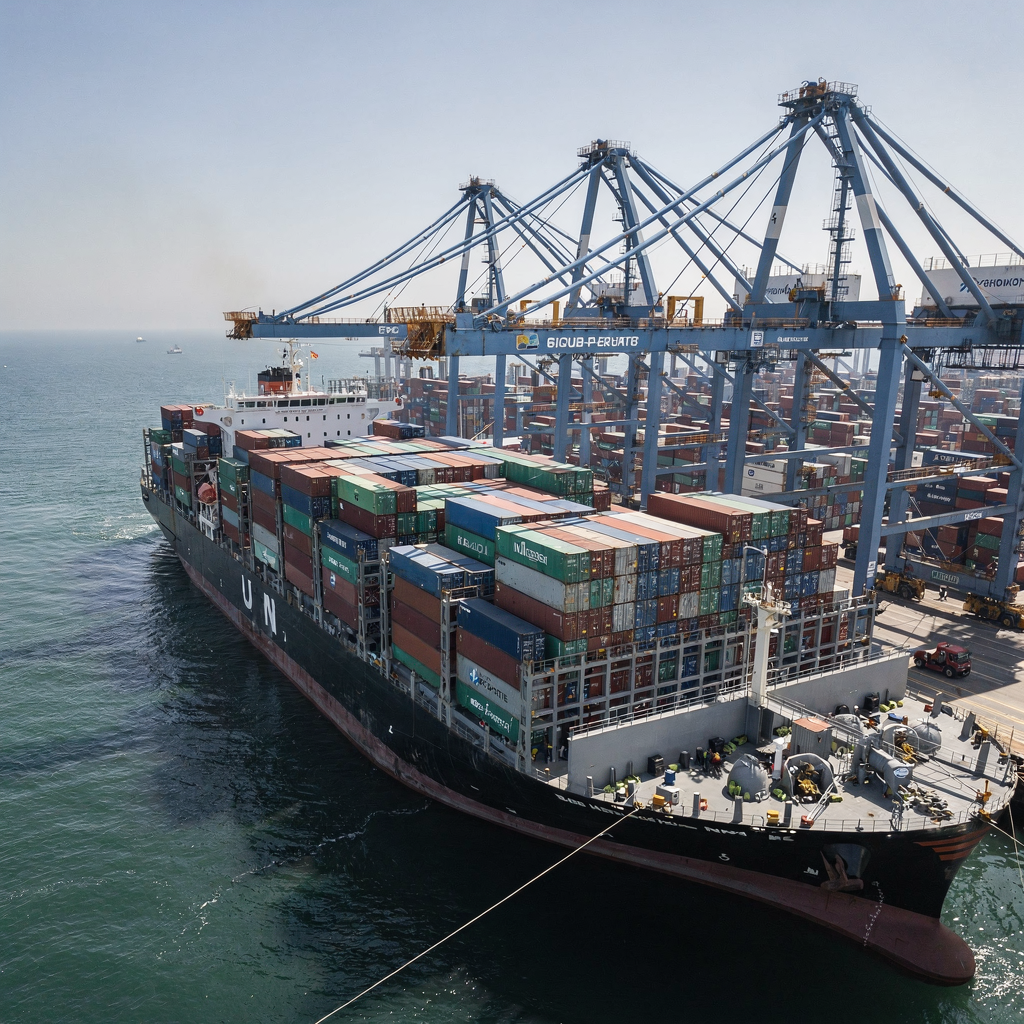
Drowning in a full terminal with replans, exceptions and last-minute changes?
Discover what AI-driven planning can do for your terminal
mathematical model formulation for stowage planning
We now present a compact mathematical model for the stowage plan. The model uses decision variables for crane moves, rehandles, stack heights and slot assignments. Let x_{c,s,t} denote assignment of a container to slot s handled by crane c at time t. Let r_i count rehandles for container i. Let h_s represent stack height for slot s. Decision variables include integer allocations for each slot and binary variables for whether a container must be moved before it can be loaded. This binary choice captures reshuffles and enforces stacking rules.
Constraints enforce stacking rules, weight and dangerous goods separation, vessel stability limits, and time windows for berthing and discharge. For example, stack height constraints limit h_s to permissible values. Stability constraints ensure that the vessel trim and list values remain within safety bounds when containers are stowed. Time window constraints link berth and gate schedules so that loading and unloading finish within allocated berthing time. We also add resource constraints for the number of available cranes, yard vehicles and yard handling equipment. In addition, we model crane sequencing so that per hour throughput aligns with mechanical limits on lifts per cycle.
The objective function balances two goals. First, minimise total reshuffles and rehandles. Second, maximise moves per hour at the quay to speed vessel turnaround. Formally, we build a weighted objective: minimise α * sum(r_i) – β * sum(moves_per_hour_c), where α and β reflect operator priorities. The model supports multi-objective analysis so decision makers can set weights to favour reduced reshuffles or faster crane productivity. To solve the problem we can use integer programming for small instances or heuristic and genetic algorithm approaches for large combinatorial instances. For practical implementation notes and how to integrate a TOS with optimization modules, see our guide on moving from rule-based planning to AI-driven scheduling from rules to AI.
optimization and genetic algorithm approach
AI-driven scheduling within a Terminal Operating System unlocks dynamic coordination between stowage planning and crane work. In practice, a genetic algorithm can search the combinatorial space and produce high-quality solutions under time limits. First, the solution encoding represents a candidate stowage plan and crane sequence. Chromosomes map container IDs to slots and to crane time slots. Next, fitness evaluation scores each chromosome by a multi-objective function that rewards fewer rehandles, higher per hour crane throughput, and adherence to stacking and safety constraints.
Genetic algorithm operators include crossover that swaps slot blocks between chromosomes, mutation that changes a container slot or crane sequence, and repair routines that restore feasibility. Local search heuristics refine offspring to improve stack balance or minimise vehicle travel distance. In addition, adaptive penalty terms discourage dangerous assignments and excessive reshuffles. The search runs inside a simulation-based evaluation function that models crane cycle times, yard travel time, and berthing time windows. This numerical simulation produces robust fitness signals even when real history is limited, which helps solve the problem where traditional supervised models fail.
Integration with real-time data is essential. The optimization module must connect to TOS telemetry, crane controllers and gate systems. For closed-loop operation, the scheduler receives live crane availability, yard occupancy and truck arrivals. It then proposes schedules and sequences to the dispatcher. Here, reinforcement learning agents trained in a digital twin add extra value. For example, Loadmaster.ai trains StowAI and JobAI agents in a simulation-first environment so policies generalise to live conditions without relying on historical data. For technical readers, our simulation-first AI approach explains why RL policies outperform rule engines in shifting conditions simulation-first AI.
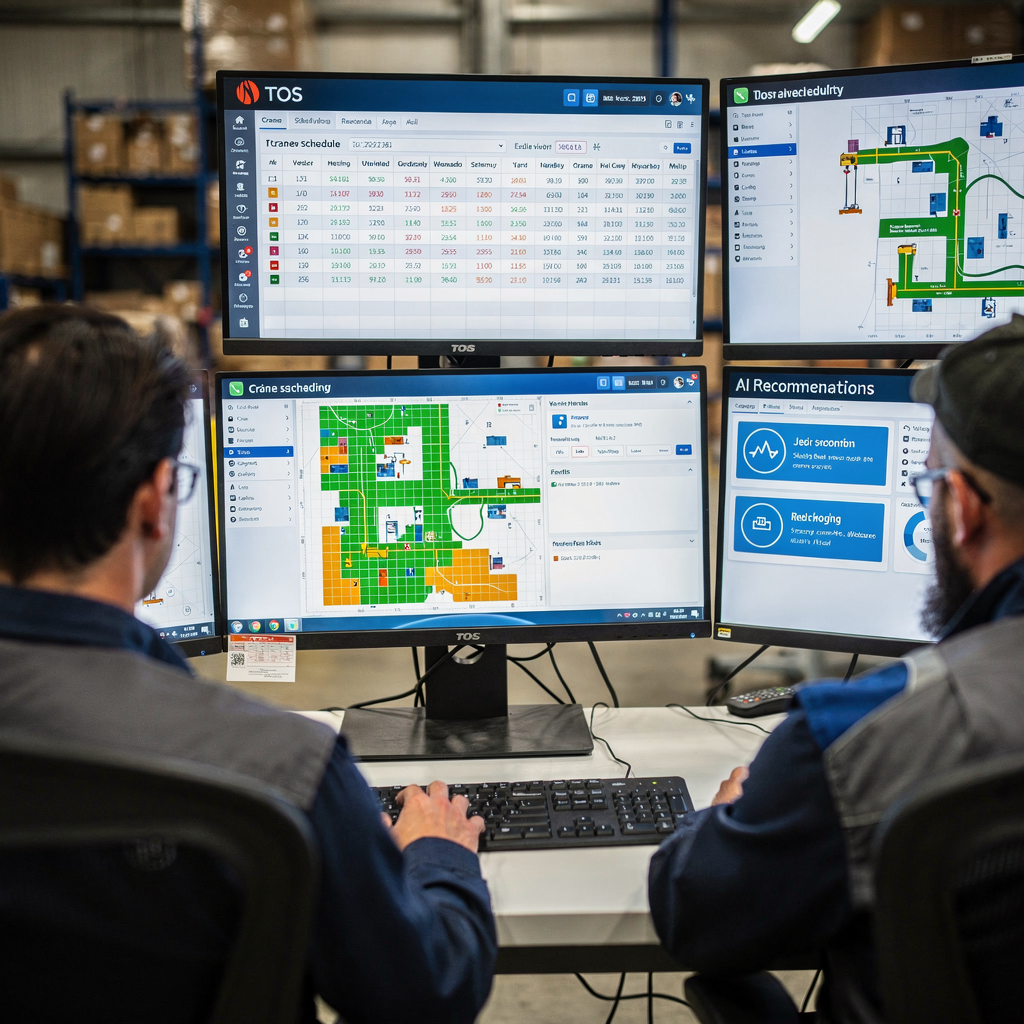
Drowning in a full terminal with replans, exceptions and last-minute changes?
Discover what AI-driven planning can do for your terminal
numerical benchmarking of crane productivity
Numerical benchmarking requires carefully designed simulation scenarios. We set up vessel mixes, yard utilisation levels, and arrival patterns. Scenario parameters include containership sizes in TEUs, distribution of import/export boxes, and berth schedules. We then compare baseline rule-based planning to the genetic algorithm and RL-based approaches. Key performance metrics include moves per hour, vessel dwell time, rehandles rate, and average vehicle travel distance. These metrics measure both crane productivity and yard quality.
Benchmarks show that modern quay cranes reach 25–40 moves per hour under optimal conditions efficiency and productivity study. However, when stowage constraints tighten, productivity can fall by up to 15–20%. In our simulated tests, combining an optimized stowage plan with an adaptive scheduling module reduced rehandles by roughly 30% and cut vessel dwell time by 5–7%, matching reported findings UNCTAD. The Port of Melbourne report emphasizes that crane availability directly affects throughput; a 5% increase in downtime led to a 3–4% throughput reduction in their modelling Port of Melbourne report.
Comparisons across solutions reveal trade-offs. Rule-based planners often hit higher peak crane productivity but with uneven yard loads and more misplaced containers. Genetic algorithm and RL hybrids keep cranes busy while protecting yard balance. For example, in one benchmark the RL policy increased average moves per hour modestly but achieved a stable reduction in rehandles and shorter truck wait times. Those outcomes translate into cost savings and lower fuel consumption. Terminal operators should run benchmark instances with local layouts to tune weights and measure the robustness of the chosen approach. For advanced yard strategy patterns and stowage masks refer to our AI-driven yard strategy resource AI-driven yard strategy.
operator insights for container terminal deployment
Terminal operators gain most by combining tactical changes with technology adoption. First, adopt dashboards that show crane state, berth queues, and stack heatmaps in real time. Second, allow the planner and the AI to share KPIs. Third, train teams to accept policy recommendations while preserving human override. Our deployment experience shows that short pilots in a sandbox digital twin reduce operational risk and build trust before go-live. Loadmaster.ai uses closed-loop RL agents that train in a terminal twin and then deploy with guardrails to protect safety and governance. This approach produces consistent gains across shifts and avoids reliance on historical data.
Best practices include continuous monitoring and periodic retraining of policies when layout or traffic patterns change. Operators should start with a clear decision support structure that includes roles for the vessel planner, yard strategist and dispatcher. For example, StowAI can suggest a stowage plan that minimises shifters while maintaining crane productivity, while StackAI optimises yard placement and reshuffles. JobAI can then sequence moves to reduce wait and keep vehicles circulating. Also, use low-latency data feeds so the optimization reacts to unplanned delays or machine faults; see our work on low-latency processing for terminal AI low-latency data processing.
Finally, plan for automation and future tools. Digital twins, predictive maintenance, and advanced scheduling will change the operator role into a supervisory one. However, maintain a feedback loop for continuous improvement and operational learning. Operators who follow this path will see better resource allocation, lower rehandles, reduced delay, and improved throughput. Deployment requires careful change management, clear KPIs, and a phased rollout that focuses on measurable win points like reduced vehicle distance and higher moves per hour.
FAQ
What is the main trade-off in a stowage plan for a container terminal?
The main trade-off is between stowage quality and crane productivity. Higher stowage quality reduces reshuffles and protects cargo, but it can lower crane speed and reduce moves per hour.
How does crane availability affect terminal throughput?
Crane availability directly affects throughput. For example, a 5% increase in crane downtime can reduce overall terminal throughput by about 3–4% according to modelling in the Port of Melbourne report.
What is a stowage planning problem?
The stowage planning problem assigns containers to ship and yard slots while meeting safety, stability and time window constraints. It aims to minimise rehandles and support efficient loading and unloading.
Can AI improve crane scheduling and stowage planning?
Yes. AI, especially reinforcement learning, can train policies in simulation to balance multiple KPIs and adapt to changing vessel mixes and disruptions. This reduces rehandles and improves consistency.
What metrics should operators monitor to measure success?
Key metrics include moves per hour, vessel dwell time, rehandles rate, average vehicle travel distance, and gate wait times. Monitoring these shows both crane productivity and yard quality.
Are genetic algorithm approaches practical for large terminals?
Genetic algorithm methods scale well when combined with simulation and local heuristics. They offer robust search for high-quality solutions under time constraints and can be integrated into a TOS.
How do you integrate an optimization module with a TOS?
Integration requires APIs or EDI links for crane telemetry, yard positions and gate flows. The optimization module receives live state and returns executable sequences to dispatchers or an automation layer.
What role do digital twins play in deployment?
Digital twins allow safe policy training and testing before live deployment. They let teams validate performance under a wide range of scenarios and avoid training on flawed historical data.
How much can better planning reduce rehandles?
Studies indicate that improving stowage quality by about 10% can cut reshuffles by roughly 30%. This reduction shortens vessel dwell time and reduces cost and damage risk.
How should terminals start a modernization program?
Start with a pilot that focuses on a clear KPI, such as reducing rehandles or improving moves per hour. Use a simulation-first approach, involve planners early, and deploy in phases with monitoring and retraining.
our products
 stowAI
 stackAI
 jobAI
jobAI
Innovates vessel planning. Faster rotation time of ships, increased flexibility towards shipping lines and customers.
Build the stack in the most efficient way. Increase moves per hour by reducing shifters and increase crane efficiency.
Get the most out of your equipment. Increase moves per hour by minimising waste and delays.
stowAI
Innovates vessel planning. Faster rotation time of ships, increased flexibility towards shipping lines and customers.
stackAI
Build the stack in the most efficient way. Increase moves per hour by reducing shifters and increase crane efficiency.
jobAI
Get the most out of your equipment. Increase moves per hour by minimising waste and delays.