
autostrad™ Container Terminal by Kalmar: Overview and Role
The Patrick Brisbane terminal sits at a strategic node for coastal and inland freight flow, and it acts as a hub where road, rail and ship meet. The site serves regional shippers and major importers, and it reduces handoffs while it simplifies scheduling, and it shortens dwell time. Patrick Brisbane operates as a cooperation between a leading container terminal operator and technology partners, and the project aims to raise throughput, to lower turnaround times and to improve supply-chain reliability for importers and exporters. The key objectives include increasing TEU throughput and tightening the links between quay activity and landside operations, and the plan aligns yard layout, truck interchange and rail windows in a single schedule.
Annual capacity planning for large terminals often ranges from several hundred thousand to over a million TEU, and research has shown automation and data-driven tools can lift moves per hour and cut idle time by improving terminal productivity. The Patrick site follows that trend, and it implemented modular systems to scale handling and to accommodate future growth. The partnership that delivered the on-site solution pairs Kalmar equipment with Patrick terminals process expertise, and it results in a roadmap to a fully automated facility that balances quay work with yard flow.
Kalmar’s delivery emphasizes integrated hardware and software, and the design supports horizontal transportation, and it preserves flexibility so that operators can implement hybrid modes during ramp-up. The project team also mapped out lifecycle service plans, and they defined maintenance windows and spares logistics to keep uptime high. For readers who want deeper background on digital twin and TOS integration, see our discussion of digital twin integration with Container Terminal Operating Systems here. The overall role of the brisbane autostrad terminal is to serve as an efficient interchange, and to reduce congestion at the quay while it improves predictability for vessels and trucks.
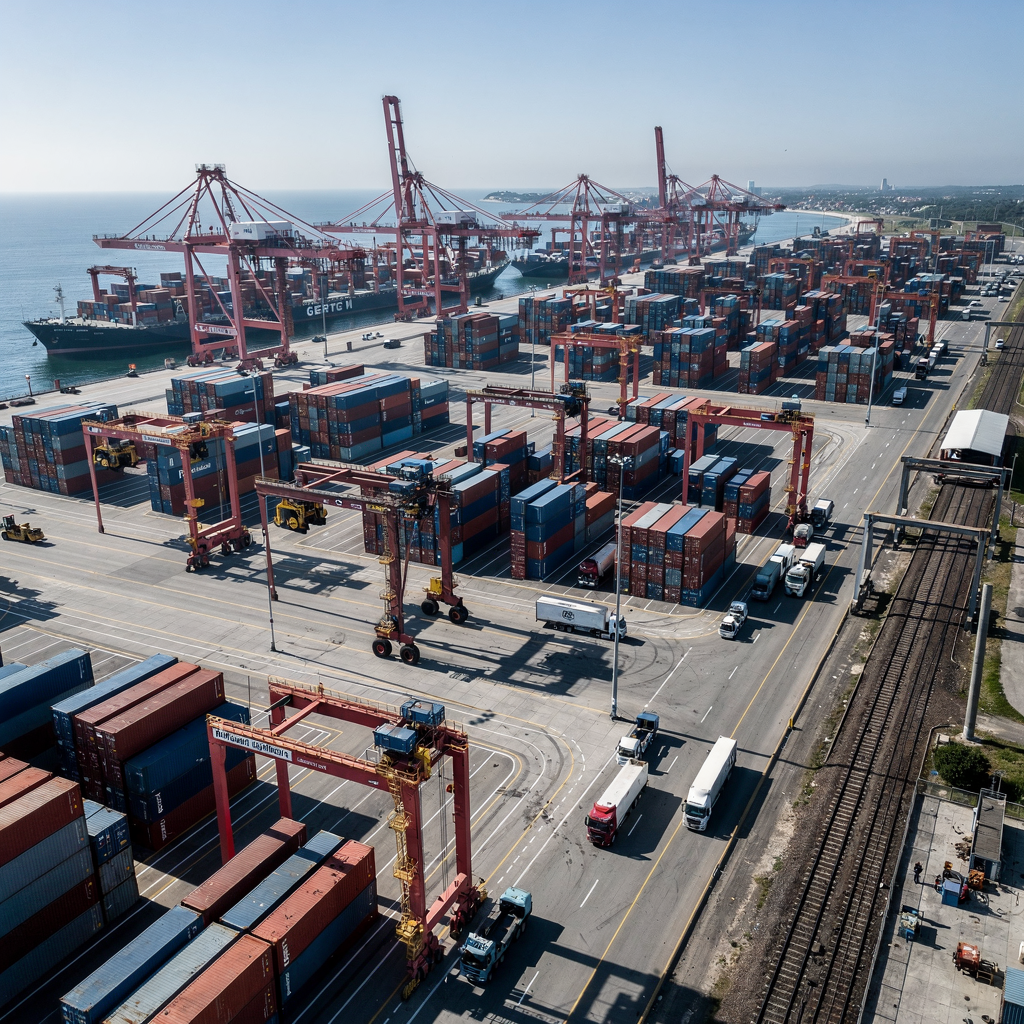
Technical Information on Automate Processes at Patrick Brisbane Terminal
Automation at Patrick Brisbane uses a blend of hardware and software, and it ties gate processing, quay moves and yard placement into a single flow. Core equipment includes automated gantry crane interfaces and automated straddle carrier systems, and the site also integrates rail interfaces and truck interchange lanes to smooth the flow between modes. The hardware supports rapid loading and unloading, and advanced sensors feed the control loop so that scheduling reacts to on-site conditions in real time. A key design decision favored modular deployments so that automation could scale block by block while operations stayed live.
The software stack couples a terminal operating system with real-time tracking, and it exposes APIs to fleet control and to external stakeholders. Patrick Brisbane uses optical character recognition at the gate and weight checks to validate manifests and to speed gate processing, and the system then publishes moves to yard planners and to quay cranes. Data feeds enable predictive maintenance, and telemetry from IoT sensors informs service intervals so that unplanned downtime drops. As one industry report notes, “Data analytics and real-time monitoring have transformed how we manage container flows, enabling us to anticipate bottlenecks and respond proactively” as the Port of Melbourne Corporation observed.
Communication networks rely on secure wireless links and local control room integration, and redundant channels protect command messages between the operating room and the automated equipment. Safety systems include fail-safe protocols and operator overrides so that crews can pause moves and address exceptions, and maintenance cycles follow a predictive schedule to reduce mean time to repair. For technical information on planning architecture and multi-agent control, readers can review our write-up on next-generation container terminal planning architecture here.
Drowning in a full terminal with replans, exceptions and last-minute changes?
Discover what AI-driven planning can do for your terminal
Kalmar Autostrad Components and Fleet Integration
Kalmar autostrad™ introduces a modular automation architecture that focuses on fleet coordination and on-site routing, and it allows phased rollouts across yard blocks. The kalmar autostrad solution includes a fleet management layer that talks to the terminal operating system and to third-party software, and it orchestrates move assignments while enforcing local safety rules. Fleet composition at Patrick Brisbane mixes automated straddle carrier units, AGVs and hybrid yard tractors, and the choice reduced reliance on manual moves while it kept flexibility for interchange zones and for peak windows.
The kalmar autostrad design supports automated straddle carrier operation and also accommodates straddle carrier fleets during transition, and the fleet management software synchronises work to protect quay productivity and to reduce excess travel. Kalmar’s remote and on-site maintenance strategy pairs predictive diagnostics with remote updates, and spare parts logistics are planned to shorten repair lead times and to protect lifecycle availability. The data flow moves from equipment telemetry to the fleet management system, and then to the TOS so that move status is visible to vessel planners and to landside partners.
Integration touches many roles and systems, and careful change management helped terminal operators adopt new processes. For terminals seeking to optimise equipment allocation, our article on job allocation optimization explains how automated dispatch complements fleet control in practice. Kalmar autostrads and similar modular platforms let site operators scale capacity without a single big-bang cutover, and the approach suits large terminals that must stay live while they implement upgrades. The architecture supports on-dock rail shuttles, and it also integrates with gantry crane interfaces and with gate OCR systems so that the end-to-end flow stays coherent.
Autostrad Container Movement: Automate Process and Data Flows
The typical movement begins when a truck presents at the automated gate, and OCR verifies the ID and a weight check confirms details so the TOS releases the slot. Trucks then proceed to the interchange zone where automated carriers or human-assisted vehicles pick up the load, and the yard planner assigns a stack position based on predicted vessel calls and on current yard balance. Real-time data exchange keeps the schedule coherent, and sensors update the status at every stage so planners and drivers see the same view.
When rail is involved, on-dock rail windows are booked and shunts are coordinated so that the short-haul leg ties into the quay cycle, and synchronising truck, rail and ship movements reduces double handling and lowers operational costs. The integration of horizontal transportation and of quay cranes is crucial, and good coordination cuts delays at the interface between ship loading and landside transfer. The terminal operating system maintains a live map of stack occupancy and of in-transit units, and that map drives automated assignment rules that aim to minimise rehandles and to preserve crane productivity.
Real-time tracking tags every TEU from gate to stack and back to vessel, and the visibility lets managers measure dwell times and adjust the schedule dynamically. For operators focused on digital transformation, our guide on container terminal digital transformation strategies outlines practical steps to implement new data flows and to introduce closed-loop optimisation here. The design at Patrick Brisbane reduces truck queues and aligns turn times with vessel windows, and it creates a workflow that supports both fully automated container moves and hybrid operations when required.
Drowning in a full terminal with replans, exceptions and last-minute changes?
Discover what AI-driven planning can do for your terminal
Customer Cases: Efficiency Gains at Patrick Brisbane Terminal
Customer cases at Patrick Brisbane show measurable gains after automation and after process redesign. One case delivered a clear throughput increase, and the site reported a notable TEU uplift and falling dwell times after the first phase. Research into comparable automated hubs highlights how automation and data-driven processes lift moves per hour and reduce truck queue length in port productivity studies. The Patrick team reported shorter turnaround and better vessel on-time performance once scheduling and yard placement were aligned.
Cost savings came from lower labour requirements for repetitive moves, and from reduced fuel use thanks to more efficient routing and to hybrid units that recover energy during braking. One sustainability win mirrored findings in external reports that show alternative fuels and reduced road kms help lower emissions such as compressed gas trucks. Operator feedback emphasised that training was straightforward, and staff appreciated clearer dashboards and consistent procedures that reduced firefighting, and that made daily shifts more predictable.
Measured KPIs improved across turnaround times, truck queue length and rail slot adherence. The project followed a tight timeframe to phase equipment and to scale moves without a single disruptive outage, and the results supported further investment. For readers curious about predictive maintenance and equipment readiness, our piece on using data to predict equipment maintenance in inland container terminals explains how telemetry and models cut downtime here. The customer cases show that when planning, fleet control and execution are aligned, the benefits of automation include better productivity, lower operational costs and a more resilient supply chain.
Kalmar Autostrad Future: Automate Upgrades and Fleet Expansion
Looking forward, planned software enhancements focus on AI-driven scheduling and on predictive route planning to reduce rehandles and to protect quay productivity. Kalmar autostrad and partner roadmaps include growth of the fleet with additional automated carriers and on-dock rail shuttles, and the intent is to scale capacity toward a multi-million TEU environment while keeping moves per hour high. The vendor and operators plan to add features that optimise energy use and that enable smarter charging and hybrid power management so that the site becomes more sustainable over time.
Roadmaps for new terminals and for retrofits use the Patrick Brisbane case as a baseline, and the phased approach proved effective at lowering risk while letting the workforce adapt. The benefits of automation are clear in KPI uplift, and the next steps will test AI-assisted planning and closed-loop control to handle disruptions and peaks. For readers interested in AI-led vessel planning and restow minimisation, see our article on AI-based restow minimisation in deepsea container port vessel planning here. The project team also set targets for lower emissions per TEU and for lower operational costs over the equipment lifecycle, and they committed to defined timeframes for fleet growth and for software rollout.
As terminals adopt these upgrades, they will need to balance automation with human oversight, and the plan includes training programmes and change management for the workforce. The future includes more intelligent scheduling, more resilient flows, and the expansion of on-dock rail services so that large volumes can be handled with predictability. Kalmar’s roadmap and the Patrick partnership provide a tested model that other port projects, including a potential sydney autostrad pilot, can evaluate before they commit to full deployment.
FAQ
What is the autostrad™ Container Terminal by Kalmar?
The autostrad™ Container Terminal by Kalmar is a modular automation solution that coordinates fleet and yard moves, and that integrates with terminal operating systems. It combines hardware and software to support phased automation while keeping operations live and predictable.
How does Patrick Brisbane benefit from automation?
Patrick Brisbane gains higher throughput and reduced dwell times, and it improves vessel schedule adherence through better synchronisation between quay and landside. The project also reduces operational costs and supports more predictable daily operations for the workforce.
What hardware does the system use?
The solution includes automated gantry interfaces, automated straddle carrier units and yard tractors, and it links to quay cranes and to on-dock rail spurs for smooth interchange. Safety systems and IoT sensors provide telemetry for maintenance and for live scheduling.
How does data improve terminal operations?
Real-time tracking and analytics let planners anticipate bottlenecks and adjust schedules before delays grow, and predictive maintenance reduces unplanned downtime. For more on digital twins and integration with TOS, see our digital twin integration write-up for practical steps and examples.
Can terminals combine manual and automated modes?
Yes, many sites implement hybrid operations during ramp-up so that automated carriers and manual fleets operate together, and this eases transition. Hybrid modes let operators protect quay productivity while training staff and while extending automation block by block.
What environmental benefits are available?
Shifting freight to rail and optimising vehicle routing reduce road kilometres and lower emissions per TEU, and energy-efficient equipment and alternative fuels further reduce the carbon footprint. Reports have noted gains when terminals adopt compressed gas trucks and when they lower idle running.
How are safety and compliance handled?
Systems include fail-safe protocols, operator overrides and redundant communications so that crews can intervene when needed, and safety procedures align with regulatory requirements. Regular maintenance cycles and predictive diagnostics keep equipment within certified performance windows.
What KPIs improved in customer cases?
Typical improvements include faster turnaround times, reduced truck queues and higher quay productivity, and clients also reported lower operational costs driven by fewer rehandles and better equipment utilisation. Measured TEU uplift and lower dwell times were common across phased deployments.
Is integration with rail supported?
Yes, on-dock rail and short-haul intermodal services are a core part of the design to reduce truck dependency and to link rail windows with vessel schedules. Synchronised rail, truck and quay moves reduce double handling and smooth the transfer of units between modes.
Where can I read more about implementation and planning?
For deeper guidance on planning architectures and AI-driven scheduling, check our articles on next-generation planning architecture and on equipment job allocation optimisation, and these provide practical steps to implement closed-loop optimisation. They explain how to build a robust rollout plan that balances productivity and yard congestion while keeping a clear timeframe for upgrades.
our products
 stowAI
 stackAI
 jobAI
jobAI
Innovates vessel planning. Faster rotation time of ships, increased flexibility towards shipping lines and customers.
Build the stack in the most efficient way. Increase moves per hour by reducing shifters and increase crane efficiency.
Get the most out of your equipment. Increase moves per hour by minimising waste and delays.
stowAI
Innovates vessel planning. Faster rotation time of ships, increased flexibility towards shipping lines and customers.
stackAI
Build the stack in the most efficient way. Increase moves per hour by reducing shifters and increase crane efficiency.
jobAI
Get the most out of your equipment. Increase moves per hour by minimising waste and delays.