
tractor vs terminal tractor: Evolution and Roles
First, define a basic tractor and then set it beside a specialized terminal tractor to show the contrast. A tractor is a general-purpose powered unit used in farming, road haulage, or yards. It tows and moves loads, and it often hauls trailers over roads. By contrast, a terminal tractor focuses on short, repetitive moves inside a terminal. It has a reinforced frame, a rear hitch for quick coupling, and a cab designed for frequent mounting and dismounting. The terminal tractor handles container transfers between quay cranes, yard blocks, and gate areas. In many ports the unit reduces cycle times and lowers strain on other equipment.
Historically, operators drove basic tractors adapted for yard use. Later designs added short-wheelbase frames and remote-control options. Then the market shifted toward semi-automated shuttles that could follow fixed lanes and return to charging stations. That evolution mirrors broader automation trends in the industry. For example, studies highlight how automation supports terminal productivity, and they underline the benefit of fleet coordination for high throughput “automation is a key for terminal efficiency”. This quote frames why terminals invest in updated units.
Performance benchmarks now compare duty cycles, turns per hour, and average idle time. A dedicated terminal tractor can complete many more short trips per shift than a general tractor. It also tolerates heavy starts and stops without overheating. In practical terms, terminals measure metrics like moves per hour and average travel distance. These benchmarks help planners choose the right mix of vehicles and drivers. Loadmaster.ai uses digital twin simulation to model those trade-offs and to test fleet rules before live deployment, so planners can see the effect on crane utilization and yard balance. For deeper context on equipment planning and how job allocation impacts cycles, read our guide on equipment planning equipment planning.
Finally, duty-cycle comparisons show lower fuel use when operators replace an older tractor with a purpose-built unit. That change reduces emissions and supports environment targets. Thus the move from versatile tractors to dedicated terminal units reflects both practical and regulatory demands. Next, we examine how autonomy extends these gains.
autonomous terminal tractors and real-time att operation
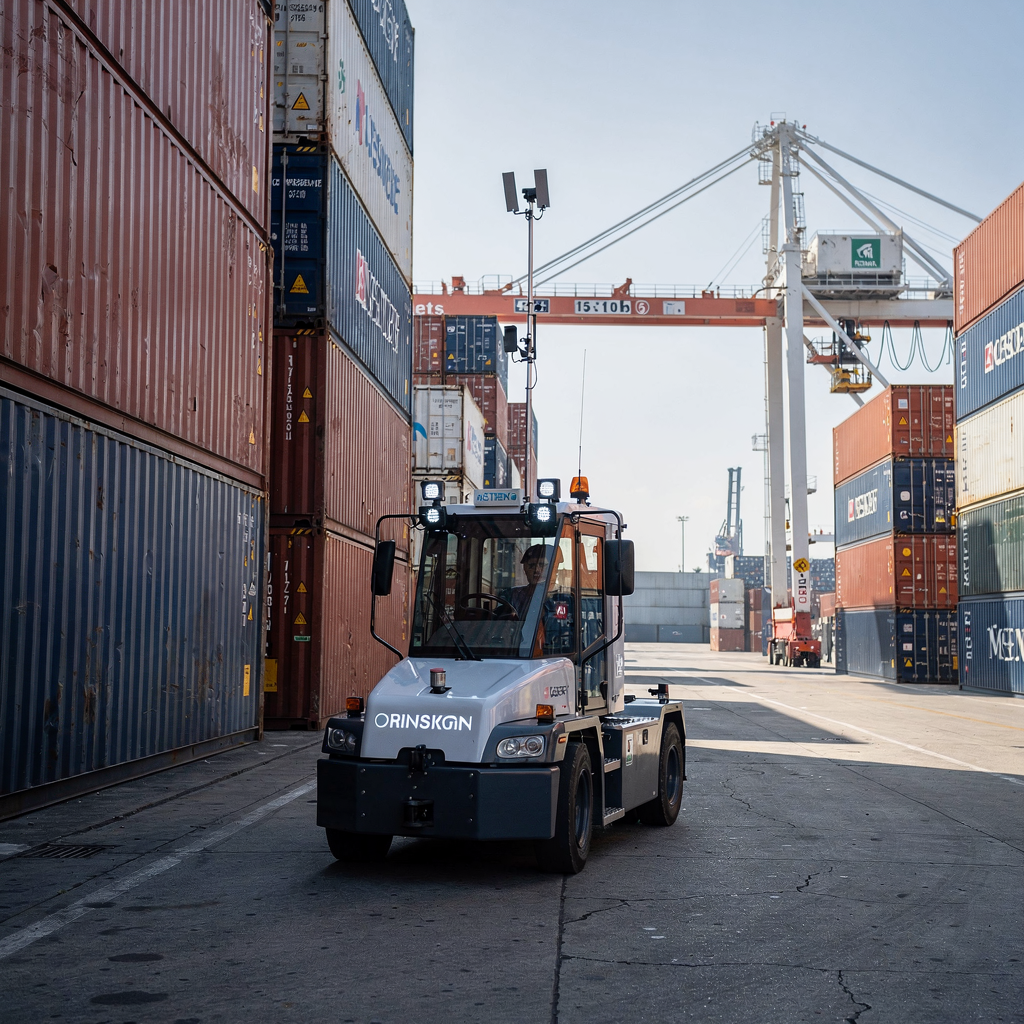
Autonomous terminal tractors take the dedicated unit a step further. These machines operate with onboard autonomy, and they connect to ATT platforms for coordinated scheduling. The term ATT often appears in project plans and vendor specs. An ATT or a-tt system integrates vehicle control, routeing, and safety protocols. In practice, ATT platforms handle communication between cranes, yard control, and the vehicle fleet. This setup lets terminals push toward fully automated operation while retaining operator oversight.
Real-time data exchange matters here. Vehicles send telemetry, position, and status to the ATT. The ATT then issues tasks and reroutes moves to avoid congestion. Low latency links and robust connectivity keep those exchanges reliable. For instance, terminals that adopt autonomous tractors report faster decision cycles and fewer idle cranes. The global market also reflects rapid deployment. By 2024 over 13,800 units were in use across ports and rail hubs, a sign of rising demand for ATT-enabled fleets 13,800 automated terminal tractors deployed.
Autonomy brings remote monitoring and dynamic job swaps. Planners can push updates from a central console and then track execution in real time. That capability reduces dependence on single personnel and helps manage labor shortages. Also, autonomy supports mixed mode operations where driverless and manned units share space. To build policies that work across both, terminals need digital models and agent-based control. Loadmaster.ai trains RL agents in a digital twin to coordinate quay, yard, and gate moves, which helps the operator reduce rehandles and balance workload. For more on digital twin integration with TOS systems, see our write-up on digital twin integration digital twin integration with TOS.
Drowning in a full terminal with replans, exceptions and last-minute changes?
Discover what AI-driven planning can do for your terminal
automation with agv and agvs systems for horizontal transport efficiency
AGV solutions and agvs systems both aim to improve horizontal transport inside a yard. An agv often follows a fixed path or magnetic guide. By contrast, agvs systems use flexible routing and dynamic scheduling. The difference matters when yards change configuration often. Automated guided vehicles offer consistent timing and low variance in move durations. They also reduce human exposure to hazardous spaces.
Containers need steady horizontal transport to preserve crane cycles. When AGV lanes flow, a quay crane receives a predictable stream of trailers. That predictability boosts throughput and reduces crane idle time. Metrics show slot utilisation increases and fuel consumption drops when operators swap diesel trucks for electrified agv systems. Market reports forecast strong growth in automated solutions as operators chase lower emissions and higher throughput market forecasts point to growth to 2033.
In concrete terms, switching to agvs can cut average travel distance and smooth peak demand. For example, slot utilisation can rise because moves queue more efficiently near stacking cranes. Fuel savings come from electrified drivetrains and less idling. The result is a smaller environmental footprint and lower operational cost per move. If you plan an agv rollout, map lanes, charging points, and communication towers first. You will need some infrastructure changes and protocol updates, but the scalability of agvs systems can justify the modification costs. For planners working on yard strategy, our article on next-generation planning architecture explains how to layer vehicle routing on top of crane schedules next-generation planning architecture.
deploy fully automated container transport logistics
To deploy a fully automated fleet in an existing yard, start with a clear pilot. First, identify a block with predictable traffic. Next, install connectivity, route markings, and charging stations. Then integrate vehicle control with gate, crane, and yard systems. This phased approach reduces disruption and reveals hidden bottlenecks early. You should also test safety and emergency-stop protocols before live service.
Integration means mapping APIs and telemetry streams between the fleet and the Terminal Operating System. Many terminals choose to spin up a digital twin to validate scenarios. That step helps estimate ROI and timeline. Industry forecasts predict market value growth from about USD 1.5 billion in 2024 to USD 2.8 billion by 2033, which supports further investment in fully automated solutions market growth projection. This projection helps operators build business cases that include capital costs, training, and phased deployment.
Operational steps include training personnel, updating SOPs, and establishing remote supervision. You also set milestone criteria for pilot success. Typical metrics include reduced waits at the gate, higher crane moves per hour, and fewer rehandles. Loadmaster.ai helps terminals test policies in simulation so teams can deploy with confidence. Our RL agents train without relying on historical mistakes, and they yield robust policies that adapt to disruption. For a practical guide on job allocation and optimization across equipment, see our article on job allocation optimization job allocation optimization.
Finally, expect a measured ROI timeline. Many projects show payback within a few years after scale-up, but that depends on throughput, labor cost, and energy prices. You may face significant infrastructure additions at first, yet the long-term gains in throughput and operational efficiency justify the work. Keep flexibility in mind, and plan for phased scale and future expansions.
Drowning in a full terminal with replans, exceptions and last-minute changes?
Discover what AI-driven planning can do for your terminal
automate operation through obstacle avoidance and safety
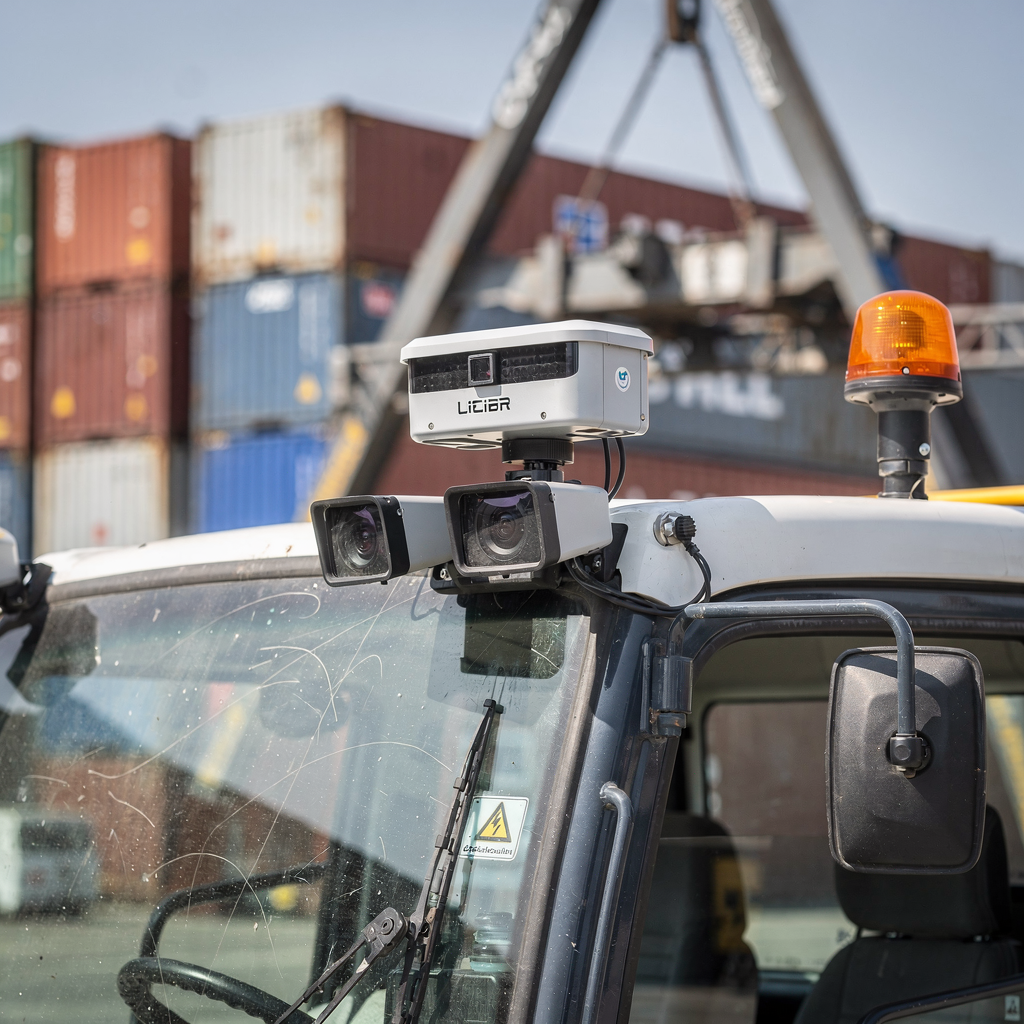
Obstacle avoidance is central to safe driverless work. Modern systems combine LiDAR, cameras, RADAR, and sensor fusion to detect people, equipment, and unexpected objects. The sensor suite feeds obstacle avoidance software that then adjusts speed and path. System-level protocols enforce safe stopping distances. Manufacturers test these stacks extensively in mixed-traffic environments and adjust rules for visibility and surface conditions.
Regulation and protocols vary by country, so terminals must certify their approach. Safety and operational audits assess how systems react to faults and human interaction. Also, operator training remains crucial even when machines run independently. Personnel must know how to intervene, how to command remote stops, and how to follow handover procedures. Protocols for remote supervision ensure that a remote operator can pause or redirect a vehicle from a control room.
Incident rates provide a useful comparison. Terminals that moved to driverless fleets often report fewer minor accidents and reduced personnel injuries. That said, initial integration phases sometimes show an uptick in near-misses while staff adapt. Careful monitoring, incremental deployment, and continuous refinement of rules lower those occurrences over time. For obstacle avoidance specifically, vendors publish results from trials that show substantial reductions in collisions when LiDAR and low-latency connectivity pair with robust decision logic autonomous fleet management research.
Finally, design safety around predictable behavior. In mixed-traffic yards, set speed limits, clear sightlines, and separation zones. Ensure redundancy in sensors and test software updates in simulation before rollout. These steps help systems perform reliably and safely under diverse conditions, and they build trust among dock staff and carriers.
market offering: terminal automation strategies
The vendor landscape in 2024 mixes established OEMs and specialist suppliers. Kalmar, Terberg, and Konecranes are visible names that compete on automation, emissions, and service models. In fact, industry analysis states that “global leaders shape the terminal tractor segment by competing on automation, emissions technology, and operational efficiency” industry analysis on key players. At the same time, niche suppliers deliver ATT stacks, fleet orchestration, and simulation platforms. Konecranes provides a broad portfolio that spans cranes and integration services, and that often appeals to operators seeking a single supplier for multiple systems.
Cost structures vary. Some vendors sell hardware with managed services. Others license software and offer on-site support. Service models include uptime SLAs, remote diagnostics, and training packages. For a terminal operator, the right balance depends on throughput, carrier mix, and existing infrastructure. Demand for electrified, connected units grows as terminals chase emissions targets and lower operating costs. Reports also show multiple market projections, with some firms optimistic about higher CAGR scenarios through 2032 alternative growth forecast.
Strategic opportunities for operators include retrofitting existing fleets, piloting ATT blocks, and partnering with technology suppliers on joint trials. Vendors also offer modular offerings so operators can scale from pilot to yard-wide operations. For terminals that want to modernize planning and reduce rehandles, our content on AI-native planning and multi-agent architectures explains how software and fleet control combine to raise performance AI-native planning architectures.
Finally, consider long-term goals like scalability and supplier lock-in. Seek partners that support open data exchange and low-latency connectivity. Also ask about reliability in mixed-traffic scenarios and support for future autonomy features. The market offering continues to evolve, and operators who plan staged deployments gain both resilience and competitive throughput.
FAQ
What is the difference between a tractor and a terminal tractor?
A tractor is a multi-purpose powered unit used across industries, while a terminal tractor is built for repetitive moves inside a yard. Terminal tractors have rear hitches, reinforced frames, and cabs optimized for quick coupling and frequent short trips.
How do autonomous terminal tractors interact with ATT platforms?
Autonomous terminal tractors connect to ATT platforms through real-time telemetry and command links. The ATT coordinates tasks, reroutes units, and updates schedules to reduce congestion and improve throughput.
Are AGV and AGVS systems the same?
No. An agv typically follows fixed guides or paths, while agvs systems offer flexible routing and dynamic scheduling. The latter supports changes in yard layout and variable demand.
What steps are needed to deploy a fully automated fleet?
Begin with a pilot block, install connectivity and charging, and integrate vehicle control with TOS and gate systems. Then validate in a digital twin, train personnel, and scale in phases while tracking ROI milestones.
How does obstacle avoidance work on driverless tractors?
Obstacle avoidance uses LiDAR, cameras, RADAR, and sensor fusion to detect hazards and then replan or stop. Systems rely on tested protocols and redundant sensors to act safely under varied conditions.
What market growth can operators expect for automated terminal tractors?
Market forecasts estimate growth from about USD 1.5 billion in 2024 to roughly USD 2.8 billion by 2033, with other reports showing higher scenarios to 2032. These projections support continued investment in automation technology.
How do terminals measure success after automation?
Terminals track metrics like moves per hour, crane utilization, slot utilisation, and average travel distance. They also monitor incident rates, energy use, and service-level KPIs for carriers.
Will automation reduce staffing needs?
Automation shifts personnel tasks rather than simply cutting headcount. Staff move from driving to supervising, maintenance, and exception handling. This shift helps address labor shortages and increases consistency.
Can existing terminals retrofit for automation?
Yes. Many operators retrofit connectivity, charging, and control interfaces to support new fleets. Retrofitting may require significant infrastructure changes initially, but it enables staged deployment and future scalability.
How do I choose a supplier for terminal automation?
Evaluate suppliers on reliability, service models, and support for open data exchange. Also assess their experience in mixed-traffic environments and their roadmap for future autonomy features. Look for partners that offer simulation and pilot support to reduce deployment risk.
our products
 stowAI
 stackAI
 jobAI
jobAI
Innovates vessel planning. Faster rotation time of ships, increased flexibility towards shipping lines and customers.
Build the stack in the most efficient way. Increase moves per hour by reducing shifters and increase crane efficiency.
Get the most out of your equipment. Increase moves per hour by minimising waste and delays.
stowAI
Innovates vessel planning. Faster rotation time of ships, increased flexibility towards shipping lines and customers.
stackAI
Build the stack in the most efficient way. Increase moves per hour by reducing shifters and increase crane efficiency.
jobAI
Get the most out of your equipment. Increase moves per hour by minimising waste and delays.