
terminal: Role of the Terminal in ASC Optimisation
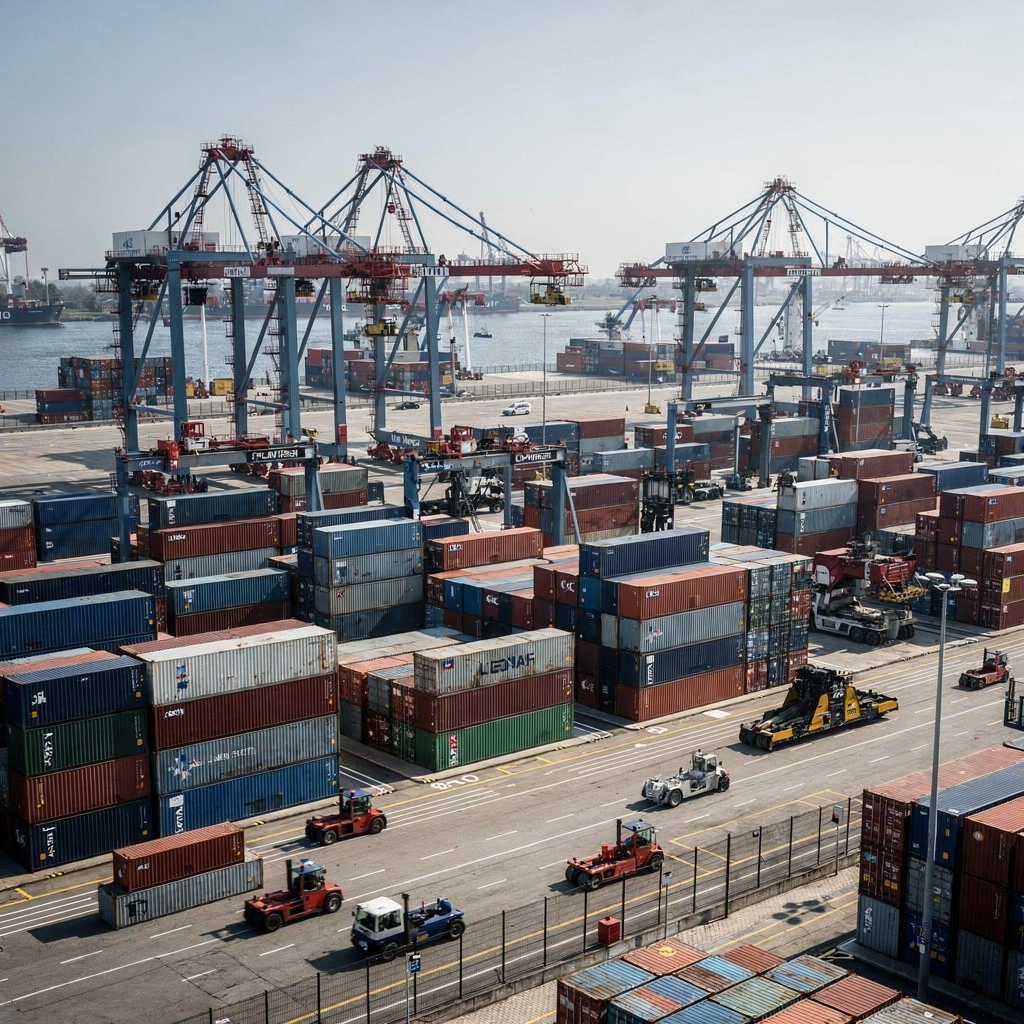
The terminal coordinates a web of moves, flows, and priorities. It must balance quay activity, yard storage, and gate throughput. Key performance indicators (KPIs) in this context include moves per hour, average dwell, crane utilisation, and energy per move. Also, berth productivity and vessel turnaround time matter. Together, these KPIs define how a terminal measures success and where optimization should focus.
Automated Stacking Cranes play a central part in the yard workflow. They pick, place, and reshuffle containers while the quay cranes load and unload ships. When ASCs are orchestrated well, terminals using advanced control often see meaningful throughput gains. For example, studies report throughput improvements of between 15% and 25% when automation and control are tightly integrated [A design approach for robotized maritime container terminals]. In practice, that translates into faster vessel service and less waiting for trucks and trains.
Cost also improves. Research links optimized ASC schedules to roughly 12% reductions in labour and operational cost [Drive, Control and Automation Components and Solutions for Cranes]. Therefore, terminals can both raise moves per hour and reduce cost per lift. Furthermore, automation reduces human error and supports continuous operations. That said, the challenge remains to coordinate ASCs with quay planning and gate flows in real time.
To meet that challenge, terminals adopt integrated management and simulation tools. Also, intelligent agents and reinforcement learning can help planners. For actionable guidance, see our work on terminal operating systems integration and how AI aligns with operator rules. Loadmaster.ai trains agents in a digital twin so that the terminal gains robust, repeatable performance without needing perfect historical data. Thus, the terminal can improve throughput, balance KPIs, and retain operational consistency.
container terminal: Container Terminal Layout and ASC Integration
Layout drives performance. In a container terminal, lane widths, block length, and stack heights set the physical limits on moves and storage density. Optimal yard allocation places fast-moving export blocks near the quay. Also, it positions inbound spill zones for short-term dwelling. This reduces driving distances for vehicles and shortens crane cycles. Simulation-based design approaches let planners test alternatives and measure impact. In fact, simulation often reduces cycle times by up to 10% when it guides yard allocation and lane design [design approach].
Integration with terminal operating systems is essential. Standardised interfaces between ASCs and the TOS enable dynamic schedule updates. Also, they allow real-time telemetry from equipment to feed higher-level decision-making. See how a TOS-centric approach can streamline decisions in our guide to terminal operating systems. When the TOS and ASC control talk, planners gain transparency. This supports more accurate yard allocation and reduces redundant rehandles.
Design must also consider horizontal transport. Automated guided vehicles (AGVs) or trucks move containers between quay and yard. Coordination between vehicle fleets and ASCs avoids queues. Also, allocation of blocks for outgoing loads keeps outbound moves local, which speeds handoffs. Terminals that integrate ASC control with yard-level software often report higher crane utilisation. That increased utilisation helps terminals compete on speed and reliability. For deeper techniques on stacking and yard policy, explore our technical article on container stacking optimization techniques.
Drowning in a full terminal with replans, exceptions and last-minute changes?
Discover what AI-driven planning can do for your terminal
container: Container Stacking Strategies for Density and Throughput
Stacking strategy determines storage capacity and handling efficiency. High-density stacking improves yard capacity by up to 18% when combined with intelligent placement and retrieval algorithms [design approach]. Advanced algorithms plan sequences that reduce reshuffles and avoid blocking. They prioritise accessibility for high-demand containers and reserve deep stacks for low-turn cargo. As a result, crane utilisation rises and unnecessary moves fall.
Sequence planning uses heuristics, optimization solvers, and machine learning agents. Reinforcement learning, in particular, can learn placement policies that balance immediate throughput and future flexibility. Loadmaster.ai deploys StackAI to place and reshuffle so that the yard stays balanced and travel distances fall. Also, the system protects future plans while reducing rehandles. Case studies show advanced scheduling cuts idle time by roughly 20% in some blocks, which improves move rates and stabilises shifts.
High-density placement needs tight coordination with quay planners. Stow sequences must respect both stacking rules and vessel work plans. When automated systems coordinate, they can automate load sequencing and reduce shifter counts. For terminals aiming to optimize container flow from ship to stack, it helps to integrate stack policies with quay sequencing logic. That reduces turnaround and delivers consistent productivity. For more on cross-equipment coordination and preventing bottlenecks, see our article on cross-equipment job prioritization.
maritime: Maritime Logistics and Port Efficiency
ASC performance links directly to vessel turnaround. Faster yard cycles free quay cranes to work continuously and reduce berth time. Also, when the yard feeds quay operations predictably, shipping lines gain confidence in berth windows. Terminal automation supports just-in-time delivery and helps manage the peaks and troughs of maritime demand. In practice, terminals that integrate automation with vessel planning see measurable gains in berth productivity and reduced dwell.
Digital readiness plays a large role. A recent study notes that, when automated stacking cranes are fully integrated with terminal operating systems, terminals unlock higher transparency and operational gains [Digital readiness of container terminals]. The report states, “Automated Stacking Cranes, when fully integrated with terminal operating systems, unlock unprecedented levels of operational transparency and efficiency, enabling terminals to meet the demands of modern supply chains.” That quote emphasises end-to-end visibility as a core benefit.
Ports also seek resilience. Optimised cranes support supply-chain robustness by reducing variability. They aid just-in-time logistics and make vessel schedules more reliable. For example, when ASCs reduce handling time, ships spend less time at the quay and truck queues shrink. Next, terminals can deploy AI-based vessel planning to further align quay and yard work. Our StowAI agent augments vessel planning to minimise shifters and maintain executability. For more on AI in port operations and reinforcement learning, consult our overview of reinforcement learning for deepsea container port operations. Therefore, maritime efficiency improves through integrated tools and clear data flows.
Drowning in a full terminal with replans, exceptions and last-minute changes?
Discover what AI-driven planning can do for your terminal
handle: Handle Congestion and Dynamic Scheduling
Peak hours bring congestion. Queues form at gate and quay, and yard blocking can cascade across shifts. To handle surges, terminals must adopt real-time scheduling that adapts to evolving conditions. Dynamic dispatch ensures that ASCs and vehicles follow priorities that align with vessel and truck schedules. Also, it shifts resources during spikes to protect critical flows.
Real-time strategies include rolling horizon schedules and event-driven replanning. These methods reschedule upcoming moves when delays or equipment failures occur. Energy-oriented dispatch adds another layer. Scheduling that minimises acceleration and idle cycles can lower energy consumption by 10–15% while preserving throughput [Energy-oriented crane scheduling]. Therefore, terminals can cut power use and cost while maintaining service levels.
AGVs and horizontal transport must work in sync with ASC decisions. Coordination reduces traffic jams and shortens driving distances. For sudden spikes in volume, multi-agent systems can rebalance work across equipment and blocks. Loadmaster.ai’s JobAI coordinates moves across quay, yard, and gate to cut wait times and keep gear busy. Additionally, robust guardrails and explainable KPIs ensure that automated policies remain safe and auditable. For examples of internal transport replanning during disruptions, see our study on dynamic internal transport replanning.
data: Data-Driven Control and Predictive Maintenance
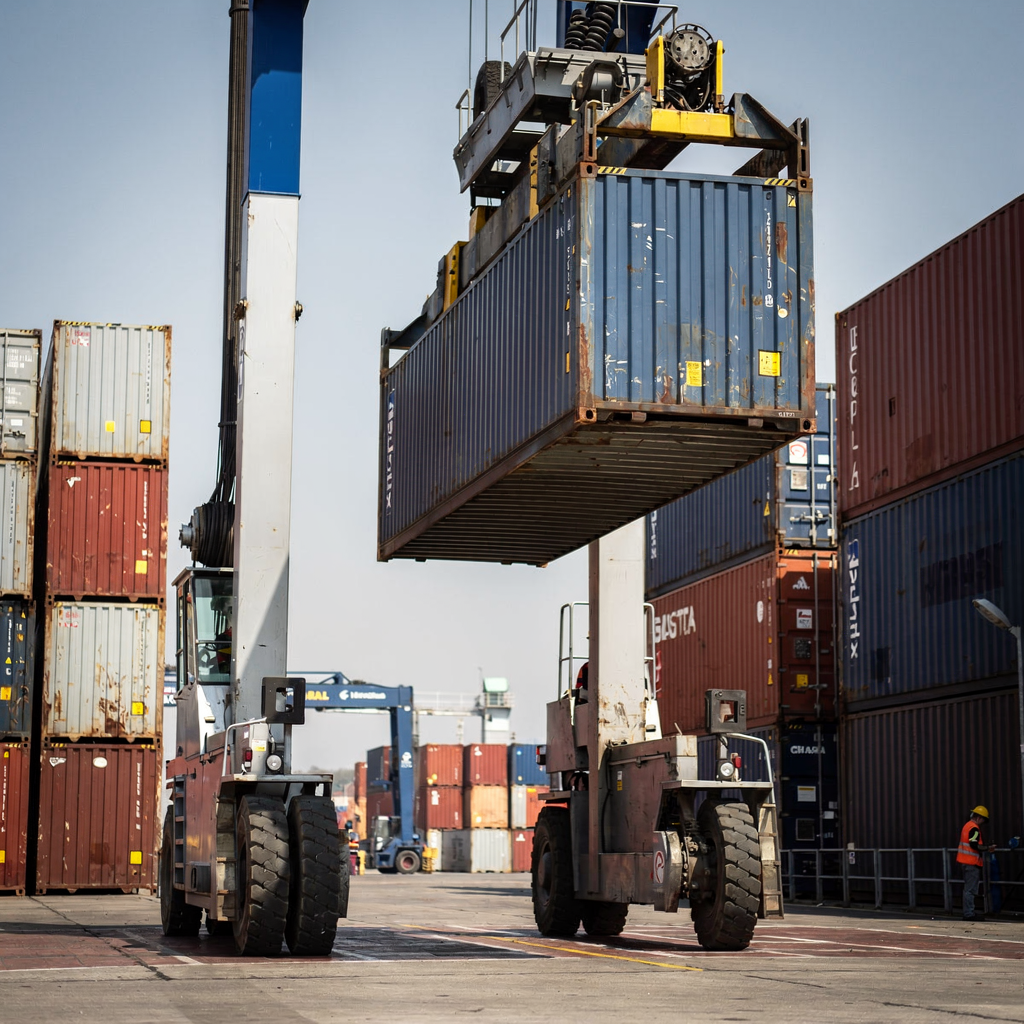
Operational data fuels smarter control. Telemetry from ASCs, vehicles, and sensors feeds analytics and anomaly detection. Also, telemetry supports predictive maintenance routines that reduce unplanned downtime. By analysing motor currents, cycle times, and vibration, systems can flag deteriorating parts before they fail. That reduces emergency repairs and keeps the yard running.
Standardised interfaces between ASCs and terminal operating systems are crucial. When data flows freely, decision-making improves across planning, dispatch, and maintenance. The Siemens technical overview highlights the role of control components and standardised data exchange for reliable operation [Drive, Control and Automation]. Also, structured data makes it easier to train ML models and to apply predictive analytics for KPIs like availability and mean time between failures.
Machine learning and AI bring further gains. Reinforcement learning can find policies that balance competing KPIs such as crane productivity, energy, and rehandle risk. At Loadmaster.ai, we train agents in a digital twin so that models do not depend on imperfect historical data. This approach yields cold-start readiness and multi-objective control. For more on predictive KPIs and shortsea terminals, see our page on predictive KPIs. Finally, a disciplined data strategy helps terminals reduce cost, improve reliability, and scale automation responsibly.
FAQ
What are Automated Stacking Cranes and why do they matter?
Automated Stacking Cranes are mechanised cranes that place and retrieve containers in the yard automatically. They matter because they reduce human error, raise moves per hour, and support continuous 24/7 operation, which improves overall terminal efficiency.
How much throughput improvement can terminals expect from ASC optimisation?
Terminals that integrate ASCs with control and planning systems report throughput improvements typically between 15% and 25% [design approach]. Actual gains depend on layout, TOS integration, and operational discipline.
Can ASC optimisation cut operational costs?
Yes. Optimised scheduling and higher crane utilisation can reduce labour and operational costs by about 12% in many cases [Drive, Control and Automation]. Energy savings from efficient dispatch can add further cost reductions.
What role does simulation play in yard design?
Simulation helps test yard allocation, lane widths, and block locations before construction or reconfiguration. It often reduces cycle times by up to 10% when used to refine layout and policies [design approach]. Simulations also validate multi-equipment interactions.
How do you reduce energy consumption for ASCs?
Energy-oriented scheduling minimises accelerations, idles, and unnecessary moves. Research shows this approach can lower energy use by 10–15% while keeping service levels [Energy-oriented crane scheduling]. Combining efficient motion profiles with smart sequence planning achieves the best results.
What is the importance of TOS integration?
TOS integration enables real-time updates and standardised commands between planning and equipment control. That reduces rehandles, shortens response times, and improves visibility across the terminal. For implementation patterns, consult our TOS integration guide at Loadmaster.ai.
How can AI help without much historical data?
Reinforcement learning trains agents in a digital twin, generating experience rather than relying on historical logs. This approach supports cold-start deployments, avoids reproducing past mistakes, and finds multi-objective policies tailored to your terminal.
What is predictive maintenance for ASCs?
Predictive maintenance uses sensor data to forecast component wear and impending faults before they occur. That reduces unplanned downtime and schedules repairs at convenient windows, which keeps operations stable.
How do terminals balance quay and yard KPIs?
Balancing requires multi-objective control and clear KPI weights. Systems must protect quay productivity during peaks while shifting focus to yard flow when needed. Agents that can reweight goals dynamically help maintain that balance.
Where can I learn more about practical ASC scheduling approaches?
Start with technical whitepapers and case studies on energy-aware scheduling and integrated design. Additionally, Loadmaster.ai publishes research and applied solutions, including stack and job scheduling articles that explain how to implement optimization in live operations.
our products
 stowAI
 stackAI
 jobAI
jobAI
Innovates vessel planning. Faster rotation time of ships, increased flexibility towards shipping lines and customers.
Build the stack in the most efficient way. Increase moves per hour by reducing shifters and increase crane efficiency.
Get the most out of your equipment. Increase moves per hour by minimising waste and delays.
stowAI
Innovates vessel planning. Faster rotation time of ships, increased flexibility towards shipping lines and customers.
stackAI
Build the stack in the most efficient way. Increase moves per hour by reducing shifters and increase crane efficiency.
jobAI
Get the most out of your equipment. Increase moves per hour by minimising waste and delays.