
Asset Tracking Fundamentals for Port Operators and Port Operations
Asset tracking in modern seaport environments ties together IoT sensors, RFID tags and GPS trackers to capture position and status for equipment and containers. Ports run complex workflows, and operators need clear situational awareness and reliable data. Asset tracking provides that clarity, and it helps reduce manual checks, speed decision making and improve operational throughput. For example, ports that adopt digital tracking report up to a 30% reduction in container dwell time, and a roughly 25% fall in labour costs tied to manual inventory checks. These statistics show why many terminals invest in connected devices, and why they treat asset data as core infrastructure.
Operators supervise stacking, gate flow and crane assignments. They rely on asset management tools and dashboards to decide where to move cranes and how to sequence trucks. A single operator can thus improve productivity by avoiding idle time and preventing unauthorized moves. In addition, asset tracking supports enhance security and theft detection through alerts when items cross geofences or when unusual motion is reported.
Implementing an asset tracking program splits into clear phases: pilot, scaled deployment and full integration. First, choose rugged tracking devices and sensors that are designed to withstand harsh maritime exposure, and then integrate feeds into management software and asset management software so that data becomes actionable. Next, combine that data with terminal planning tools to optimize yard layout, and then measure ROI through throughput gains and reduced losses. If you want more on terminal automation and planning, see our overview of container terminal automation software market. This keeps human focus on exceptions, and not on routine status updates.
IoT Asset Tracking: GPS Tracker Enabling Real-Time Visibility
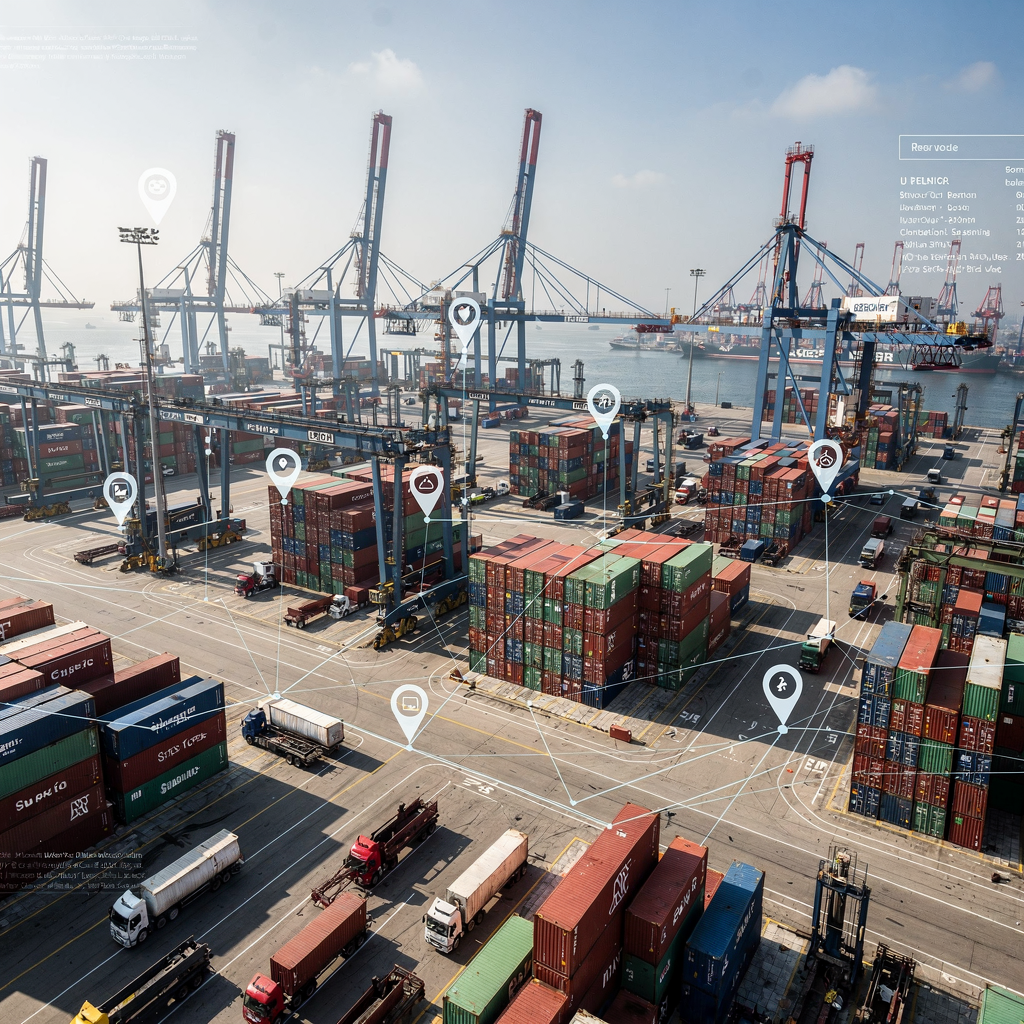
GPS tracker modules form a key layer in IoT asset tracking stacks. A GPS unit reports global coordinates, and an IoT sensor adds condition data like temperature or shock. Together, trackers feed telemetry to gateways, and then to cloud analytics for live maps and logs. This real-time visibility allows supervisors to see position and motion, and then to route cranes and trucks where they are needed most. Studies show asset utilization can rise by up to 20% when operators act on live location data, and idle times for cranes and trucks drop by 15–20% when dispatch is guided by continuous updates (market analysis).
For theft prevention and unauthorized movement detection, GPS trackers support geofencing and automated alert triggers. When a container crosses a fence or if a chassis reports motion at odd hours, the system generates an alert and opens a supervised incident workflow. Those alerts feed into monitoring and control dashboards so teams can escalate quickly. To enable robust detection across indoor and outdoor zones, GPS links are often combined with BLE beacons and UWB for short-range accuracy, especially when a container is inside a shed or under a canopy.
Hardware selection matters. Choose rugged, waterproof units that are designed to withstand salt spray and heavy handling, and choose devices with both cellular and satellite fallbacks so you keep position reporting even when a terminal’s connectivity fluctuates. For more on improving truck turnaround and gate workflows that depend on live trackers, see our guide on reducing truck turnaround time at deepsea container ports. In short, combine reliable tracker hardware with sensors and cloud services to enable live situational awareness and faster resolution of exceptions.
Drowning in a full terminal with replans, exceptions and last-minute changes?
Discover what AI-driven planning can do for your terminal
Optimize Efficiency with Management Software and Connectivity
Management software drives scheduling, resource allocation and dashboard reporting. A good module set includes gate handling, yard planning, equipment dispatch and metrics for ROI. Port teams use management software to sequence unload operations and to balance crane workloads. By integrating real-time feeds from trackers, the software can reassign tasks dynamically and reduce idle moves. Industry reports link digital adoption to up to 12% annual throughput growth for ports that scale systems and improve coordination.
Connectivity underpins that flow. Terminals rely on a mix of Wi-Fi, 5G and LoRaWAN® for resilient messaging. Cellular links handle wide-area telemetry, and LoRaWAN supports low-power, wide-area telemetry for simple sensors. Together they form an infrastructure that reduces latency and improves command-and-control. When connectivity is robust, operators receive faster alerts and crews act sooner, and productivity improves across shifts.
Asset utilisation improves as dashboards present clear KPIs and predictive insights. Asset tracking and asset tracking solutions connect to planning layers that advise on crane assignments and truck windows. For real-time equipment dispatch strategy that complements this approach, check our article on real-time equipment dispatch optimization. Also, combining management software with asset management software and edge analytics helps teams automate routine tasks and to focus on exceptions. As a result, terminals see better asset allocation, less handling, and measurable gains in operational efficiency. These improvements also reduce fuel use and idle emissions, which supports sustainability goals and supply chain resilience.
Automate Asset Management and Monitor Terminal Operations using LoRaWAN® and Geolocation
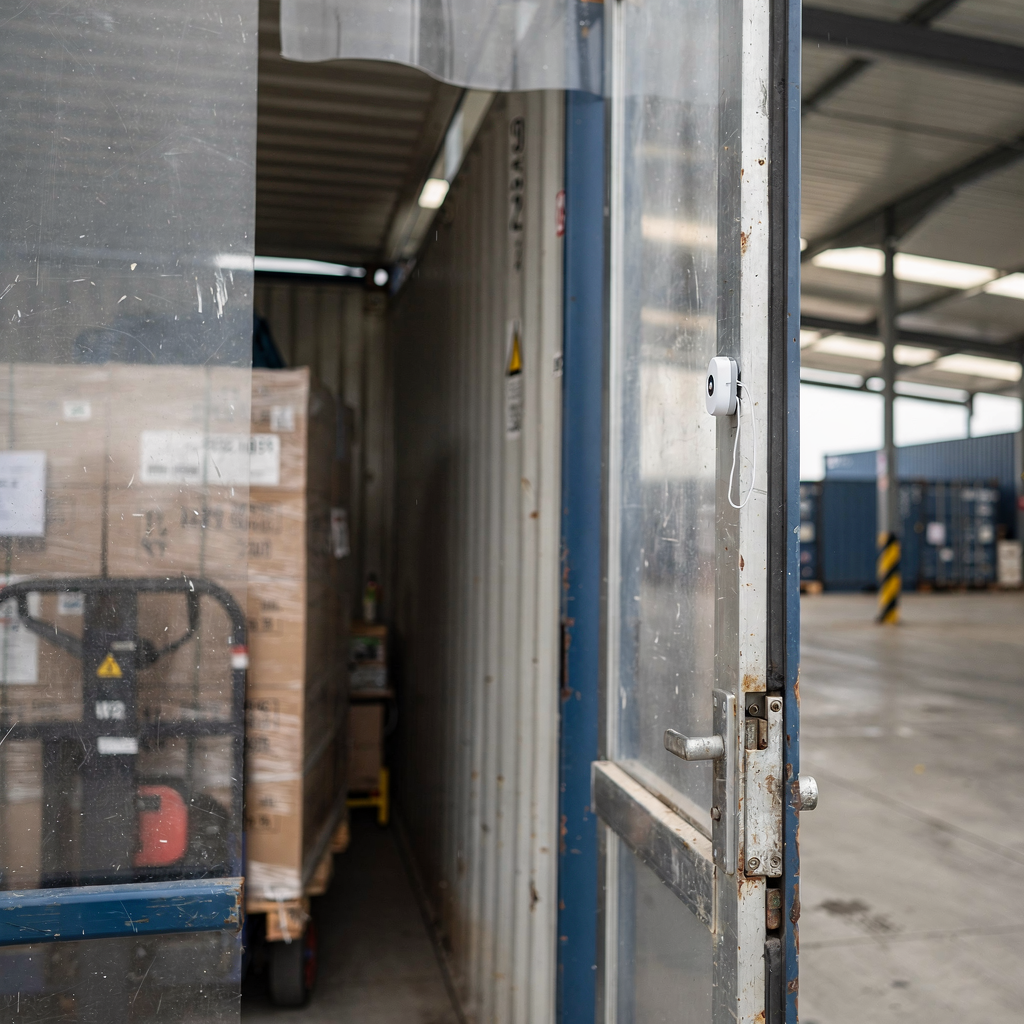
LoRaWAN covers large terminal footprints at low power, and it supports dense sensor deployments for monitoring gates, stacks and yard lights. A LoRaWAN network uses gateways to collect small packets from sensors, and then forwards them to cloud platforms for analysis. This setup reduces battery swaps and cuts maintenance. In practice, terminals deploy LoRaWAN for door state, tilt and proximity sensing, and then use geolocation layers to pin position indoors.
Geolocation blends GNSS for outdoors with BLE and UWB indoors, and it gives operators reliable position data across indoor and outdoor settings. BLE beacons signal proximity in container sheds, and UWB provides centimeter accuracy for crane and handling equipment alignment. Use cases include automated gate checks, stack verification and chassis tracking. Automation of these checks reduces manual validation, and gate processing times can fall by up to 40% when scanners, beacons and software share data in a coordinated flow.
Terminals can also automate routine supervision and alerts so staff receive only the most actionable items. For example, temperature sensors and shock detectors tied to monitoring and control systems flag perishable cargo that needs attention. Asset tracking ties into maintenance schedules as well; predictive rules trigger work orders before failures occur. To learn about reducing equipment starvation through intelligent pooling, see our analysis of intelligent pooling in port operations. Together, networked sensors, LoRaWAN and geolocation deliver a robust platform for automated terminal optimization.
Drowning in a full terminal with replans, exceptions and last-minute changes?
Discover what AI-driven planning can do for your terminal
Cargo and Container Tracker Use Cases: Fleet and Mobile Assets
Use cases span the lifecycle from ship unload to yard stacking and onward delivery. A container may be fitted with a tracker that reports location and temperature as it moves off a vessel, and then during yard moves the data helps crews place it in an optimal slot for quick access. This reduces rehandles and supports faster turns at berth. Cases with active temperature monitoring also reduce spoilage in cold chains and improve ROI for perishable cargo.
Fleet management for straddle carriers, RTGs and trucks benefits from live dashboards that show position and workload. Dispatchers can view the entire fleet and then assign tasks to the nearest machine, and this reduces deadhead time. Mobile assets such as forklifts, chassis and trailers report battery state and shock events through sensors, and they feed maintenance queues. For deeper insights into crane workload and distribution, explore our piece on crane workload distribution strategies. The same tracking systems support condition monitoring so teams detect faults early and schedule repairs with minimal disruption.
Security teams use trackers and geofencing to detect unauthorized moves and to trigger immediate action. When a container reports motion outside scheduled windows, an alert posts to supervision channels and a protocol initiates. These responses reduce the risk of theft and of misrouting. Also, combining tracking technology with digital twin models helps planners visualize flows and to test changes before implementing them. Overall, the combined effect is higher utilization, less waste and a more resilient maritime handling environment.
Building a Robust Solution for Cutting-edge Logistics Optimization
Designing an end-to-end architecture starts with edge devices and gateways, and then moves through cloud analytics and digital twins. Edge devices capture raw telemetry, and gateways aggregate packets to reduce hops. Cloud services then perform analytics, and digital twins let planners simulate scenarios and measure optimization gains. This layered approach scales as traffic grows and supports international trade across waterways and inland links.
Data standardisation is crucial to interoperability. Open schemas and APIs allow systems to share status, and they improve decision making across carriers, terminals and hauliers. At the same time, cybersecurity measures must protect operational data. This includes encryption, identity management and network segmentation to prevent unauthorized access to tracking feeds. Research highlights data integration challenges and stresses secure open data strategies for future-ready ports (open data study).
Looking ahead, AI-driven predictive maintenance and adaptive terminal layouts will reshape operational planning. Satellite and cellular fallbacks can keep position streams available, and integration with cargo booking and TMS systems will enable automated gate notifications and fewer manual handoffs. For planners focused on yard capacity and predictive modelling, see our guide on predictive modeling for yard capacity. Finally, a robust deployment combines IoT solutions, secure infrastructure and clear workflows so terminals can scale with global trade. When systems automate routine email and exception handling, teams handle more complex decisions and deliver consistent service.
FAQ
What is asset tracking in a port context?
Asset tracking in a port context means using connected trackers, sensors and software to monitor equipment and containers across a terminal. It provides position and condition data so teams can act faster and reduce manual checks.
How does a GPS tracker help terminals?
A GPS tracker reports the global location of a container or vehicle so dispatchers can route nearby units and cut idle time. Paired with sensors, it also logs condition data for fragile or temperature-sensitive cargo.
Which connectivity options are best for terminals?
Terminals typically combine Wi-Fi, 5G and LoRaWAN for resilient coverage and low-power sensing. Cellular and satellite fallbacks help maintain position streams when ground links degrade.
Can asset tracking reduce container dwell time?
Yes. Case studies show up to a 30% reduction in dwell time when terminals adopt tracking and process automation. That reduction speeds throughput and improves ROI.
What indoor geolocation approaches work in sheds?
BLE beacons and UWB systems work well indoors and provide short-range accuracy where GNSS cannot reach. These systems integrate with gate scanners to verify stack locations.
How do ports prevent unauthorized container moves?
Ports use geofencing, motion detection and alert workflows to detect unauthorized moves and to flag them for supervision. Systems create incident tickets so teams can respond quickly.
Are LoRaWAN® networks suitable for large terminals?
Yes. LoRaWAN® provides low-power, wide-area coverage that supports many sensors and long battery life, making it ideal for status monitoring across a large terminal. It is often paired with higher bandwidth links for trackers.
What role does management software play?
Management software handles scheduling, resource allocation and reporting, and it ingests tracker feeds to automate dispatching. This reduces manual tasks and improves operational consistency.
How can email overload from alerts be handled?
This cuts time on triage and returns focus to exception management.
Where can I read more about terminal automation and planning?
For related resources, see our overview of container terminal automation software market, and our piece on real-time equipment dispatch optimization which offer deeper technical guidance.
our products
 stowAI
 stackAI
 jobAI
jobAI
Innovates vessel planning. Faster rotation time of ships, increased flexibility towards shipping lines and customers.
Build the stack in the most efficient way. Increase moves per hour by reducing shifters and increase crane efficiency.
Get the most out of your equipment. Increase moves per hour by minimising waste and delays.
stowAI
Innovates vessel planning. Faster rotation time of ships, increased flexibility towards shipping lines and customers.
stackAI
Build the stack in the most efficient way. Increase moves per hour by reducing shifters and increase crane efficiency.
jobAI
Get the most out of your equipment. Increase moves per hour by minimising waste and delays.