
ASC job scheduling and deepsea container port yard optimisation
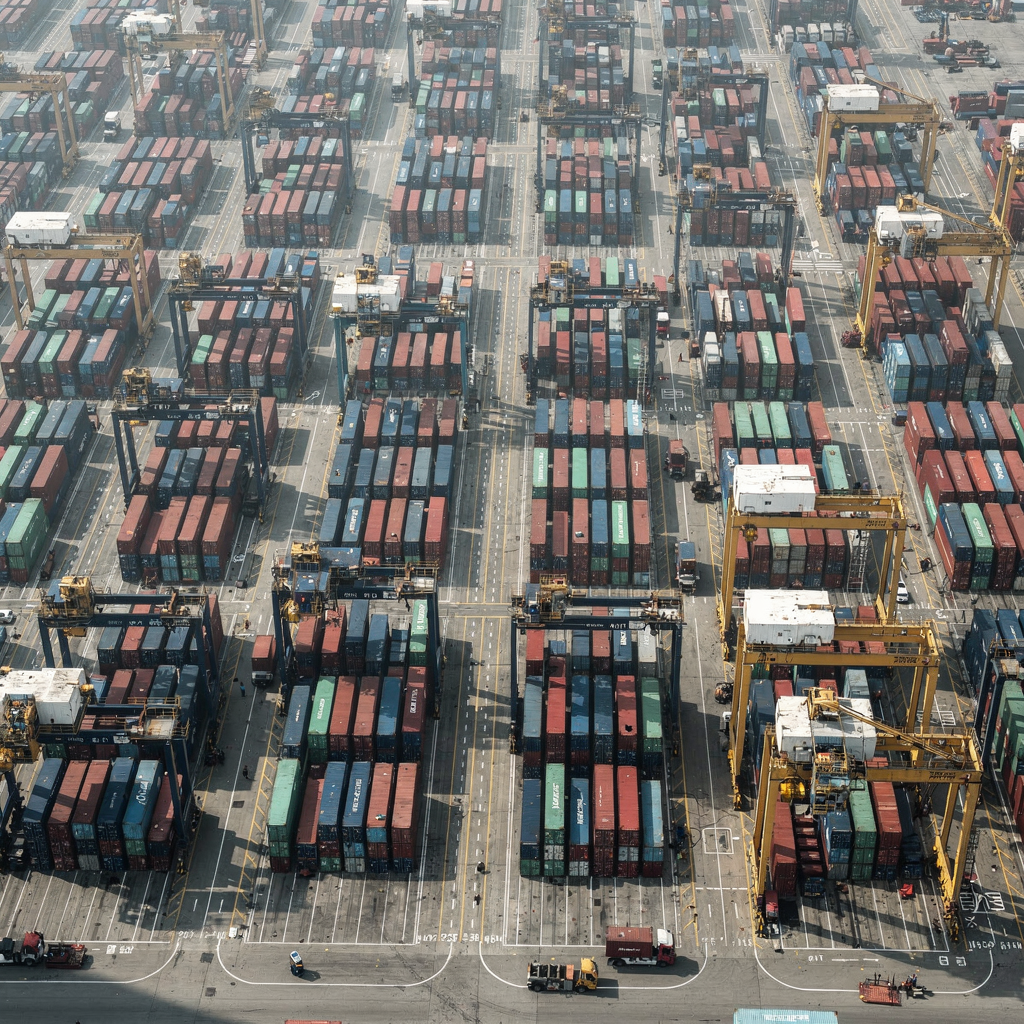
Automated Stacking Cranes (ASCs) are specialised gantry cranes that stack and retrieve containers across yard blocks. They operate on rails, pick and place containers, and serve as backbone equipment in automated deepsea container port yards. ASCs take on repetitive moves with high precision, and they free human operators from heavy lift tasks. Also, they integrate with terminal operating systems and control layers to receive job orders and report status. Effective ASC deployment depends on tight coordination across quay cranes, AGVs, and yard systems.
Job scheduling means assigning moves to ASCs in time and space so that the yard stays fluid. Good scheduling reduces idle time, prevents crane interference, and lowers rehandles. It links vessel planning, yard placement, and gate flow into one flow. Therefore, scheduling impacts throughput and costs directly. For example, terminals that adopt optimized ASC schedules report productivity improvements. Industry research shows a potential boost of 20–30% in yard productivity. Also, well-coordinated ASC blocks can reach utilisation above 85%, which shortens container dwell time and speeds gate cycles.
Scheduling covers priorities such as import versus export moves, reshuffles, and service windows. It also enforces safety and operational rules. For operators, a clear schedule reduces firefighting and manual juggling. For planners, tools that provide visibility and what-if testing matter. At Loadmaster.ai we build RL agents that learn scheduling policies in a digital twin, and then run those agents against live KPIs. This method avoids training on historical mistakes and creates robust, adaptable plans. For readers who want a deeper technical view of simulation use in planning, see our resource on simulations for terminal planning.
Importance of ASC job scheduling for yard productivity
Optimised ASC scheduling directly reduces idle time and container dwell. When ASCs receive consistent, conflict-free task flows they spend more time moving loads. Also, this reduces unnecessary repositioning. As a result, terminals increase moves per hour and lower average stack dwell. For example, case studies show ASC terminals with optimized schedules can reach high utilisation rates and faster throughput. A published review highlights utilisation metrics and performance gains in highly automated facilities here.
Cost savings come from fewer rehandles, less equipment wear, and shorter vessel stays. Reduced dwell cuts demurrage and gate congestion. In practice, even single-block improvements scale across terminal daily flows. Operators that lift throughput by 20% see disproportionate reductions in per-container handling costs. Therefore, investment in scheduling pays back through lower operating expenses and improved yard flow. Also, freeing planners from constant micro-decisions lowers labor costs and error rates.
Industry data underlines these points. Empirical studies report that multi-agent and optimisation methods reduce handling time and crane interference. For instance, agent-based approaches have shown an approximate 15% drop in average handling time and nearly 25% fewer crane interference incidents. These numbers translate into measurable yard savings and steadier performance across shifts.
Balancing cost and throughput also demands cross-equipment awareness. Loadmaster.ai’s approach ties quay planning, yard stacking, and job execution together. Our StowAI, StackAI, and JobAI agents optimize multiple KPIs simultaneously without relying on flawed historical averages. For actionable metrics and methods on improving gross crane rate, consult our guide on gross crane rate improvement strategies.
Drowning in a full terminal with replans, exceptions and last-minute changes?
Discover what AI-driven planning can do for your terminal
Scheduling Challenges in deepsea container terminals
Scheduling in deepsea terminals faces several complexities. First, multiple ASCs work in tight blocks. They must avoid collisions and blocking moves. Second, task priorities change. Import containers may require quick retrieval while export boxes need staging. Third, yard space limits require careful placement. In tight yards a single reshuffle can cascade into delays that hit quay productivity. These constraints force schedulers to balance short-term execution with long-term yard health.
Dynamic conditions add further friction. Vessels arrive early or late. Gate peaks occur. Equipment fails. Each disruption forces replanning under time pressure. Consequently, static rule engines and models that mimic the past struggle to cope. Traditional AI based on supervised learning learns historical patterns. It cannot explore new policies or try counterfactual strategies in live operations. By contrast, adaptive approaches that can simulate outcomes perform better under changing mixes and disruptions. For background on using simulation rather than history, see our work on logistics simulation software for port operations.
Crane interference is a common bottleneck. ASCs block each other when paths overlap. Scheduling must prevent deadlock and reduce waiting. Task priorities complicate this. Emergency retrievals, gate stacks, and vessel cut-offs can clash. To address such problems, practitioners use heuristics like greedy nearest-first and lookahead planning. They also apply optimisation algorithms such as mixed-integer programming for small horizons.
Heuristics scale but can lock in bad trade-offs. Exact optimisation offers quality but often lacks real-time speed. Hybrid methods that combine heuristics with optimisation and real-time replanning offer good compromise. Loadmaster.ai applies reinforcement learning within a digital twin so policies learn to trade off KPIs dynamically. For content on dynamic replanning during disruptions, visit our page on dynamic internal transport replanning during disruptions.
Agent-based Approach to ASC scheduling
Multi-agent systems treat each ASC as an intelligent agent that negotiates tasks. Agents communicate and coordinate to avoid conflicts. They exchange local state, proposed moves, and timing. This decentralised setup reduces central computational bottlenecks and allows scalable decision-making. Also, it enables graceful degradation when parts of the system experience faults. For example, an agent can reassign tasks when a neighbour goes offline.
Research shows agent-based techniques cut handling time and interference. One study found an average 15% reduction in handling time and roughly 25% fewer crane interference incidents. Those outcomes follow from better task matching and smarter local trade-offs. Agents can prioritize moves that protect future schedules, reduce reshuffles, and lower travel distance.
Machine learning refines task allocation in real time. Reinforcement Learning (RL) agents learn policies that map states to actions. They train against KPIs in a digital twin environment. This approach avoids overfitting to historical anomalies. At Loadmaster.ai we train three cooperating agents—StowAI, StackAI, and JobAI—to control quay sequencing, yard placement, and job execution. The agents learn to balance quay productivity against yard congestion and travel distance. They can reweight objectives on the fly, protect quay during peak loading, and shift focus when gates spike. For technical readers, our article on reinforcement learning for deepsea container port operations explains the training loop and KPI design.
Agent-based models also support explainability and governance. Policies run with hard constraints and produce audit trails. Operators can test policies in sandboxed digital twins before go-live. Consequently, deployment risk drops. The approach scales from a single block pilot to full-yard operations while maintaining consistent performance across shifts.
Drowning in a full terminal with replans, exceptions and last-minute changes?
Discover what AI-driven planning can do for your terminal
Smart Port Technologies integration for ASC scheduling
Smart port technologies strengthen ASC scheduling with richer data and faster control loops. IoT sensors on cranes and vehicles stream telemetry. Real-time data links feed AI models with accurate states. AI analytics convert raw telemetry into predictive signals. For instance, sensors predict equipment degradation before failure. Therefore, scheduling can preempt breakdowns by adjusting assignments proactively. A report on smart port development captures this trend and the benefits of automation and digitalisation here.
Digital twins serve as the testing ground. They mirror the terminal layout, equipment, and rules. Operators run scenarios and evaluate KPI trade-offs. Scenarios include peak gate surges, slow quay crane rates, and adverse weather. With a validated digital twin, planners try alternative policies without risking live operations. At Loadmaster.ai we spin up bespoke digital twins to train RL agents. The agents then deploy with operational guardrails and live feedback. For more on simulations and terminal planning, see our simulations resource simulations for terminal planning.
Real-time links let systems adjust schedules on the fly. AI modules consume telemetry and recommend new assignments. Predictive analytics suggest which stacks will need reshuffling. They also highlight emerging bottlenecks. Together, these capabilities reduce unplanned moves and lower fuel use. Integrated approaches also streamline cross-equipment coordination, matching QC, AGV, and ASC workloads. For a discussion of cross-equipment prioritization to prevent bottlenecks, consult our analysis on cross-equipment job prioritization.
Performance Metrics and Case Studies in ASC optimisation
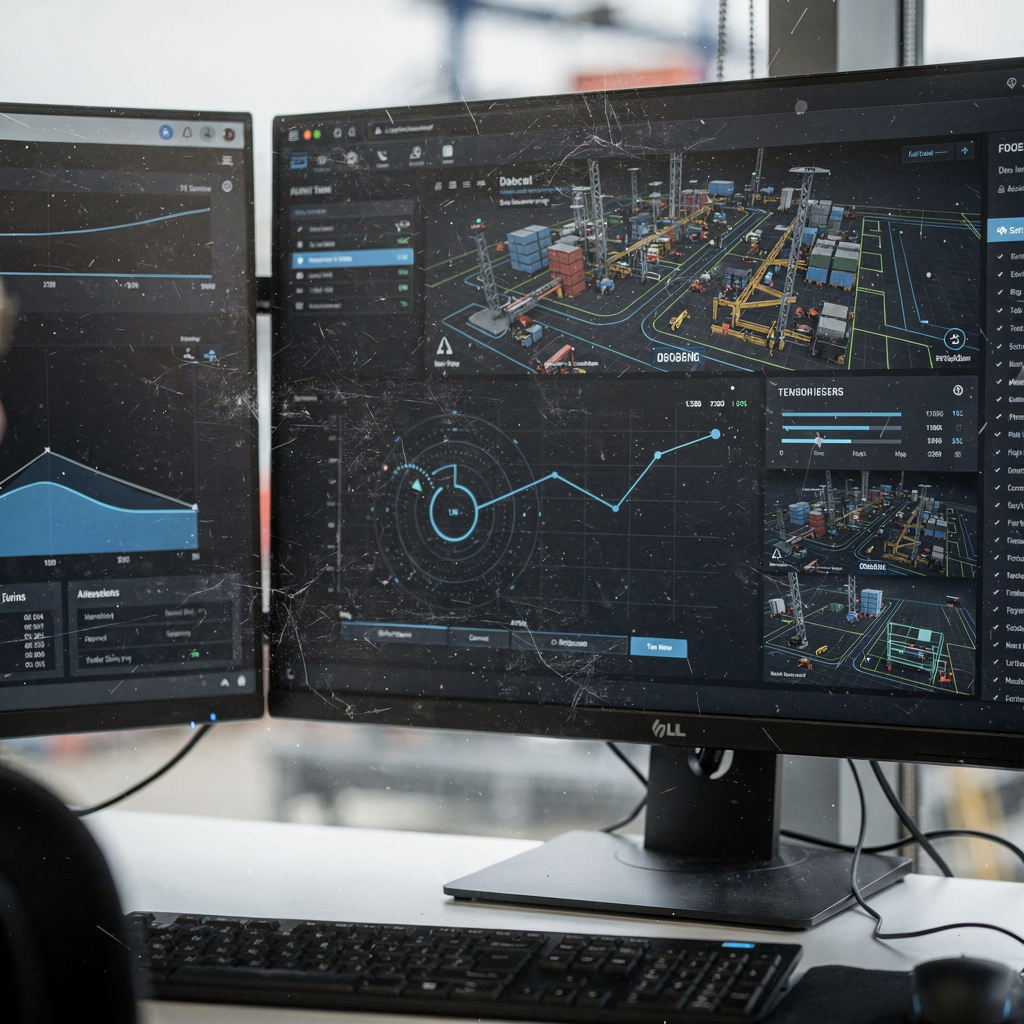
Measuring ASC performance requires multiple metrics. Key indicators include average container handling time, crane utilisation, reshuffle counts, and overall yard throughput. Operators also track moves per hour, average travel distance, and container dwell. Combining these metrics gives a fuller view than any single KPI. For example, increasing moves per hour while raising reshuffles does not represent a net improvement. Thus, multi-objective metrics are necessary.
Case studies from major ports illustrate real gains. The Ports of Antwerp and Rotterdam report high automation levels with corresponding performance improvements. Studies indicate ASC utilisation rates exceeding 80% in several automated terminals here. These terminals pair automation with tight operational rules and data-driven scheduling. They also use integrated frameworks that balance quay cranes (QC), AGVs, and ASCs to avoid shifting bottlenecks.
Research that weighs QC, AGV, and ASC loads together offers a practical roadmap for scheduling. Holistic frameworks ensure that scheduling decisions do not improve one area at the expense of another. For instance, balancing QC sequencing with yard placement avoids overloading ASCs during quay peaks. A study presenting such combined workload measurement helps planners align equipment duties and improve end-to-end flow here.
Implementations using RL-trained agents show consistent benefits: fewer rehandles, higher crane utilisation, shorter driving distances, and steadier outputs across shifts. Those results follow from closed-loop optimization and sandboxed testing. Loadmaster.ai’s production deployments demonstrate that sim-trained agents can improve yard balance and reduce unnecessary travel while protecting quay performance. To explore KPI design for AI-driven operations, see our guide on key performance indicators for AI in port operations.
FAQ
What are Automated Stacking Cranes (ASCs) and why do they matter?
ASCs are rail-mounted gantry cranes that stack and retrieve containers in yard blocks. They matter because they automate repetitive moves, increase precision, and reduce human exposure to heavy operations, which raises throughput and lowers errors.
How does ASC job scheduling affect terminal productivity?
Scheduling affects how often ASCs remain busy and whether they cause interference. Good schedules reduce idle time, lower reshuffles, and improve moves per hour. That directly translates into reduced dwell and lower terminal costs.
What are common scheduling challenges in deepsea terminals?
Challenges include crane interference, shifting task priorities, limited yard space, and dynamic events like late vessel arrivals and equipment faults. These factors force frequent replanning and make static rules insufficient.
How do agent-based systems help ASC scheduling?
Multi-agent systems let ASCs act as autonomous decision-makers that coordinate locally. They reduce central bottlenecks and adapt to local changes quickly. Studies show this approach can cut handling time and interference rates significantly.
Can machine learning improve real-time task allocation?
Yes. Reinforcement Learning trains agents in a simulated digital twin and helps them learn policies that balance multiple KPIs. These agents adapt to new mixes and disruptions without relying on flawed historical data.
What role do IoT sensors and digital twins play?
IoT sensors feed real-time telemetry to AI models. Digital twins mirror terminal state for safe testing and training. Together, they support predictive maintenance and enable proactive schedule adjustments.
How do terminals measure ASC scheduling performance?
Terminals use metrics like average handling time, crane utilisation, reshuffle counts, moves per hour, and container dwell. A multi-metric view prevents misleading improvements that hurt other areas.
Are there proven results from automated terminals?
Yes. High-automation ports like Antwerp and Rotterdam report ASC utilisation rates above 80% and tangible productivity gains. Research also documents reductions in handling time and interference with agent-based scheduling.
How does Loadmaster.ai’s approach differ from traditional AI?
Loadmaster.ai trains RL agents in a site-specific digital twin instead of relying on historical data. This yields cold-start capability, multi-objective optimization, and adaptive policies that outperform models that merely copy the past.
How can a terminal start improving ASC scheduling today?
Begin with a digital twin and targeted KPIs. Test optimization and agent policies in simulation, then run pilots in a controlled block. For practical resources, explore Loadmaster.ai’s simulation and reinforcement learning guides to plan the next steps.
our products
 stowAI
 stackAI
 jobAI
jobAI
Innovates vessel planning. Faster rotation time of ships, increased flexibility towards shipping lines and customers.
Build the stack in the most efficient way. Increase moves per hour by reducing shifters and increase crane efficiency.
Get the most out of your equipment. Increase moves per hour by minimising waste and delays.
stowAI
Innovates vessel planning. Faster rotation time of ships, increased flexibility towards shipping lines and customers.
stackAI
Build the stack in the most efficient way. Increase moves per hour by reducing shifters and increase crane efficiency.
jobAI
Get the most out of your equipment. Increase moves per hour by minimising waste and delays.