
model port terminal simulation: concepts and design
Discrete event thinking helps explain how vessel handling works and how to design a flexible model for a modern port. Discrete events track each arrival and departure and the work done by quay cranes, yard trucks and labour. Arena and other discrete tools let a planner reproduce the stochastic arrival of a ship and the variations in unload or load time. A planner can then test a schedule, and evaluate berth allocation or resource sharing without touching live operations. For example, a study that used Arena to mimic vessel berthing at Beirut Container Terminal identified queuing as a major cause of waiting time and suggested targeted operational changes to reduce delays [Beirut study].
Key element selection starts with berths and yard blocks and then expands to equipment and labour. The element list should include quay cranes, yard vehicles, gate staff, and storage capacity. A good design also models stochastic events such as crane breakdown and variable arrival patterns. You should set parameters for service time distributions and create arrival processes that match measured data. When real data are limited, you can estimate parameters and then investigate sensitivity to demand and disruption.
Workflow for building a basic Arena model begins by defining entities and resources. Next, you create queues and schedules. Then you add logic for priority, batching and safety margins. After that, you run scenarios and capture KPIs such as turnaround and berth utilisation. Rockwell Automation notes substantial throughput gains when ports use simulation in planning and investment decisions [Rockwell]. Planners will also want to compare results to real logs, and then refine service time distributions.
Loadmaster.ai uses a digital twin approach to spin up a terminal replica and then trains RL agents against those KPIs. This lets decision-makers test alternatives, and it helps to prove new policies before they reach the dock. The approach trades off quay productivity, yard congestion and driving distance so that planners can see balanced outcomes.
simulation models for container terminal layout and resource use
Designing the terminal layout is the first practical step toward terminal optimization and smooth flow. The quay, yard blocks, and gate complex form a single connected network that governs vehicle routes and storage rules. Start by mapping blocks, lanes, storage rows and the single dock operation at each berth. Then add information on container stacking constraints, and yard handling rules. A clear layout reduces ambiguity and helps to evaluate peak demand and expansion options.
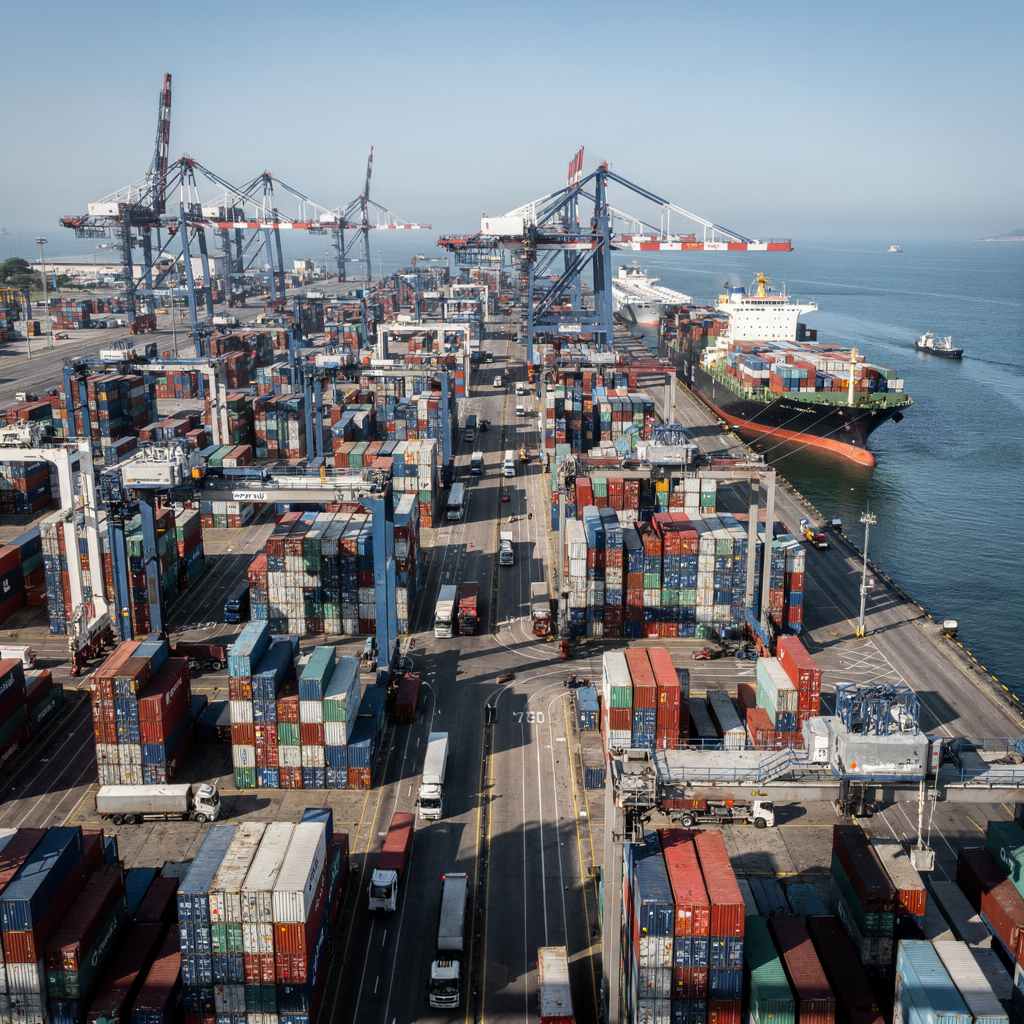
To allocate resources, assign quay cranes to berth segments and assign truck pools to yard loops. Define labour shifts and maintenance windows and then bind resources to tasks. Use the model to test how different allocations affect throughput and identify where queues form. For example, a resource coordination study found up to a 15% reduction in turnaround time and about 20% better equipment use when quay crane and truck schedules were optimised together [Resource optimisation].
Peak load evaluation needs demand profiles, arrival rates, and peak-hour mixes. Simulate container mixes and equipment availability and then investigate how bottlenecks move between quay and yard. A compact scenario might hold berth productivity high but push congestion into the yard. Metrics such as moves per hour and waiting time expose inefficiencies and let you compare layout alternatives. You can also integrate yard routing heuristics to optimize transfer distances.
If you need deeper technical work, teams may require programming assistance to build customised logic or to integrate timetable feeds. For further reading on practical tools and yard planning, see our guide on how to model container yard operations how to model container yard operations.
Drowning in a full terminal with replans, exceptions and last-minute changes?
Discover what AI-driven planning can do for your terminal
features and capabilities of Arena as a solution for port logistics
Arena provides templates and modules that speed modelling and let teams focus on decision rules. The platform supports experiment manager workflows and produces reports and dashboards for KPIs. Users can animate flows to visualise every move and then export metrics for later analysis. The software has pre-built elements for berths, cranes and vehicles which cut development time.
When planning a build, include data feeds for arrival schedules and yard inventory. Arena can integrate with external sources to keep runs realistic and to enable what-if analyses. The platform also works with optimisation engines to search policy space when you compare crane allocation alternatives. This features and capabilities mix supports both tactical and strategic planning, and it helps to evaluate investment scenarios.
For firms that want a modern decision support stack, Arena and related tools can be part of a larger platform. Loadmaster.ai pairs a digital twin with reinforcement learning to produce closed-loop control that learns from simulation runs. The approach trains agents without historic dependency, and then deploys with explainable KPI constraints to improve productivity and reduce rehandles.
If you are choosing between systems, our comparison of terminal operating systems and simulation tools can help you weigh trade-offs in integration and extensibility compare systems. And if you want to learn which simulation software container terminals typically use, see our overview on that topic what simulation software do container terminals use.
case studies: data-driven analysis of port terminal operations
Case studies show how targeted experiments yield measurable gains and support investment planning. At Beirut Container Terminal, a focused Arena-run study replicated berthing and quay processes and identified queues that drove waiting time up. The researchers noted that by changing berth allocation and sequencing, waiting times could be sharply reduced [Beirut study]. This practical result helps to prove the value of modest operational changes.
At El-Dekheilla Port, a week-long run used real arrival and handling logs to capture the interaction between berths and yard blocks. The study fed actual ship lengths, start and end operation times and container counts into the model and then analysed results to identify choke points [El-Dekheilla report]. The detailed data allowed the team to evaluate alternative staffing and crane mixes and to quantify improvements in throughput.
Across multiple reports, ports that invested in simulation-driven management reported throughput increases between 10% and 25% when they adopted recommended changes [Rockwell]. These figures strengthen the business case for using a digital twin or an arena simulation software environment to support capacity and investment decisions [TRID case].
Loadmaster.ai has used similar simulation-based approaches to train RL agents on terminal layouts so planners can test policies at scale. The agents learned to reduce rehandles and to balance yard and quay workloads, and the pilots demonstrated measurable gains before live deployment.
Drowning in a full terminal with replans, exceptions and last-minute changes?
Discover what AI-driven planning can do for your terminal
related industries: integrating container simulation into global logistics
Container terminals are not isolated; they sit at nodes in a wider supply chain and they affect the global flow of goods. Ports connect to rail corridors and inland depots, and so any change at the quay can shift delays down the line. To evaluate system-wide impact, teams build multi-node models that include rail links, truck gates and storage terminals. This lets planners simulate transfer times and to test coordinated schedules across modes.
Scenario testing supports resilience planning and helps to manage disruptions. You can simulate demand spikes, labour shortages, or a vehicle breakdown and then observe how the network adapts. These tests let decision-makers compare strategies and to choose ones that keep flow of goods and material moving under stress. Digital twins and integrated logistics platforms can automate such scenario sweeps so planners get robust recommendations fast.
Many terminals now examine their seaport connections and hinterland links when planning expansion. This helps to evaluate not just quay capacity but also yard storage and inland transport capacity. For a practical toolkit, see our article on maritime terminal simulation tools for yard planning which covers connectors and scheduling heuristics maritime terminal tools.
In related industries, such as rail freight and inland depots, simulation models help to optimize vehicle routing and to reduce dwell. These cross-sector applications highlight that the methodology scales across any logistics network. They also show that a small port change can cascade into global improvements in delivery times and inventory flow.
industry outlook: simulate and optimize port logistics with data
The industry is moving toward AI-enhanced workflow and predictive control. Reinforcement learning agents now augment traditional planning and can search policy space to find improvements beyond historical practice. AI tools support planners in balancing KPIs and in reacting to changing demand patterns. Loadmaster.ai builds agents that train inside a digital twin and then deploy with operational guardrails to ensure safe, explainable outcomes.
Data-driven decision support also informs investment planning and risk assessment. Simulation helps to prove the ROI on equipment purchases or on layout expansion. You can simulate an extra crane and then evaluate whether it reduces waiting time during peak windows. Such tests provide evidence for capital allocation and for phased expansion decisions.
Sustainability and resilience are next-wave priorities. Teams now model energy use and emissions to identify lower-impact operating modes. Digital twins link operational telemetry to environmental KPIs so that planners can test greener schedules. When ports ask how to enhance long-term throughput without overspending, a simulation-led approach offers a defensible path forward.
As you prepare to adopt simulation-led workflows, consider whether you will require programming assistance to build customised displays or to integrate with your TOS. If you want a controlled evaluation, our resources on terminal decision support simulation and on capacity planning software can guide selection and piloting terminal decision support and capacity planning software.
FAQ
What is Arena and how is it used in port planning?
Arena is a discrete-event modelling platform used to reproduce the sequence of operations at a port. Planners use it to test berth assignments, crane schedules and yard layouts before making changes on the ground.
Can simulation improve berth utilisation?
Yes. By matching quay crane schedules to vessel arrival profiles, simulation can reveal idle periods and recommend changes that improve berth utilisation. Studies of container terminals show measurable reductions in waiting time after such adjustments.
How do digital twins and RL agents interact?
A digital twin provides a realistic environment where reinforcement learning agents train. The agents try millions of decisions inside the twin and then learn policies that balance KPIs and adapt to new conditions.
Are case studies available that prove benefit?
Yes. For example, research at Beirut Container Terminal identified queuing causes and recommended fixes that reduced vessel waiting time [Beirut study]. Other reports show throughput gains between 10% and 25% when simulation informs changes [Rockwell].
How does simulation support sustainability goals?
Simulation can model energy use and emissions for different handling patterns and equipment mixes. By testing lower-consumption schedules, planners can choose operating modes that reduce environmental impact.
Do terminals need large historical datasets to benefit?
No. Methods that train agents in simulation can start without extensive historical data and still find improved policies. This reduces reliance on imperfect or incomplete past logs.
What role do yard trucks and vehicle routing play?
Truck routing determines travel distances and affects crane wait times. Simulating routes helps to balance yard work, reduce driving distance and improve overall productivity.
How do I evaluate software choices for terminal planning?
Compare platforms by their integration options, experiment management and support for animation and reporting. Our comparison articles show trade-offs between TOS integration and customisability system comparison.
Can simulation help with investment decisions?
Yes. Simulation can prove whether additional cranes or yard expansion will reduce waiting time and improve moves per hour. Tests help to justify capital expenditure by showing expected ROI under realistic loads.
When might a terminal require programming assistance?
Terminals may require programming assistance when they want custom logic, bespoke dashboards, or tight TOS integration. Skilled developers can also build customised displays and extend the base platform to meet specific needs.
our products
 stowAI
 stackAI
 jobAI
jobAI
Innovates vessel planning. Faster rotation time of ships, increased flexibility towards shipping lines and customers.
Build the stack in the most efficient way. Increase moves per hour by reducing shifters and increase crane efficiency.
Get the most out of your equipment. Increase moves per hour by minimising waste and delays.
stowAI
Innovates vessel planning. Faster rotation time of ships, increased flexibility towards shipping lines and customers.
stackAI
Build the stack in the most efficient way. Increase moves per hour by reducing shifters and increase crane efficiency.
jobAI
Get the most out of your equipment. Increase moves per hour by minimising waste and delays.