
AI and terminal operations: Leveraging historical data
Terminal operations collect huge logs of container movements, equipment usage, labour allocation, and schedules, and these records power modern AI systems. Operators record container movements and operational events every hour and every shift, and that creates a dataset that supports pattern discovery and forecasting. When an AI ingests this historical data it learns sequences and cycles, and then it can forecast congestion and spot a bottleneck before it grows. Studies show AI-driven programs can lift efficiency by 20–30%, and they can cut delays by 15–25% when models learn from past patterns Research on AI in supply chain and operations management. That evidence makes a strong case for integrating AI into daily planning and execution.
Data types matter. Examples include timestamped moves, crane work cycles, gate transactions, chassis and truck arrivals, and maintenance logs. Each record supplies data points that training routines use to shape an AI model, and the model returns ai outputs such as predicted dwell, suggested routing, and resource allocation. Practically, planners use those outputs to optimize crane sequences, to balance yard stacks, and to reduce driving distance. The result is improved operational efficiency and lower operational costs, and the gains become visible in throughput and in fewer rehandles.
However, the quality of the input matters. Poor data quality leads to noisy signals and weak ai recommendations. Therefore teams must invest in consistent naming, accurate timestamps, and robust sensors. Loadmaster.ai helps terminals by creating digital twin environments and by training agentic policies that work with your current operations and that can operate even with sparse history. This approach reduces dependency on historical patterns and accelerates ai adoption.
For further reading on yard-level tactics and software, see practical coverage of terminal operations yard optimization software solutions that explain yard workflows and toolchain integration terminal yard optimization. That resource ties the data types above to real implementation steps, and it shows how measurement and modelling create repeated gains.
Machine learning in terminal operating system for container terminal optimization
Machine learning and deep networks fit naturally inside a terminal operating system because they can map inputs to outcomes, and they can adapt as situations change. Within a terminal operating system, supervised models predict container dwell times and unsupervised clustering groups similar yard states. Classic techniques such as random forests and gradient boosting appear alongside sequence models and RNN variants, and together they form machine learning models that forecast yard congestion and arrival curves. These machine learning models help the TOS schedule slots, and they support yard planning with probabilistic forecasts.
Consider a container terminal where forecasts of dwell and yard density improve yard flow and reduce driving. A predictive maintenance program driven by pattern recognition can lower downtime by up to 35% according to deep learning reviews deep learning in supply chain. Similarly, AI-based order picking systems show productivity gains in warehouses, and those gains translate when applied to container handling at scale order picking AI study. Inside a TOS the models feed decision support systems and they provide short-term forecasts that dispatchers use to sequence cranes and trucks.
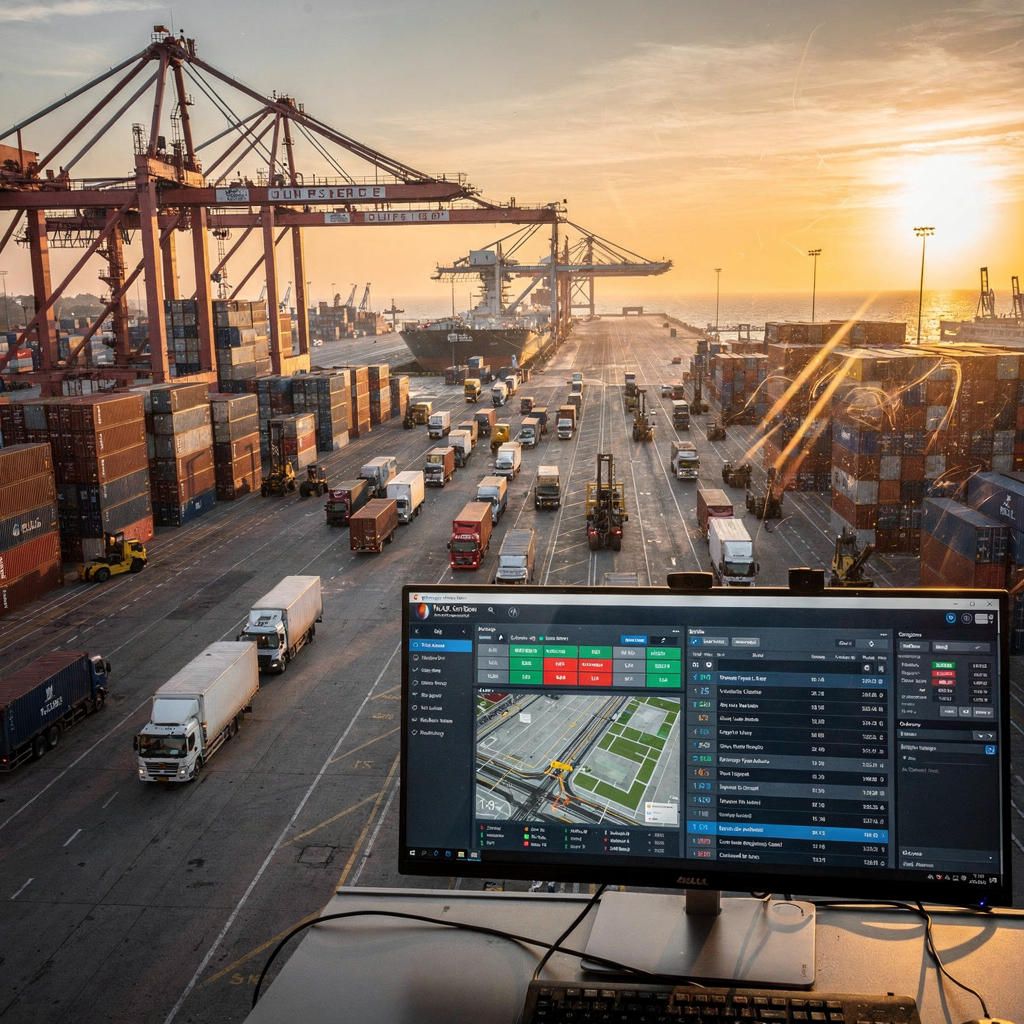
Practical deployment requires careful validation. Teams must test each ai model for edge cases and for unseen traffic mixes, and they must validate outputs against live operations. Running models in parallel with the TOS for several weeks provides confidence, and then the TOS can shift to using model-driven parameters. For reference on TOS integration and vessel turnaround improvements, read how TOS optimization reduces vessel time in berth TOS optimization for vessel turnaround.
Drowning in a full terminal with replans, exceptions and last-minute changes?
Discover what AI-driven planning can do for your terminal
Smart port: integrating AI and artificial intelligence for port operations
A smart port merges hardware, software, and AI to create coordinated operations across quays, yards, and gates. In practice the smart port uses sensors and cameras, and it links telemetry from cranes, RTGs, and trucks to centralized analytics. Artificial intelligence unifies those data streams, and the result is faster situational awareness and better planning. The smart port concept extends to berth windows, to truck appointment systems, and to predictive staffing models, and it unlocks measurable throughput gains while reducing environmental footprint.
AI integration matters. When AI systems fuse gate counts with crane rates and with arrival estimates, planners gain a holistic view that supports better resource allocation. The export of circular-economy thinking into port operations shows additional value, and an industry report highlights AI’s role in supporting circular practices and sustainability AI and the circular economy. That report notes how AI reduces waste and increases reuse by optimizing routing and by lowering idle time.
Dr. Maria Lopez puts it plainly: “Learning from historical terminal operations data allows AI systems to not only react to current conditions but to anticipate future challenges, enabling proactive management that was previously impossible.” Dr. Maria Lopez. In a smart port the upstream data source includes vessel manifests and truck ETAs, and the downstream outputs include recommended crane sequences and berth sloting. Those ai-driven recommendations help terminal operators make faster, more consistent decisions, and they improve throughput while lowering cost.
To see how deep planning and coordination work together, review holistic deepsea container port optimization resources that explain cross-domain coordination deepsea container port optimization. That work ties digital twin approaches to operational uses, and it shows how AI-powered simulation and live controls coordinate cranes, gates, and stacks.
AI agents: implementing AI in terminal operating system and real-time data to optimize port
Autonomous AI agents coordinate moves across quay, yard, and gate, and they can run as part of a terminal operating system to automate short-term decisions. These ai agents learn to balance quay productivity with yard congestion and to reduce unnecessary crane repositioning. By applying agentic policies we move from static rules to adaptive policies that trial new sequences inside a sandbox, and then they deploy with operational guardrails. That pattern reduces firefighting and reduces reliance on a single planner’s intuition.
Implementing AI successfully needs streaming inputs. One key stream is real-time data from sensors positioned on cranes and on trucks, and another stream is historical schedule logs. Using both allows a closed-loop controller to adapt to arrivals and to changes in tide or traffic. When agents receive live telemetry and truck ETAs they can reassign tasks and reroute equipment, and that improves responsiveness. Case studies show optimized port throughput can rise by up to 25% when dynamic scheduling replaces manual slotting and when AI agents coordinate equipment deep learning and coordination.
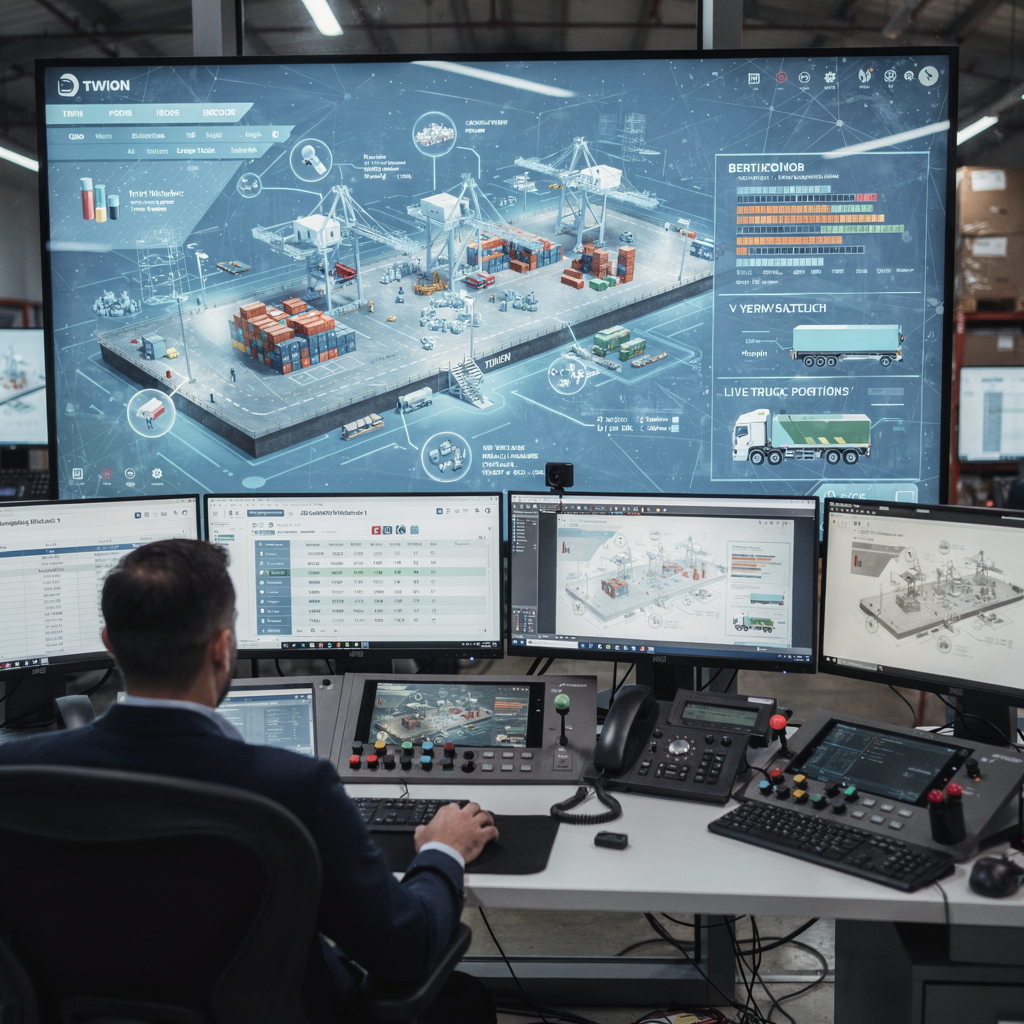
Agent deployment also involves safety and validation. Teams must test policies in a digital twin and then validate the behavior against safe KPIs. Loadmaster.ai trains policies in simulation software and then refines them online, and this approach ensures the ai implementation works from day one without inheriting past inefficiencies. For technical approaches to coordinating quay, yard, and gate with decentralized agents, see research on decentralized AI agents coordinating operations decentralized AI agents. That explanation shows how agents communicate and how live feedback improves scheduling and resource allocation.
Drowning in a full terminal with replans, exceptions and last-minute changes?
Discover what AI-driven planning can do for your terminal
Benefits of AI for terminal operators: improve data quality and optimization
Benefits of AI for terminal operators include fewer rehandles, shorter driving distances, and more stable performance across shifts. AI cleanses records, and it standardises timestamps, and it removes duplicates so analysts face less friction. Better data quality leads to better forecasts, and in turn better forecasts drive improved resource allocation and reduced operational costs. Teams that clean their input data see clearer patterns, and they see faster convergence in training routines.
Good AI practice includes data governance that defines schemas, and it includes procedures to validate incoming records. Algorithms can flag improbable moves and ask humans to confirm. These steps protect the dataset and they keep the training set robust. When teams then use predictive analytics to forecast container volumes and arrival rhythms, planners can schedule labour and cranes with more confidence, and that reduces overtime and prevents bottleneck formation. A practical implementation standard includes audit trails, and these trails support governance and help with ai adoption in regulated environments.
Operational savings appear in many forms. Predictive maintenance cuts downtime, and optimized routing reduces fuel and labour costs. In pilot projects, terminals saw throughput increases and measurable cost savings, and these benefits justified broader ai implementation across the estate. For hands-on processes like yard planning and slotting, see resources on dynamic slotting and yard-level monitoring that offer tactical how-to guides dynamic slotting and yard density monitoring. Those guides describe data feeding, polling rates, and how decision support systems present recommendations to dispatch teams.
AI is transforming logistics operations and container terminal operations
AI is transforming how ports and terminals plan and execute moves. Across intermodal chains AI links vessel schedules to inland hubs and to truckers, and it offers visibility across lanes. Learning models and hybrid algorithms enable planners to forecast container flows and to propose robust alternatives when disruptions occur. The growth of digital twin technology and of simulation software means teams can explore many what-if scenarios, and they can stress-test policies before rolling them out. That flexibility makes terminals more resilient to disruption and more capable of maintaining steady throughput as conditions shift.
Future directions include hybrid approaches that combine interpretable rules with reinforcement learning, and these methods aim to balance explainability and performance. Decentralized agents and AI-powered orchestration reduce single points of failure, and they support multi-objective optimization that protects quay productivity while preserving yard balance. Loadmaster.ai uses digital twin technology and agentic policies to produce closed-loop control and to optimize port operations without demanding historical models. This approach avoids teaching AI the average of past mistakes, and it uses simulation to generate robust experience for agents, and then it refines policies online.
Research will continue to refine predictive analytics and to unify ai algorithms with existing TOS tools, and that will help terminals forecast arrivals and departures more accurately. As operators integrate AI into routine workflows they gain consistent performance and lower cost per move. If you want to explore scenario-based capacity planning and scalable engines for port planning, review scenario-based capacity optimization techniques that explain trade-offs and KPI balancing scenario-based capacity optimization. Continued investment in data capture, and in fair testing, will validate systems and will help terminal operators identify areas for improvement across their estate.
FAQ
What types of historical records do AI systems use in terminal environments?
AI systems use records such as container movements, crane cycles, gate transactions, maintenance logs, and labour rosters. They also use schedule files, truck ETAs, and equipment telemetry to build a rich dataset for training and validation.
How can AI reduce turnaround time at a container terminal?
AI improves berth allocation, optimizes crane sequencing, and predicts yard congestion to reduce waiting times. By forecasting arrivals and balancing workloads, AI helps planners allocate resources more effectively and increase throughput.
Do terminals need perfect historical data to benefit from AI?
No. While robust historical data helps supervised models, simulation-based reinforcement learning can train agents without heavy reliance on past records. Loadmaster.ai trains agents in a digital twin and then fine-tunes them with live feedback to avoid overdependence on imperfect history.
What is a smart port and how does it use AI?
A smart port integrates sensors, operational systems, and AI to coordinate quay, yard, and gate activities. It uses unified analytics to suggest resource allocation, to forecast demand, and to reduce idle time across assets.
Can AI agents work with my existing terminal operating system?
Yes. Many implementations integrate with a TOS through APIs or EDI, and they provide recommendations or control signals while leaving governance in operator hands. This allows a phased rollout and careful validation before full automation.
How does AI help with predictive maintenance?
AI detects early signs of equipment degradation and schedules maintenance before failures occur. That approach reduces downtime and supports higher equipment utilization and more stable operations.
What safeguards ensure AI behaves safely in live operations?
Safeguards include simulation testing, hard operational constraints, explainable KPIs, and audit trails for all decisions. These measures help teams validate outputs and maintain governance during AI adoption.
How quickly can terminals see cost savings from AI?
Many pilots show measurable gains within months once agents run in a live-sandboxes and after data pipelines stabilize. Savings appear in reduced rehandles, shorter driving distances, and lower overtime, and they compound as AI refines policies.
Will AI replace planners and dispatchers?
AI augments planners and dispatchers by automating repetitive tasks and by surfacing high-quality recommendations. Human experts remain essential for strategic decisions, for rule-setting, and for handling novel disruptions.
Where can I learn more about deploying AI at scale in a port?
Start with practical case studies and technical guides that address yard optimization, decentralized agents, and TOS integration. For applied resources, see Loadmaster.ai’s materials on decentralized coordination, yard monitoring, and dynamic slotting that explain real deployments and best practices.
our products
 stowAI
 stackAI
 jobAI
jobAI
Innovates vessel planning. Faster rotation time of ships, increased flexibility towards shipping lines and customers.
Build the stack in the most efficient way. Increase moves per hour by reducing shifters and increase crane efficiency.
Get the most out of your equipment. Increase moves per hour by minimising waste and delays.
stowAI
Innovates vessel planning. Faster rotation time of ships, increased flexibility towards shipping lines and customers.
stackAI
Build the stack in the most efficient way. Increase moves per hour by reducing shifters and increase crane efficiency.
jobAI
Get the most out of your equipment. Increase moves per hour by minimising waste and delays.