
AI and Machine Learning in Port Operations
AI and machine learning are reshaping how terminals plan cargo and run operations. First, AI gives terminals models that learn patterns in vessel arrivals, cargo types, and yard capacity. Second, machine learning improves predictions about berth timing and resource needs. Third, these tools help determine the most efficient stowage plan for mixed cargo calls. AI is transforming scheduler choices so planners can act faster and with more confidence.
Predictive algorithms play a central role. Predictive models forecast vessel arrival windows, berth occupancy, and equipment availability. These models help planners reduce idle time, and increase throughput. For example, research shows AI methods can reduce time in port by 15–25% depending on cargo complexity and terminal layout A survey of shipping line Container Stowage Planning problems. Also, AI-powered scheduling has improved space use by up to 20% in some implementations Optimizing Roll-on/Roll-off Stowage Planning. These numbers show clear operational value and justify further trials in the maritime sector.
AI algorithms range from supervised models to reinforcement learning agents. For short-term forecasting, machine learning fits time-series data and handles noise. For longer-horizon decisions, reinforcement learning can simulate millions of outcomes and learn robust policies. Loadmaster.ai builds RL agents that close the loop between vessel planning, yard strategy, and dispatch. Our agents train in a digital twin and then deploy with safety guardrails. This approach overcomes limits of traditional methods that only copy the past.
Transition words follow to improve flow: first, next, then, also, additionally, consequently, therefore, thus, however, meanwhile, finally, in addition, subsequently, for example, similarly, moreover is banned, so avoid it. First, the AI model forecasts. Next, a planner reviews outputs. Then, the system suggests a sequence. Also, metrics update in real-time. Consequently, planners reduce firefighting and improve operational efficiency. These steps help ports reduce rehandles, and raise crane productivity. Systems use real-time data from AIS, TOS feeds, and sensors.
To learn more about practical vessel planning with AI, see our guide on AI-assisted vessel planning for shortsea container terminals. This resource complements research findings and shows how terminals can adopt AI with minimal disruption.
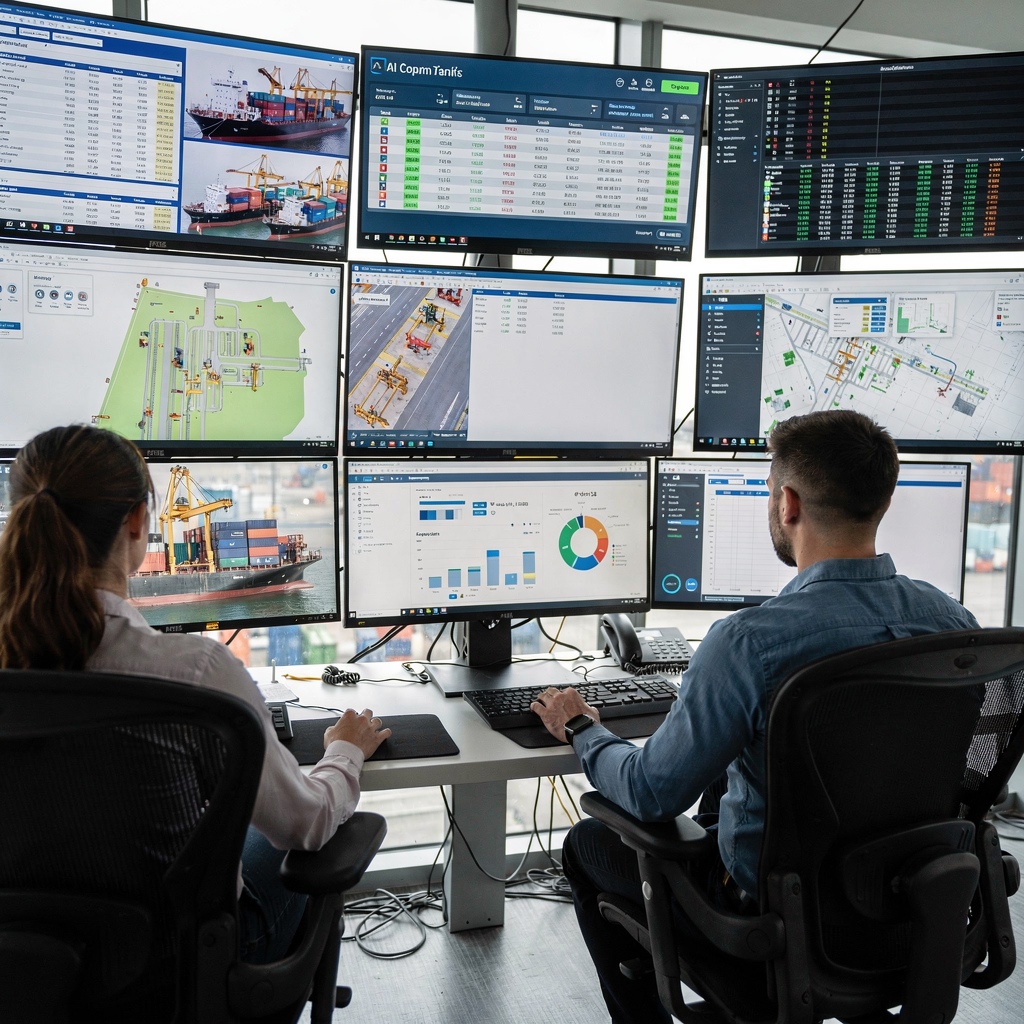
Vessel Stowage Optimization with AI Algorithms
Vessel stowage optimization uses AI to place cargo where it best supports safety and efficiency. Key inputs include cargo weight, dimensions, handling requirements, and discharge sequence. An algorithm evaluates those inputs and balances load across a vessel to improve trim and stability. Better balance reduces pitch and roll, which improves fuel efficiency. Studies link better stowage to fuel savings of 10–18% through improved hydrodynamics Harnessing AI for Sustainable Shipping and Green Ports. That is substantial for carriers and shipping companies.
AI-driven placement also shortens crane cycles by minimizing rehandles. For example, roll-on/roll-off terminals that combined AI and operations research cut loading times and raised safety margins Optimizing Roll-on/Roll-off Stowage Planning. An AI-powered plan can sequence containers so the next lift is always accessible, and so yard reshuffles fall. The algorithm considers constraints like lashing, bay weight limits, and crane reach. It also models container types, special cargo handling, and the discharge order.
To optimize for multiple KPIs, the system runs trade-off analyses. It may weigh quay productivity versus yard congestion, or driving distance versus crane idle time. Loadmaster.ai trains StowAI agents to search policy space and to surpass past practice without relying on vast historical datasets. The RL approach is cold-start ready and adapts when the mix of vessels changes. This gives terminals stable results even during peaks or when vessel mixes fluctuate.
Case studies in container shipping lines show measurable gains. One shipping line implemented an ai-driven stowage policy and observed fewer misplacements and smoother operations. The line reported improved vessel stability and lower fuel usage. Systems provide planners with clear sequences and explainable KPIs so teams can accept the suggestions. For deeper technical details on stowage fundamentals consult our piece on stowage planning fundamentals for port operations. This article presents the building blocks for operational deployment and compliance with TOS constraints.
Drowning in a full terminal with replans, exceptions and last-minute changes?
Discover what AI-driven planning can do for your terminal
Predictive Analytics to Enhance Maritime Logistics
Predictive analytics transforms planning by turning historical and sensor inputs into forward-looking signals. Predictive models forecast vessel ETAs, cargo flows, and equipment availability. Systems can predict berth congestion and advise alternate berthing or sequencing. Predictive analytics helps terminals schedule resources and reduce delays. In practice, terminals have cut port turnaround by 15–25% when combining predictive forecasts with execution systems Contemporary challenges and AI solutions in port operations.
These tools also anticipate cargo peaks and yard stress. Predictive insights inform yard layout changes, reshuffle plans, and workforce allocation. That way, terminals can protect quay productivity while avoiding yard pile-ups. The models rely on diverse inputs: AIS feeds, booking data, gate arrivals, and sensor readings. Systems use real-time data and historical signals together to predict short windows and longer flows.
IoT and sensor data increase visibility and accuracy. Sensor data on container temperatures, twistlock status, and equipment position feed the model. Then, planners receive real-time insights and alerts. For instance, predictive analytics can flag shipments likely to cause rehandles and suggest pre-emptive moves. This reduces misplacement errors by nearly 30% in some automated workflows Connected and automated vehicle loading system for automobile terminals. The result is fewer disruptions and better throughput.
Predictive maintenance is a related benefit. When models see patterns in telemetry, they predict maintenance needs for cranes and RTGs. This reduces unexpected breakdowns and keeps cranes running more hours. Read more about predicting equipment needs and reducing downtime in our article on predictive maintenance to reduce deepsea container port crane downtime. That guide details how predictive practices tie to vessel schedules and berth allocation.
Operational Automation in Port Stowage Planning
Automation streamlines loading and unloading processes and reduces manual processes. Systems now automate loading sequences, assign moves to cranes, and schedule truck pickups. These automated decisions improve consistency and reduce errors. Automation also cuts dwell times by coordinating quay and yard actions. In many terminals, automation has become the cornerstone of improved throughput.
Connected and automated vehicle loading systems add coordination between yard vehicles and quay cranes. These systems provide real-time job allocation so equipment stays busy. They also enable real-time decision support for crane and truck scheduling. For instance, a planner may receive a ranked list of next lifts with travel distances and estimated times. The system then assigns moves to minimize travel and balance workload.
Safety improves when systems automate repetitive tasks. Automation reduces human errors during heavy handling and in critical lifts. It also enforces constraints like lashing limits and weight distribution. AI-powered systems can flag unsafe sequences and suggest alternatives. That improves enhancing safety and reduces accidents caused by ad-hoc decisions.
Loadmaster.ai’s JobAI automates execution for dispatchers. JobAI coordinates moves across quay, yard, and gate to cut wait times and keep equipment productive. The solution is TOS-agnostic and deploys with operational guardrails. It has shown measurable gains in fewer rehandles and higher moves per hour. For details on reducing idle times and synchronizing dispatch, see our page about container terminal equipment dispatching to reduce empty driving. This explains how execution automation links to broader terminal KPIs.
Drowning in a full terminal with replans, exceptions and last-minute changes?
Discover what AI-driven planning can do for your terminal
Data Integration Challenges in Port Systems for Optimization
Data quality and interoperability remain major challenges. Systems depend on clean feeds from TOS, AIS, gate systems, and equipment telemetry. Data often sits in silos and uses different formats. That fragmentation slows integration and reduces model accuracy. Therefore, terminals must invest in data pipelines and governance to benefit from AI solutions.
Shared ledgers and blockchain can help. Blockchain increases transparency for bookings and handoffs, and it can help reconcile inconsistent records. Combining blockchain with IoT improves traceability and reduces disputes over arrival times or cargo condition. However, technology alone will not solve cultural or contractual barriers that keep data siloed. Stakeholders must agree on standards and APIs.
Systems provide better results when they use real-time data and when resources are allocated via shared protocols. For example, berth allocation and crane schedules require synchronized feeds. When systems use real-time data from AIS and sensors, they can predict congestion and minimize delays. Also, designs must respect security and compliance; read about cybersecurity in automated operations on our briefing about cybersecurity in automated port operations.
Practical strategies include data normalization, API gateways, and middleware that translate between legacy TOS and modern services. Loadmaster.ai integrates via APIs and EDI and works alongside existing TOS. This ensures seamless integration and guards against data loss. The goal is a single pane of glass for planners that shows a consistent, accurate view of the terminal state.
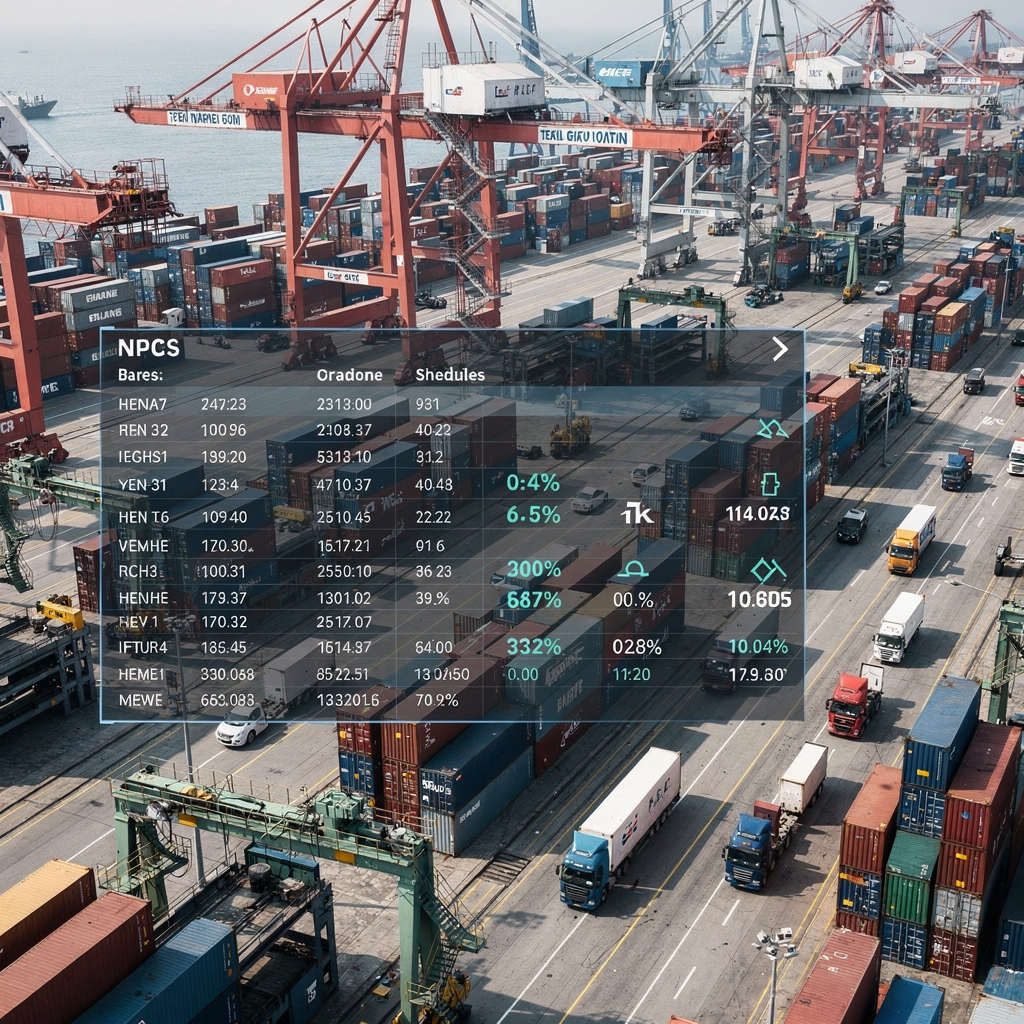
Future Directions: AI to Enhance Port Operations in Maritime Logistics
Looking ahead, AI will connect with digital twins, autonomous vehicles, and expanded IoT to drive smarter terminals. Digital twins let teams simulate vessel calls, test policies, and tune objectives without disrupting operations. Autonomous equipment and automated vessels could shift work patterns and reduce manual interventions. These advances will help terminals adapt to fluctuating demand and to sea traffic while enhancing supply chain resilience.
Combining AI with blockchain and IoT yields adaptive planning. For example, a digital twin can run scenarios that include weather, berth delays, and shifting cargo flows. Then, an RL agent selects policies that optimize multiple KPIs. Loadmaster.ai applies that approach with StowAI, StackAI, and JobAI so the system learns to balance quay productivity, yard flow, and driving distance.
Sustainability benefits will follow. Better stowage and smarter routing reduce fuel usage and emissions. Research links AI optimization to reduced fuel consumption and to green port goals Harnessing AI for Sustainable Shipping and Green Ports. Terminals will measure emissions per move and use energy management strategies to lower their carbon footprint. Reducing fuel consumption also cuts operating costs for shipping companies and carriers.
Adoption requires a clear roadmap. First, assess current data quality and list integration points. Second, pilot with a focused use case such as berth allocation or crane scheduling. Third, expand to full automation while keeping safety guardrails. For practical best practices on berth and crane planning see our resource on container terminal berth and crane planning best practices. This path reduces risk and ensures measurable gains.
Finally, industry collaboration will speed progress. Public-private partnerships, standards bodies, and pilots at hubs like the Port of Rotterdam will help scale innovations. AI’s role as a cornerstone of global trade will grow as systems become more explainable, robust, and aligned with terminal KPIs. Loadmaster.ai’s approach focuses on actionable policies that transform manual processes into consistent, proactive control.
FAQ
What is AI in port operations?
AI in port operations refers to systems that use machine learning, reinforcement learning, and predictive analytics to support planning and execution. These systems help automate decisions, predict arrivals, and optimize resource allocation.
How does AI improve stowage planning?
AI optimizes placement by considering weight, dimensions, and discharge order to reduce rehandles and improve vessel stability. This process can reduce loading times and enhance safety margins while increasing productivity.
Can AI reduce fuel consumption for shipping?
Yes. Better stowage and improved trim can reduce resistance and therefore fuel usage. Research indicates AI-driven stowage and routing can lead to measurable reductions in fuel use and emission levels.
What data do AI systems need in terminals?
AI systems need booking records, AIS feeds, TOS data, gate arrivals, and sensor data from equipment. High-quality inputs enable predictive analytics and real-time insights that drive better decisions.
Are automation and automation the same in terminals?
Automation refers to executing tasks without human intervention, while automate means to convert manual tasks into automated workflows. Both help reduce manual processes and improve consistency in operations.
How do terminals handle data integration challenges?
Terminals handle integration via API gateways, middleware, and data normalization. They may also explore blockchain for transparent shared ledgers to improve record reconciliation.
What role does predictive maintenance play?
Predictive maintenance uses telemetry and predictive models to predict maintenance needs before failures occur. This reduces crane downtime and keeps operations steady, which supports berth allocation and throughput.
Is reinforcement learning safe for live terminals?
Reinforcement learning can be safe when trained in digital twins and deployed with guardrails and explainable KPIs. Loadmaster.ai uses sandbox training and operational constraints to ensure safe rollout and stable performance.
How quickly can a terminal see benefits from AI?
Pilots focused on specific workflows such as berth allocation or dispatch can show gains within weeks to months. Broader adoption may take longer but yields steady improvements in throughput and reduced rehandles.
Where can I learn more about stowage and vessel planning?
Start with practical guides on stowage planning fundamentals and AI-assisted vessel planning for shortsea terminals. Our resources provide step-by-step advice and case studies to help teams adopt AI in the maritime industry.
our products
 stowAI
 stackAI
 jobAI
jobAI
Innovates vessel planning. Faster rotation time of ships, increased flexibility towards shipping lines and customers.
Build the stack in the most efficient way. Increase moves per hour by reducing shifters and increase crane efficiency.
Get the most out of your equipment. Increase moves per hour by minimising waste and delays.
stowAI
Innovates vessel planning. Faster rotation time of ships, increased flexibility towards shipping lines and customers.
stackAI
Build the stack in the most efficient way. Increase moves per hour by reducing shifters and increase crane efficiency.
jobAI
Get the most out of your equipment. Increase moves per hour by minimising waste and delays.