
ai: Improving Container Port Throughput and Terminal Operation
Rising cargo volumes and tight schedules push modern container ports to the limit. First, terminals face NP-hard combinatorial problems when they try to stack, retrieve, and move containers with limited quay cranes and yard space. Next, traditional port planners use fixed rules and historical averages that do not adapt well to sudden vessel delays or spikes in container volume. Also, planners often firefight rather than plan, which raises the number of unnecessary container movement and drives inconsistent performance across shifts. Therefore, AI provides a fundamentally different approach to optimize operations in deepsea container terminals.
Furthermore, AI predicts vessel arrivals and assigns quay cranes while it optimizes yard crane cycles in ways that reduce rehandles and balance workloads. For example, the Port of Rotterdam implemented a Smart Container Management system that boosted handling efficiency by about 20% (source). Also, AI helps ports by forecasting queuing and gate pressure, which allows operators to schedule staff and equipment proactively. In addition, AI supports a terminal operating system by feeding live recommendations that planners can accept or refine, and this improves the performance of a container terminal under varying conditions. For more on integrating AI with TOS layers, see the discussion on integrating TOS with AI optimization layers.
Moreover, closed-loop reinforcement learning agents can be trained in a digital twin to try millions of strategies without affecting real operations. Then, policies transfer to live terminals with guardrails. Also, this approach reduces the data dependency problem that plagues supervised machine learning. For example, Loadmaster.ai trains RL agents in simulation so terminals get cold-start ready agents that do not copy past mistakes. In addition, the company’s StowAI and StackAI components specifically address QC planning and yard placement to reduce shifters and travel. Finally, using AI helps ports move from reactive firefighting to proactive, policy-driven control that improves terminal operation, reduces container dwell time, and raises the predictability of daily throughput.
container stacking: Tackling Complex Yard Management Challenges
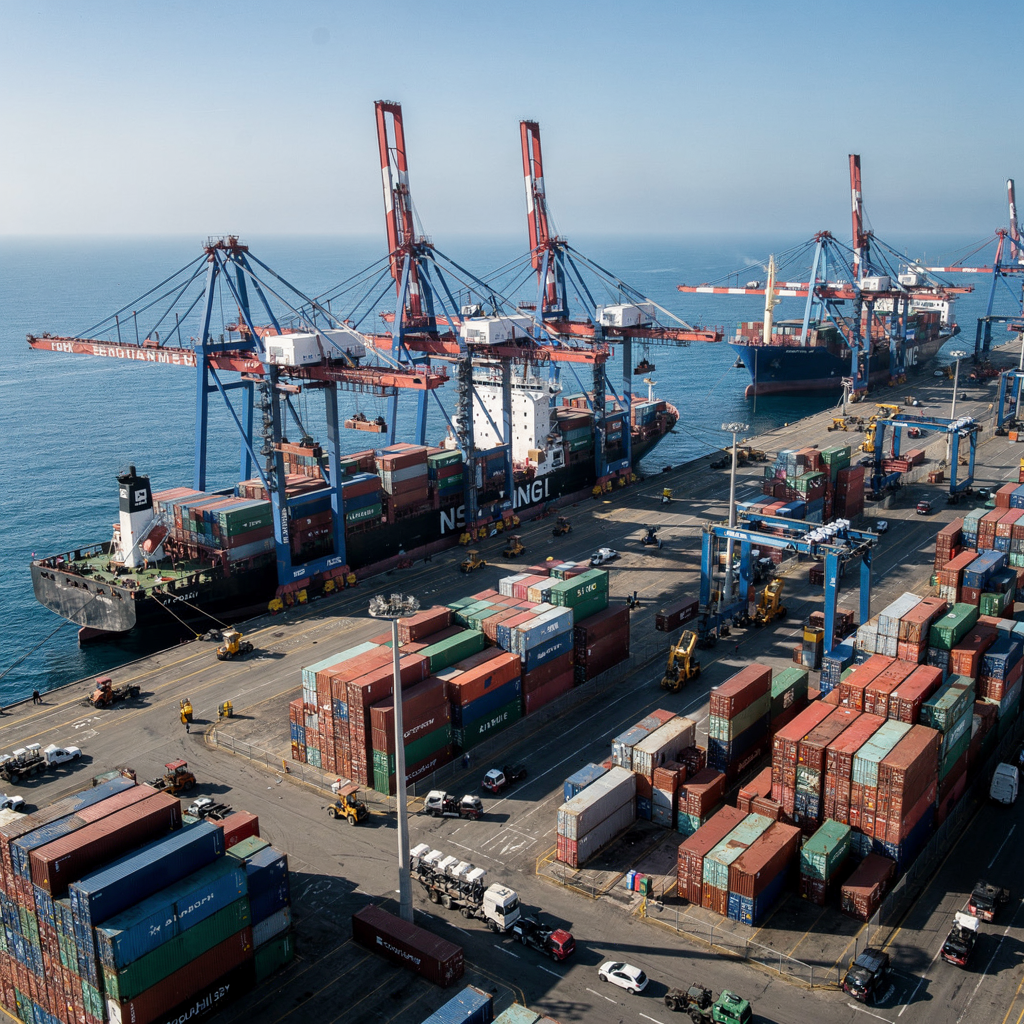
Stacking planning in a container yard involves thousands of possible moves every hour. First, when container arrival patterns change, the yard strategist must decide where to place each container so retrieval later becomes efficient. Next, the container stacking problem grows combinatorially with yard size and vessel mix. Also, traditional heuristics such as greedy placement or fixed bay rules often fall short because they cannot look ahead or trade off quay productivity against yard congestion. Therefore, the container relocation problem remains a core bottleneck in many modern container terminals.
Furthermore, Deep Reinforcement Learning (DRL) learns near-optimal stacking and relocation strategies through trial and reward. For example, DRL can define the yard layout as a state, moves as actions, and a reward that penalizes unnecessary container movement and long retrieval times. In addition, hybrid approaches that combine heuristics with DRL improve solution quality and learning speed. Research shows DRL reaches optimal or near-optimal solutions in small-scale tests and scales well when augmented with heuristic search techniques (study on DRL for relocation), (stacking optimization).
Also, experimental results demonstrate that AI-driven stack policies cut unnecessary relocations and streamline yard workflows. For example, systems trained to minimize total moves reduce rehandles and lower fuel use of yard equipment. Next, efficient stack handling protects future plans by placing forecasted outbound containers in accessible positions. In addition, smart placement reduces truck waiting time at the gate and shortens vessel turnaround, because fewer back-and-forth shifters are needed during execution.
Moreover, the yard benefits when AI balances long-term objectives with short-term throughput. Also, modern solutions incorporate constraints like weight, stability, and safety while they pursue multi-objective gains. For a practical example of job scheduling integration with yard operations, see Loadmaster.ai’s research into job scheduling with double-ARMG yard operations. Therefore, applying AI to container stacking helps ports and terminal operators reduce cost, minimize container dwell time, and increase the efficiency of container handling equipment in high-volume environments.
Drowning in a full terminal with replans, exceptions and last-minute changes?
Discover what AI-driven planning can do for your terminal
application of ai in container: Deep Reinforcement Learning for Stack and Retrieval
Defining the DRL problem precisely is essential for success. First, the state encodes the container yard layout, including stacked positions, container sizes, and target departure times. Next, the action set includes moves like relocate, retrieve, or leave as-is. Also, the reward structure penalizes extra container movement, long crane idle times, and plan infeasibility. Therefore, an effective DRL framework pushes agents to minimize the number of relocations while preserving quay crane productivity and gate throughput. For more on container terminal stowage planning and stability considerations, see the detailed guide on stowage planning for stability and safety.
Furthermore, integrating heuristic search methods such as beam search or A* with DRL accelerates learning and improves the quality of actions. For example, a hybrid agent can use beam search to shortlist plausible moves, then use a learned policy to choose among them. Also, the literature reports that heuristic-assisted deep learning marks a paradigm shift for real-time decision-making in container terminals (heuristic-assisted deep learning). In addition, small-scale tests often reach provably optimal placements, while scaled deployments maintain robust performance in noisy, real-world environments.
Moreover, practical systems must enforce safety and operational guardrails. First, the terminal operator defines hard constraints such as weight limits and restricted bays. Next, the AI agent trains against explainable KPIs so planners can audit decisions. Also, Loadmaster.ai’s approach spins up a digital twin of the terminal and trains RL policies against operator-defined KPI weights. Then, agents such as StowAI, StackAI, and JobAI coordinate to reduce rehandles, shorten travel, and stabilize shift-to-shift performance. Finally, this application of AI in container terminals supports a transition from reactive manual control to proactive, measurable orchestration that respects safety and operational rules.
ai technologies for real-time Resource Allocation in Smart Port Systems
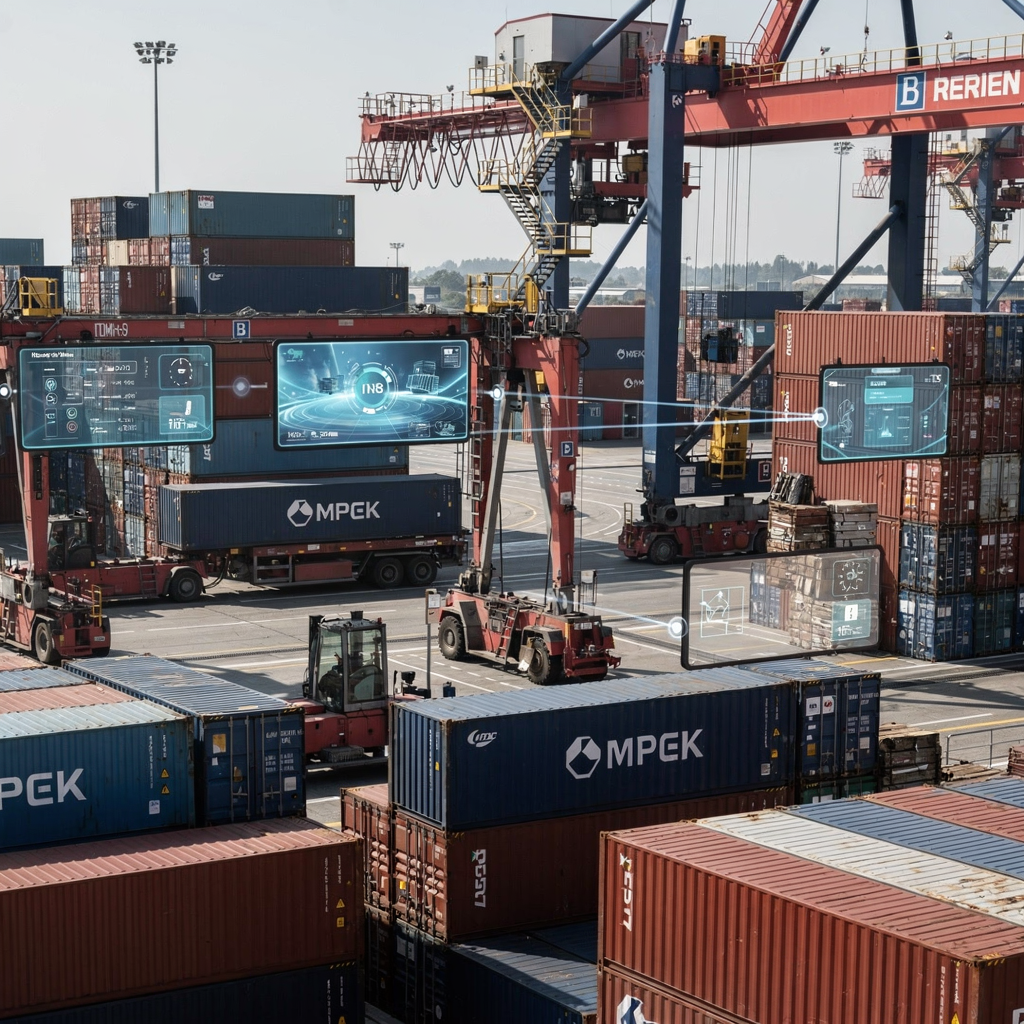
IoT sensors and telemetry feed real-time yard status into the AI decision layer. First, sensors report crane locations, container RFID tags, and truck arrival times. Next, real-time analytics synthesize this stream into demand signals for cranes, stackers, and gate lanes. Also, AI technologies such as computer vision, predictive models, and reinforcement learning form a combined stack that supports live resource allocation. Therefore, the result is a system that can assign cranes and trucks on the fly to avoid bottlenecks.
Furthermore, computer vision systems detect foreign objects with high accuracy and automate safety-critical tasks. For instance, foreign object detection rates have reached 99.8% in operational trials, significantly reducing stoppages and avoiding damage (detection stat). In addition, automation of stacker-reclaimer tasks has been reported up to 94%, which raises throughput and reduces manual labor. Also, modern real-time allocation couples vision with telemetry so that AI can pause moves or re-route equipment when obstacles appear.
Moreover, using AI in a terminal reduces idle equipment and shortens response times. First, job schedulers coordinate across quay, yard, and gate to match capacity to demand. Next, RL agents can dynamically reassign crane sequences to protect critical KPIs during peaks. Also, these agents can be combined with a terminal operating system or run as an overlay that offers suggested actions to dispatchers. For further reading on how TOS and optimization layers interact, see role of TOS optimization.
Finally, this orchestration produces measurable operational efficiency and throughput gains. Also, AI enables terminals to adapt to disruptions such as labor shortages or equipment faults by re-weighting objectives in real-time. Therefore, smart port designs that blend IoT, AI, and automation tools deliver robust improvements in the efficiency of container flows and the predictability of terminal operation.
Drowning in a full terminal with replans, exceptions and last-minute changes?
Discover what AI-driven planning can do for your terminal
dynamic container handling within Port Logistics and Terminal Operations
Inbound and outbound flows often fluctuate hourly in deepsea container ports. First, the arrival mix of import container, export loads, and empty container repositioning creates a shifting retrieval priority. Next, planning rules that treat each day as identical will fail when ultra-large container vessels or feeder bunching occur. Also, dynamic container handling requires solutions that adapt stacking plans and gate throughput continuously. Therefore, AI systems that react to changes and reassign tasks deliver better outcomes for the entire supply chain.
Furthermore, automated container equipment such as AGVs and stackers follow AI directives to minimize idle time and fuel use. For example, coordinated logistics that optimize container movement reduce truck waiting and cut yard congestion. In addition, these systems lower vessel turn times by ensuring that containers bound for a particular ship are accessible when the vessel is ready to load. Also, Loadmaster.ai’s JobAI coordinates cross-functional execution to cut wait times and keep equipment busy in live operations; learn more about coordinated agent approaches at decentralized AI agents coordinating quay, yard, and gate operations.
Moreover, AI-driven scheduling links macro berthing plans with micro-level move sequencing. First, berth planners supply expected vessel container volumes and deadlines. Next, AI uses that forecast container information to pre-marshall yard blocks so retrieval is fast during crane cycles. Also, the system can perform container pre-marshalling to group same-vessel loads. For more on predictive housekeeping and yard readiness, see predictive housekeeping for container terminals. Finally, coordinated dynamic handling reduces total container moves, boosts crane productivity, and improves the performance of a container terminal under varied operational scenarios.
smart port: Environmental Impact and Efficiency Gains
Green-port targets require fewer container movements and lower equipment emissions. First, AI-driven placement strategies reduce unnecessary rehandles, which in turn cut diesel use and carbon output from yard equipment. Next, closed-loop learning with adaptive data generators refines strategies as weather, vessel schedules, and container volume change. Also, this continuous learning supports sustainability goals by aligning operational efficiency with emission reduction. Therefore, AI contributes to the development of sustainable port practices.
Furthermore, research into AI-driven container relocation frames these benefits within the container terminal’s broader environmental agenda. For example, studies show that optimized stacking lowers yard travel distances and reduces the number of shifters required per operation (Frontiers research). In addition, heuristic-assisted DRL approaches help terminals reach both operational and green-port objectives by balancing crane productivity against yard emissions (heuristic-assisted study). Also, when ports worldwide adopt AI-driven policies, the cumulative environmental benefit scales across global container flows.
Moreover, proactive AI control future-proofs terminal operation by making it resilient to regulatory changes and stricter emission targets. First, the platform can reweight KPIs to prioritize minimal fuel consumption during low-demand windows. Next, the AI agent can protect critical quay productivity when needed and then switch focus to yard flow when gates spike. Also, these multi-objective capabilities let port operators meet sustainability commitments while they maintain high throughput. Finally, implementation risk lowers when terminals use sandbox digital twins to validate policies, and Loadmaster.ai follows this approach to ensure safe, deployable improvements that enhance efficiency and reduce environmental impact.
FAQ
What is AI-driven container placement?
AI-driven container placement uses artificial intelligence models, often reinforcement learning, to decide where containers should be stacked and when they should be relocated. Also, these systems aim to minimize unnecessary container movement while maximizing crane productivity and reducing truck waiting time.
How does Deep Reinforcement Learning improve stacking?
Deep Reinforcement Learning trains agents to explore sequences of stacking and retrieval actions and to learn which moves yield the best long-term rewards. In addition, DRL agents can incorporate constraints and optimize multiple KPIs simultaneously, which reduces rehandles and improves yard flow.
Are there real-world examples of AI improving port performance?
Yes. For example, the Port of Rotterdam reported a roughly 20% increase in container handling efficiency after deploying Smart Container Management systems (source). Also, other terminals have reported high foreign object detection rates and substantial automation gains in stacker tasks.
What role do sensors and computer vision play?
Sensors and computer vision provide the real-time inputs AI needs to make informed decisions. For instance, vision systems have achieved detection rates around 99.8% in trials, which reduces stoppages and improves safety (detection stat). Also, telemetry helps allocate cranes and trucks dynamically.
Can AI systems work with existing Terminal Operating Systems?
Yes. AI layers often integrate with a terminal operating system via APIs and EDI, offering optimization recommendations or automated actions. Also, this integration supports gradual deployment and allows operators to retain operational governance while improving throughput; see more on integrating TOS with optimization layers here.
Do these AI methods require large historical datasets?
Not necessarily. Some approaches, such as those using simulation-based reinforcement learning, train agents in a digital twin and need little or no historical data. In addition, this cold-start capability avoids inheriting past mistakes from noisy histories.
How do AI systems help with environmental goals?
AI reduces unnecessary container movement and optimizes equipment routes, which lowers fuel consumption and emissions. Also, closed-loop learning helps strategies adapt to evolving conditions so terminals can maintain green-port targets consistently.
What is the container relocation problem and can AI solve it?
The container relocation problem is the task of minimizing moves needed to retrieve target containers from stacks. AI, particularly DRL and heuristic-assisted methods, has shown the ability to find optimal or near-optimal solutions, improving both speed and resource usage (study).
How do AI agents coordinate quay, yard, and gate operations?
Decentralized AI agents can specialize on quay sequencing, yard placement, and job execution, and then exchange plans or signals in real-time. For a practical architecture, see the work on decentralized agents coordinating quay, yard, and gate operations here.
How can my terminal start using AI safely?
Begin with a sandbox digital twin to train and validate policies before live deployment. Also, choose solutions that provide explainable KPIs, guardrails, and phased integration with your terminal operating system to lower operational risk and ensure measurable gains.
our products
 stowAI
 stackAI
 jobAI
jobAI
Innovates vessel planning. Faster rotation time of ships, increased flexibility towards shipping lines and customers.
Build the stack in the most efficient way. Increase moves per hour by reducing shifters and increase crane efficiency.
Get the most out of your equipment. Increase moves per hour by minimising waste and delays.
stowAI
Innovates vessel planning. Faster rotation time of ships, increased flexibility towards shipping lines and customers.
stackAI
Build the stack in the most efficient way. Increase moves per hour by reducing shifters and increase crane efficiency.
jobAI
Get the most out of your equipment. Increase moves per hour by minimising waste and delays.