
Exploring AI in container terminal for maritime container and container port operations
Shortsea container terminals are specialized hubs that link short-distance maritime routes to inland networks, and they play a key role in modern supply chains. They handle concentrated volumes of MARITIME CONTAINER traffic, and they must be agile. AI transforms planning, and it helps terminals optimize slot use, resource schedules, and equipment deployment. In practice, ai technologies such as machine learning, computer vision, and predictive analytics power systems that forecast container volumes, predict vessel arrivals, and drive berth decisions. For example, a review found that models improve vessel arrival time prediction accuracy by up to 20% compared with traditional methods [Prediction of vessel arrival time to port], and this feeds directly into better port operations and lower delays.
Industry reports show that automation projects with AI deliver sizeable gains. Terminals report a 15–30% rise in operational efficiency and a 25% reduction in vessel turnaround time [How technology can advance port operations]. These figures highlight impact on throughput and cost. Also, collaborative AI and federated learning approaches allow multiple facilities to share model improvements without releasing sensitive data, which supports regional optimization and cooperation [Enhancing Safety in Autonomous Maritime Transportation Systems].
Key ai technologies in container terminal settings include optimization algorithms that minimize empty moves, computer vision for container handling and inspection, and decision support that reduces human error. Terminals using smart planning tools and terminal operating systems can improve day-to-day execution. To explore yard strategies, readers can see practical approaches in our pieces on AI-driven yard management systems and on the berth allocation problem in terminal operations.
Improving real-time allocation to optimize terminal operations
Real-time data is central to modern terminal operations. Sensors, AIS feeds, crane telemetry, and TOS logs stream status updates and give a live view from berth to yard. AI ingests these streams, and it creates a data-driven picture that supports dynamic allocation. Real-time models adjust quay crane assignments, truck windows, and container allocation to reduce idle time and to improve throughput. For terminals aiming to optimize, predictive models enable proactive decisions rather than reactive firefighting. In practice, a predictive model that improves vessel scheduling accuracy by up to 20% reduces missed windows and lowers congestion [Prediction of vessel arrival time to port].
Dynamic berth and resource allocation models use optimization algorithms and reinforcement learning to allocate cranes and trucks, and to minimize container re-handles. They optimize allocation across equipment pools and create balanced work plans that reduce crane idle time and lower per-move costs. Our discussion of real-time conflict resolution between equipment pools in port operations shows how AI prevents task clashes and raises port efficiency. Also, terminals that couple AI with terminal operating systems and real-time planners see measurable ROI through lower demurrage and faster turnaround.
Collecting and normalizing data is a first step, and then models must be validated in a controlled rollout. For many terminal operators, pragmatic deployment means piloting AI for one berth or one crane, and then expanding after performance metrics show gains. This staged deployment reduces risk and builds staff confidence. When done well, AI-based allocation reduces operational costs, increases throughput, and improves on-time performance, which benefits global trade and local supply chain partners.
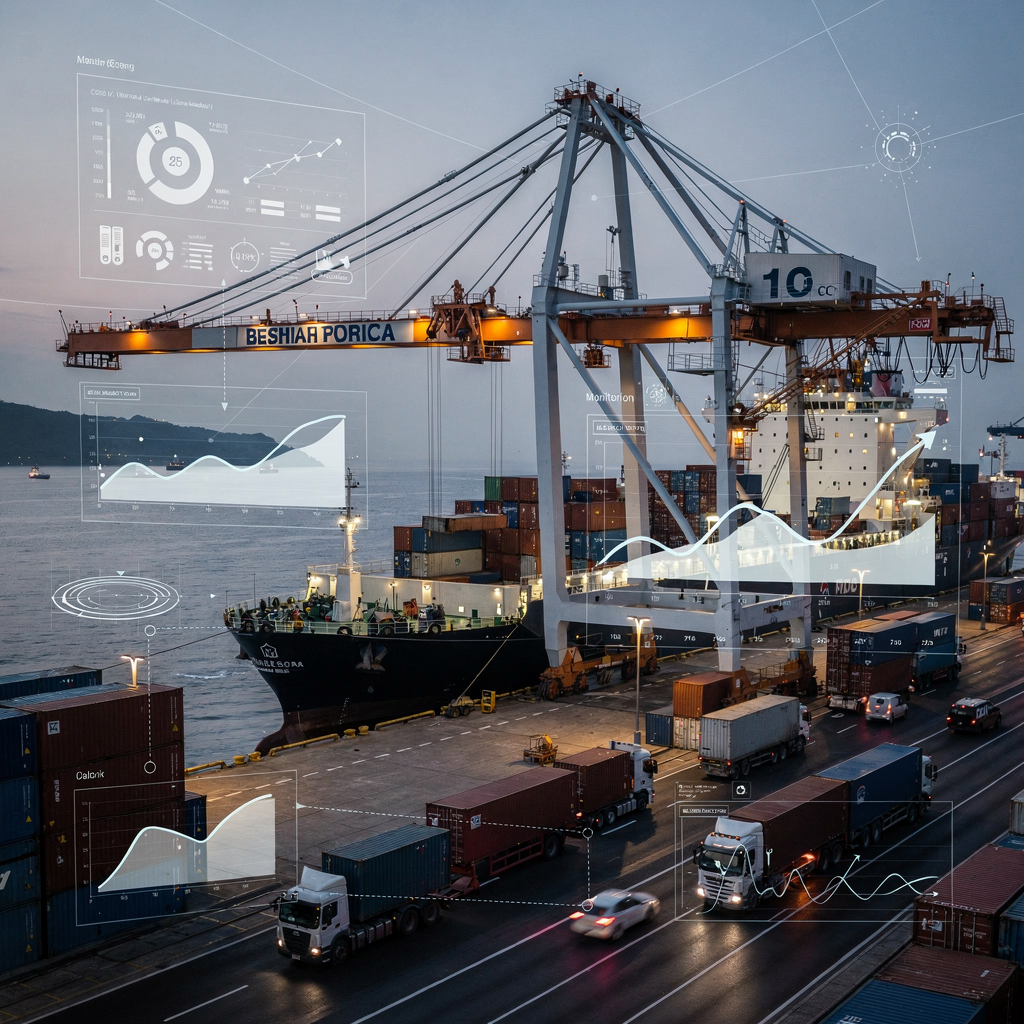
Drowning in a full terminal with replans, exceptions and last-minute changes?
Discover what AI-driven planning can do for your terminal
Optimize container yard stack and container stacking utilization
Container yard planning faces tight space constraints and complex moves. Terminals must decide where to stack incoming boxes, and they must plan for retrieval with minimal reshuffles. AI helps optimize the container yard by using optimization algorithms that assign slots according to expected departure times, container type, and handling constraints. These decisions cut unnecessary re-handles and improve utilization of land, and they support faster retrieval for onward transport.
Optimized yard strategies reduce average moves per container and raise yard utilization. For example, AI-driven yard operation projects report throughput improvements up to 25% and fewer re-handles, which lowers fuel and crane wear costs [How technology can advance port operations]. An optimized yard also frees quay capacity, and it helps terminals minimize dwell times for import boxes. Tools for yard planning and slot assignment often include constraint-aware algorithms that respect stack heights, weight limits, and container compatibility. See practical yard planning software examples in our article on container terminal yard optimization software solutions.
AI-based models use machine learning to predict container volumes and to recommend slot allocations that minimize handling. This approach leverages historical patterns, vessel stowage plans, and truck appointment data. When operators adopt these systems, they reduce average handling time per TEU and improve retrieval speed. Moreover, automated stacking cranes and optimized stacking logic help terminals increase density without sacrificing flexibility. The result is an optimized yard that supports higher throughput, lower cost per move, and improved operator safety.
Streamlining freight and port logistics with artificial intelligence
AI is reshaping freight flows through networks of ports and terminals, and it helps synchronize shortsea links with truck and rail services. Mapping freight movement requires an integrated view of shipments, schedules, and modal connections. AI can predict bottlenecks and suggest re-routing options, and it can help planners allocate resources to match demand. Putting AI into port call optimization reduces berth waiting times and supports better coordination across the supply chain [AI-Enhanced Smart Maritime Logistics].
Computer vision and robotics speed up cargo handling, and they raise safety through automated checks and object detection systems. Cameras mounted on cranes and automated guided vehicles feed ai systems that detect misaligned containers, damaged boxes, or unsafe conditions. This lowers accident risk and improves throughput. For deeper insight into crane productivity and lashing, readers can review our analysis on optimizing lashing and crane productivity.
Integrated logistics platforms bring together port management, TOS, and carrier systems so that shipments move with fewer handoffs and with clearer ETAs. AI modules forecast container volumes and recommend truck appointment windows, which reduces gate congestion. Additionally, the use of federated learning and privacy-preserving models lets multiple ports share forecasting gains while protecting commercial data [Enhancing Safety in Autonomous Maritime Transportation Systems]. Together, these developments support a more resilient and responsive maritime industry.
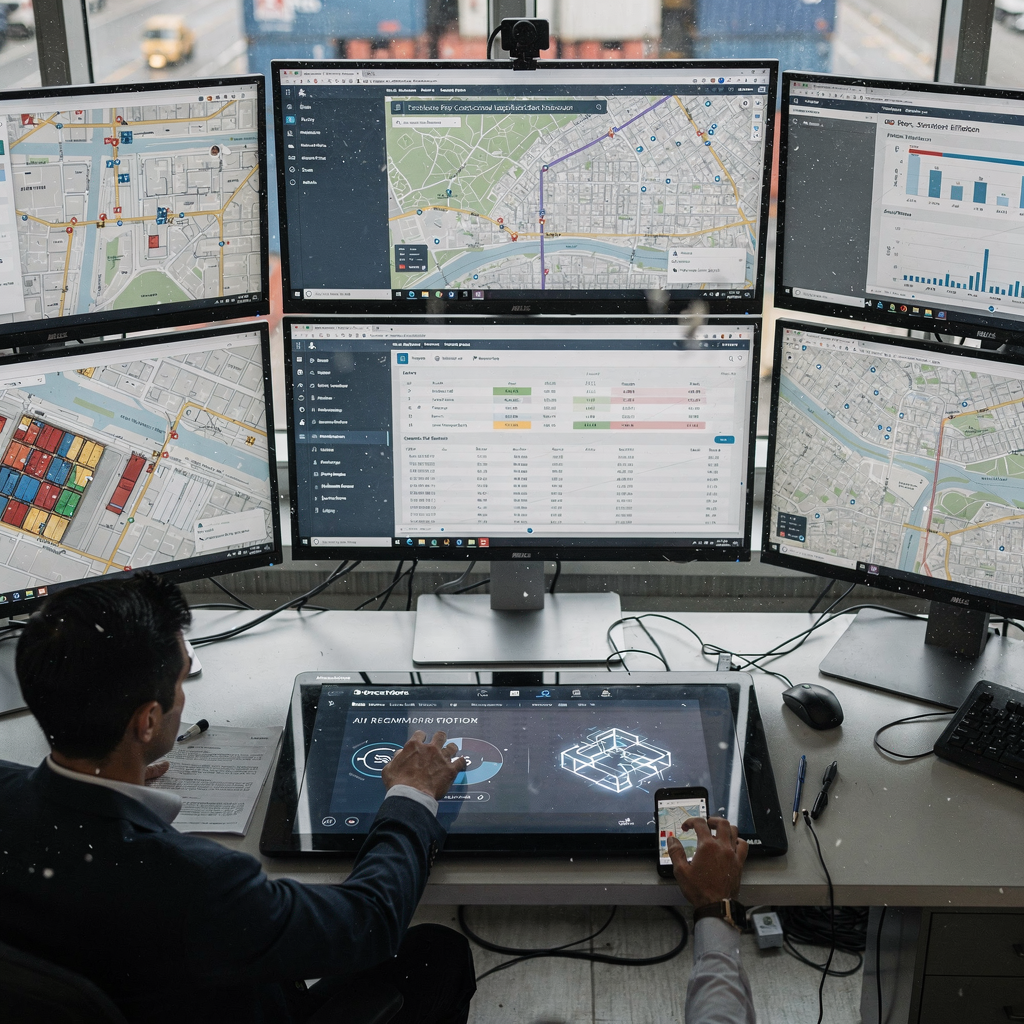
Drowning in a full terminal with replans, exceptions and last-minute changes?
Discover what AI-driven planning can do for your terminal
Implementing AI in container terminal operations and AI implementation strategies
Implementing AI requires a clear plan, and it must address data integration, staff training, and cybersecurity. First, terminals should audit their data sources and identify gaps. Then, teams should clean and standardize feeds from TOS, AIS, crane telematics, and ERP systems. Terminal operating systems are central to this integration, and they act as the backbone for AI models. For guidance on cloud and TOS choices, see our comparison of cloud-based versus on-premise TOS.
Scalable AI models and federated approaches help smaller ports benefit without exposing raw data. Integration of AI must also include governance, and it must define access, audit trails, and model retraining cadences. Cybersecurity is non-negotiable, and secure deployment practices protect both operations and commercial information. Staff training is equally important. Terminal operators and crane crews need clear procedures and decision support tools that reduce human intervention while preserving oversight.
When implementing ai, teams should measure performance using operational efficiency, throughput, and ROI. Start small, iterate quickly, and expand successful pilots. Decision support and visualization tools shorten the learning curve, and they increase adoption. Finally, monitoring, continuous improvement loops, and periodic audits ensure AI keeps delivering value and stays aligned with shifting trade patterns and operational needs.
Future of maritime logistics and benefits of AI
The future of container terminals will include digital twins, IoT meshes, and tighter blockchain integration to improve traceability and trust. Digital twins provide a testbed for scenarios, and they let planners stress-test schedules and resource plans before changes hit the yard. Combined with internet of things sensors and distributed ledgers, this approach can improve transparency for carriers and shippers, and it can reduce disputes over timing and condition. The future of maritime logistics also includes autonomous vessels and smarter hubs that coordinate via shared models.
AI continues to evolve, and its benefits of AI extend across efficiency, reliability, sustainability, and resilience. Smarter planning tools and optimization algorithms reduce fuel use and emissions through fewer empty moves. They also minimize demurrage and detention costs, which helps carriers and shippers. As research progresses, future AI applications will focus on real-time collaboration across regional terminals and on improving overall terminal productivity. Suggested research directions include federated forecasting for container traffic, improved human-AI interaction for safety, and dynamic stowage planning for late arrivals [dynamic stowage plan adjustment].
To summarize, AI in the maritime industry will optimize operations, support decision-making, and enhance sustainability. Terminals that adopt these tools will gain competitive advantage in global trade. For teams planning deployment, focus on data readiness, staff training, and modular pilots that prove value fast. That approach will maximize ROI and prepare ports and terminals for an increasingly connected and automated future.
FAQ
What is AI optimization in container terminal operations?
AI optimization uses machine learning and optimization algorithms to schedule equipment, predict arrivals, and allocate yard slots. It reduces delays, cuts re-handles, and improves operational efficiency across the terminal.
How accurately can AI predict vessel arrival times?
Recent studies report up to a 20% improvement in arrival prediction accuracy compared with traditional methods [Prediction of vessel arrival time to port]. Accuracy varies by data quality and coverage, and integration of AIS and historical patterns improves results.
Can AI help optimize container stacking and yard utilization?
Yes. AI-based optimization algorithms allocate slots to minimize re-handles and to increase utilization. Terminals have reported throughput gains and a reduction in unnecessary moves after adopting these systems [How technology can advance port operations].
What data sources are needed for real-time allocation?
Terminals need AIS feeds, crane telemetry, truck gate logs, TOS records, and ERP inputs. Combining these sources creates the real-time view required for dynamic allocation and decision support systems.
How do smaller terminals adopt AI without sharing sensitive data?
Federated learning and privacy-preserving techniques let terminals learn collaboratively while keeping raw data local [Enhancing Safety in Autonomous Maritime Transportation Systems]. This reduces barriers for terminals using advanced models.
What role do automation and robotics play in port logistics?
Computer vision and robotics speed up container handling and improve safety by automating repetitive checks. Automated stacking cranes and AGVs work with AI platforms to raise throughput and lower human exposure to hazardous tasks.
How does email automation support terminal operators?
Email automation reduces time spent on routine operational messages, and it connects TOS and ERP data to replies.
What performance metrics should terminals track during AI deployment?
Track throughput, average moves per container, crane utilization, vessel turnaround time, and ROI. Continuous improvement loops based on these metrics ensure steady gains and align ai implementation with business goals.
Are there cybersecurity risks with AI systems?
Yes. AI systems must be deployed with hardened access controls, encrypted communications, and audit trails. Strong governance and regular security reviews minimize the risk of data breaches or model manipulation.
What is the next frontier for AI in container terminals?
Expect wider use of digital twins, integrated IoT networks, and blockchain for supply chain transparency. Research is moving toward multi-terminal collaboration, autonomous vessels integration, and improved human-AI interaction to further enhance terminal operations.
our products
 stowAI
 stackAI
 jobAI
jobAI
Innovates vessel planning. Faster rotation time of ships, increased flexibility towards shipping lines and customers.
Build the stack in the most efficient way. Increase moves per hour by reducing shifters and increase crane efficiency.
Get the most out of your equipment. Increase moves per hour by minimising waste and delays.
stowAI
Innovates vessel planning. Faster rotation time of ships, increased flexibility towards shipping lines and customers.
stackAI
Build the stack in the most efficient way. Increase moves per hour by reducing shifters and increase crane efficiency.
jobAI
Get the most out of your equipment. Increase moves per hour by minimising waste and delays.