
Port Congestion and Delays in Container Shipping
PORT congestion and delays shape reliability across global trade lanes. Ports often face surges in inbound and outbound activity that overwhelm quay capacity, and this pressure reduces predictability for carriers and cargo owners. Port congestion and delays make scheduling fragile. They drive longer WAIT TIMES, higher shipping costs, and stress on the wider supply chain. Shipping schedules become harder to keep, and transit times stretch. For example, the 2021 Suez Canal incident amplified global port activity backlogs and produced a clear ripple effect across subsequent ports and shipping routes. The Suez blockage reminded stakeholders that a single stoppage can cause a ripple effect across several ports, and it can disrupt production schedules and berth assignments for weeks.
Key measures help diagnose the problem. Berth occupancy rates, vessel WAIT TIMES, TEUs processed and container dwell quantify pressure at terminals. High berth occupancy signals limited capacity, and long vessel WAIT TIMES signal either vessel delays or yard bottlenecks. Terminal-level metrics such as TEU throughput and container dwell track how fast cargo moves through gates and stacks. Recent research finds that effective port-call optimisation can cut turnaround time and reduce fuel waste; for instance, smart scheduling has shown up to 20–30% delay reduction and 10–15% fuel savings when linked to speed adjustments and berth sequencing Port Call Optimization: How Smart Data Cuts Time and Fuel Waste. That translates to measurable savings for shipping lines and terminals, and it improves the reliability of shipping for shippers.
Ports experience unique mixes of constraints. Some terminals handle the largest container vessels and so see wide swings in demand. Others struggle with hinterland congestion that blocks gate flow. To navigate these pressures, port authorities and port operators must balance short-term firefighting with tactical and strategic planning. Loadmaster.ai helps operators move from reactive firefighting to proactive, policy-driven control by simulating terminal dynamics and training RL agents that reduce rehandles and keep equipment busy, and the approach directly supports improved schedule reliability and faster recovery when delays happen.
Causes of Port Congestion in a Congested Port
Port congestion occurs for many reasons. Physical constraints such as limited quay length and insufficient berth availability form the first group. When multiple container vessels arrive close together, terminals can run out of workable berth windows, and that creates queuing outside the terminal. Operational bottlenecks follow. Slow container handling, limited handling equipment, or uneven crane allocation create local bottleneck effects. Labor shortages compound the problem because fewer hands mean slower gate throughput and longer dwell times. In periods of peak demand, terminals cannot scale human shifts fast enough. The pandemic surge exemplified this. Sudden demand spikes hit terminals while terminal workforces were reduced, and many ports had to rework yard strategies to cope with the imbalance.
External triggers also contribute. Adverse weather can force vessels to delay arrival or slow sailing. Hinterland blockages, such as rail or road disruptions, stop trucks and trains from clearing stacks, and that increases container dwell and yard congestion. Empty containers and imbalanced flows make yard planning harder because terminals must find space for empties and for full imports at the same time. In practice, causes of port congestion are intertwined with commercial and operational factors: freight demand, scheduling choices by shipping companies, and customs clearance delays at the gate. These causes and consequences mean a successful response must span berthing, yard, and gate. For terminals seeking AI-driven support, Loadmaster.ai’s StackAI and JobAI help reslot and sequence moves, and they reduce shifter counts while keeping quay productivity high.
Many ports report a mix of these issues. Data show that congestion creates longer WAIT TIMES and higher demurrage risk, and that contribute to congestion if not addressed. To tackle this, port authorities and port operators need both immediate triage and medium-term capacity planning. Effective solutions couple operational adjustments with digital tools, and port community systems that share ETA, berth status, and truck arrival windows are central to smoothing peaks.
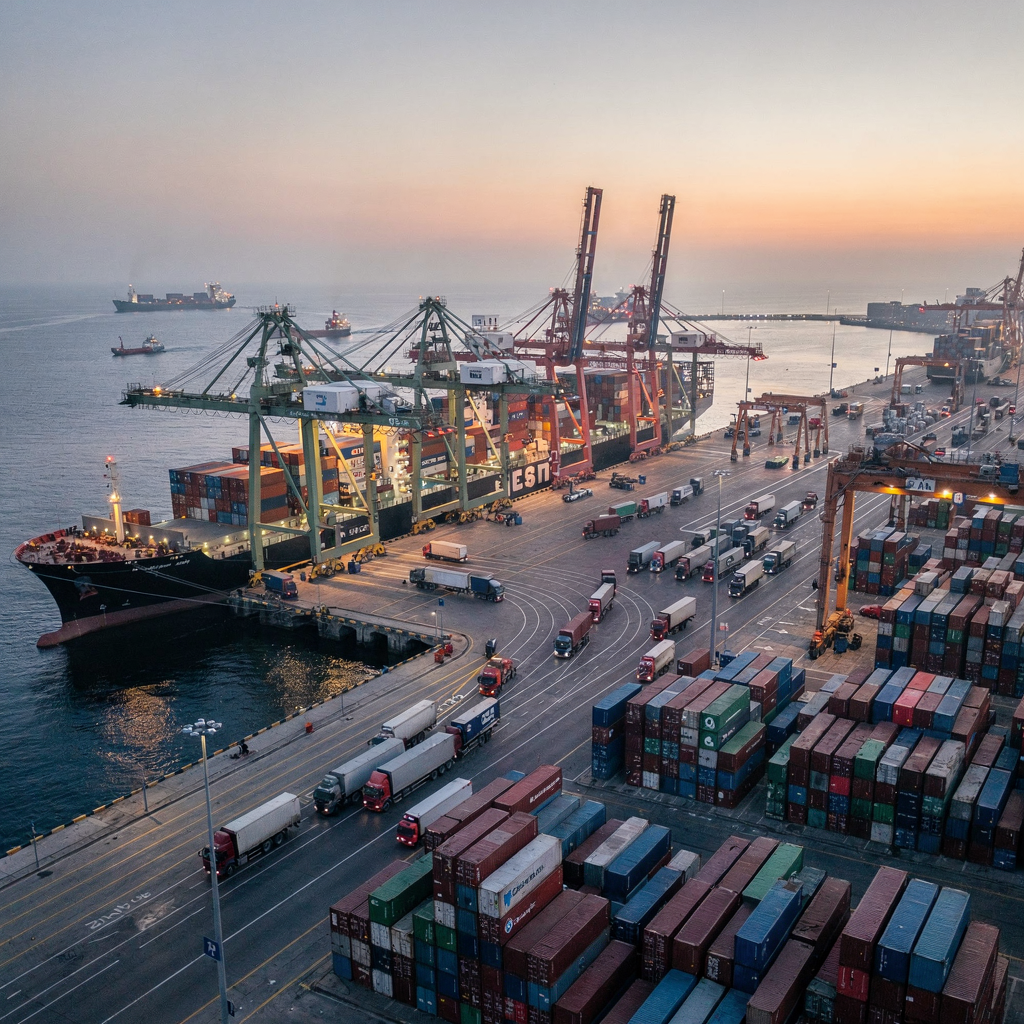
Drowning in a full terminal with replans, exceptions and last-minute changes?
Discover what AI-driven planning can do for your terminal
Vessel Delays: How Delays Happen in Cargo Operations
Vessel delays occur when ships do not arrive on time at a scheduled port. Primary sources include weather, mechanical breakdowns, and earlier port holdups that cascade down the service loop. When one call runs late, a vessel misses its berth window, and the delay propagates to subsequent ports on the rotation. This cascade is central to understanding schedule reliability and the wider ripple effect that affects yards and trucks. Vessel delays also force changes in yard planning. Terminals must reshuffle container stacks, reassign cranes, and sometimes reallocate labor across shifts to avoid congestion and to prevent excessive rehandles.
In major loops such as the Asia–Europe string, the impact is visible. A late departure in one hub can turn into cumulative hours of delay across the route, and that raises demurrage and detention costs for cargo owners. In practice, delays in container operations change stow plans, and they force planners to prioritize urgent import loads or critical export slots. The Vessel Schedule Recovery Problem is a technical instance of this: how to replan vessel rotations, berth assignments, and yard moves to minimize total delay and operational cost. Research shows that adjusting sailing speed and port productivity can be among the most effective strategies to recover time Vessel schedule recovery strategy in liner shipping considering …. That means carriers and port terminals must coordinate on speed, berth swaps, and sequencing.
Vessel delays change cargo handling priorities. For example, high-priority imports may require rearranging slots and accelerating customs clearance, and that may push empty containers to less accessible stacks. The result is more internal moves and higher inefficiency. To reduce this, terminals can adopt joint scheduling between carriers and service providers. Joint scheduling improves berth assignment and throughput by aligning crane and truck windows. The academic work on joint scheduling highlights measurable gains in throughput when terminal planners coordinate with carriers and port operators Joint scheduling of vessels and vessel service providers for enhancing …. In short, better coordination cuts delays and makes yard operations steadier.
Port Call Replanning to Optimize Throughput and Reduce Inefficiency
Port call replanning targets the heart of the disruption response. Dynamic rescheduling can adjust sailing speeds, revise berth windows, and shift quay crane assignments to recover lost time. Speed adjustments work when fuel and emissions trade-offs remain acceptable, and they can shrink schedule variance quickly. Port skipping and call swapping offer another lever: selectively dropping or reordering a port call can ease terminal load and let a critical vessel keep to an earlier rotation. Skipping a scheduled port is not free. It changes service coverage, and it requires careful coordination with cargo owners and inland connections, but it can clear congestion pockets and reduce delays caused by stacked arrivals. Research indicates that optimized port-call decisions reduce turnaround delay by up to 20–30% when combined with operational levers Port Call Optimization: How Smart Data Cuts Time and Fuel Waste.
Decision support tools make replanning workable in real time. Scheduling algorithms, AI-driven platforms and digital twins simulate outcomes and propose plans that trade off quay productivity, yard congestion, and driving distances. Loadmaster.ai’s three-agent architecture is an example: StowAI helps plan QC sequences, StackAI supervises yard placement, and JobAI executes moves to cut wait times and balance workloads. This closed-loop approach lets terminals test what-if scenarios before committing to a change. For many terminals, adding a buffer time per berth and introducing differential prioritization for premium cargo lanes helps the replanning process. A careful plan also respects schedule reliability for services that must arrive on time for downstream commitments.
Evidence supports the investment. Joint scheduling and smart replanning have shown throughput improvements of 5–10% in congested terminals and measurable reductions in inefficiency and rehandles Optimizing maritime transport schedule recovery strategies: a novel …. Therefore, operators should pair algorithmic planning with human oversight, and they should roll out changes in controlled stages to protect operations while they optimize.
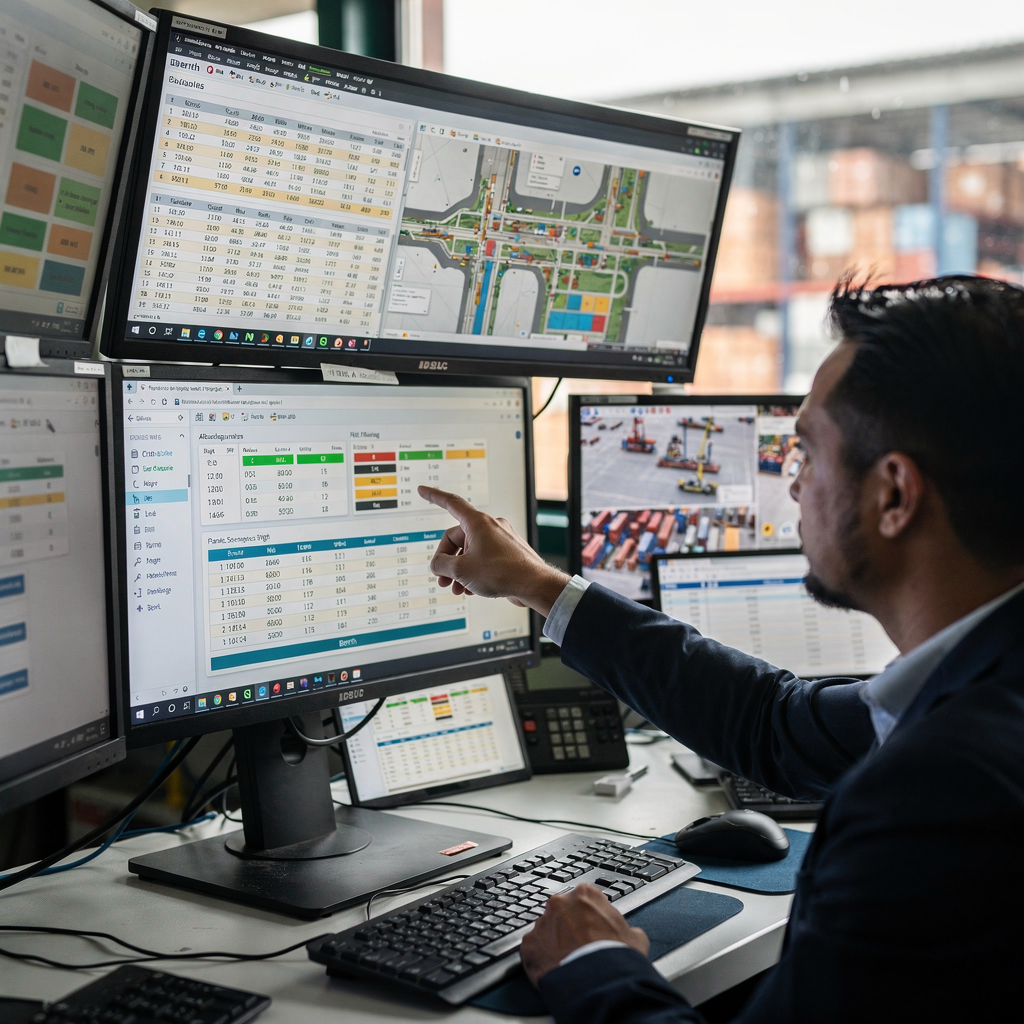
Drowning in a full terminal with replans, exceptions and last-minute changes?
Discover what AI-driven planning can do for your terminal
Managing Freight Rate Volatility to Boost Reliability
Vessel delays and port congestion affect freight rates directly. When vessels miss windows, capacity tightens and freight rate spikes can follow. The link between delays and freight rate volatility is clear. During COVID-19 lockdowns, sudden demand shifts and constrained port capacity produced rapid freight rate swings that hit shippers and carriers alike. Freight rate spikes raise shipping costs and force carriers to re-price services on short notice. To protect margins and reliability, carriers and terminals can implement priority handling for premium cargo lanes and differential pricing models. Charging for priority berthing or guaranteed gate slots helps allocate scarce capacity to critical loads. Those financial signals also allow carriers to choose routing and speed strategies that reduce overall disruption.
Priority replanning plays a role. When terminals apply a mix of dynamic rescheduling and premium lanes, they can stabilize service for time-critical imports and reduce the financial impact on shipping companies. That reduces the downside for cargo owners who must meet tight production schedules. Smart scheduling also reduces unnecessary fuel burn and demurrage exposure. Research shows that port-call optimisation and speed adjustments can cut fuel consumption by 10–15% while reducing delays by up to 30% in some scenarios Port-call optimisation – shipping’s secret weapon against cost and emissions. As a result, operators who invest in real-time replanning tools can smooth freight rate impacts and improve reliability for customers.
To prepare financially, liners and shippers should model volatility into contracts and consider peak surcharges that reflect real operational constraints. Transparent allocation of priority handling fees helps avoid disputes and supports collaborative responses to disruptions. Ultimately, improving schedule reliability reduces the need for reactive price spikes, and it supports a more stable shipping market that benefits the entire supply chain.
Real-Time Container Handling Strategies to Alleviate Congestion
Real-time systems change the way terminals respond to disruption. Using RFID, IoT sensors and port community systems improves container visibility, and that visibility shortens reaction time when a vessel arrives late or early. Real-time data on truck arrivals, gate throughput, and yard density lets planners reassign tasks dynamically. Automated quay cranes and digital yard management improve execution speed. Automated equipment keeps productivity high during constrained windows, and automation reduces human error at peak load.
Collaborative replanning between carriers, terminals and hinterland operators is essential. When all parties share ETAs and slot reservations, they can mange congestion better and avoid stacking conflicts. Port community systems that share a single source of truth give everyone the same picture and permit aligned decisions. In practice, predictive analytics can detect impending bottlenecks and suggest pre-emptive actions. For instance, when an incoming vessel is expected to arrive late, AI can propose a revised stow plan, shift cranes, and reallocate truck windows—this is proactive planning rather than firefighting. Real-time container monitoring also reduces container dwell and improves gate throughput.
Terminal technology must integrate with existing TOS and telemetry, and that is feasible with TOS-agnostic AI layers that exchange APIs and EDI. Loadmaster.ai provides explainable AI that learns in a sandbox digital twin, and then it deploys policies that reduce rehandles and shorten driving distances while protecting stability and safety. The future will see more predictive recovery tools that suggest alternative berth assignments, and that will help manage congestion and avoid delays caused by manual replanning. When terminals combine real-time container tracking with automated yard strategies, they protect throughput and support faster customs clearance for urgent imports.
FAQ
What is port congestion and how does it affect global trade?
Port congestion occurs when demand outstrips a terminal’s handling capacity, and it leads to longer vessel WAIT TIMES, higher yard density, and slower gate throughput. The result is longer transit times, higher shipping costs, and risks to production schedules for cargo owners.
What causes port congestion in a congested port?
Causes include limited quay length, insufficient berth availability, handling equipment limits, labor shortages, and external triggers such as weather and hinterland blockages.
How do vessel delays spread through shipping routes?
Vessel delays propagate because a late arrival at one port shifts berth windows and pushes subsequent ports later in the rotation. This creates a ripple effect that affects yard planning, container dwell, and truck schedules across several ports.
What strategies can reduce the impact of late port calls?
Dynamic rescheduling, speed adjustments, port skipping and call swapping, and joint scheduling of vessels and service providers all help reduce delays and rebalance terminal workload. Decision support tools and AI-driven replanning make these options practical.
How do freight rates respond to port disruption?
When capacity tightens due to delays or congestion, freight rates can spike as demand outpaces available space. Priority handling and differential pricing can allocate scarce capacity while signalling the true cost of urgent moves.
What role does real-time technology play in relieving congestion?
Real-time data from RFID, IoT, and port community systems improves container visibility and allows planners to adapt quickly to late vessel arrivals. This reduces idle time, shortens dwell times, and enables more accurate resource allocation.
Can AI help with port call replanning?
Yes. AI that combines simulation and reinforcement learning can test millions of scenarios and propose robust plans that minimize rehandles and balance quay and yard KPIs. Loadmaster.ai uses RL agents to deliver adaptive scheduling that works without requiring perfect historical data.
Are there environmental benefits to better replanning?
Improved port-call optimisation and speed adjustments can reduce fuel consumption and lower emissions, with studies indicating possible fuel savings of around 10–15% when optimized. These gains arise from fewer idle hours and more efficient sailing profiles.
What should port authorities prioritize during a disruption?
Port authorities should prioritise clear information sharing through port community systems, coordinated berth allocation, and fast customs clearance for priority cargo. Proactive planning and transparent slot management reduce confusion and speed recovery.
How can shippers and carriers prepare for future congestion?
They can build flexibility into contracts, use priority lanes where appropriate, and invest in better ETA sharing with terminals. Collaborative tools and AI-driven replanning reduce inefficiency and improve the reliability of shipping for all parties.
our products
 stowAI
 stackAI
 jobAI
jobAI
Innovates vessel planning. Faster rotation time of ships, increased flexibility towards shipping lines and customers.
Build the stack in the most efficient way. Increase moves per hour by reducing shifters and increase crane efficiency.
Get the most out of your equipment. Increase moves per hour by minimising waste and delays.
stowAI
Innovates vessel planning. Faster rotation time of ships, increased flexibility towards shipping lines and customers.
stackAI
Build the stack in the most efficient way. Increase moves per hour by reducing shifters and increase crane efficiency.
jobAI
Get the most out of your equipment. Increase moves per hour by minimising waste and delays.