
AI integration and machine learning in maritime terminal operations
Maritime terminal operations cover quay planning, cargo handling, yard management, and berth scheduling. First, these activities must balance limited space with tight vessel windows. Second, they require fast responses to arrival changes, tidal shifts, and equipment faults. Third, planners juggle competing KPI trade-offs like quay productivity versus yard congestion. In short, maritime operations require systems that process many data points and adapt on the fly.
AI and machine learning change how operators see and solve those problems. For example, machine learning models process vessel schedules, tidal data, and equipment status in real-time to predict conflicts before they escalate. Consequently, planners can reroute trucks, resequence container moves, or delay lifts with minimal disruption. Studies show that ML-driven routing can boost throughput by up to 20%, and AI integration can cut waiting times by 15% (source). At the same time, demand forecasting accuracy improves by as much as 30% when AI is combined with human checks (source).
Loadmaster.ai works by creating a digital twin and training reinforcement learning agents that test thousands of scenarios. Thus, the agents learn robust policies without relying on flawed historical averages. In practice, StowAI helps vessel planners sequence moves, while StackAI balances the yard and JobAI coordinates dispatchers. This approach reduces rehandles and evens RTG workloads, and it supports resilient decision loops during disruptions.
To deploy these models, terminals need stable data pipelines and sensors that feed real-time telemetry to AI systems. In addition, computer vision can track container positions and equipment motions, while edge compute reduces latency for safety-critical control. Therefore, integrating AI and machine learning yields better visibility and faster reactions. However, the use of artificial intelligence and machine learning must be paired with human judgment so high-stakes choices remain accountable.
Finally, terminals adopting these tools see measurable operational efficiency gains, and they can better mitigate delays caused by weather or port congestion. For more on real-time yard sensing and density analytics, see our work on real-time container terminal yard density monitoring.
AI-driven logistics optimisation in container terminals
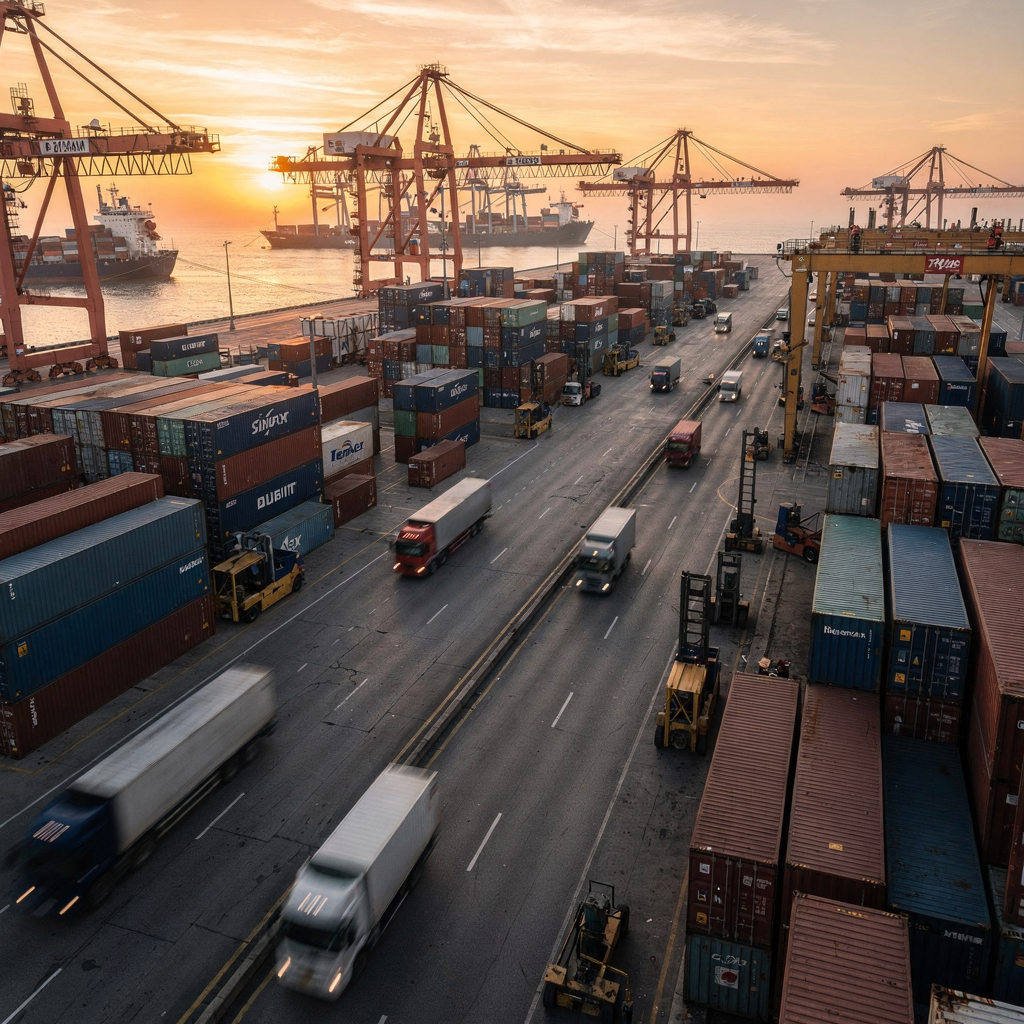
Container terminals demand tight coordination from gate entry through vessel loading. AI-driven models for container stacking, automated guided vehicles, and remote-controlled cranes now orchestrate end-to-end flows. For instance, automated guided vehicles optimize routes across the yard, while logic-based scheduling keeps quay cranes fed with the right containers on time. In practice, these AI applications improve slot allocation, reduce unnecessary reshuffles, and shorten driving distances for yard equipment.
At large hubs such as Rotterdam, logic-based and reinforcement-trained policies have delivered clear gains. One case study showed throughput gains of around 12% through AI-driven yard planning, and similar pilots reduced gate-to-berth delay times. These results reflect the value of simulation-first AI that explores new strategies rather than imitating past shifts (study on collaborative cognitive agents). Additionally, terminals that unify procurement, production, logistics, and inventory data report a 15–20% rise in operational efficiency (source).
End-to-end logistics coordination means the terminal control centre links TOS data with AI layers. That connection helps match containers to vessel slots, adjust yard placements, and sequence moves that minimize crane idle time. For terminals aiming to reduce yard congestion and improve performance, dynamic slotting and predictive householding are practical steps; see our article on dynamic slotting in container port yards for details. Furthermore, decentralized agents can coordinate quay, yard, and gate roles to keep operations coherent under pressure (decentralized agents).
While automation handles repetitive moves, human workers still manage exceptions and safety reviews. As a result, AI frees planners to focus on strategy and incident resolution rather than routine dispatching. Still, terminals must prepare for ai implementation that scales, and they must invest in integration of ai across equipment telemetry and operations. Overall, combining automated guided vehicles, smart scheduling, and operator oversight yields smoother vessel cycles and measurable throughput improvements.
Drowning in a full terminal with replans, exceptions and last-minute changes?
Discover what AI-driven planning can do for your terminal
Human intervention and human-AI collaboration for data-driven efficiency
Human-AI collaboration matters more than ever in data-driven terminal operations. Humans set priorities, validate edge cases, and steer the AI when unexpected situations occur. For example, cognitive agents support shift-supervisors in closed-loop decision cycles where a human approves a plan before execution. This human intervention ensures that AI suggestions align with safety rules and commercial constraints. In addition, human judgment remains essential when AI recommendations conflict with on-the-ground realities.
Effective collaboration requires training, transparent interfaces, and cultural change. Terminals often face a disconnect between strategic intent and operational culture; employees may distrust models trained only on historical data. Therefore, operators need hands-on reskilling programs so human workers can read and override AI plans appropriately. In practice, AI adoption works best when it is seen as a tool to augment human capabilities rather than replace them. That mindset helps to maintain tribal knowledge and to support continuous improvement.
From a technical perspective, ai systems must present actionable insights with explainability and clear guardrails. For example, when an algorithm suggests a different stow plan, the planner needs the reasoning, expected KPI impacts, and failure modes. This level of transparency improves effective collaboration and builds trust. Our explainable AI work shows how planners can audit decisions and maintain governance for deployment of ai across port operations (explainable AI).
Change management matters too. Training programs should cover human decision-making under stress, scenario-based drills, and ways to interpret predictive alerts. Only then will teams accept ai adoption and integrate those tools into daily practice. Finally, human expertise remains critical: in high-stakes choices the final call often requires human intelligence, and the balance between automation and oversight must be calibrated so humans remain in control.
AI tools for predictive maintenance to improve performance
Predictive maintenance systems now form a core part of terminal reliability. By combining IoT sensors, anomaly-detection algorithms, and digital twins, terminals can monitor crane bearings, spreader wear, and RTG hydraulics continuously. These ai tools spot early signs of degradation and schedule interventions before failures occur. As a result, predictive alerts typically reduce crane downtime by 30% and maintenance costs by 20% when implemented with proper workflows (industry survey).
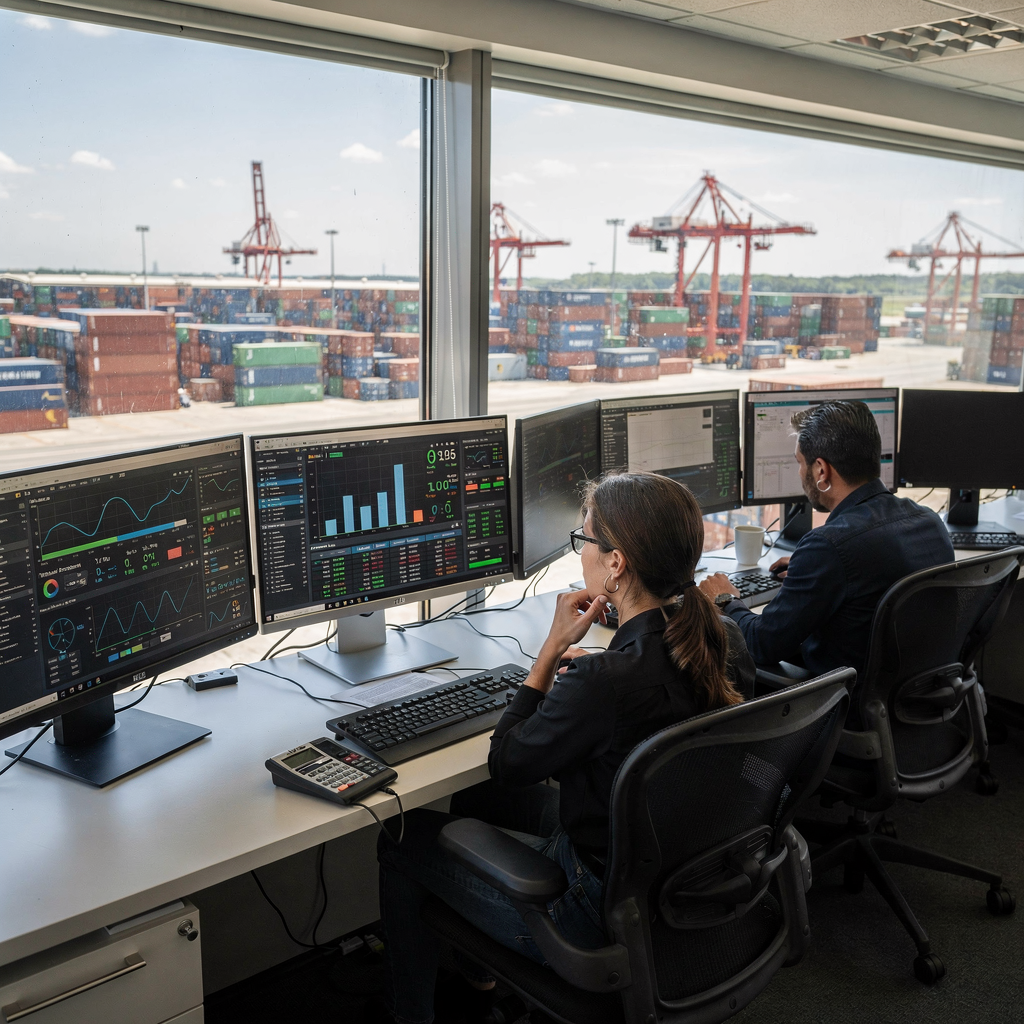
To implement predictive maintenance, teams build data pipelines that stream equipment telemetry into cloud analytics and operator dashboards. Additionally, edge computing can run anomaly models near the machinery to cut latency for critical alerts. Then, maintenance teams use condition-based schedules rather than fixed intervals, which optimizes resource allocation and reduces unnecessary parts replacement. These practices also help mitigate cascading bottlenecks that would otherwise disrupt vessel loading.
Digital twins allow simulation of failure scenarios and resource plans. For example, a twin can test what happens if a key crane is out for two hours and propose alternative lift distributions. Using such simulations helps planning teams decide whether to call in spare crews, reroute trucks, or slow loading to protect a future vessel schedule. Operators see clear benefits: fewer emergency repairs, improved equipment availability, and steadier throughput. For a practical guide to predictive housekeeping at the block level, see our post on predictive housekeeping for container terminals.
Finally, combining predictive maintenance with human oversight ensures safe execution. Maintenance crews receive prioritized work orders with clear failure descriptions, historic trends, and expected recovery times. Thus, operators can act quickly and reduce risk. To close the loop, feedback from repair outcomes trains the anomaly models and supports continuous improvement across the terminal.
Drowning in a full terminal with replans, exceptions and last-minute changes?
Discover what AI-driven planning can do for your terminal
Benefits of AI in terminal operations and logistics
AI delivers multiple benefits across terminal operations and logistics. First, AI improves decision-making by turning complex datasets into clear, ranked options. Second, it enhances safety by monitoring zones and equipment to reduce incidents caused by human error. Third, AI can optimize resource allocation so cranes and trucks run with fewer idle minutes. These outcomes contribute to operational efficiency and a lower total cost of moves.
Quantitative gains are substantial. Survey data from 279 firms shows demand forecasting accuracy up to +30% and inventory optimisation at +25% when AI is integrated with human review (source). In terminals, AI adoption has been associated with a 40% reduction in human-error incidents in several case studies (case study). Also, unified data platforms across procurement, production, logistics and inventory can increase operational efficiency by 15–20% (source).
Environmental benefits follow operational gains. For example, lower vessel idling and optimized slotting cut diesel use and reduce emissions. Smart scheduling shortens truck dwell times and encourages smoother gate flows, which in turn reduces traffic emissions near ports. In addition, the use of predictive maintenance reduces wasted parts and extends equipment life, which supports sustainability goals.
AI also promotes adaptability in high-stakes contexts. By providing actionable insights and short-term simulations, AI helps supervisors prioritize moves and mitigate risks to schedules and cargo. Nevertheless, human oversight remains essential. AI offers recommendations, but human judgment must confirm final plans for safety and contract compliance. For those wanting to explore scheduling and yard operations, our deep dive on job scheduling with double-armG yard operations provides concrete examples of where AI yields measurable benefits.
Future of AI to improve performance in container terminals
The future of AI in container terminals looks like a blend of edge compute, digital twins, and faster decision loops. Digital twins for an entire terminal enable scenario-based capacity planning and stress tests that inform investment decisions. Edge computing will allow millisecond-level control for safety-critical functions, while cloud systems handle longer-term optimization and learning. Together, these technologies can transform how terminals adapt to surges and disruptions.
We will likely see a mix of fully autonomous tasks and augmented human roles. Some moves may become fully autonomous, especially in controlled yard blocks. However, many functions will remain collaborative, with humans overseeing AI agents and stepping in for exceptions.
Regulatory and ethical frameworks must keep pace. Data privacy, audit trails, and compliance with jurisdictional rules will shape the deployment of ai solutions. For example, EU regulations require explainability and documented decision-making processes for high-impact systems. Operators must plan for safe ai implementation, governance, and reskilling programs so human workers can work alongside agents rather than be sidelined. In practice, terminals that train staff early and use simulation-first deployment reduce resistance and shorten time to benefit.
Finally, research agendas will focus on better anomaly detection, multi-agent coordination, and the integration of computer vision with predictive maintenance systems. These topics will help mitigate equipment failures and reduce downtime. As the industry adopts AI more broadly, terminals will see improved performance, lower emissions, and more consistent throughput. For further reading on scenario-based planning and scalable engines, see our posts on scenario-based capacity optimization and scalable AI engines for deepsea container port planning.
FAQ
What is the role of AI in modern terminal operations?
AI analyzes large volumes of operational data to propose optimized plans for stowage, yard moves, and gate flows. It provides actionable insights that human supervisors can approve or adjust to meet safety and commercial goals.
How does human-AI collaboration improve safety?
AI continuously monitors equipment and zones, and it raises alerts for anomalies that could lead to accidents. Meanwhile, humans validate safety-critical actions and apply contextual judgment for exceptions.
Can AI reduce equipment downtime?
Yes. Predictive maintenance tools using IoT and anomaly detection can schedule repairs before failures occur, which reduces downtime and lowers maintenance costs. This approach also supports longer equipment life and fewer emergency interventions.
Will AI replace human workers at container terminals?
AI is designed to augment human capabilities rather than replace them. It frees human workers to focus on strategy, exception handling, and safety oversight while automating repetitive tasks.
What data does AI need to work effectively in a port?
AI systems use equipment telemetry, vessel schedules, gate transactions, and sensor data such as computer vision feeds. However, simulation-trained agents can start without extensive historical records, making deployment flexible.
How do terminals measure the benefits of AI?
Terminals track KPIs like moves per hour, crane utilization, rehandle count, and truck dwell time to quantify improvements. They also monitor incident rates to evaluate safety gains and maintenance savings for cost impacts.
Is explainability important for AI in ports?
Absolutely. Explainable models help planners trust recommendations by showing expected KPI impacts and failure modes. Clear audit trails also support governance and compliance with regulations.
What steps should a terminal take to adopt AI?
Start with a sandbox simulation or digital twin to evaluate policies before live deployment. Train staff, set clear guardrails, and integrate AI with TOS and equipment telemetry for phased rollouts.
How does AI affect environmental performance?
AI optimizes schedules and reduces vessel idling, which lowers fuel use and emissions. It also reduces truck dwell times and unnecessary equipment movements, contributing to better local air quality.
Where can I learn more about practical AI deployments in terminals?
Explore case studies and technical articles on simulation-first methods, decentralized agent coordination, and explainable AI for planners. Our site contains multiple resources that show real implementations and lessons learned.
our products
 stowAI
 stackAI
 jobAI
jobAI
Innovates vessel planning. Faster rotation time of ships, increased flexibility towards shipping lines and customers.
Build the stack in the most efficient way. Increase moves per hour by reducing shifters and increase crane efficiency.
Get the most out of your equipment. Increase moves per hour by minimising waste and delays.
stowAI
Innovates vessel planning. Faster rotation time of ships, increased flexibility towards shipping lines and customers.
stackAI
Build the stack in the most efficient way. Increase moves per hour by reducing shifters and increase crane efficiency.
jobAI
Get the most out of your equipment. Increase moves per hour by minimising waste and delays.