
crane and portal coordination to handle container flows in sts cranes operation
Portal trolleys run beneath a quay crane to move a load horizontally between ship and stack area. They shuttle boxes along fixed tracks while the crane handles vertical transfers. The combination makes a loop: the crane lifts, the trolley receives, the trolley moves, then the crane lifts again. This choreography reduces idle time and helps the crane achieve higher productivity. Studies show that improved coordination can boost moves per hour by 15–20% and cut crane idle time from about 25% to under 10% (assessing throughput demand). Such gains matter when a single berth must service a mega vessel with thousands of boxes.
How a portal trolley works is simple to describe. The trolley positions itself under the spreader. The crane lowers the hoist and locks the spreader to the box. Then the crane lifts and transfers the box to the trolley deck. At the handover the trolley stabilizes and confirms load securement to the operator. After the handover the trolley accelerates along its track to a transfer point. There the crane picks up the box for placement. This handoff repeats every cycle and must happen without delay.
Synchronization needs precise timing and accurate position feedback. If a trolley misaligns, the crane must wait. That waiting creates a cascading delay across the berth. Traffic rules and simple sensors help, but complex traffic requires smarter control. For example, loadmaster.ai trains reinforcement learning agents that plan sequences to minimize rehandles and keep cranes busy. These agents simulate millions of scenarios so the operator sees suggested schedules that respect stowage plan constraints and execution safety. They also protect against unexpected disruptions, improving operational consistency and reducing reliance on individual man expertise.
Challenges include speed matching, spreader coupling, and safe decouple. The crane must manage speed and boom geometry to present the spreader at the correct position on the vessel. The trolley must negotiate other trolleys and transport vehicles on the quay. Collision avoidance and route sequencing therefore become critical. Sensor suites on trolleys, combined with remote operator interfaces, cut the chance of delays and keep the pick-up cycle short. For deeper reading on coordinating quay and yard planning tools see the role of TOS and AI optimization layers for quay management TOS integration with AI.
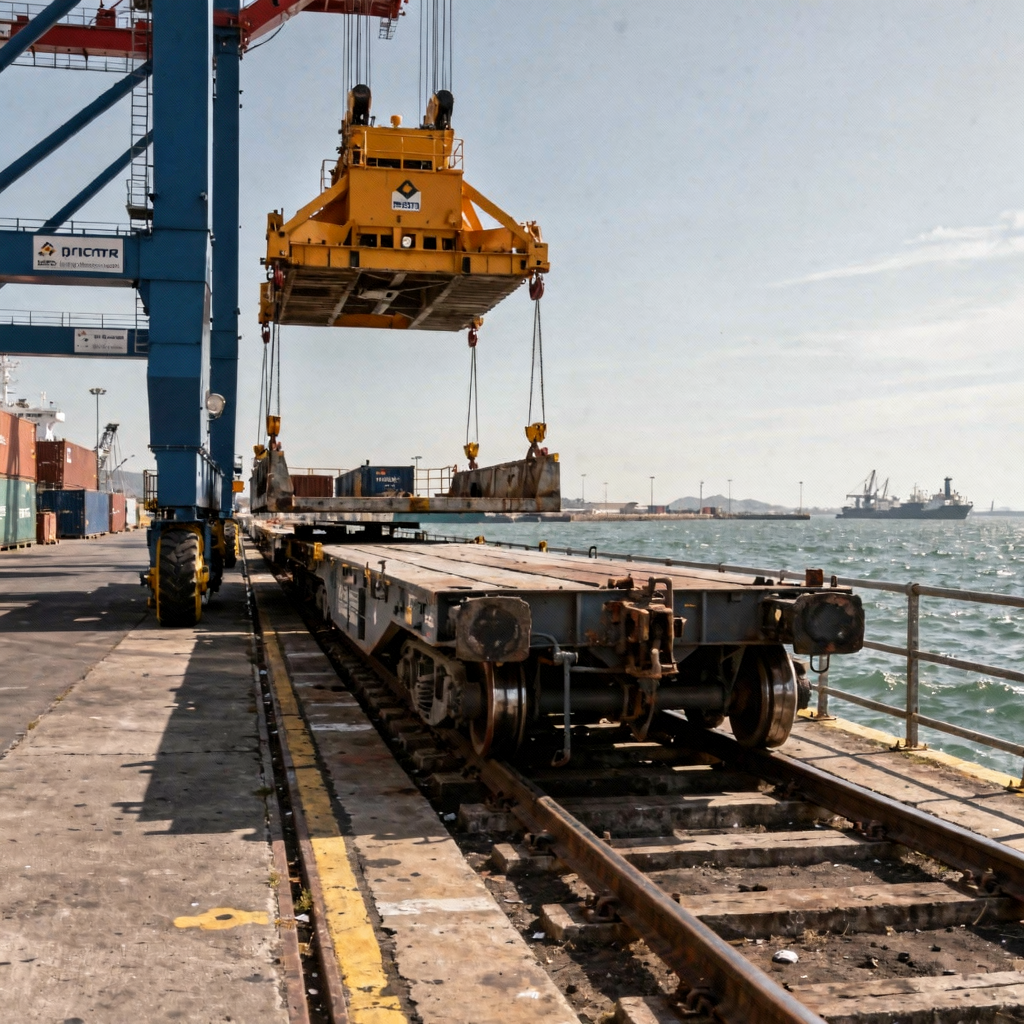
yard and quay alignment to support port lift operation
Quay layout and storage design shape how fast operations proceed. A compact layout reduces trolley travel distance and shortens the pick-up cycle. Designers place high-frequency bays near the berth to limit cross-traffic. Slots are assigned by stacking logic that balances rehandle risk with crane productivity. Good berth planning also matches arrival windows to available space in the stack area. When planners align berth schedules with land-side capacity, cranes see fewer holdups at the quay and more steady work.
Traffic-management rules prevent collisions and bottlenecks. Clear right-of-way protocols let a trolley and a transport vehicle pass without hesitation. Digital signalling combined with local sensors controls speed and enforces stopping points. Terminals that implement these systems reduced congestion notably. For example, research from a Vietnamese port found that digital readiness improved the quay-yard link, enabling more predictable transfer windows and fewer unscheduled waits (digital-ready case study). That study also showed faster decision loops for reallocation of slots and better scheduling of high-priority boxes.
Berth planners now use demand forecasts to assign call windows and crane sequences. Forecasts help avoid clashes when multiple ships arrive close together. They also guide where to stage inbound boxes to match crane reach and trolley pickup patterns. This planning reduces unnecessary moves and keeps cranes focused on servicing the vessel instead of clearing space in the stack area. For terminals aiming to optimize across quay and stack, scenario-based capacity tools show how different placings affect productivity and delays scenario-based capacity optimization.
Operational discipline matters too. Operators set maximum trolley dwell times at the quay to prevent backups. They set minimum clearances between trolleys at intersections. Systems then enforce these rules through route re-planning. The result is fewer stops, fewer human interventions, and a smoother handover at the berthing face. When planners combine smart slotting with traffic control, the whole port sees an increase in moves processed per hour and a reduction in delay across shifts.
Drowning in a full terminal with replans, exceptions and last-minute changes?
Discover what AI-driven planning can do for your terminal
automate portal trolleys for full automation with electric mobile harbour systems
Automation levels range from assisted remote control to full automation. The aspiration is full automation of horizontal moves so cranes and trolleys operate in a synchronized, closed-loop system. Electric drive trolleys support that goal. They cut emissions, run quieter, and simplify maintenance compared with diesel units. Electric mobile harbour trolleys also allow precise torque control for smooth acceleration and braking. This feature helps maintain stable coupling with the crane hoist and reduces swing during handovers.
Autonomous features include lane following, obstacle detection, and dynamic rerouting. Lidar, radar, and camera-based sensors provide the perception stack. AI planners interpret sensor input and make safe short-term choices, then submit tasks to the execution layer. Pilots by major operators explored electric mobile harbour trolleys and reported better predictability and lower energy costs; Transnet’s efforts are an example of industry interest in autonomous horizontal systems (Transnet collaboration).
Automation reduces manual driving and the risk of human error. Remote operator stations supervise multiple vehicles and only intervene for exceptions. That design increases flexibility and allows a smaller team to manage larger operations. For AI-driven coordination, reinforcement learning agents can suggest task assignments that balance quay work and stack reshuffles. Loadmaster.ai’s StackAI and JobAI demonstrate how simulated training yields robust policies that perform from day one without relying on historical data. They also reduce unnecessary moves and protect future plans.
Operators must plan for investment in charging infrastructure and software integration. Charging schedules should match peak cycles to avoid idle time for trolleys. Maintenance intervals differ from diesel units but are predictable and often shorter. Transition pilots that run electric trolleys in mixed fleets help measure ROI before full fleet renewal. In the long run, deploying electric mobile harbour systems supports sustainability targets and can reduce running costs, while improving execution speed at busy berths.
container handling via gantry hoist and gantry crane component selection
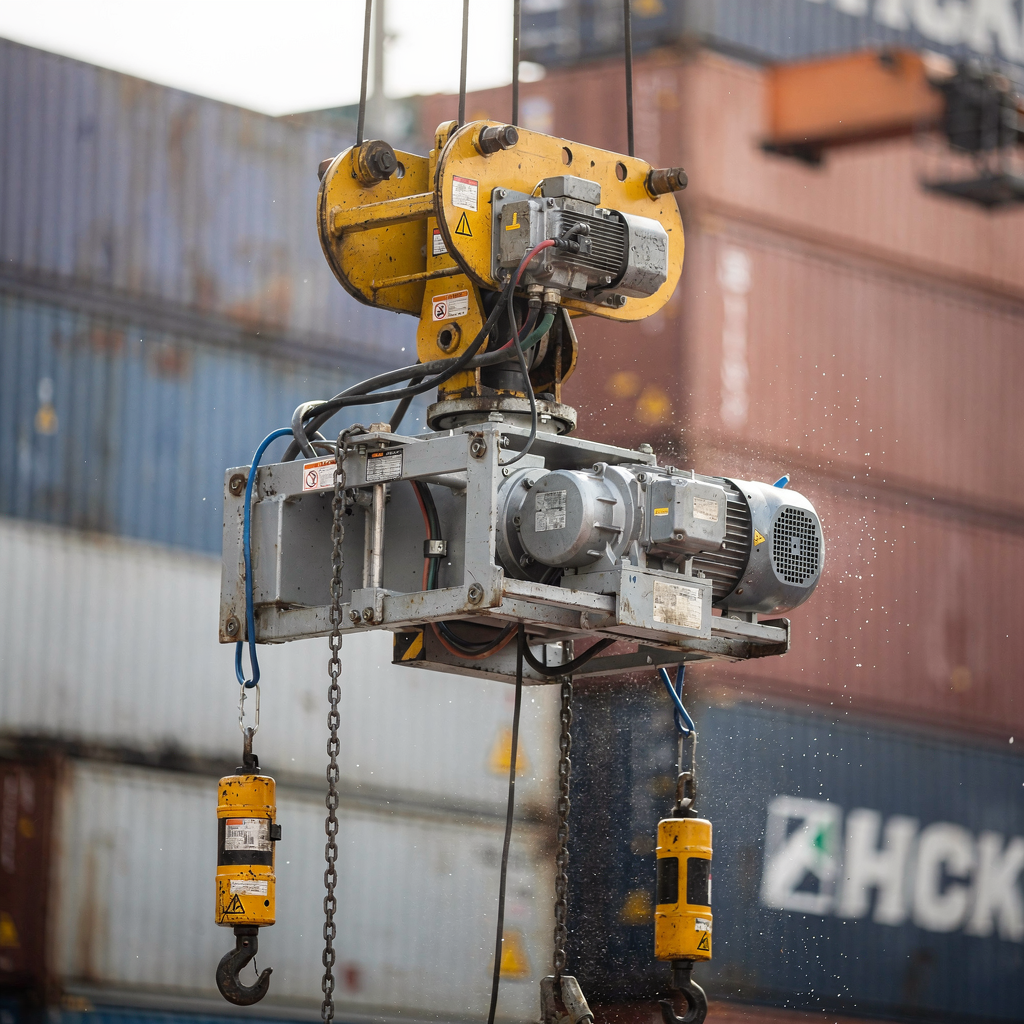
Choosing the right gantry crane and hoist specs makes handovers consistent. The hoist must deliver stable lift and precise positioning so the trolley can secure the load. Motor selection affects start-stop torque and smoothness. Gearbox choices influence maintenance cycles and TCO. Modern systems pair variable-frequency drives with regenerative braking. That pairing reduces peak power draw and extends component life.
Sensors play a central role. Position encoders on the hoist, rangefinders, and tilt sensors all contribute to a safe pick-up. A robust sensor suite reduces misalignment and speeds coupling. Crane manufacturers use redundant sensing to avoid single-point failures. Those design choices matter when servicing larger vessels where a single delay can create a chain of postponements. Gard guidance on freight containers highlights that as containerships grow, equipment standards must rise to match the increased demands at the berth (Gard guidance).
Maintenance planning impacts total-cost-of-ownership. Predictive housekeeping, for example, schedules component replacements before failures. That approach lowers emergency repairs and keeps cranes available. Operators can use telemetry to monitor motor currents, gearbox temperatures, and hoist cable wear. Then they schedule interventions when metrics indicate rising risk. For further reading on predictive maintenance and component lifecycle planning see our work on predictive housekeeping for container terminals predictive housekeeping.
Component choice also affects compatibility with automation. Controls must expose APIs so remote systems and robots can command precise moves. A well-integrated gantry crane allows decouple of manual tasks and the introduction of automated container workflows without hardware changes. In procurement, compare modular designs, support agreements, and spare part availability. These factors determine how quickly a new capability can be deployed and how robust the crane’s day-to-day operation will remain under heavier loads.
Drowning in a full terminal with replans, exceptions and last-minute changes?
Discover what AI-driven planning can do for your terminal
technology for remote control of automated container movements to ship and shore
Remote platforms connect human supervisors with automated cranes and trolleys. They provide live telemetry, camera feeds, and control overlays. Operators can assign tasks, override decisions, and monitor safety zones. Real-time data exchange matters. Low-latency links allow AI decision layers to schedule tasks and the execution layer to act confidently. That combination reduces human workload and lowers the chance of operator fatigue causing an error.
AI-driven decision support optimizes task sequencing. Agents predict future constraints, then allocate moves to balance productivity and rehandle risk. For example, AI can align a crane’s work sequence with the stowage plan to protect stability and minimize shifters. It can also recommend when to pause ship-side work to avoid stacking conflicts ashore. Experts note that synchronization of portal trolley movements with cranes is “a linchpin in achieving high throughput rates” and that terminals must leverage automation and analytics to meet trade demands (expert quote).
Safety gains follow from better visibility and fewer manual tasks near moving equipment. Remote supervision reduces exposure to hazards that accompany manned vehicles on the quay. Systems detect obstacles and halt a move autonomously. They also log actions for audit and training. That transparency helps operators meet regulatory expectations and supports explainability for AI decisions during audits such as those required under the EU AI Act.
Finally, demand-forecast analytics align inbound flows to crane speed. When analytics predict a surge of boxes for certain bays, planners shift resources proactively. That coordination reduces peak congestion and keeps cranes busy without causing excessive reshuffles. For more on integrating AI with quay, yard, and gate functions, read about decentralized AI agents coordinating operations decentralized AI agents.
port operation at the shore for maximised throughput in deepsea terminals
Best practices tie shore systems into the crane-trolley loop. They start with clear KPIs that balance quay productivity and land-side congestion. They then adopt automation in measured phases: pilot, expand, scale. This staged approach limits disruption and delivers measurable ROI at each step. Terminals that follow this path report a 12–18% reduction in vessel turnaround time when coordination improves between crane cycles and horizontal transfer systems (turnaround impact).
To start, define a transformation plan that lists the required investment, timelines, and success metrics. Deploy pilots for electric mobile harbour trolleys and automated container tasks to test safety and gains. Use digital twins to simulate load mixes and peak windows. That testbed lets you explore trade-offs and choose the right automation levels without risking live operations. Loadmaster.ai’s approach of training RL agents in a sandbox mirrors this principle and helps terminals adopt AI that is cold-start ready and safe by design.
Next, integrate the TOS and telemetry so the execution layer receives accurate stowage plan data and slot availability. This integration prevents over-allocating bays and avoids unnecessary reshuffles. It also helps adapt to last-minute delays or changes in vessel plans. For guidance on integrating optimization layers, see our piece on TOS-aware AI integration integrating TOS with AI.
Finally, invest in training and change management. Operators must trust automated suggestions and still be able to intervene. Provide clear guardrails and audit logs so teams understand when and why the system makes choices. Over time, consistent execution produces stable productivity. That reliability pays back through fewer rehandles, shorter driving distances, and more consistent shift-to-shift performance.
FAQ
How does a portal trolley interact with a quay crane?
A portal trolley runs beneath the quay crane to receive and deliver boxes horizontally. The crane lifts and lowers the hoist while the trolley secures the box for transfer to or from a stack area.
What gains can improved coordination deliver?
Better synchronization can boost crane moves per hour by 15–20% and drop idle time significantly, sometimes from roughly 25% to below 10% (study). Those improvements shorten vessel calls and raise productivity at the berth.
Are electric trolleys ready for deepsea operations?
Yes, electric mobile harbour trolleys are proving ready in pilots and reduce emissions while improving control. They require charging infrastructure and integration work but often deliver lower running costs.
What role do sensors play in handover reliability?
Sensors on cranes and trolleys provide position feedback and obstacle detection, which reduces misalignments during coupling. Redundancy in sensing improves safety and reduces unexpected delays.
Can terminals automate without historical data?
Yes. Simulation-trained AI agents can learn policies in a digital twin without relying on historical logs. This approach avoids repeating past mistakes and delivers robust control from the first day.
How does berth planning affect horizontal transfers?
Good berth planning stages adjacent stack slots for high-frequency boxes and aligns arrival windows with available transfer capacity. That reduces travel distance and keeps cranes focused on unloading rather than clearing space.
Is remote supervision safe for automated moves?
Remote supervision can be very safe when combined with low-latency telemetry and automated obstacle detection. It reduces direct exposure of staff to moving equipment and provides audit trails for each action.
What maintenance changes when switching to electric and automated systems?
Electric systems typically have different wear patterns and more predictable service intervals. Predictive housekeeping and telemetry let operators schedule maintenance before failures occur, improving uptime.
Which analytics help match crane speed to incoming flows?
Demand-forecast analytics and AI-driven scheduling align inbound box volumes with crane cycles. These tools advise when to speed up or slow down quay work to minimize reshuffles and delay.
How should a terminal begin digital transformation?
Start with a pilot, define KPIs, and use a digital twin to validate automation changes. Then integrate TOS and telemetry, train staff, and scale successful pilots while monitoring productivity and delay metrics.
our products
 stowAI
 stackAI
 jobAI
jobAI
Innovates vessel planning. Faster rotation time of ships, increased flexibility towards shipping lines and customers.
Build the stack in the most efficient way. Increase moves per hour by reducing shifters and increase crane efficiency.
Get the most out of your equipment. Increase moves per hour by minimising waste and delays.
stowAI
Innovates vessel planning. Faster rotation time of ships, increased flexibility towards shipping lines and customers.
stackAI
Build the stack in the most efficient way. Increase moves per hour by reducing shifters and increase crane efficiency.
jobAI
Get the most out of your equipment. Increase moves per hour by minimising waste and delays.