
Integrate AI in the Terminal Operating System for Smart Port Automation
A Terminal Operating System is the software backbone that coordinates equipment, labour and yard space at a container hub. It schedules cranes, assigns trucks, and manages gates. The terminal operating system manages container movements and guides operator shifts. In busy ports a TOS must balance many trade-offs quickly. Therefore terminals need a smarter layer to plan ahead and adapt.
AI arrives as an optimisation layer that builds a digital twin for dynamic scenario testing. AI can simulate yard states, quay plans, and truck peaks. Then planners can test what-if options before committing to a plan. For example, integrating meteorological feeds lets a terminal adjust vessel schedules, crane assignments and gate windows in real time “By integrating meteorological data and AI-driven analytics…”. This kind of integration helps optimize berth use and improve decision-making.
When a TOS integrates an AI layer it enables earlier planning, better resource allocation and shorter vessel waits. Planners see predicted congestion, rehandles, and idle time in advance. Then the team reallocates yard blocks, cranes and trucks. The result reduces dwell time and raises port productivity. Loadmaster.ai uses reinforcement learning to spin up a digital twin and train agents to act under real constraints. This approach does not need historical data to produce gains, and it helps operators move from reactive firefighting to proactive control (see our work on decentralized AI coordination).
AI also supports operator training and continuous improvement. For instance, an AI can recommend crane sequences that reduce shuttle runs and improve utilization. It can suggest stack placements that lower driving distance, and it can highlight when to automate repetitive tasks. In short, integrating AI with an existing TOS turns a management system into a predictive, policy-driven control plane that helps terminals optimize throughput, reduce inefficiency and enhance efficiency across the terminal ecosystem.
AI-Powered Real-Time Port Operations and Container Tracking to Boost Port Productivity
Live sensors create the data feed that powers AI-powered operations. Quay cranes, yard equipment and gate systems stream telemetry. Trucks and straddle carriers emit GPS traces. RFID readers mark container arrivals and exits. Consequently a terminal gets constant awareness of asset location and status. This real-time picture enables faster operator responses, better resource allocation and less idle time.
AI-driven container tracking uses GPS tags, RFID and computer vision to follow boxes across the yard. For example, computer vision on a crane can confirm container IDs and flag mis-matches at lift time. AI then matches that feed with the TOS plan to avoid container dwell at the gate. This reduces dwell time and improves container handling operations. Real-time analytics update ETAs and reduce uncertainty at the gate and in the yard. For more on equipment task allocation and live coordination see our write-up on real-time equipment task allocation.
Insights from live data drive faster decisions, cut dwell times and lift throughput. Studies report measurable gains in moves per hour after adding predictive layers and automation; ports that apply AI features often see double-digit improvements in specific KPIs in South Korean implementations. An AI-powered TOS updates crane sequences and yard picks instantly. It pushes new assignments to dispatchers and automated vehicles. The result is smoother container handling and fewer rehandles.
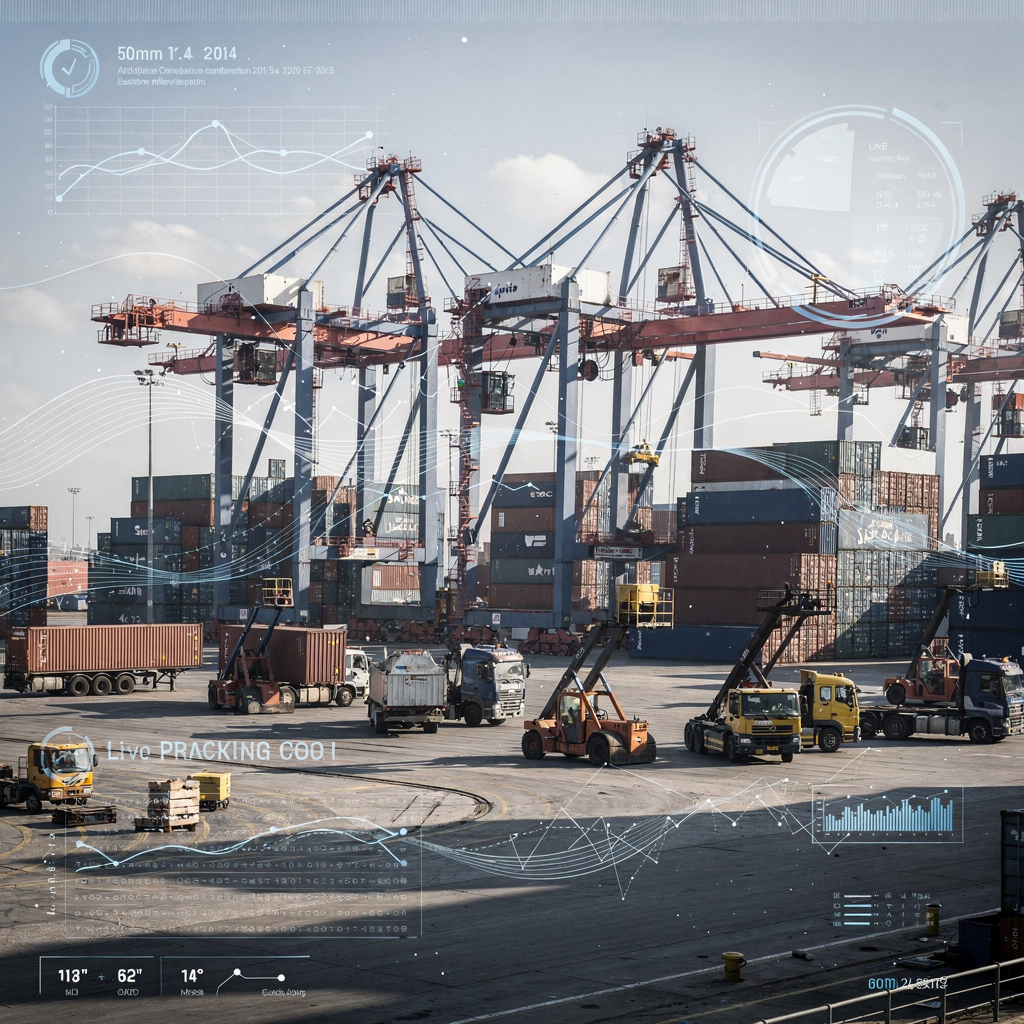
AI also supports stakeholder coordination via port community interfaces. A port community system can share ETAs with shipping lines and truckers. Thus gates open when trucks arrive and empty container moves drop. The combined effect streamlines container flows and helps optimize port operations. Finally, because these capabilities sit on top of the TOS, terminals can add automation gradually and preserve existing systems while they adopt advanced AI tools.
Drowning in a full terminal with replans, exceptions and last-minute changes?
Discover what AI-driven planning can do for your terminal
Machine Learning Stack Deployment in Maritime Container Terminals
Implementing a machine learning stack in a terminal requires clear stages. First comes data ingestion. Sensors, cranes, gate logs and the TOS feed streams into an ingestion layer. Next comes feature engineering. Teams transform raw signals into meaningful predictors such as truck arrival patterns and yard density. Then models train on those features. Finally inference runs live to inform work assignments and alerts. This pipeline supports predictive analytics and real-time decision-making at scale.
Architectural choices matter. Teams may choose cloud-based deployment for scalability and rapid updates. Alternatively they may opt for on-prem architectures to meet latency, sovereignty or cybersecurity constraints. Loadmaster.ai supports both approaches and delivers sandbox deployment so terminals can test policies before go-live. This reduces risk during deployment and accelerates measurable value.
Use cases include predictive maintenance and yard-stack pattern optimisation. Machine learning and RL agents can forecast equipment failures, schedule housekeeping, and propose reshuffles to balance space. Predictive maintenance reduces downtime and lowers operational costs. For example, terminals that adopt condition-based maintenance cut unexpected downtime and improve equipment availability. A trained model can flag a crane motor anomaly before it forces a stoppage, and the team can plan a service window with minimal impact on crane utilization.
Beyond maintenance, ML and reinforcement learning agents drive better allocation of RTGs, trucks and cranes. They can recommend stacking patterns that preserve future accessibility. The agents can also reduce driving distance and protect quay productivity during peaks. These improvements translate into higher moves per hour, lower idle time and clearer operational governance. For an in-depth look at yard optimization software see our piece on terminal operations yard optimization. Overall the ML stack delivers a mix of tactical wins and strategic, long-term gains in operational efficiency and resilience.
Berth Planning Optimisation and Measurable Port Call Efficiency in Container Terminal Operations
Berth planning drives vessel turnaround and berth occupancy. Accurate berth planning coordinates cranes, pilots and tugs. A poorly planned berth call increases vessel dwell and raises operational costs. Thus optimizing berth use matters for port efficiency and shipping line satisfaction.
AI performs what-if scenarios at scale to allocate quay space and cranes more effectively. It tests permutations of arrival sequences, crane allocations and yard constraints. Then it recommends the plan that best meets KPI weights such as minimal port call duration, high crane utilization and low yard congestion. This approach can reduce turnaround and improve berth productivity.
Metrics to track include berth productivity, crane utilization and port call duration. Terminals can measure moves per hour, average quay idle time and average turnaround time. For example, some South Korean ports that adopted AI-enhanced operations reported improvements in turnaround by up to 15% in published case studies. These gains also lift port productivity and reduce customer friction.
Berth planning ties directly into ETA sharing and port community collaboration. When a port community system communicates an accurate ETA, the terminal aligns gate windows, truck pickup slots and yard moves. This reduces container dwell and smooths container handling flows. For more on reducing vessel turnaround through TOS optimization, see our discussion on role of TOS optimization in reducing vessel turnaround time.
AI also helps balance competing goals. It can protect quay productivity during peak arrivals yet shift focus to yard flow when gate spikes occur. This multi-objective control reduces inefficiency and supports stakeholder trust. By automating routine berth decisions and surfacing trade-offs to planners, terminals gain measurable improvements in utilization and service levels.
Drowning in a full terminal with replans, exceptions and last-minute changes?
Discover what AI-driven planning can do for your terminal
Terminals Need to Integrate TOS: Addressing Data Standardisation and Cybersecurity in Maritime Ports
Terminals need common data models and open APIs to share accurate signals across the port community. Data standardisation simplifies integration between the TOS, port community system and shipping lines. Standard schemas reduce ambiguity and speed integrations. APIs give systems the hooks they need to exchange ETAs, equipment use metrics and gate transactions. A clear management system helps stakeholders act on the same facts.
Cybersecurity is critical. The International Association of Ports and Harbors provides guidelines to safeguard TOS infrastructure and related systems IAPH Cybersecurity Guidelines. Ports must harden networks, segment critical services and monitor access. Regular drills and incident response plans protect against breaches that could halt port operations. Terminals should encrypt telemetry and maintain audit trails for regulatory and governance needs.
Skills and training matter as well. There is a skills gap for modern AI and cyber-resilience roles. Terminals should invest in upskilling planners and operators so staff can work with advanced AI tools and understand model outputs. Loadmaster.ai partners with terminals to deploy agents and to train teams on operational guardrails. This practice ensures operators can interpret recommendations and apply constraints safely.
Best practices include starting with small, measurable pilots, enforcing secure APIs, and adopting common data standards. Also implement sandbox testing with live-like scenarios before connecting to existing tos in production. That way terminals can integrate new capabilities seamlessly and limit risk. Finally, incorporate predictive analytics into workflows to reduce the surprise of breakdowns and to improve resource allocation across the terminal ecosystem.
Terminal Operating AI Layers for a Smarter Port and Automation of Port Productivity
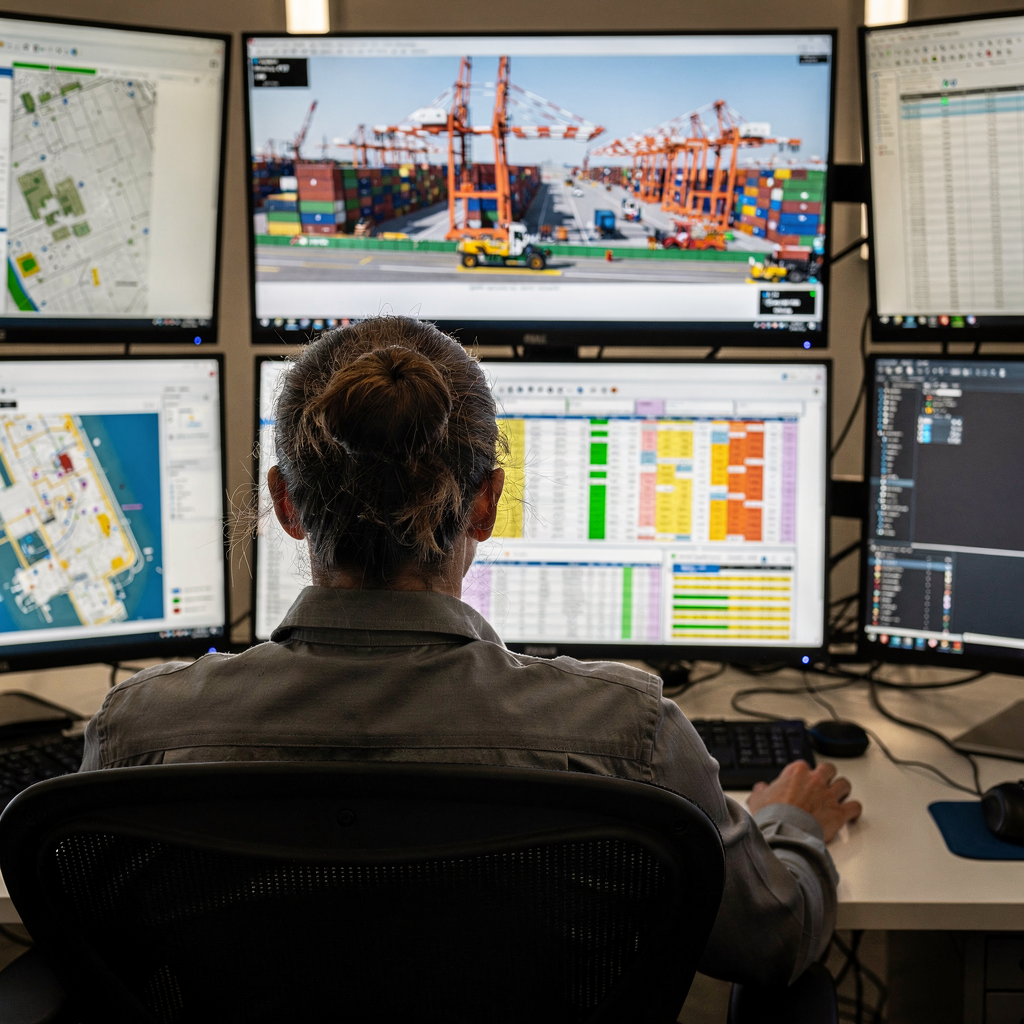
The vision of TOS 2.0 is a terminal operating system with embedded AI layers that automate end-to-end flows. TOS 2.0 combines digital twins, ai models and closed-loop controllers to coordinate quay, yard and gate. It aims to automate routine decisions while keeping humans in the loop for exceptions. This smarter port approach supports autonomous cranes, AGVs and robotic stacking.
Steps toward full automation include phased trials of autonomous cranes, automated guided vehicles and robotic stacking. Terminals often start with assisted modes, then move to higher autonomy as confidence grows. Reinforcement learning agents can train in a sandbox then transfer policies into production, minimizing risk. Loadmaster.ai uses this method to deliver cold-start ready agents that generate experience in simulation and then refine online.
Market signals support continued investment. The TOS market is projected to reach about $867.1 million by 2033 at a CAGR of 5.5% market research. That growth reflects demand for cloud-based solutions and advanced automation. As terminals integrate AI, they will leverage blockchain for secure port call records and standards for streamlined container handovers.
Future trends include tighter integration with supply chain partners and more use of IoT sensors to collect high-granularity signals. Terminals will optimize port operations using predictive analytics and dynamic slotting to adjust to demand. The outcome will be measurable: fewer rehandles, improved crane utilization, shorter turnaround and lower operational costs. Ultimately TOS that integrates advanced AI will help ports scale throughput while maintaining compliance and resilience across maritime operations.
FAQ
What is a Terminal Operating System (TOS)?
A Terminal Operating System is the core software that manages quay cranes, yard stacks and gate movements. It schedules resources and records container movements in real time so teams can coordinate operations.
How does AI improve berth planning?
AI runs what-if scenarios and recommends crane allocations and arrival sequences. This reduces berth occupancy and can cut turnaround by measurable percentages when implemented correctly.
Can AI work with existing TOS installations?
Yes. Many AI tools integrate via open APIs and EDI with existing tos. This lets terminals adopt advanced features without ripping out their management system.
Do terminals need historical data for AI to work?
Not always. Reinforcement learning can train agents in a digital twin and generate experience without relying on historical data. This cold-start approach lets terminals get value quickly.
What cybersecurity measures should ports take?
Ports should adopt segmentation, encryption and regular audits, and follow IAPH guidelines for robust protection. They must also maintain incident response plans to limit disruption.
How does container tracking reduce dwell time?
Container tracking gives live visibility of location and status, enabling faster decisions and fewer search moves. Coordinated gates and ETAs reduce container dwell and speed truck cycles.
Are cloud deployments better than on-prem for terminals?
Both have pros and cons. Cloud offers scalability and quick updates, while on-prem can meet latency and sovereignty requirements. Terminals should choose based on security and operational needs.
What KPIs should terminals monitor after AI deployment?
Key metrics include moves per hour, crane utilization, idle time, turnaround time and container dwell. Monitoring these KPIs shows where AI improves productivity.
How do reinforcement learning agents differ from traditional machine learning?
Reinforcement learning searches for policies by simulating decisions, while traditional models often imitate past actions. RL can surpass historical performance by exploring new strategies safely in a simulator.
How can terminals start a smart port transformation?
Begin with pilot projects that target clear pain points such as yard congestion or berth planning. Use sandboxed digital twins, secure APIs and stakeholder engagement to scale successful pilots into production.
our products
 stowAI
 stackAI
 jobAI
jobAI
Innovates vessel planning. Faster rotation time of ships, increased flexibility towards shipping lines and customers.
Build the stack in the most efficient way. Increase moves per hour by reducing shifters and increase crane efficiency.
Get the most out of your equipment. Increase moves per hour by minimising waste and delays.
stowAI
Innovates vessel planning. Faster rotation time of ships, increased flexibility towards shipping lines and customers.
stackAI
Build the stack in the most efficient way. Increase moves per hour by reducing shifters and increase crane efficiency.
jobAI
Get the most out of your equipment. Increase moves per hour by minimising waste and delays.