
Container Terminal Basics
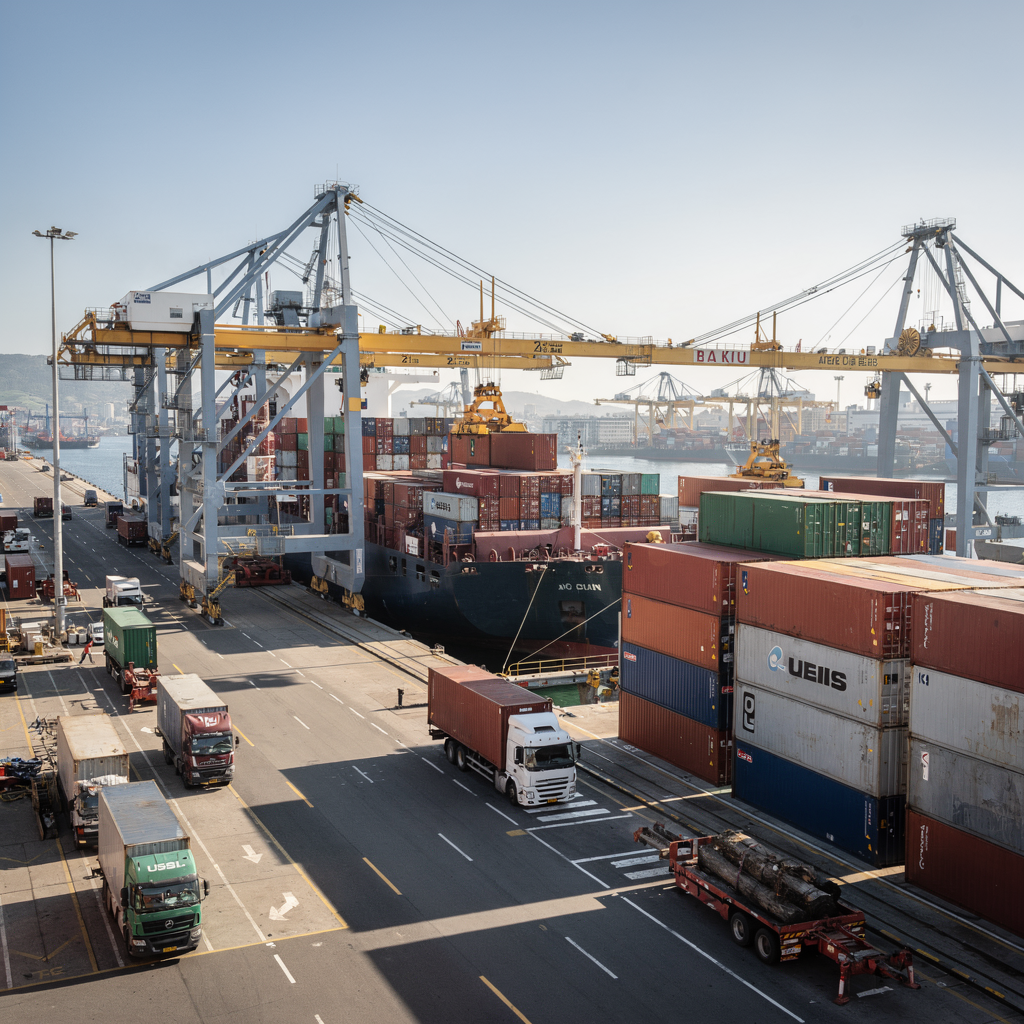
A container terminal is a specialised area within a port where shipping containers arrive, are stored, and then transferred between ships, trucks, and trains. For operators, the terminal acts as the junction between hinterland transport and the ocean leg of a voyage. First, quay cranes lift containers from CONTAINER ships. Then, yard equipment moves CONTAINER loads to storage blocks. Next, trucks or rail take CONTAINER cargo away. In practice, the terminal coordinates many actors. Therefore, clear procedures and robust infrastructure matter.
Key infrastructure includes quay cranes, yard equipment such as RTGs and straddle carriers, and designated storage areas for different CONTAINER types. Quay cranes do the heavy lifting. Yard cranes stack CONTAINERS into container stacks. Gate systems control truck flow. In addition, terminals maintain equipment to support safe cargo handling and to keep the yard productive.
Type of containers vary. For example, standard container units handle dry goods. Refrigerated units protect temperature-sensitive goods. Hazardous consignments go to isolation areas. Different container types require specific handling and placement. Thus, planners consider container size, weight, and cargo compatibility during a loading or unloading event.
Handling procedures at a modern container terminal follow clear steps. First, a booking and manifest enter the terminal system. Then, stevedores prepare the vessel and move designated CONTAINERS to the quay. Next, cranes load and unload in bay sequences. Finally, yard staff place containers in assigned slots. As a result, the terminal reduces delays and damage to other containers.
Transitioning from gate to quay relies on efficient slotting and task allocation. For readers who want deeper technical detail on yard strategies, see our article on terminal operations and yard optimization terminal operations yard optimization. Also, operators increasingly adopt AI for real-time equipment task allocation, which improves crane and vehicle use AI modules for equipment task allocation. Finally, when terminals simulate workflows, they reduce the firefighting that often plagues daily operations. Consequently, a well-equipped terminal supports safety of the ship, safety on board, and efficient container movement.
The Container Stowage Planning Problem
A stowage plan is the map that tells crew and terminal staff where each container sits on the vessel. The plan involves allocating slots according to weight, destination, and handling priorities. Therefore, a good stowage plan reduces rehandles and speeds the loading and unloading sequence. Planning for container placement begins well before the ship arrives at the port.
The container stowage planning problem spans many variables. For instance, planners consider CONTAINER weight distribution, the order of port calls, dangerous cargo segregation, and crane reachability. In practice, heavier containers go low and central. Meanwhile, containers bound for the first call sit on top or near the hatch. This sequencing helps avoid unnecessary moves and reduces yard congestion.
Also, the master bay plan problem requires balancing deck loads and below-deck stowage. The master needs accurate data. As one authority notes, “better information to the master is important” to improve ship stability and safety Stability Status – an overview. In addition, terminals must follow rules on hazardous cargo and container stacks to protect crew and cargo.
Stowage planning must consider the container stowage planning problem in terms of constraints and objectives. For example, planners avoid placing incompatible cargo next to dangerous cargo. They also aim to minimize moves during the call. Therefore, a plan that sequences load and unload tasks saves quay time and keeps the ship’s stability within limits.
Finally, advanced tools and software help automate the planning process. For readers interested in automated solutions, our overview on automated port operations and stowage planning software explains how modern systems improve executability automated stowage planning software. In short, when terminals integrate accurate container manifests, equipment schedules, and yard availability, they generate a stowage plan that reduces delays, protects cargo, and supports the safety of maritime movements.
Drowning in a full terminal with replans, exceptions and last-minute changes?
Discover what AI-driven planning can do for your terminal
Weight Distribution and Container Ship Stowage
Weight distribution drives ship stability. Proper placement of containers helps maintain the centre of gravity and metacentric height. Therefore, planners allocate weight to keep the ship upright and responsive. The aim is to maintain stability and safety for the entire voyage.
Container ship stowage follows clear rules. First, place heavier containers low and near the centreline. Second, balance weight longitudinally to control trim. Third, ensure transverse balance to avoid listing. These rules protect the ship during rough seas and reduce the risk of container loss. In addition, stowage planners monitor stability constraints when they adjust the loading plan.
The consequences of unbalanced loading can be severe. For example, stacking too many heavy units on one side raises the centre of gravity and can reduce metacentric height. That situation worsens in heavy weather. Indeed, investigations show that container loss incidents often link to stability failures Marine Transportation Safety Investigation Report. Therefore, planners test each vessel stowage plan against ship stability criteria before execution.
Consider balanced versus unbalanced loading. In a balanced load, heavier containers sit low and central. Consequently, roll and pitch stay within safe limits. In an unbalanced load, heavier containers may be stacked asymmetrically. As a result, the ship may list and cargo securing may fail. Thus, safe cargo handling during the loading sequence helps keep the stability of the vessel within design limits.
Ship’s stability requires constant checks during the loading process. Modern stowage software evaluates centre of gravity, trim, and stress across the hull. In practice, combining those tools with human oversight avoids critical errors. For deeper reading on container size, stack limits, and gigantism pressures, see research on gigantism in container shipping, which explains new constraints for planners Gigantism in container shipping.
Safety and Efficiency in Effective Container Stowage
Effective stowage links safety and efficiency. A clever plan reduces time in port and lowers exposure to congestion risks. For example, optimized stowage can reduce loading and unloading times by up to 15%, which shortens vessel turnaround and reduces queuing at the berth Review of maritime transport 2024. Therefore, both safety and productivity improve when terminals plan well.
Stacking height and lashing requirements create trade-offs. Higher stacks increase capacity, yet they raise the centre of gravity. Thus, safety and efficiency must balance. In particular, efficient stowage keeps stacks within allowable limits and applies proper cargo securing. As a result, terminals minimise the chance of container loss during heavy weather.
Statistics reinforce the point. Safety compliance rates and focused stowage rules have reduced cargo-related accidents by roughly 20% in recent years CARGOSAFE REPORT. Moreover, safety audits show that accurate container documentation and clear handling procedures cut damage to other containers and lower rehandles. Consequently, terminals that invest in planning reap safety gains.
Efficient stowage also protects the crew and cargo. Good stowage places dangerous cargo away from general stacks and gives stevedores clear access. The loading plan must flag hazardous consignments early. In addition, communication between ship and shore ensures that the vessel stowage plan meets stability constraints and regulatory rules. Therefore, a well-executed plan supports the safety of the ship and cargo safety.
Finally, modern approaches blend software and policy. For instance, AI-driven slotting and yard control reduce unnecessary shifters and driving distance. Companies like ours use reinforcement learning to balance quay productivity and yard congestion so that efficient stowage and cargo safety improve together. See work on decentralized AI agents coordinating quay, yard, and gate operations for more on that integration decentralized AI agents.
Drowning in a full terminal with replans, exceptions and last-minute changes?
Discover what AI-driven planning can do for your terminal
Creating a Stowage Plan for Container Ships
Creating a stowage plan follows a step-by-step process. First, gather accurate container manifests and weight declarations. Then, check the ship’s loading guidelines and stability constraints. Next, sequence containers by discharge port and crane accessibility. Finally, validate the plan with the vessel’s officers and terminal staff, then execute.
The planning process begins with data inputs. Planners need container weight, container dimensions, destination, and dangerous cargo flags. In addition, they use yard availability and quay crane schedules. After that, software modules test constraints such as load limits, lashing plans, and ship stability. The plan involves trade-offs across objectives. Therefore, modern stowage tools run simulations to find executable solutions.
Stowage plan tools include modules for slot allocation, bay sequencing, and constraint checking. They accept inputs from terminal operating systems and provide outputs for the crane operators. For more on how software links to execution, read about role of TOS optimization in reducing vessel turnaround time TOS optimization. Also, planners who use digital twins can trial scenarios before committing to a final plan.
Best practices include early identification of heavier containers, explicit slots for refrigerated units, and clear labelling of dangerous cargo. A vessel stowage plan should also minimise rehandles. For that reason, many terminals adopt dynamic slotting and yard algorithms to balance short-term needs with long-term yard flow dynamic slotting. In short, the efficiency of the stowage plan depends on accurate container data and well-tested constraint checks.
Lastly, human oversight remains essential. Stowage planners review automated proposals, adjust for operational quirks, and confirm the master bay plan problem is solved. Thus, combining software with experienced planners produces a good stowage outcome that ensures ship’s stability, keeps the stability of the vessel, and reduces on-the-ground friction during the call.
Cargo Handling and Cargo Containers Management
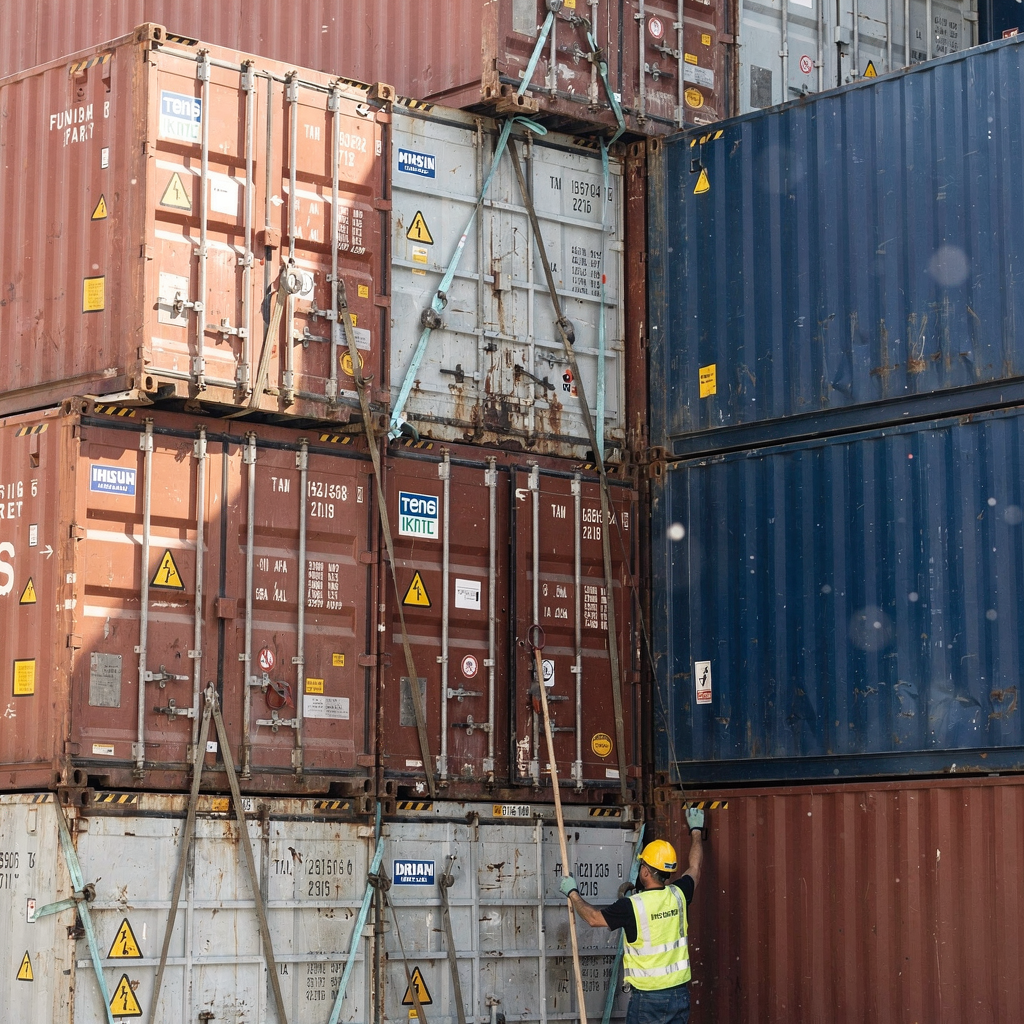
Safe cargo handling protects people and property. Terminal teams follow clear rigging and lifting rules when they load and unload containers. Stevedores secure each container before lifting. Then, crane drivers and yard crews work in coordinated steps to move the container to its assigned spot. As a result, the risk of damage to other containers falls.
A quality container stowage plan supports terminal operations by reducing rehandles and preventing congestion. Good stowage positions containers so that cranes can operate efficiently. In addition, it directs yard crews to place cargo containers where future moves are easiest. Consequently, efficient container placement cuts driving distance and lowers equipment wear.
Coordination between ship planners, terminal staff, and stevedores matters. For example, stowage planners issue a vessel stowage plan that includes lift sequences and timing. Then, yard teams prepare slots and confirm gate paperwork. Meanwhile, dispatchers track equipment and make on-the-day adjustments. This three-way coordination keeps operations smooth and reduces delays during loading and unloading.
Moreover, handling and stowage must follow segregation and securing rules. Planners must flag dangerous cargo and ensure it never sits atop incompatible consignments. Also, containers with high centre-of-gravity need special attention when placed in container stacks. These steps protect crew and cargo on a vessel and maintain ship’s stability through the voyage.
Practical measures such as predictive housekeeping and real-time yard density monitoring support safe cargo flow. For terminals seeking to lower congestion and rehandles, AI-driven approaches offer measurable gains. Our StackAI and StowAI systems focus on optimizing container placement and preserving future options, thereby reducing unnecessary moves and improving cargo securing. In effect, efficient stowage reduces equipment idle time and improves overall cargo safety.
FAQ
What is a stowage plan?
A stowage plan allocates specific slots for each container on the vessel. It shows where to place containers to ensure safety, minimize rehandles, and sequence discharge at each port call.
Why does weight distribution matter for container ships?
Weight distribution keeps the centre of gravity in safe limits. Proper distribution prevents list and reduces stress on the hull, which helps maintain ship stability and safety of the ship during the voyage.
How does a terminal reduce rehandles?
Terminals reduce rehandles by sequencing containers for discharge and choosing efficient container placement in the yard. In addition, dynamic slotting and AI-driven planning help match quay sequencing with yard slots to avoid extra moves.
What role do quay cranes play in stowage execution?
Quay cranes lift containers between ship and shore and follow the loading plan sequence. They require clear bay sequencing and stable supply of containers at the quay to keep moves per hour high.
How are dangerous cargoes handled in a stowage plan?
Dangerous cargo receives special slots away from incompatible goods and often sits in designated holds or on deck where regulations allow. Planners flag such cargo early so handling teams and the master can ensure safe cargo handling and segregation.
Can software solve the container stowage planning problem?
Software helps by checking constraints, simulating plans, and producing executable sequences. However, human oversight remains necessary to resolve on-the-day issues and confirm the master bay plan problem is solved.
What is a vessel stowage plan check?
A check verifies weight distribution, lashing requirements, and discharge order. It validates that the plan maintains ship’s stability and meets regulatory and safety standards before loading starts.
How do terminals manage yard congestion?
Terminals manage congestion through slotting, predictive housekeeping, and equipment scheduling. Moreover, AI can balance quay productivity against yard density to avoid bottlenecks and keep operations steady.
What information must shippers provide for an accurate stowage plan?
Shippers must provide weight declarations, container size, hazardous cargo flags, and final destinations. Accurate container data helps planners optimize placement and ensure safety on board.
How does Loadmaster.ai help improve stowage planning?
Loadmaster.ai uses reinforcement learning agents to optimize quay sequencing, yard placement, and dispatcher execution. The approach reduces rehandles, shortens driving distances, and improves consistency across shifts while keeping safety and efficiency aligned.
our products
 stowAI
 stackAI
 jobAI
jobAI
Innovates vessel planning. Faster rotation time of ships, increased flexibility towards shipping lines and customers.
Build the stack in the most efficient way. Increase moves per hour by reducing shifters and increase crane efficiency.
Get the most out of your equipment. Increase moves per hour by minimising waste and delays.
stowAI
Innovates vessel planning. Faster rotation time of ships, increased flexibility towards shipping lines and customers.
stackAI
Build the stack in the most efficient way. Increase moves per hour by reducing shifters and increase crane efficiency.
jobAI
Get the most out of your equipment. Increase moves per hour by minimising waste and delays.