
ai in port operations: a maritime optimization overview
AI is transforming how ports plan capacity and react to change. Scenario-based capacity optimisation uses AI to model multiple futures. It then helps port planners choose options that improve outcomes. This approach contrasts with static plans that freeze resource allocation weeks or months in advance. Instead, AI adapts continuously. It learns from vessel arrivals and yard states, and it adjusts schedules to reduce idle time and conflict.
Key benefits are measurable. For example, AI-driven berth scheduling can deliver 20–30% gains in berth utilization when implemented across terminals, and AI-enabled capacity planning supports 15–25% throughput increases for terminals that optimize their workflows (PDF) AI-Enhanced Smart Maritime Logistics. At the same time, ports report 10–18% cost reductions through fewer delays and leaner staffing models Artificial Intelligence in Logistics Optimization with Sustainable Criteria. These figures show that optimizing operations can be both profitable and sustainable.
Core AI techniques power these results. Machine learning models spot patterns in historical data and sensor feeds. Computer vision inspects container stacks and detects anomalies. Predictive analytics and forecasting help anticipate demand peaks and equipment faults. Together, these AI capabilities enable ports to move from firefighting to planned responses. For readers who want deeper technical approaches, studies on port digitalization provide practical guidance on data use and governance Port Digitalization with Open Data. Also, a strong simulation backbone lets planners test trade-offs without disrupting live terminal operations.
Transitioning to AI involves people, process, and technology. Port authorities and terminal operators must update rules, train staff, and validate AI outputs. For terminals that lack long historical records, reinforcement learning agents can still learn by simulating millions of operational sequences. Loadmaster.ai uses this method to create policy-driven agents that deliver consistent, measurable gains. This helps terminals improve overall efficiency while keeping human oversight in the loop. The power of AI becomes clearer when teams compare before-and-after KPI charts and operational case studies.
integrate real-time data with predictive forecast and machine learning
Ports run on data. Real-time data from sensors, automatic identification systems, gate scanners, and crane telemetry feed the planning layer continuously. These data sources include vessel arrivals, cargo manifests, weather feeds, and equipment status. AI ingests these feeds and cross-references them with historical patterns to form a live picture. This data fusion lets planners react quickly to unexpected events. For example, a sudden berth delay from a mechanical fault now shows up seconds after the fault occurs. The AI then proposes adjustments to quay schedules and yard moves.
Predictive forecast models are central to this capability. They estimate arrival windows, expected handling durations, and yard occupancy levels. High-quality forecasts let terminals prepare for demand surges and reduce congestion before it escalates. Practical systems can reach prediction accuracies above 85% for vessel arrival times and handling durations, which improves sequencing and reduces waiting time (PDF) AI-Enhanced Smart Maritime Logistics. These predictive gains matter because small errors cascade into large delays across the supply chain.
Machine learning refines capacity planning iteratively. Supervised models extract patterns from historical data, while reinforcement learning explores new policies in a simulated environment. Combining both keeps learning stable and practical. For terminals that struggle with dirty or sparse historical data, Loadmaster.ai’s approach trains RL agents in a digital twin, so the system starts strong without dependence on historical data. This avoids the trap where AI simply repeats past inefficiencies.
Integrate AI systems with existing TOS and telemetry via APIs and EDI. Doing so preserves legacy workflows while adding adaptive intelligence. This step reduces migration risk and speeds adoption. Also, integrating with weather feeds and berth allocation systems supports robust decision-making during storms and peak windows. Ports that adopt AI see benefits in reduced idle crane time and improved operator coordination. To learn how terminal agents coordinate quay, yard, and gate tasks, see our discussion on decentralized AI agents coordinating quay, yard, and gate operations in port operations decentralized AI agents.
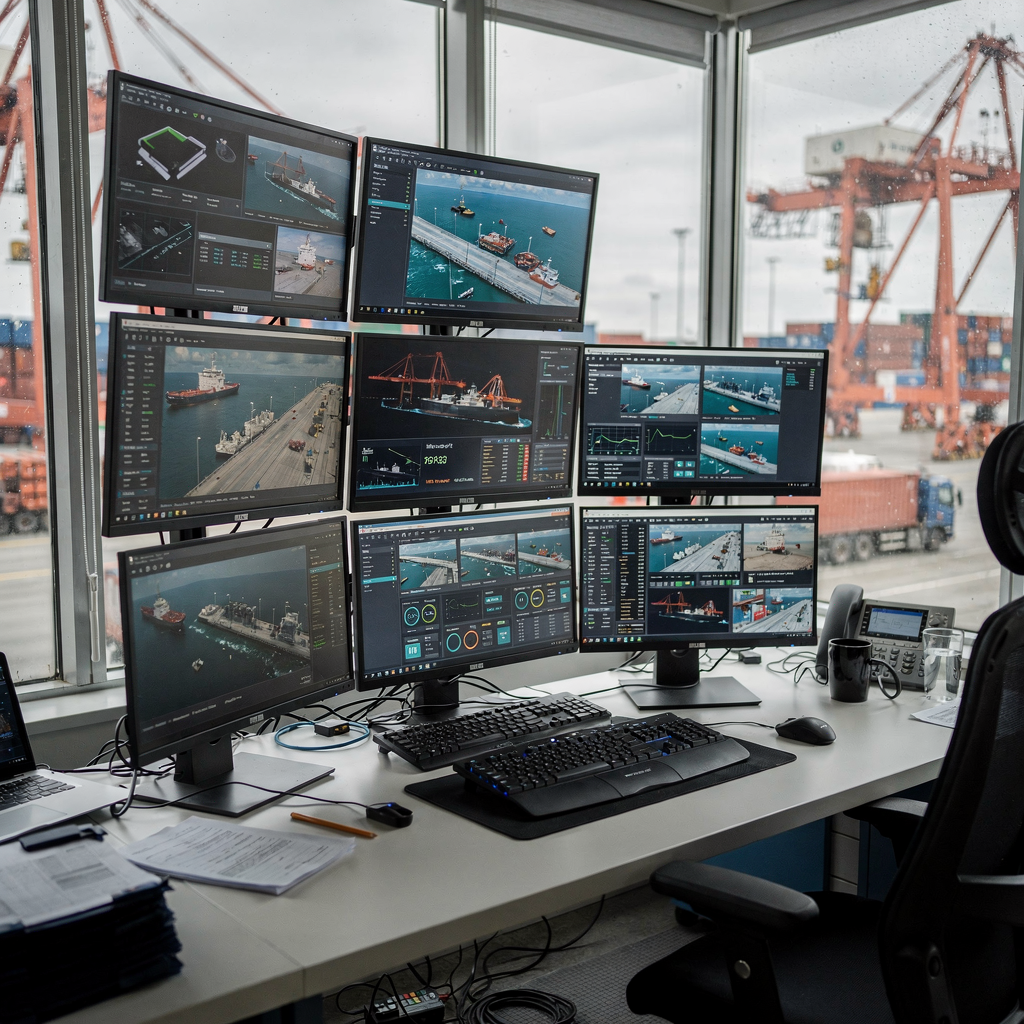
Drowning in a full terminal with replans, exceptions and last-minute changes?
Discover what AI-driven planning can do for your terminal
simulation and digital twin: building a smart port
Digital twin technology creates a virtual replica of a terminal. This digital twin mirrors physical assets, workflows, and constraints. It runs scenarios to evaluate trade-offs without interfering with live operations. For example, simulation can test what happens if a crane fails during a peak window. It can then suggest alternative allocations to keep throughput steady. Digital twin models also support what-if analysis for weather events, labor shortages, and gate surges.
Simulation helps quantify risk and guide investment. By running thousands of scenarios, planners see where congestion forms, and where small changes yield large gains. Digital twin outcomes let teams prioritize investments in quay capacity, yard layout, or equipment upgrades. Furthermore, Loadmaster.ai trains reinforcement learning agents inside the digital twin so policies are refined before they touch real equipment. This method lowers deployment risk and accelerates measurable improvements.
Scenario simulations can model equipment failures, storm delays, and demand spikes. They do this by varying input assumptions across multiple runs. The simulation output then drives decisions on shift patterns, temporary worker deployment, and berth sequencing. Simulation also helps tune KPIs; for example, a terminal can stress-test a policy that prioritizes quay productivity over yard congestion, and then adjust weights to meet operational goals.
Using digital twin and simulation, port operators can move from reactive to proactive. They gain the ability to forecast how a change in one area shifts load elsewhere. This supports better resource allocation and clearer communication with stakeholders such as shipping lines and port authorities. For teams seeking more about creating robust virtual replicas, see research on port digitalization and open data Port Digitalization with Open Data. Also, for deeper technical approaches to training agents in sandboxes, our piece on scalable AI engines for deepsea container port planning offers practical steps scalable AI engines.
ai-powered autonomous allocation to optimize throughput
AI-powered scheduling algorithms allocate berths, cranes, and trucks in real time. These algorithms consider vessel ETA windows, cargo priorities, and yard capacity. They then propose allocations that reduce idle moves and balance workloads. Autonomous allocation reduces the reliance on manual shifts, and it standardizes outcomes across shifts. This consistency helps terminals improve throughput without proportional CAPEX.
Autonomous systems run continuously. They re-evaluate plans when a situation changes. For instance, if a vessel is late, the autonomous scheduler can reslot cranes and reassign truck tasks to keep the quay moving. These capabilities lead to lower idle crane time and fewer rehandles. Studies report that AI-driven berth scheduling can lift berth utilization by up to 30%, which translates into measurable increases in moves per hour The impact of dynamic capabilities on shipping port performance.
Reinforcement learning agents excel at multi-objective optimization. They weigh trade-offs like crane productivity versus yard congestion. Loadmaster.ai’s closed-loop approach uses three specialized agents—StowAI, StackAI, and JobAI—to coordinate quay, yard, and gate moves. This reduces rehandles and evens workload across equipment. The agents learn policies that match terminal-specific KPI weights, and they adapt when conditions change. As a result, terminals can optimize their operations while keeping human oversight in place.
Autonomous allocation also improves predictability for the wider logistics chain. Shipping lines and inland haulers get clearer ETAs. This reduces dwell time at gates and cuts waiting queues. Terminals that adopt AI see smoother handoffs to feeder services and inland transport, which helps the broader supply chain. For those interested in how AI coordinates quay, yard, and gate tasks, our article on AI modules for real-time equipment task allocation in container ports explains practical integration patterns AI modules for real-time equipment task allocation.
Drowning in a full terminal with replans, exceptions and last-minute changes?
Discover what AI-driven planning can do for your terminal
automation in port operations: streamlining cargo and port equipment
Automation in port operations combines robotics, computer vision, and autonomous vehicles. Together, they speed cargo handling and improve safety. Computer vision inspects container IDs and stack integrity. It feeds data to AI for container tracking and anomaly detection. Robotic handlers and automated guided vehicles move containers with precise coordination. This reduces manual lifting and shortens job cycles.
Integration with port equipment is critical. Remote-controlled cranes, electric RTGs, and AGVs all need coherent tasking. AI assigns jobs to machines based on current location, battery level, and priority. This reduces deadhead travel and evens equipment workload. For example, optimized AGV charging schedules cut idle time and extend vehicle availability across shifts AGV charging schedules. As a result, terminals see shorter turnaround times and better labour utilisation.
Computer vision and IoT sensors provide rich sensor data that fuels AI models. These ai models process images and telemetry to detect damage, confirm picks, and verify placements. The output then updates the digital twin and the planning layer. Using this feedback loop, autonomous systems become more reliable. They reduce rehandles and lower the frequency of corrective interventions.
Automation also changes operator roles. Operators shift from manual control to supervision and exception handling. They monitor AI recommendations and approve adjustments when needed. This improves decision-making and maintains human accountability. Several ports that implemented automation report higher crane utilization and improved port throughput, which directly impacts terminal profitability and service reliability. For guidance on balancing automation with human workflows, see our analysis on terminal operations and yard optimization software solutions yard optimization software.
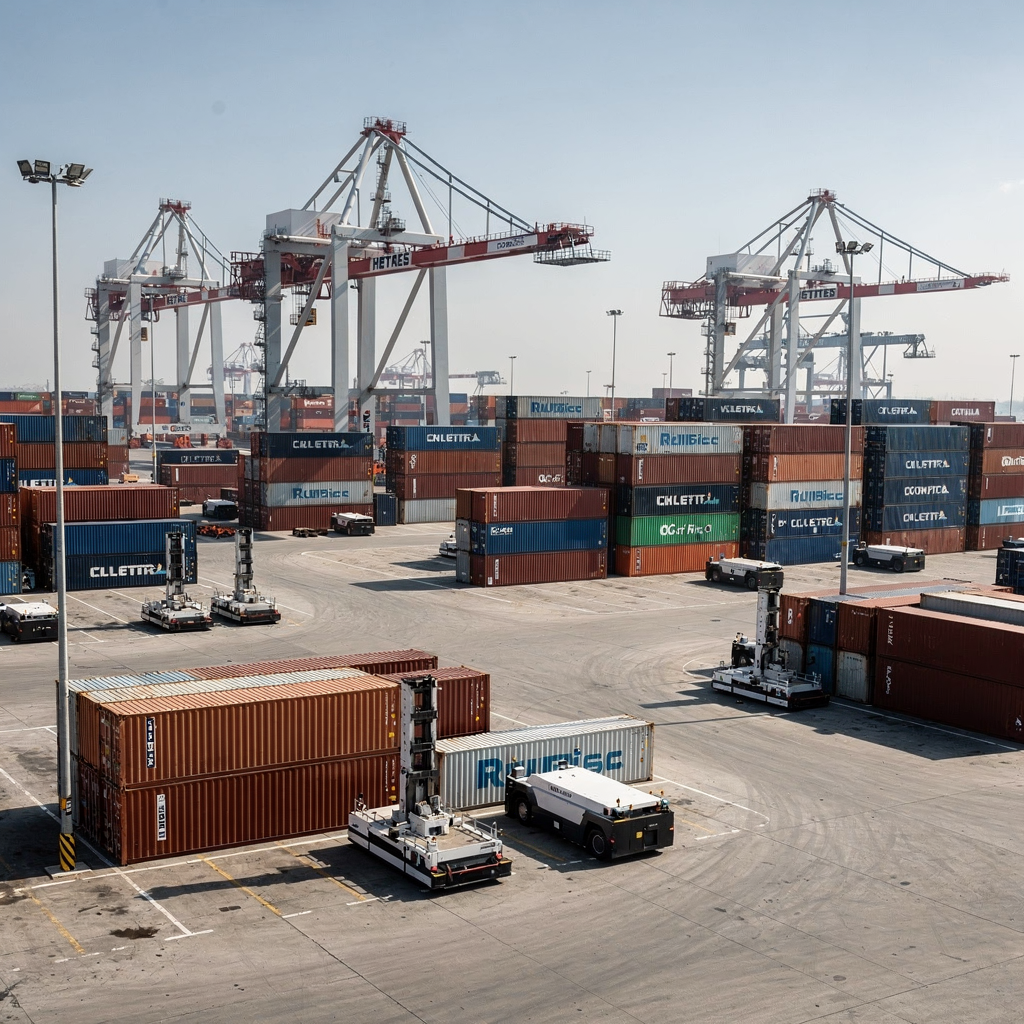
deploying ai for sustainable port operations: energy optimization systems, predictive maintenance, enhanced safety protocols
Deploying AI supports sustainability and resilience. Energy optimization systems manage shore power, lighting, and charging cycles to cut energy use and emissions. AI can schedule shore power to match vessel needs and align with low-carbon grid periods. This reduces greenhouse gas emissions and operating cost. For terminals pursuing sustainability goals, AI is a practical tool to reach compliance with environmental standards and to track progress over time.
Predictive maintenance prevents unexpected downtime. By analyzing equipment telemetry and vibration signals, AI detects wear patterns early. Predictive maintenance minimizes downtime and reduces costly emergency repairs. It also improves safety by keeping critical equipment in nominal condition. Multiple studies show that predictive maintenance yields reliability gains and lowers lifecycle costs when combined with good maintenance policies Artificial Intelligence in Logistics Optimization with Sustainable Criteria.
Enhanced safety protocols benefit from AI monitoring. Computer vision flags unsafe movements and areas where personnel are at risk. AI systems generate real-time alerts and propose corrective actions. These systems augment operator vigilance and help reduce accidents. At the same time, AI helps terminals plan shifts and breaks to reduce fatigue-related incidents, which supports both safety and productivity.
Putting these systems together builds long-term resilience. Energy optimization systems, predictive maintenance, and safety monitoring create a virtuous cycle: lower emissions, reduced downtime, and improved throughput. Ports that deploy AI see steady improvements in their environmental footprint and in their bottom line. For terminals that want to start small, consider piloting predictive maintenance on a single crane fleet and then scaling based on measured gains. If you need examples of policy-driven AI that works without vast historical data, Loadmaster.ai shows how RL agents train in a sandbox digital twin and then deploy with operational guardrails, delivering consistent results across shifts.
FAQ
What is scenario-based capacity optimisation for ports?
Scenario-based capacity optimisation uses AI and simulation to model possible futures and to choose resource plans that perform well across many contingencies. It lets terminals test allocations for berths, cranes, and yards before applying them in live operations.
How does AI improve berth utilization and throughput?
AI analyzes arrival patterns and handling times to schedule vessels and cranes more tightly. This reduces idle time and leads to higher berth utilization and increased throughput.
What data sources are necessary for accurate forecasts?
Useful sources include vessel schedules, cargo manifests, weather feeds, equipment telemetry, and gate scanner logs. Combining these with historical data improves forecast accuracy and supports predictive models.
Can AI systems work without extensive historical data?
Yes. Reinforcement learning agents can train in a digital twin, generating experience in simulation. This approach reduces dependence on historical data and avoids repeating past inefficiencies.
What is a digital twin and why is it useful?
A digital twin is a virtual replica of a terminal that mirrors assets and workflows. It allows teams to run scenario simulations safely, which supports proactive decision-making and risk mitigation.
How does automation affect port staff roles?
Automation shifts staff toward supervision, exception handling, and higher-level planning. Operators still set goals and validate changes, while AI handles routine scheduling and execution tasks.
What sustainability benefits come from deploying AI?
AI enables energy optimization systems for shore power and charging, reduces unnecessary travel, and supports predictive maintenance to avoid inefficient breakdowns. Together, these reduce greenhouse gas emissions and operational waste.
Are autonomous allocations safe to deploy?
When deployed with guardrails and human oversight, autonomous allocations are safe and reliable. They must integrate with existing TOS and include audit trails for governance.
How do ports measure the ROI of AI projects?
Terminals measure ROI via KPIs such as moves per hour, berth utilization, gate dwell, rehandles, and energy consumption. Pilots and staged rollouts help quantify gains before full deployment.
How can my terminal start with AI?
Begin with a small pilot use case like predictive maintenance or AGV charging optimization. Then scale to quay and yard coordination once you validate performance. For practical examples of staged deployments and agent coordination, our articles on future-proofing port operations and scalable AI engines offer next steps future-proofing port operations and scalable AI engines.
our products
 stowAI
 stackAI
 jobAI
jobAI
Innovates vessel planning. Faster rotation time of ships, increased flexibility towards shipping lines and customers.
Build the stack in the most efficient way. Increase moves per hour by reducing shifters and increase crane efficiency.
Get the most out of your equipment. Increase moves per hour by minimising waste and delays.
stowAI
Innovates vessel planning. Faster rotation time of ships, increased flexibility towards shipping lines and customers.
stackAI
Build the stack in the most efficient way. Increase moves per hour by reducing shifters and increase crane efficiency.
jobAI
Get the most out of your equipment. Increase moves per hour by minimising waste and delays.