
applications of ai in smart port operations and port environments
Smart port concepts combine automation, sensors, and digital control to improve throughput, reduce cost, and support sustainability. First, AI adds a layer of continuous learning and decision-making that classical rule engines cannot provide. Also, smart port operations need to cope with vessel arrivals, yard congestion, weather changes, and equipment state. Therefore, AI helps by fusing these inputs and producing prioritized actions for planners and operators. For example, AI-driven queuing and scheduling can reduce CO₂ during congestion. A study found that port queuing systems can cut CO₂ emissions by about 15% during busy periods (Investigation of a port queuing system on CO2 emissions).
Second, real-time data feeds create actionable context. Vessel AIS, berth windows, weather forecasts, crane telemetry, and gate timelines form the raw inputs. AI systems combine them to predict delays and suggest corrective actions. In practice, managing the volume and speed of these feeds remains a major issue. As Vibylabs notes, “Managing large amounts of data, its volume, speed, variety, and accuracy, remains a major issue” (AI Knowledge Agents in Maritime Operations). So, ports that invest in real-time data pipelines see faster decision-making and fewer firefighting episodes for planners.
Third, there are early successes across Europe and Asia. Ports have trialled AI for berth planning, dynamic quay crane allocation, and gate scheduling. Also, container terminal pilots using reinforcement-learning agents have demonstrated stable performance gains with fewer rehandles and balanced workloads. Loadmaster.ai builds on that approach by training RL agents in a sandbox digital twin, which means terminals avoid the trap of copying historical mistakes. In addition, studies on AI-driven container relocation show handling times can drop by up to 20% (Research on artificial intelligence-driven container relocation). Finally, AI makes the smart port more resilient; when schedules slip, it reweights priorities and proposes executable sequences that respect safety and equipment constraints.
AI integration in port and terminal operations
Frameworks for AI integration must respect existing operations. First, a modular approach reduces risk. For example, AI modules can sit alongside the container terminal operating system (TOS) and SCADA, exchanging tasks via APIs or EDI. Then, terminals can trial AI planning in a sandbox before full deployment. Loadmaster.ai follows this path by offering TOS-agnostic integration and sandbox training in a digital twin. This approach helps terminals avoid relying on historical data that may encode past inefficiencies.
Second, managing data volume, velocity and variety matters. Ports ingest telemetry from cranes, AGVs, gate systems, and external feeds such as vessel ETA and customs manifests. Therefore, architects combine edge computing for low-latency control with cloud-native services for scalable training and analytics. Also, data pipelines implement validation, enrichment, and semantic mapping so AI models see consistent signals. For more on yard visibility and density, see real-time container terminal yard density monitoring and tools that support dynamic-slotting strategies real-time yard density monitoring and dynamic slotting.
Third, examples of successful integration exist. Terminals that integrated AI for crane split adjustment and AGV charging schedules reported smoother workflows and higher resource utilization. For instance, dynamic crane split adjustments reduce idle crane time and improve crane balance across shifts dynamic crane split adjustment. With integration, the operator keeps final control while AI suggests optimized plans. In addition, AI modules for real-time equipment task allocation can sync dispatch decisions with TOS priorities and reduce waiting time at gates AI modules for task allocation. Finally, a clear integration roadmap, strong data governance, and staged pilots help ports scale AI from a single block to full yard coverage.
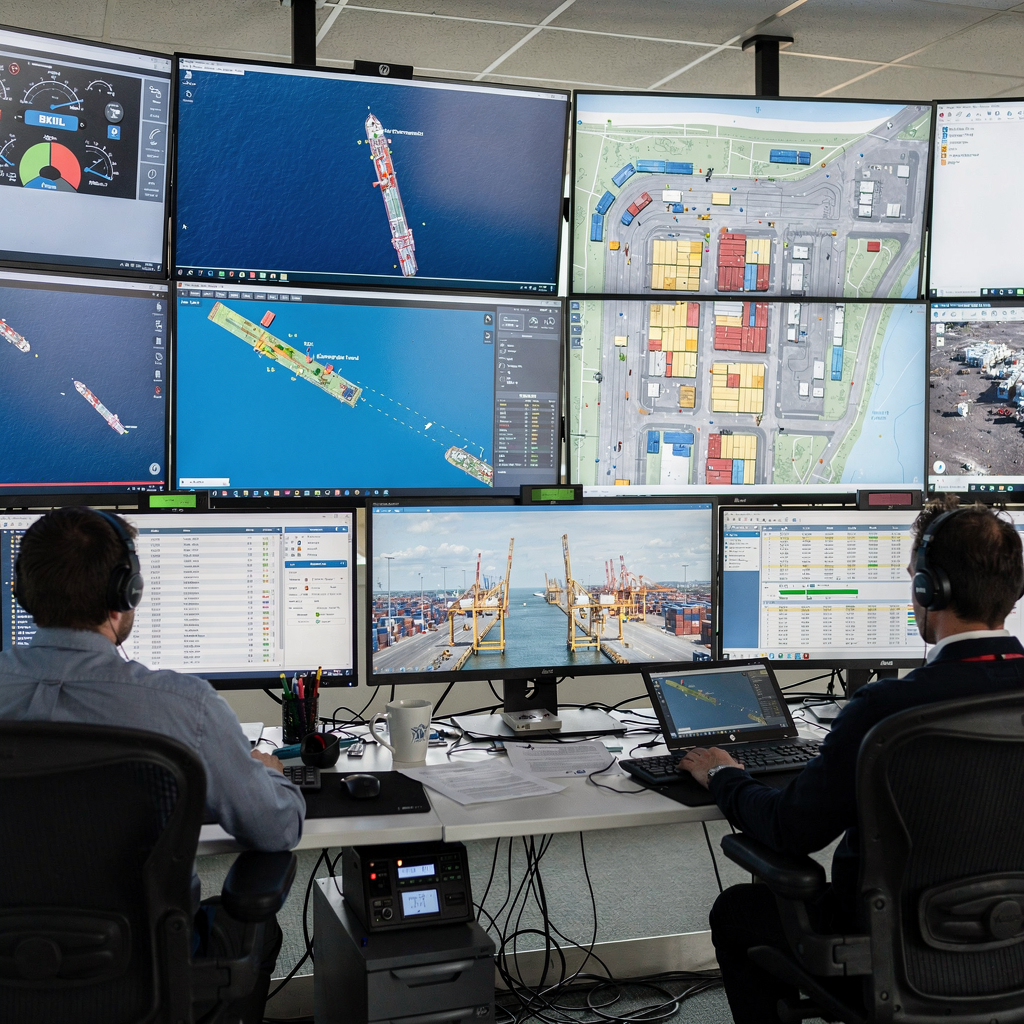
Drowning in a full terminal with replans, exceptions and last-minute changes?
Discover what AI-driven planning can do for your terminal
Predictive maintenance and optimization for crane and vessel operations
Predictive maintenance uses sensor streams and ML to foresee failures and schedule work before breakdowns occur. First, sensors on cranes, spreaders, and electrical systems stream vibration, temperature, current, and position data. Then, ML models detect anomalous patterns and trigger alerts or maintenance tasks. Predictive maintenance can reduce unplanned downtime and extend equipment life. Also, scheduling maintenance windows with optimization algorithms keeps throughput high. For example, an optimizer can shift minor maintenance to short slack periods between vessel calls so the quay stays productive.
Second, AI algorithms combine maintenance forecasts with operational constraints. A scheduling algorithm can propose maintenance during low-demand intervals, or split work to maintain at least one crane per berth online. Also, these algorithms can consider spare parts inventory and technician availability. Loadmaster.ai uses simulation-based training to test maintenance policies within the digital twin. This method lets planners evaluate the trade-offs between crane productivity and long-term reliability without risking live operations.
Third, the quantified gains are persuasive. Research and trials show properly applied predictive approaches lower downtime by measurable margins. For instance, terminals using sensor-driven predictive models often report extended Mean Time Between Failures and reduced corrective maintenance costs. In addition, fewer emergency repairs translate to steadier throughput and less overtime for operators. As a result, terminals recover capacity and maintain service levels even when vessel schedules compress. Finally, coordinated predictive maintenance across cranes and vessel service slots helps minimize disruptions and supports higher berth occupancy without sacrificing service quality.
application of ai in container handling and maritime logistics
AI tackles the Container Relocation Problem (CRP) and yard stacking with a mix of search, heuristics, and learned policies. First, AI planners seek sequences that minimize rehandles while preserving executability. For example, reinforcement learning agents can simulate millions of moves and learn policies that outperform historical rules. Research shows AI-driven approaches to the CRP can reduce container handling times by up to 20% (Research on artificial intelligence-driven container relocation). Also, these savings lower berth dwell and speed vessel turnaround.
Second, yard planning requires predicting hinterland demand and aligning stacking with truck and rail windows. AI uses predictive routing and load forecasting to place export and import stacks closer to their likely gate times. In this way, AI reduces driving distance, cuts empty moves, and balances yard density. For terminals that balance many KPI trade-offs, Loadmaster.ai’s StackAI and StowAI illustrate how closed-loop agents can protect future plans while maximizing crane productivity. Furthermore, these agents do not need historical data to start; they learn in a digital twin, which makes cold-start deployments realistic and safe.
Third, improving hinterland connectivity matters for the whole supply chain. Predictive routing helps trucking companies and rail operators plan movements, while the terminal adjusts slots and labor. So, container dwell time shortens and cargo handling becomes more predictable. For broader strategy and terminal-level optimizations, see holistic deepsea container port optimization explained holistic port optimization. Finally, AI can also support empty container repositioning, improving asset utilization for shipping companies and reducing unnecessary truck miles.
Drowning in a full terminal with replans, exceptions and last-minute changes?
Discover what AI-driven planning can do for your terminal
Automation and AI technologies in container terminal operations
Automation at the quay and yard includes AGVs, automated cranes, and robotics. First, autonomous guided vehicles and automated container handlers execute repetitive moves with precision. Then, AI coordinates them for efficient resource pooling and collision-free routing. AI technologies also handle dynamic berth allocation, quay crane scheduling, and resource pooling. For instance, dynamic berth algorithms match berth windows to vessel priorities and expected handling times. This reduces wait time and supports smoother vessel operations.
Second, architecture choices determine scalability. Cloud-native training paired with edge compute for real-time control helps ports scale AI across a busy terminal. Also, digital twin simulations enable safe testing of automated container sequences before live rollout. Loadmaster.ai leverages a digital twin to train RL agents that coordinate quay, yard, and gate moves. That design supports both pilot deployments and larger rollouts without harming live operations. For more on scaling automation and TOS interactions, see the role of TOS optimization in reducing turnaround time TOS optimization.
Third, the mix of automation and AI yields operational benefits. Automated equipment reduces labor variability. Meanwhile, AI planners keep equipment busy and reduce deadhead miles. Also, dynamic scheduling algorithms optimize crane splits and AGV charging to match demand peaks. For example, optimized AGV charging schedules reduce idle fleet time and ensure buffer capacity during vessel peaks AGV charging schedules. Finally, combining automation with adaptive AI enables a next-generation port that can respond to changing vessel mixes, seasonal peaks, and disruptions with minimal manual firefighting.
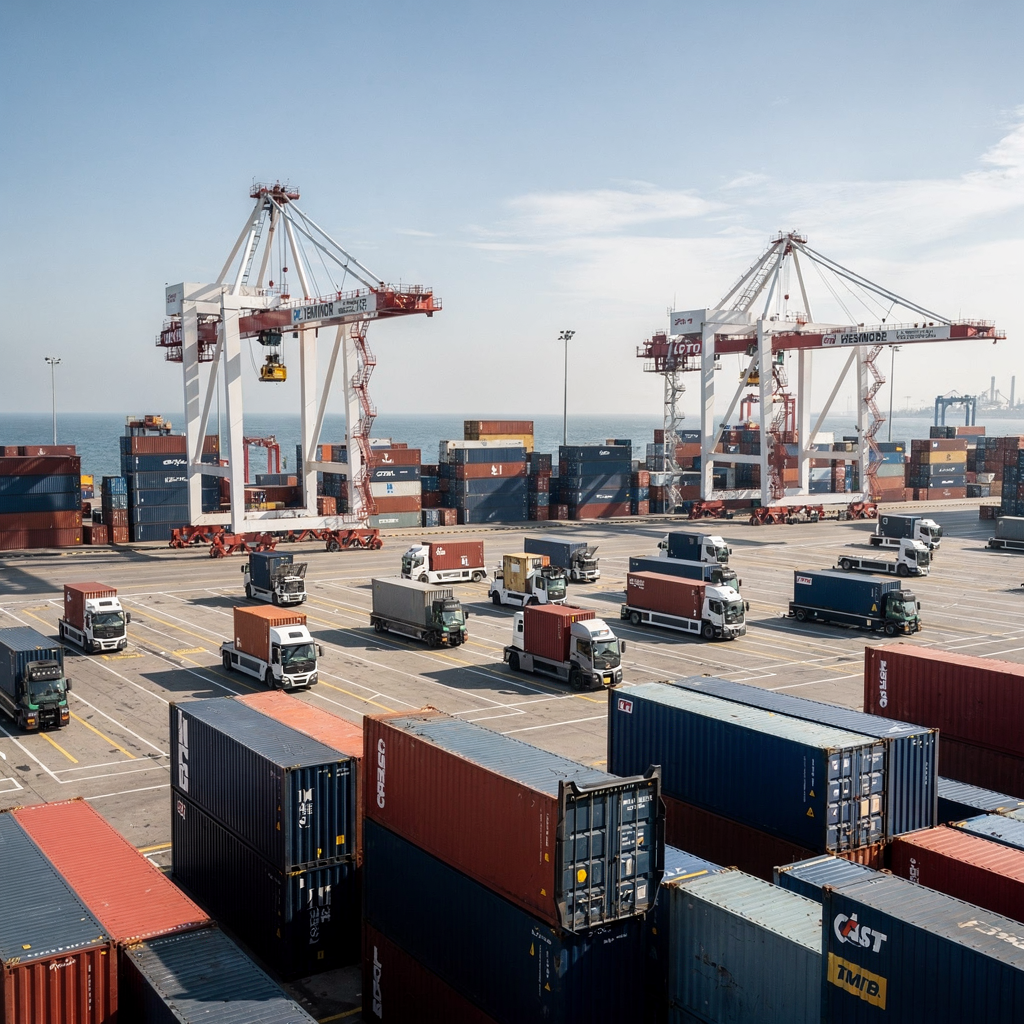
benefits of ai for port operations: use ai for future maritime and logistics
AI delivers measurable operational efficiency, environmental, and strategic gains for ports. First, operational efficiency improves vessel turnaround, increases throughput, and lowers cost per move. For instance, AI-driven container relocation has shown up to 20% reductions in handling time, which translates into faster vessel berthing and departure (container relocation study). Also, closed-loop AI agents help terminals reach more consistent performance across shifts, reducing dependence on individual planner experience.
Second, environmental benefits are real. AI-enabled queuing and scheduling reduce idle time and unnecessary engine-on time for vessels, lowering emissions. One analysis found port queuing optimization can reduce CO₂ by about 15% during congestion (CO2 reduction study). Thus, AI supports sustainable port goals and helps terminals meet regulatory requirements. In addition, reduced container dwell time and optimized hinterland flows cut truck miles and lead to reduced emissions across the supply chain.
Third, the strategic outlook for ports is clear. Ports must adopt AI to stay competitive and sustainable in global port networks. For example, funding digital transformation and cultivating “ship+AI” talent ensures the maritime industry keeps pace with technological change (AI and shipbuilding talent). Also, implementation of AI through sandboxed digital twins reduces rollout risk and accelerates benefits. Loadmaster.ai shows how advanced AI agents can be cold-start ready and scale from pilot blocks to whole yards while safeguarding operational governance. Finally, as ports modernize, they will become ports of the future that combine automation, predictive maintenance, and data-driven optimization to secure resilient, lower-cost, and lower-emission maritime and logistics services.
FAQ
What is the role of AI in smart port operations?
AI helps synthesize vessel schedules, equipment telemetry, and weather data to create executable plans. It also learns from simulations and live feedback to improve recommendations and reduce manual firefighting.
How does AI reduce container handling times?
AI optimizes stacking, sequencing, and relocation moves to minimize rehandles and driving distances. Research shows AI approaches to container relocation can reduce handling times by up to 20% (container relocation study).
Can AI work with existing TOS and SCADA systems?
Yes. AI modules can integrate via APIs and EDI without replacing the TOS. For example, many deployments use TOS-agnostic connectors and test changes in a digital twin before go-live.
What environmental benefits does AI provide at ports?
AI reduces queuing time, idle engine running, and unnecessary truck miles, which lowers CO₂ emissions. Studies indicate queuing optimization can cut emissions by roughly 15% during congested periods (CO2 reduction study).
How does predictive maintenance work for cranes?
Sensors stream vibration, temperature, and electrical metrics to ML models that detect anomalies. Then, planners schedule repairs proactively to avoid breakdowns and preserve throughput.
What is a digital twin and why is it useful?
A digital twin models the terminal layout, equipment, and workflows in a simulated environment. It lets AI agents learn policies safely and lets operators test scenarios before applying changes to live operations.
How do autonomous vehicles fit into a modern terminal?
Autonomous guided vehicles and automated cranes execute moves with high precision. AI coordinates them to avoid conflicts, optimize routes, and keep equipment utilization high.
Is historical data necessary for AI to start delivering value?
Not always. Reinforcement learning and simulation-trained agents can generate experience in a digital twin, which allows a cold-start deployment. This avoids teaching the AI past mistakes and accelerates useful recommendations.
How can ports measure benefits after AI deployment?
Ports track KPIs such as moves per hour, rehandles, crane utilization, average dwell, and CO₂ emissions. Pilot projects and sandbox tests provide baseline comparisons to quantify improvements.
How should ports begin implementing AI?
Start with clearly scoped pilots, strong data governance, and stakeholder alignment. Also, test AI policies in a digital twin, integrate with the TOS carefully, and roll out incrementally to build operator trust; see managing planner trust during AI deployment for practical guidance managing planner trust.
our products
 stowAI
 stackAI
 jobAI
jobAI
Innovates vessel planning. Faster rotation time of ships, increased flexibility towards shipping lines and customers.
Build the stack in the most efficient way. Increase moves per hour by reducing shifters and increase crane efficiency.
Get the most out of your equipment. Increase moves per hour by minimising waste and delays.
stowAI
Innovates vessel planning. Faster rotation time of ships, increased flexibility towards shipping lines and customers.
stackAI
Build the stack in the most efficient way. Increase moves per hour by reducing shifters and increase crane efficiency.
jobAI
Get the most out of your equipment. Increase moves per hour by minimising waste and delays.