
terminal, port and supply chain overview
The terminal sits at the heart of a port and it links ships, trucks and trains to the wider supply chain. It handles container movement, local drayage, and coordinated rail arrivals while it supports vessel operations and inland distribution. A terminal manages loading and unloading, yard stacking, and gate processes that affect shipment reliability and transit time. For example, global maritime trade rose by 2.4% in 2023, which increased pressure on terminals and transportation networks (UNCTAD 2024), and that growth directly affects throughput and terminal capacity.
Intermodal links between trucks, rail and vessels determine how smoothly cargo moves. Poor intermodal connections create a bottleneck at the gate, and they raise drayage costs and truck turn times. As one study notes, “The issue is not solely the port and terminal berthing operations but the lack of intermodal transportation support such as trucks and rail, which exacerbates congestion problems” (ScholarWorks). That quote highlights why terminals must coordinate with railroads and drayage operators to minimize idle time, and to keep freight moving.
Terminal throughput is a key supply chain metric. When a terminal operates at high efficiency, it lowers inventory carrying costs for shippers, and it shortens lead times. Conversely, inefficiency at the terminal cascades through the supply chain. Port authorities and terminal operators therefore monitor truck turn times, berth schedules and yard management to sustain operational efficiency. To learn more about automation strategies that help terminals, see practical guides on container-terminal automation fundamentals here. Also, smart arrival planning can improve berth use; see just-in-time vessel arrival strategies here. Overall, terminals must balance capacity, safety standards and technology platforms to support modern supply chains.
congestion and wait times in terminal operation
Terminal congestion often starts with physical limits and grows from poor coordination. Infrastructure limits at gates, insufficient chassis pools, and constrained berth layouts create queues. Berth scheduling that ignores inland constraints worsens the problem, and intermodal gaps increase turnaround times. Quantitatively, research shows that congestion can extend truck turnaround by up to 30% during peaks (ScholarWorks). That same work confirms that delays at terminals raise fuel consumption, and they reduce air quality in port neighborhoods.
Typical wait times vary by facility. At busy container terminals, truck drivers can face extended queueing at gate systems and staging areas, and trucks may wait longer when chassis are scarce. Vessels can also wait to berth when terminal capacity is strained. Demand-side measures reduce congestion once implemented. For instance, FHWA analysis found demand-side strategies can cut congestion by about 15–20% when applied to terminals and urban roadway networks (FHWA). Those results underline the value of appointment systems and smarter traffic control.
The environmental impacts are clear. Idling handling equipment and drayage trucks increase fuel consumption and emissions, and they harm air quality. Congestion also increases the risk of collisions near gates if traffic control is weak, and it raises operational costs for carriers and shippers. Case data therefore shows that peaks in terminal congestion push truck turn times up to 30% longer, and that creates measurable economic loss and supply chain disruption (ScholarWorks). To reduce risk and restore flow, terminals must combine infrastructure upgrades with better appointment scheduling, and with management systems that match demand to terminal capacity.

Drowning in a full terminal with replans, exceptions and last-minute changes?
Discover what AI-driven planning can do for your terminal
traffic management initiatives for freight: empowering terminal operators
Arrival window systems and electronic booking platforms improve predictability. An appointment system regulates truck arrivals and balances peak demand, and it reduces dwell times. Slot-management strategies use capacity data to allocate time slots dynamically. Those strategies let terminal operators smooth traffic flow and minimize peak-hour queues. In practice, coordinated platforms share arrival data with drayage operators, and they help prevent bottleneck buildups at gates.
Digital platforms enable collaborative routing and load planning for freight, and they shorten decision loops. For example, electronic booking reduces paperwork, and it automates routing updates for truck drivers and drayage trucks. Terminals that combine appointment systems with advanced software and TOS integration see fewer manual handovers, and they cut truck turn times. Research indicates that demand-side coordination and digitalization can reduce delays by roughly 15–20% in many contexts (FHWA). That statistic supports wider adoption of traffic management initiatives.
Slot-management and dynamic scheduling techniques also help with vessel arrival windows. Just-in-time arrivals smooth vessel operations and improve berth use; see a practical guide on arrival optimization in container terminals here. Furthermore, collaborative platforms connect terminal operators, carriers and port authorities so they can share accurate data and optimize cargo movement. When terminals apply these tools, they preserve terminal capacity, lower dwell and make it easier to manage unexpected disruption. The result benefits freight owners, drayage operators and truck drivers alike.
real-time, data-driven terminal operating systems and asset tracking
Real-time systems give visibility across the yard and gate. IoT-enabled sensor networks and RFID tags let teams track container locations and asset status continuously. A sensor on handling equipment reports health and position, and that information helps prevent delays. Accurate data from sensors can also provide predictive alerts for maintenance. For instance, asset tracking reduces idle time for cranes, and it helps terminals schedule work orders efficiently.
Terminal operating systems (TOS) and terminal operating systems modules integrate equipment tracking, gate operations, and planning. A modern TOS will provide real-time visibility to traffic managers and to operators at the gate. That visibility allows teams to route trucks, manage stacking, and optimize workload across cranes. In addition, TOS integration with management systems and customs reduces manual handoffs and eases regulatory compliance. Terminals that automate data exchange with carriers can significantly improve throughput and terminal efficiency.
Data-driven dashboards and analytics offer actionable insights fast. Dashboards present congestion hotspots, sensor alerts, and key performance indicators so that staff can act before queues form. When combined with AI-powered scheduling, terminals can optimize crane assignments and routing to minimize repositioning. Vendors and terminal teams also use GPS tracking and dGPS feeds to refine gate sequencing and to prevent collisions in busy lanes. For hands-on advice about yard technology, see terminal operations yard optimization software solutions here. Finally, platforms that provide real-time visibility support better decision making, and they reduce the cost of dwell and demurrage.
Drowning in a full terminal with replans, exceptions and last-minute changes?
Discover what AI-driven planning can do for your terminal
streamline workflows with tos and operator coordination
Integration matters. A TOS must link to external systems such as customs, trucking fleets and rail carriers. Integrations let gate systems validate shipments faster, and they let terminals push work orders to handling teams instantly. When the TOS exchanges accurate data with transportation networks and with carriers, terminals reduce manual checks and improve regulatory compliance. Those links also help freight planners route loads and maintain a predictable workflow.
Operator roles must be clear and training focused. Terminal operators and supervisors need standard operating procedures that include maintaining safety standards and preventing accidents. Regular training on gate workflows and on advanced software updates reduces human error, and it strengthens trust in automation. Front-line operator tools should include decision-support interfaces that show next moves for cranes, chassis allocation, and truck assignments. Clear protocols for handovers minimize delays and stop repeated checks that cause inefficiency.
Communication plays a central role. Traffic managers require structured alerts for congestion, and they need escalation paths for disruptions. An appointment system reduces arrivals clustering, and a unified ticketing approach shortens queue time. Also, AI agents can automate repetitive email workflows that often block operations. That automation reduces time spent on triage and lets staff focus on physical operations. In short, streamlining workflows with TOS integrations and good training drives measurable terminal efficiency, and it supports ongoing optimization of daily operations.
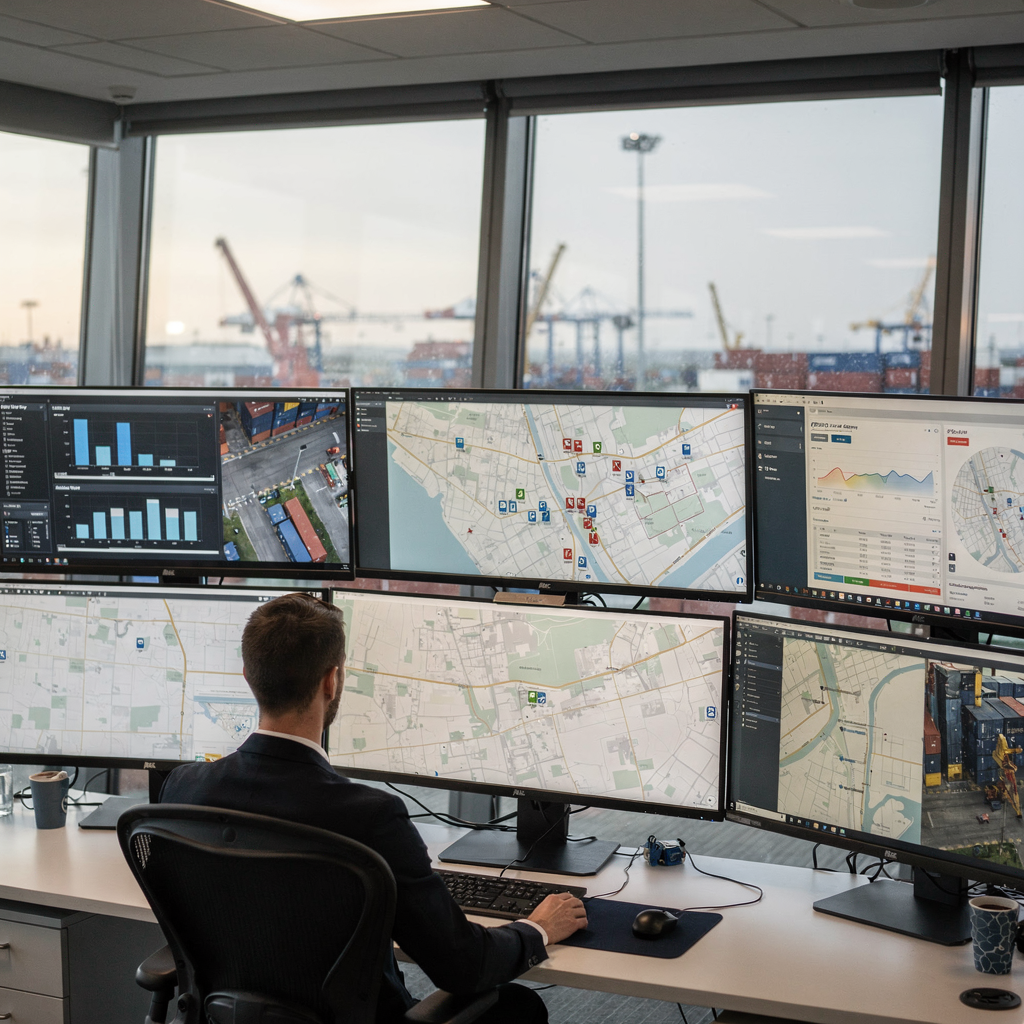
traffic management for optimising port terminal operating
Optimizing a port requires a holistic approach that combines infrastructure, people and technology. Investments in smart port initiatives, in advanced software and in asset tracking yield measurable returns. For example, digitalization spend on smart port infrastructure supports better vessel traffic coordination and yard management. AI-driven modules can suggest crane splits and charge AGV schedules to reduce idle handling equipment time and to maximize throughput.
Key performance indicators guide continuous improvement. Typical metrics include truck turn times, berth utilization, container dwell time, and a safety metric tied to maintaining safety standards. A balanced scorecard that includes air quality and fuel consumption can also drive greener operations. Regular audits ensure that gate systems and management systems meet regulatory compliance, and that they reflect the latest software updates.
Case studies show that integrated solutions reduce delays and raise terminal capacity. Terminals that adopt data-driven optimization, automate routine tasks, and train operators properly report gains in terminal efficiency and in operational efficiency. Future trends will emphasize digital twins for scenario planning, AI-powered routing, and autonomous handling equipment that can automate repetitive moves. To explore AI decision support for port operations, see related guidance on AI decision support for port operations operating systems here. Ultimately, a smart port that combines TOS, asset tracking and people-centered processes can reduce bottleneck risk, and it can keep freight moving even during disruption.
FAQ
What is the role of a terminal in the supply chain?
A terminal links sea transport with inland modes and it handles container movement, storage, and handovers. It helps keep freight moving and it affects lead times across the supply chain.
How does congestion at a terminal affect costs?
Congestion raises truck turn times, increases fuel consumption, and causes demurrage charges for shippers. It also reduces throughput and leads to higher inventory carrying costs across the supply chain.
What technologies improve wait times at gates?
Appointment systems, TOS integrations, gate systems and GPS tracking improve scheduling and reduce queueing. Real-time dashboards and sensor networks also enable faster decisions and lower wait times.
Can arrival windows reduce vessel waiting?
Yes, arrival windows and just-in-time scheduling smooth berth demand and improve berth utilization. Studies show coordinated arrival planning improves vessel operations and reduces anchorage waiting.
How do terminals track container locations in real-time?
IoT sensors, RFID tags and GPS tracking help track container locations and handling equipment. These tools feed data to TOS and dashboards to provide real-time visibility for traffic managers.
What role do terminal operators play in safety?
Terminal operators enforce safety standards, train staff, and maintain procedures to prevent accidents. They also coordinate with port authorities to ensure compliance with regulations.
How do digital platforms help drayage operators?
Digital platforms provide slot availability, routing updates, and automated documentation for drayage trucks. That reduces idle time for drayage operators and shortens truck turn times at the gate.
What metrics should terminals monitor for continuous improvement?
Terminals should track truck turn times, berth utilization, container dwell time, and air quality metrics. Monitoring these KPIs supports optimization and drives sustainable improvements.
How does asset tracking reduce inefficiency?
Asset tracking reduces idle time for cranes and handling equipment, and it supports predictive maintenance. By tracking assets, terminals can assign work orders more effectively and minimize unnecessary moves.
Can AI help automate operational emails and notifications?
Yes. AI agents can automate email triage, route messages and draft replies with accurate data from ERP and TMS, and thereby reduce manual workload.
our products
 stowAI
 stackAI
 jobAI
jobAI
Innovates vessel planning. Faster rotation time of ships, increased flexibility towards shipping lines and customers.
Build the stack in the most efficient way. Increase moves per hour by reducing shifters and increase crane efficiency.
Get the most out of your equipment. Increase moves per hour by minimising waste and delays.
stowAI
Innovates vessel planning. Faster rotation time of ships, increased flexibility towards shipping lines and customers.
stackAI
Build the stack in the most efficient way. Increase moves per hour by reducing shifters and increase crane efficiency.
jobAI
Get the most out of your equipment. Increase moves per hour by minimising waste and delays.