
crane Electrification: Benefits and Context
Electrifying yard equipment is changing how a container terminal plans work, and electric RTG cranes lead that shift. Electric and hybrid rubber-tyred gantry crane models offer measurable gains. For example, hybrid RTGs can cut energy consumption by up to 30% and can deliver 15–20% faster container handling compared with older diesel-powered units, which helps terminals increase container throughput while they reduce fuel costs and carbon dioxide emissions Port of Salalah takes delivery of new hybrid RTG cranes. These figures influence how a terminal schedules and deploys equipment. They also change crew rotation, maintenance windows, and charging plans.
First, electric cranes reduce onsite pollution and noise, which is a clear sustainability benefit for inland yards close to urban areas. Second, electric systems extend effective run times between fuel or charge events, and therefore increase utilization and lower idle time across the yard. Studies and manuals on terminal capacity show that RTG utilization rates vary widely, and that optimized scheduling can push utilization from typical 60–85% up toward the upper bound, improving throughput by roughly 10–15% Seaport capacity manual: application to container terminals. Third, switching to electric RTGs supports terminal environmental performance goals and helps ports meet net-zero targets without large footprint changes.
Operationally, a terminal that electrifies must rethink how it assigns tasks, when it schedules maintenance, and how it forecasts demand. The shift is not only technical, but also managerial. For instance, planners must schedule charging windows, and they must automate many repetitive communications so staff focus on high-value decisions. This reduces waiting time for trucks and minimizes stacking disruptions.
Finally, decision-makers should weigh capital costs and expected savings. Although electrify investments and cable or substation upgrades require upfront capital, terminals can deploy hybrid options to balance cost and benefit. Sites that adopt electric RTGs often report better productivity and lower lifecycle operating costs, and this supports wider adoption across port and inland operations The transition towards ‘Green Ports’: implementation … – HWR Berlin. In short, electrification creates both operational improvements and sustainability gains, and it alters how planners schedule yard work and stack containers.
gantry cranes Power Systems and Design Features
Gantry cranes in electric form come in hybrid and fully electric drivetrains, and each choice affects scheduling, charging, and infrastructure. Hybrid designs typically include on-board battery packs and energy recovery systems. Fully electric models rely on larger batteries or continuous power feeds through cable systems, pantographs, or automated battery swapping. Designers choose battery capacity based on expected container numbers per shift, and they add regenerative braking and energy buffers to stabilise load on the grid. As a result, crane availability and cycle speed depend on the drivetrain design and the charging model.
From a design perspective, weight and stability matter. A heavier battery changes the crane center of gravity, which requires engineering adjustments to maintain safe lifts and precise container stacking. Safety systems must monitor load, wind, and positioning continuously, and they must integrate with positioning systems and information systems that support yard crane scheduling. Also, cable management and the placement of recharge points influence aisle layout and truck lanes. Terminals that upgrade electrical infrastructure must plan for these physical constraints while they design optimal layouts for container stacking and efficient moves.
Case study insights help clarify these trade-offs. The Port of Salalah took delivery of hybrid RTGs that “offer quicker container handling while consuming less energy” and that illustrate how a hybrid approach can accelerate handling without full grid dependency Port of Salalah. This case shows how design choices translate to operational gains such as faster unload times and reduced idling. It also highlights a practical deployment path: deploy hybrid RTG cranes first, then consider additional electrification as substations and charging strategies mature.
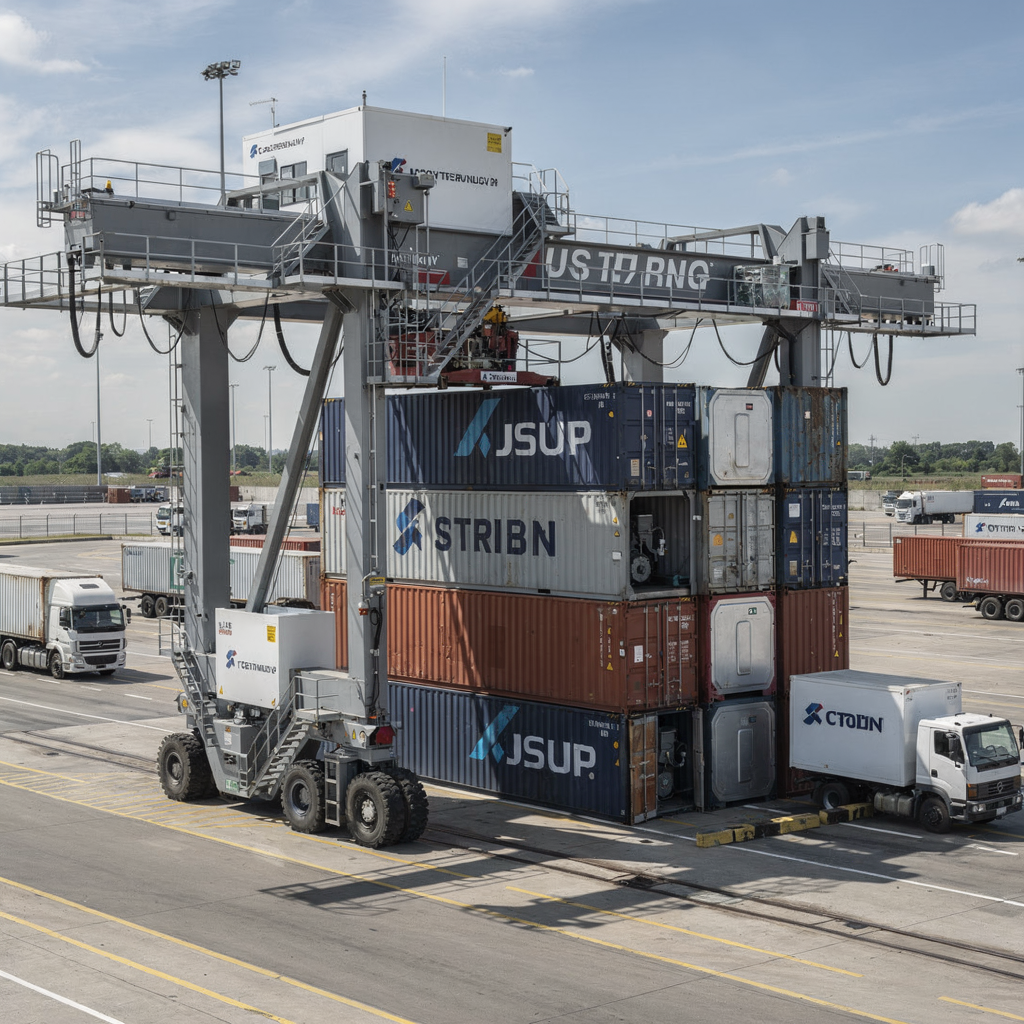
Beyond hardware, planners must consider charging methods. Rapid top-up charging at convenient points reduces the need for large on-board storage, and battery swap systems can enable round-the-clock operation with minimal downtime. However, swap stations require space and logistics to move heavy battery packs, and they introduce a new source of operational complexity. For terminals that prefer a gradual approach, partial electrification combined with smart scheduling can yield early gains while the site upgrades substations and integrates renewable energy sources for long-term energy efficiency.
Finally, the selection between hybrid and fully electric options is also an economic decision. Terminals should model total cost of ownership, including diesel engine maintenance savings, energy consumption reductions, and equipment downtime. Planners who combine engineering, scheduling, and predictive tools achieve balanced performance and safer on-site operations. For more on yard layout and density forecasting that informs these choices, see research on advanced yard density forecasting for terminal operations advanced yard density forecasting.
Drowning in a full terminal with replans, exceptions and last-minute changes?
Discover what AI-driven planning can do for your terminal
port Energy Infrastructure for Electric RTGs
Power-supply constraints are often the primary limiter for large-scale electrification at inland terminals. Many inland sites use substations sized for legacy loads, and they need upgrade work to handle peak draw from multiple RTGs charging simultaneously. Terminals must plan upgrades carefully, and they must schedule work to avoid disrupting terminal operations. In practice, planners stagger charging windows and use energy-storage buffers to smooth short-term spikes. Using a battery buffer or dedicated energy storage can reduce the need for immediate substation upgrades, and it can serve as a backup source of energy during peaks.
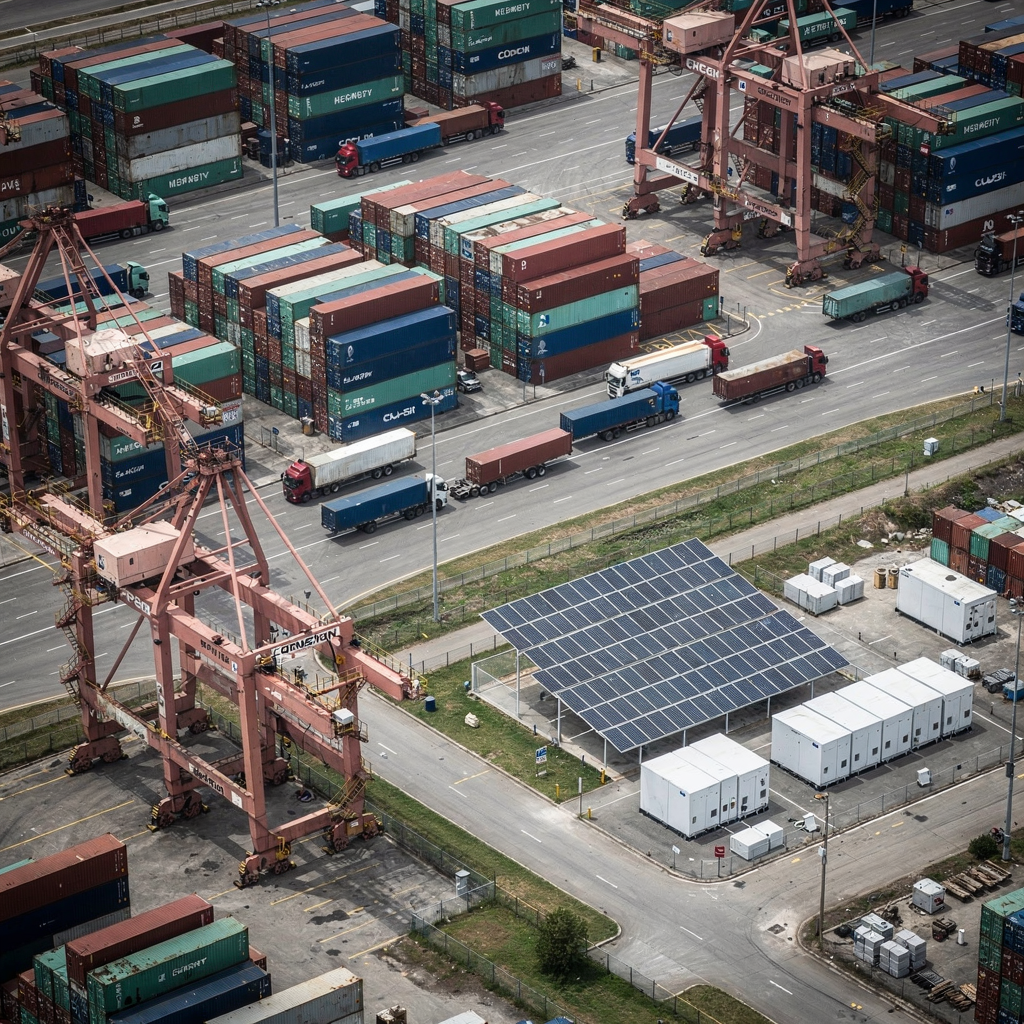
Integration of renewable energy reduces lifecycle energy consumption and improves sustainability. Terminals can pair solar arrays or on-site renewable energy generation with storage systems to charge RTGs during daytime peaks. Renewable energy does two things: it lowers operational energy costs over time, and it reduces pollution and carbon outputs around the yard. For terminals aiming at greener profiles, coupling renewables with smart load management helps them meet sustainability targets while they minimise peak billing. A practical approach includes demand-side controls to schedule charging during off-peak periods and to adapt charging rates when the grid signals congestion.
Grid connection models vary. Some terminals opt for direct feed to charging points, while others build microgrids that combine renewable energy, energy-storage systems, and conventional supply. Microgrids provide resilience and let terminals operate even when the main grid has constraints. They also let terminals deploy round-the-clock operations by shifting energy use across the day. Energy-management systems can generate schedules that optimise when to charge and when to run heavy lifts, and they can also automate demand response actions. For deeper technical guidance on connecting equipment and on power upgrades, terminals can consult resources on predictive maintenance and on AI decision support for port operations to synchronise energy and task allocation AI decision support for port operations.
Another consideration is the physical distribution of cables and connectors. Cable trays, retractable cable systems, and safe routing for charging equipment must coexist with truck lanes and stack areas. Proper routing reduces tripping hazards and minimises downtime due to damaged cables. Moreover, planners must factor in site safety and the working environment, and they must ensure that charging infrastructure meets local electrical codes while it supports continuous operations. Finally, terminals should evaluate whether to electrify quay crane or focus first on yard crane fleets, and they should balance priorities based on container throughput, vessel schedules, and inland freight flows PORT CONGESTION PROBLEM, CAUSES AND SOLUTIONS.
rtg cranes Scheduling: Metrics and Constraints
Scheduling RTGs requires clear metrics to measure success. Key performance indicators include throughput, utilization rate, idle time, waiting time, and energy consumption. Tracking these indicators lets teams optimise yard moves and reduce unnecessary repositioning. For example, utilization measures how well a crane is assigned across a shift, and higher utilization generally means better productivity. Terminals that tune scheduling to battery-life limits and charging windows see lower idle time and reduced energy cost, and they maintain steady container stacking performance even with high arrival variability.
Battery-life limits impose a hard constraint on assignment. Each RTG has a predictable energy profile per cycle, and planners must factor this into shift schedules. Charging windows become service events that require avoiding overlap with high-demand periods. Dynamic assignment tools help redeploy cranes when batteries run low, and they let planners assign lighter tasks to units with constrained energy. These tools also reduce the need to keep spare diesel engine units on standby.
Coordination with vessel arrivals, truck lanes, and inland rail determines effective yard throughput. Poor coordination creates congestion and increases container rehandles, which reduces productivity. To prevent that, terminals must synchronise RTG tasks with vessel windows and with gate operations. Yard crane scheduling must also account for stack layout, which is frequently rectangular, and for the location of heavy-duty lifts. Integrating data from information systems and from positioning systems enables real-time awareness of stack occupancy and truck positions, and this helps assign the right crane to the right task at the right time.
Operational constraints are many. For instance, a crane that must move across multiple lanes to reach a container creates deadhead travel and increases cycle time. Therefore, schedule planners optimise assignments to minimise travel, and they use lane-specific rules to balance workload. Similarly, terminals must maintain spare capacity for peak vessel unloads, and they need to plan for quay crane handoffs and for AGVS or automated guided vehicles assistance. For ideas on reducing rehandles and on optimising inter-terminal transport, see guidance on minimising container rehandles and optimising inter-terminal transport flows minimizing container rehandles and optimizing inter-terminal transport flows.
Finally, planners face the constraint of mixed fleets. Some yards run rail-mounted gantry cranes alongside RTGs, and each equipment type has different reach and speed. Scheduling must therefore balance tasks across machines and across time, and it must do so in a way that minimises waiting time and keeps container stacking orderly. When terminals adopt electrification, they should update KPIs to include energy-efficiency metrics and to track the effect of charging on container handling throughput.
Drowning in a full terminal with replans, exceptions and last-minute changes?
Discover what AI-driven planning can do for your terminal
operational Strategies: Battery Management and Charging Schedules
Effective battery management keeps RTGs moving. Terminals should design charging schedules that charge during off-peak periods and that top up batteries during predicted low-demand windows. Scheduling charging during low demand reduces peak billing and lets cranes operate more of the day. Smart charging also helps avoid full discharge, which lengthens battery life, and it reduces the number of battery swap cycles if the site uses swap stations.
Dynamic task reassignment is essential. A scheduler that monitors battery state-of-charge can assign short moves to low-charge units and heavier lifts to healthier units, and it can therefore extend overall service availability. This approach reduces idle time and keeps high-priority moves on schedule. Monitoring dashboards that show charge, task queues, and stack occupancy help planners make quick decisions. They also help operators and supervisors understand where to redeploy crews or which lanes to clear to speed moves.
Monitoring tools also support preventive maintenance. Battery health metrics and charge-discharge cycles reveal when packs require service, and predictive models can trigger maintenance before failures occur. Integrating these insights with terminal operations systems gives planners a single view of equipment readiness and task assignment. This lets teams focus on higher-value decisions rather than on repetitive messaging.
Charging strategies vary by deployment. Some terminals prefer distributed fast-charge points near stack areas to minimise travel when cranes top up. Others centralise charging in service corridors with battery swap logistics. Each option affects layout and cable routing, and planners must balance the space trade-off. For terminals aiming to electrify gradually, hybrid RTG deployment with scheduled top-ups provides a pragmatic path. Finally, teams should track energy consumption and energy efficiency as primary metrics, and they should aim to minimise peak draw while they maximise round-the-clock coverage.
approximation Algorithms and AI for Dynamic Task Allocation
Scheduling is an optimization problem with many constraints, and approximation and heuristic methods often provide practical solutions. Greedy heuristics assign the nearest available crane to a task, and they work well for simple scenarios. Genetic algorithms explore many assignment combinations to find near-optimal plans when search spaces are large, and approximation approaches accelerate planning when terminals require fast decisions. In all cases, terminals should evaluate multiple approaches and compare them using simulation before deploying them live.
Reinforcement-learning models show promise because they adapt to changing yard conditions and they learn policies that balance throughput, energy consumption, and waiting time. These models train against historical container numbers and against synthetic scenarios that mimic vessel arrivals or sudden gate surges. Once trained, RL agents can propose dynamic assignments and can suggest when to charge, how to redeploy cranes, and which stacks to prioritise. Integrating such agents with Terminal Operating Systems lets the AI synchronise RTG tasks with quay crane schedules, with truck lanes, and with inland rail moves.
Hybrid approaches often work best in practice. For example, an algorithm provides a baseline plan and a reinforcement model refines it in real time. The system then automates routine emails and alerts so that human planners only handle exceptions.
Finally, terminals must consider data quality. Big data and predictive modules need accurate input from positioning systems, from container stacking records, and from energy meters. Mismatched data leads to suboptimal assignments. Therefore, terminals should invest in reliable telemetry and in integration across information systems. For further reading on AI modules for real-time equipment task allocation, see our resource on AI modules for real-time equipment task allocation in container ports AI modules for real-time equipment task allocation. In practical deployments, algorithms reduce idle time and improve utilization while they help the yard meet sustainability and productivity targets.
FAQ
What are the main benefits of switching to electric RTGs?
Electric RTGs reduce fuel use and lower carbon dioxide emissions, and they cut noise and local pollution in inland yards. They also tend to improve energy efficiency and may speed up container handling when compared with older diesel engine models.
How does battery life affect yard crane scheduling?
Battery life defines how long a crane can run between charges, and it limits continuous availability for container handling tasks. Planners must schedule charging windows and reassign tasks dynamically to avoid idle time and to maintain throughput.
Can terminals electrify gradually?
Yes. Many terminals begin with hybrid RTGs and then add infrastructure as demand grows, and this lets them manage capital and upgrade schedules. Hybrid deployments can deliver faster handling early while the site upgrades substations and charging systems.
What role does renewable energy play in RTG electrification?
Renewable energy lowers lifetime operational costs and improves sustainability. When paired with energy-storage buffers, renewable energy helps minimise peak grid draw and supports round-the-clock operations with lower emissions.
How do approximation algorithms help scheduling?
Approximation and heuristic algorithms produce near-optimal assignments quickly, and they are useful when terminals need fast responses. They balance travel time, stack configuration, and energy constraints to reduce idle time and waiting time.
Are real-time systems required for dynamic task allocation?
Real-time data improves decision accuracy, and it helps systems adapt to vessel delays, truck surges, and unexpected equipment faults. Integrating telemetry and information systems yields better assignments and fewer rehandles.
How can terminals automate coordination and reduce email load?
Automating the email lifecycle with AI agents reduces manual triage and speeds responses about charging, maintenance, and task changes.
What infrastructure upgrades are most common when electrifying a port terminal?
Terminals typically upgrade substations and install charging points, and they add cable routing or battery swap stations. They may also invest in energy-storage systems and in microgrid components to manage peak loads.
How do RTG scheduling strategies interact with quay cranes and vessels?
Scheduling must synchronise RTG moves with quay crane unloads to minimise truck dwell and to keep container stacking predictable. Coordinated scheduling reduces congestion and improves container throughput.
Where can I read more about AI and yard optimisation for terminals?
For deep dives on related topics, consult resources such as AI decision support for port operations and advanced yard density forecasting for terminal operations. These guides explain methods for synchronising equipment and maximising utilization AI decision support for port operations, advanced yard density forecasting, and on AI modules for real-time equipment allocation AI modules for real-time equipment task allocation.
our products
 stowAI
 stackAI
 jobAI
jobAI
Innovates vessel planning. Faster rotation time of ships, increased flexibility towards shipping lines and customers.
Build the stack in the most efficient way. Increase moves per hour by reducing shifters and increase crane efficiency.
Get the most out of your equipment. Increase moves per hour by minimising waste and delays.
stowAI
Innovates vessel planning. Faster rotation time of ships, increased flexibility towards shipping lines and customers.
stackAI
Build the stack in the most efficient way. Increase moves per hour by reducing shifters and increase crane efficiency.
jobAI
Get the most out of your equipment. Increase moves per hour by minimising waste and delays.