
ai integration in port terminal operations
A deepsea container port handles vessel arrivals, cargo flows and terminal chores under tight schedules. Planners must coordinate berth windows, crane tasks and yard layouts with limited slack. AI promises to help. AI can surface patterns in schedules, predict peaks and flag risks before they cascade. This matters because planners decide millions of euros of operational moves every week.
Since 2018 there has been an 11% rise in maritime AI projects, reflecting investment and experimentation across the port sector. Still, ports face three hard hurdles. First, they must process vast dynamic data from ships, cranes, trucks and external supply chains. Second, the technical complexity of integrated systems strains IT and operations teams. Third, human acceptance remains the deciding factor for whether implemented AI actually changes behaviour and outcomes.
Planner trust is the linchpin. If planners distrust recommendations they will override or ignore them. That reduces the potential for operational efficiency and safety. A study shows that over 70% of operational delays link back to decision inefficiencies that better tools could reduce Deep dive: Artificial Intelligence in the maritime industry. This statistic underlines why ports must manage change carefully.
To make AI adoption useful, stakeholders must treat the initiative as a socio-technical transition. That means aligning people, processes and technology, not just installing a new ai system. Ports should document workflows, collect trusted datasets and design audit trails for decisions. For example, linking an AI berth recommendation to a clear causal explanation lets planners validate the suggestion. Readers who want a deeper technical take on berth problems can read a focused piece on the berth allocation problem in terminal operations berth allocation problem in terminal operations.
Finally, the capital intensity of port upgrades requires staged pilots. Early wins help build credibility. Small, measurable pilots reduce risk and accelerate ai integration. When planners see consistent accuracy, they start to adjust routines. That is how trust grows and how ports move from experiment to everyday practice.
application of ai in container handling and scheduling
AI modules now run core planning tasks across container terminal workflows. In berth allocation AI offers ranked windows and conflict checks. In crane sequencing AI recommends splits and move orders. In yard stacking AI helps decide container stacking and retrieval paths. At gates AI routes trucks to minimize wait time and reduce errors. These modules link with a terminal operating system to provide a single pane of truth.
When planners actively engage with the system, the application of AI in container handling delivers measurable returns. Research indicates a 15–25% improvement in berth allocation efficiency when planners use AI-assist tools and accept recommendations Enhancing Safety in Autonomous Maritime Transportation Systems. That improvement shows how collaboration between humans and machines raises throughput and reduces conflicts at quay.
Predictive maintenance is another high-impact use case. A pilot at a major container port reduced unscheduled downtime by 30% after planners completed a structured trust-building phase that included hands-on training and iterative feedback Unlocking the Full Potential of Your Data with IMOS Data Lake. The reduction followed a period in which the ai system earned credibility by predicting faults and by providing clear diagnostics that engineers could verify. That sequence—predict, verify, trust—explains why technical gains depend on human validation.
AI components use several techniques. Computer vision inspects container damage and checks gate identity. Optimization engines run scheduling and resource allocation. Machine learning extracts patterns from historical moves and equipment telemetry. For readers who want details on yard logic and optimization, there is a practical reference on container terminal yard optimization software solutions container terminal yard optimization software solutions. Together these functions shorten crane idle time, compress container dwell time and lower unit handling costs.
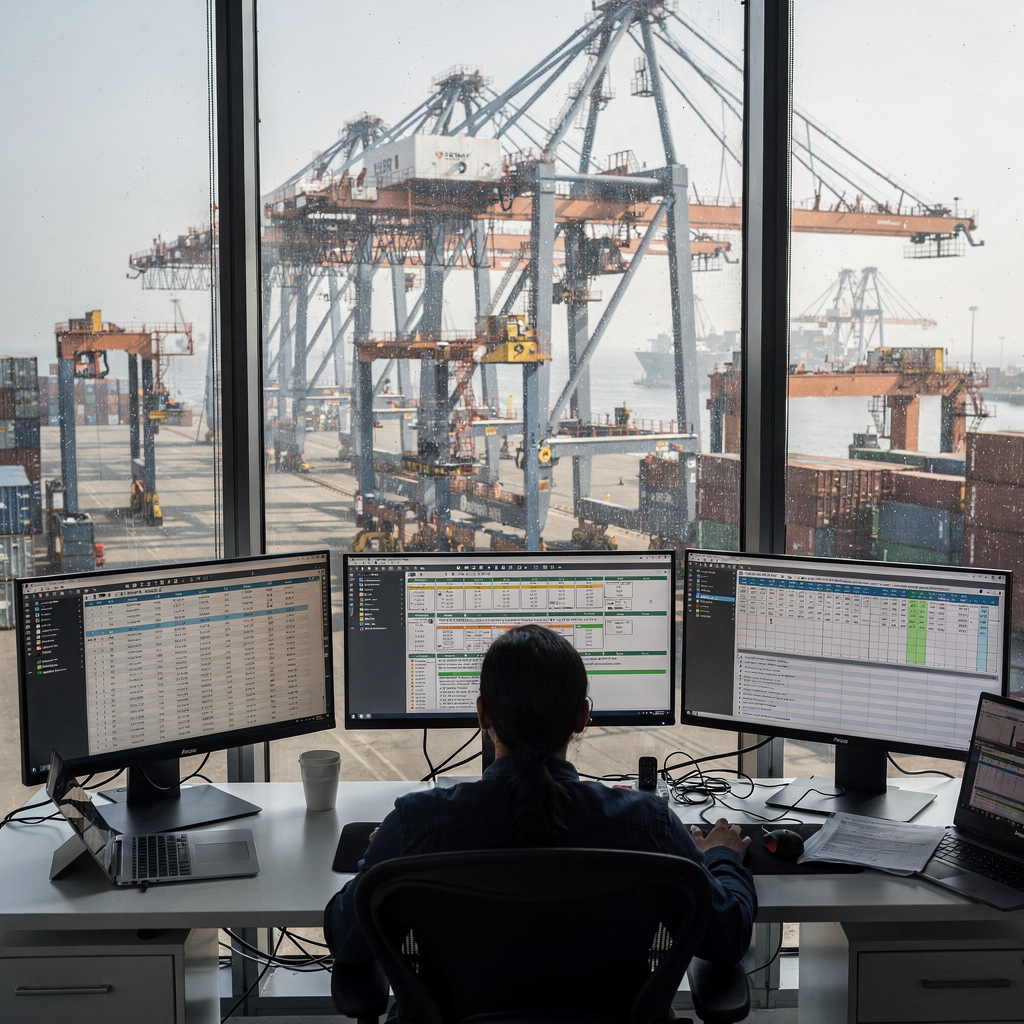
Drowning in a full terminal with replans, exceptions and last-minute changes?
Discover what AI-driven planning can do for your terminal
benefits of ai and automation for container terminal operations
AI and automation create clear operational benefits. First, efficiency rises because AI reduces manual planning steps. Data points show over 70% of delays originate in human decision-making inefficiencies, so AI helps remove those bottlenecks Deep dive: Artificial Intelligence in the maritime industry. Second, cost savings appear across labour, fuel and maintenance categories. Automated container handling reduces unnecessary moves and idling, which cuts fuel use and equipment wear.
These gains also translate to better scalability. When volumes spike, an ai system can run scenario evaluations in seconds while planners assess trade-offs. That responsiveness makes the terminal more resilient during peak seasons and disruptions. For port operators, resilience is now a competitive advantage. Tools such as predictive maintenance and real-time scheduling reduce the chance that a single equipment failure will cascade into a multi-day delay.
Beyond throughput, safety improves. Automation reduces manual exposure in high-risk zones. Computer vision and sensor fusion spot unsafe conditions earlier. At the planning layer, AI highlights risky sequences of moves and suggests safer alternates. This combination supports both safety and efficiency in tandem. That dual benefit is one reason many ports are accelerating implementation of ai modules and ai tools across operations.
Operational metrics improve as systems mature. Examples include lower container dwell time, fewer rehandles and improved crane split balance. To understand how predictive maintenance fits into the maintenance roadmap, see a focused briefing on predictive maintenance for STS cranes predictive maintenance for STS cranes in container ports. In practice, benefits of ai depend on data quality, governance and the willingness of planners to interact with the system. AI works best when human expertise and automated insight combine toward efficient operations.
role of ai technologies and machine learning in smart port development
Core ai technologies power smart port features. Optimization algorithms schedule assets and balance trade-offs. Computer vision verifies container identity and checks crane alignment. Natural Language Processing helps parse emails and messages from the port community. Together these tools create a fabric of digital capabilities that port managers can use to orchestrate activity.
Machine learning drives many of these insights. ML models learn from sensor feeds, historical moves and service logs. They produce probabilistic forecasts for container volume, equipment health and berth occupancy. Use cases include demand forecasting, yard density prediction and truck turn-time estimates. For technical readers, there is an article on using machine learning predictions as inputs for reinforcement learning agents in deepsea container ports ML predictions as inputs for RL agents.
Smart port enablers are equally important. High-bandwidth 5G connectivity, centralized data lakes and integrated control towers let multiple ai models collaborate. A container terminal operating system aggregates data from TMS, ERP and sensors. This integration supports coordinated decision making, which reduces conflicts between equipment pools and improves throughput. Readers can learn more about conflict resolution in real time in an overview of real-time conflict resolution between equipment pools real-time conflict resolution.
AI technologies also support softer tasks. For example, automated email triage powered by NLP can eliminate repetitive communication work for planners. That reduces time spent on triage and helps planners focus on exceptions. In short, the combination of ai and ml technologies equips ports with tools to predict, prescribe and respond faster than before.
Drowning in a full terminal with replans, exceptions and last-minute changes?
Discover what AI-driven planning can do for your terminal
artificial intelligence, ai implementation and ai act: building planner trust
Trust starts with transparency and explainability. Planners need to see why an ai algorithm makes a recommendation. Systems should provide interpretable outputs, visualised decision paths and audit trails. Clear explanations let planners verify AI output against domain knowledge. That verification is the basis for sustained adoption of ai and for ensuring that ai systems stay aligned with operational goals.
Collaborative workflows help too. Design choices like override controls, two-way feedback loops and interactive dashboards keep planners in control. When planners can modify rules and see the effect immediately, they feel agency. This sense of control increases the likelihood that planners will adopt AI recommendations and that the ai system will become a partner rather than an adversary.
Governance and ethics play a central role, especially under the EU AI Act. Ports should map risks, keep logs and enforce data privacy. Compliance with the ai act is not just regulatory box-ticking. It also builds trust by creating standards for accuracy, accountability and human oversight. Ports and port authorities that align implementation of ai with clear governance demonstrate commitment to safe use.
Training programs are another pillar. Iterative education, hands-on workshops and scenario drills convert theoretical advantages into everyday practice. Virtual training that ties AI outputs to concrete examples accelerates learning. Our team has observed that when planners engage in role-play with an AI recommendation, they adopt new routines faster. For hands-on learning about terminal resilience strategies that support trust, consider reading about terminal operations resilience against disruptions terminal operations resilience.
Finally, ai implementation needs to measure progress. Metrics should capture accuracy, override rates and time saved. Those metrics demonstrate efficiency gains and help refine ai models. The goal is not blind acceptance but a tested partnership in which planners and AI learn from one another.
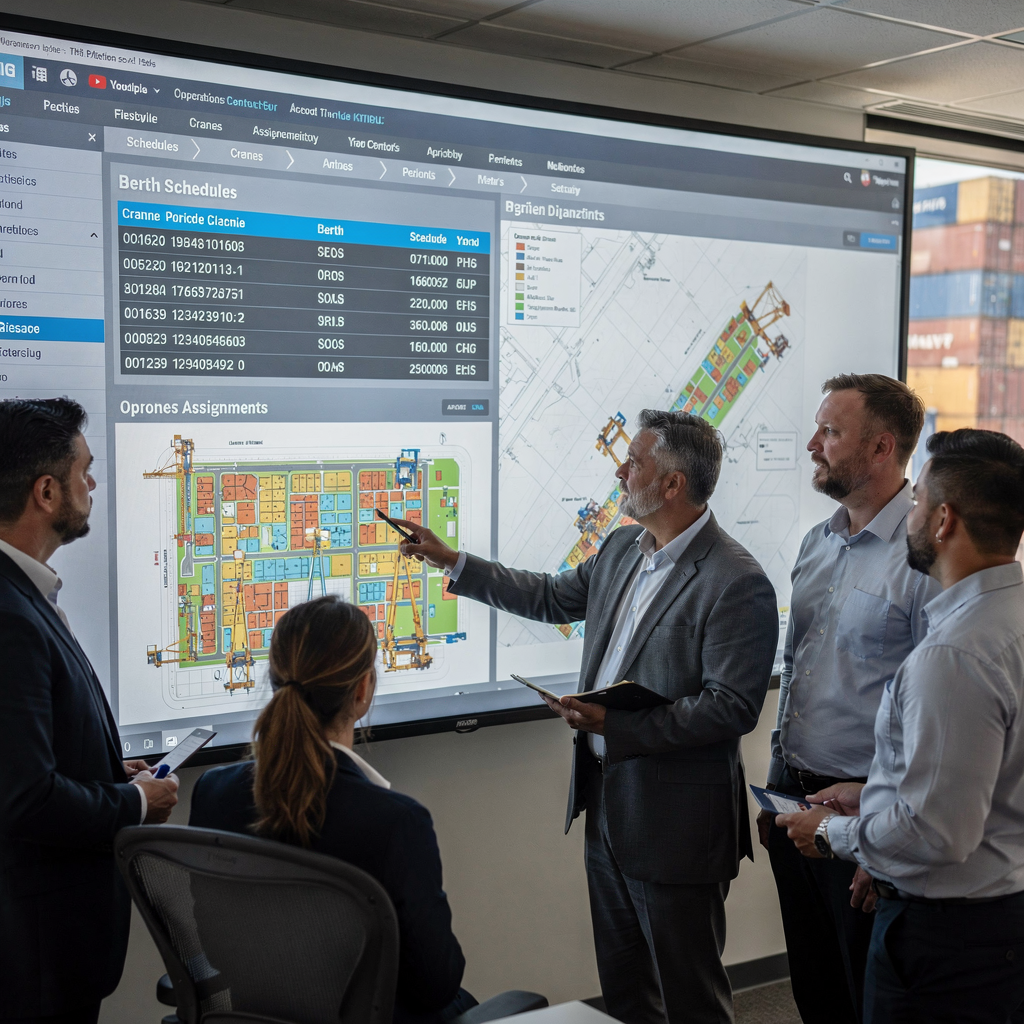
application of ai in terminal: future directions for terminal planning
The future of port planning will combine adaptive ai with stronger governance. Research is moving toward scalable AI models that can manage uncertainty across traffic spikes and weather events. These models must be robust and interpretable. Ongoing work also explores adaptive scheduling that updates plans as new information arrives, offering planners real-time alternatives.
Regulatory alignment will shape adoption. Aligning with evolving EU regulations and global standards helps ports avoid friction and ensures consistent safeguards. As AI capabilities expand, regulators will require clearer evidence of human oversight. This regulatory clarity will, in turn, help ports reach wider adoption of ai solutions.
Decision support will deepen. Future systems will integrate risk management, probabilistic simulation and multi-scenario planning in a single view. That integration will let planners test trade-offs quickly and set policy knobs like risk tolerance and priority classes. To understand how AI can assist with shortsea planning and adaptations for late arrivals, review ai-assisted planning for shortsea container terminals AI-assisted planning for shortsea terminals.
Roadmaps for full-scale implementation should list milestones for trust, performance and interoperability. Early phases should prove accuracy and lower override rates. Mid phases should demonstrate interoperability across the terminal operating system and supply chain partners. Later phases should scale models and reduce manual handoffs. Ports must also invest in data lakes, governance and people to fully leverage AI.
Finally, the potential of AI will depend on whether planners and operators choose to integrate AI into daily practice. Where planners interact with AI systems and treat them as collaborative tools, ports see more durable gains. The future port will be a mixed human-AI ecosystem where advanced AI supports decisions, and human judgment sets boundaries and validates outcomes. That balance will define the next generation of efficient, resilient and sustainable terminals.
FAQ
What is AI integration in port terminal operations?
AI integration in port terminal operations means embedding AI models, sensors and decision-support tools into everyday workflows. It involves connecting data sources, running algorithms and creating interfaces so planners can act on AI recommendations quickly.
How does AI improve berth allocation?
AI improves berth allocation by evaluating many constraints rapidly and proposing ranked windows with conflict checks. Studies report 15–25% improvements in berth allocation efficiency when planners engage with AI-assisted systems source.
Can AI reduce unscheduled downtime at terminals?
Yes. Predictive maintenance pilots have cut unscheduled downtime by around 30% after trust-building, training and iterative feedback cycles example. AI predicts faults and helps schedule repairs before failures occur.
What role does machine learning play in a smart port?
Machine learning analyses sensor and historical data to forecast demand, equipment health and yard density. ML supplies the probabilistic inputs that optimization engines and planners use to make robust decisions.
How do ports build planner trust in AI?
Ports build trust through transparency, explainability, collaborative workflows and training. They also establish governance aligned with regulatory guidance like the AI Act to ensure accountability.
Are there governance requirements for AI in ports?
Yes. The EU AI Act introduces mandatory risk assessments, documentation and human oversight for certain AI uses. Ports should map risks and implement audit trails to comply and to build trust.
How does automation affect safety and efficiency?
Automation reduces manual exposure to hazardous tasks and improves scheduling accuracy. This dual effect enhances both safety and operational efficiency when systems are designed with human oversight.
What is the value of integrating email automation with port planning?
Email automation reduces repetitive manual work and ensures timely, accurate communication across ERP, TMS and WMS systems. Tools that automate the full email lifecycle free planners to focus on exceptions and strategic decisions.
How should a port start with AI deployment?
Start with a focused pilot that targets a high-impact use case like berth allocation or predictive maintenance. Measure accuracy, train users and iterate before scaling. Early measurable wins accelerate wider ai adoption.
Where can I learn more about practical AI modules for ports?
There are targeted resources that explain AI modules for automated container port planning and yard optimization. For practical guides, review the ai modules for automated container port planning and the container terminal yard optimization software solutions AI modules and yard optimization.
our products
 stowAI
 stackAI
 jobAI
jobAI
Innovates vessel planning. Faster rotation time of ships, increased flexibility towards shipping lines and customers.
Build the stack in the most efficient way. Increase moves per hour by reducing shifters and increase crane efficiency.
Get the most out of your equipment. Increase moves per hour by minimising waste and delays.
stowAI
Innovates vessel planning. Faster rotation time of ships, increased flexibility towards shipping lines and customers.
stackAI
Build the stack in the most efficient way. Increase moves per hour by reducing shifters and increase crane efficiency.
jobAI
Get the most out of your equipment. Increase moves per hour by minimising waste and delays.