
predictive maintenance in an industry 4.0 context
Predictive maintenance is a data-driven approach that forecasts faults before they occur and schedules targeted repairs. In modern container terminal operations it replaces purely calendar-based checks and reduces reliance on reactive maintenance. Predictive maintenance uses sensor streams, machine learning, and connected systems to prioritize work and extend service life. For ship-to-shore crane platforms this approach helps avoid costly unplanned stoppages and keeps throughput stable, so terminals can better meet vessel windows and cargo commitments. Studies show that predictive maintenance implementations can cut unplanned downtime by up to 50% and reduce maintenance costs by 20–30% (MDPI review), and that machine learning models applied to operational data at smart ports achieved fault detection accuracy above 85% (smart ports study).
Industry 4.0 principles underpin this shift. Artificial intelligence and the internet of things allow continuous collection of equipment condition signals, while cloud analytics and predictive analytics turn raw sensor readings into alerts and remaining useful life estimates. This tight loop of sensing, analytics, and action forms a predictive maintenance system that aligns with terminal goals for reliability and throughput. In addition, predictive maintenance supports integration with computerized maintenance management and maintenance planning, so scheduled maintenance and maintenance activities are more efficient and less disruptive. For operations teams, adopting these tools means fewer emergency repairs, clearer maintenance schedules, and more time for strategic planning.
At the same time, adopting a predictive maintenance program requires cultural and technical change. Teams must share operational data, set up secure connectivity, and validate models against real faults. Finally, the case for investment is strong: by using predictive analytics and industry 4.0 tools, terminals often realize measurable gains in crane availability and overall port performance.
condition monitoring with sensor and iot integration
Condition monitoring is central to any predictive maintenance effort for quay cranes and other handling machines. Key sensor types include vibration transducers, temperature probes, and strain gauges mounted on motors, gearboxes, brakes, and structural members. Acoustic sensors add another signal source and help detect loose fittings or bearing defects. These sensors produce time-series records that reveal drift, spikes, and patterns that precede failures. For example, early vibration growth on a hoist motor can indicate bearing wear and provide weeks of lead time if detected correctly.
IoT gateways collect and forward sensor readings to edge or cloud platforms, and this internet of things topology enables real-time telemetry while minimizing bandwidth. Edge preprocessing filters noise, converts raw voltages into engineering units, and compresses data for transmission. Typical preprocessing steps include bandpass filtering, outlier trimming, and feature extraction such as RMS, kurtosis, and spectral peaks. These steps increase the signal-to-noise ratio and improve downstream fault detection and prediction. Real-time alerting then flags anomalies to maintenance crews and operators so that corrective action can be planned rather than rushed.
Accurate sensor data is necessary for robust machine learning models. Data labeling from maintenance logs and event histories makes supervised models more reliable. At the same time, unsupervised methods can find novel failure modes when labeled examples are scarce. Systems must also enforce secure connectivity and resilient buffering to avoid data gaps during network outages. For terminals that want a deeper technical primer on analytics-driven decision inputs, a useful resource explains how machine learning predictions can feed automation agents for operational improvements using machine learning predictions as state inputs. Ultimately, consistent condition monitoring and high-quality sensor data give teams the time they need to schedule repairs and to optimize maintenance activities without disrupting container handling.
Drowning in a full terminal with replans, exceptions and last-minute changes?
Discover what AI-driven planning can do for your terminal
smart condition monitoring solutions and monitoring solutions for harbor cranes
Operators can choose off-the-shelf platforms or bespoke smart condition monitoring solutions for crane monitoring. Off-the-shelf products speed deployment and often include prebuilt analytics, dashboards, and alerting. Custom systems allow deeper integration with terminal control systems, and they can embed proprietary maintenance models tuned to specific fleet profiles. Both paths rely on cloud-based analytics to scale model training and to consolidate data from several cranes. Dashboards provide operators with a single view of equipment health, so they can see trending metrics and prioritize work. A well-designed dashboard minimizes noise and surfaces only actionable alerts.
Cloud solutions support remote monitoring and they reduce the burden on on-site IT. They also enable secure sharing of anonymized operational data for benchmarking across ports and terminals. Remote-access dashboards let maintenance managers review recent faults and to assign tasks to technicians. For automated terminals, remote controllers and predictive dashboards have driven availability above 95% at some sites, showing how analytics and automation together improve crane availability (ABB example). When selecting a monitoring platform, consider integration points with computerized maintenance management and with terminal operating systems to ensure seamless handover from alert to work order.
Monitoring solutions for harbor cranes must support both real-time monitoring and historical trend analysis. This combination lets teams find early-stage issues and also to validate long-term service life assumptions. Security is also important as ports digitize: maritime cyber security frameworks guide secure data flows and protect predictive maintenance systems from manipulation (cyber-risk assessment). In practice, a hybrid approach often wins: use a proven cloud platform while adding bespoke analytics modules for fault detection and for optimal maintenance decisioning. If you want deeper guidance on terminal automation fundamentals and how condition monitoring fits into a larger automation stack, read this primer on container terminal automation fundamentals container terminal automation fundamentals.
crane, harbor cranes and straddle carriers operations
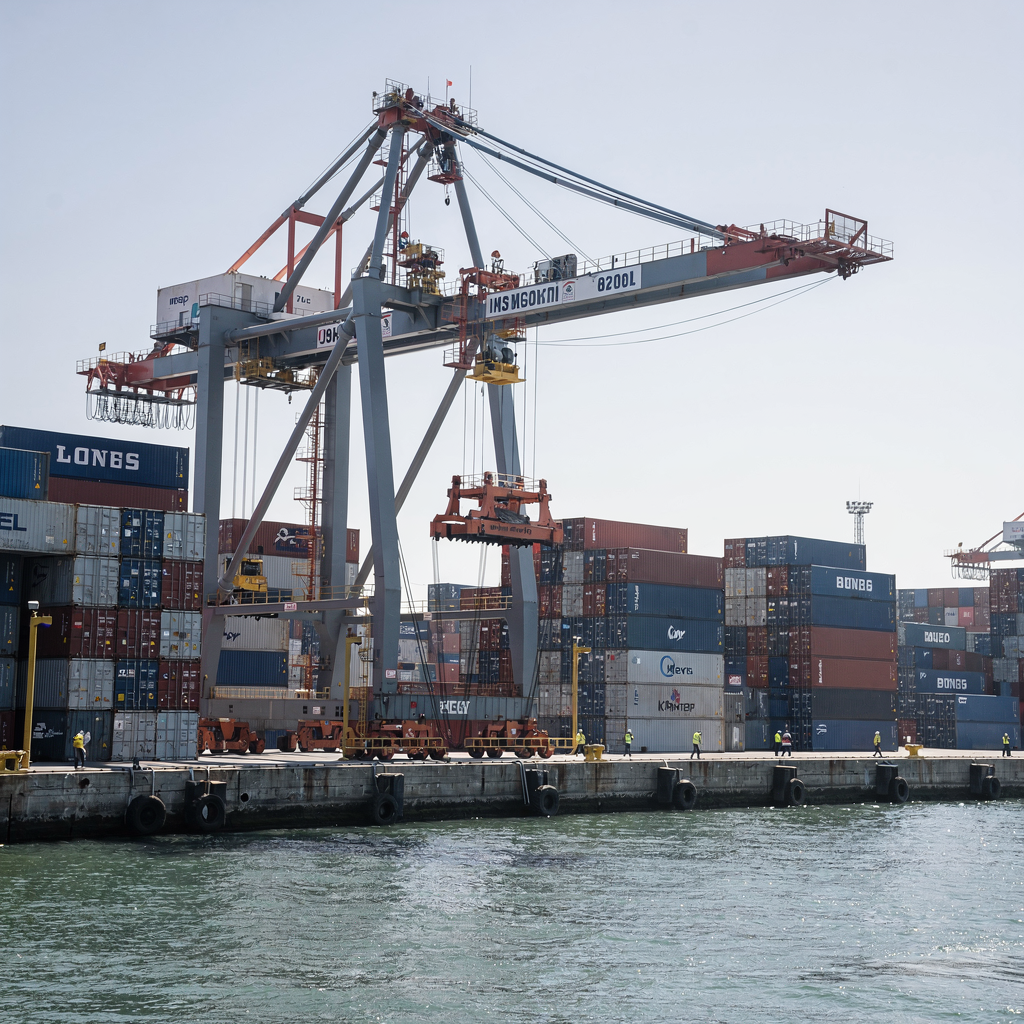
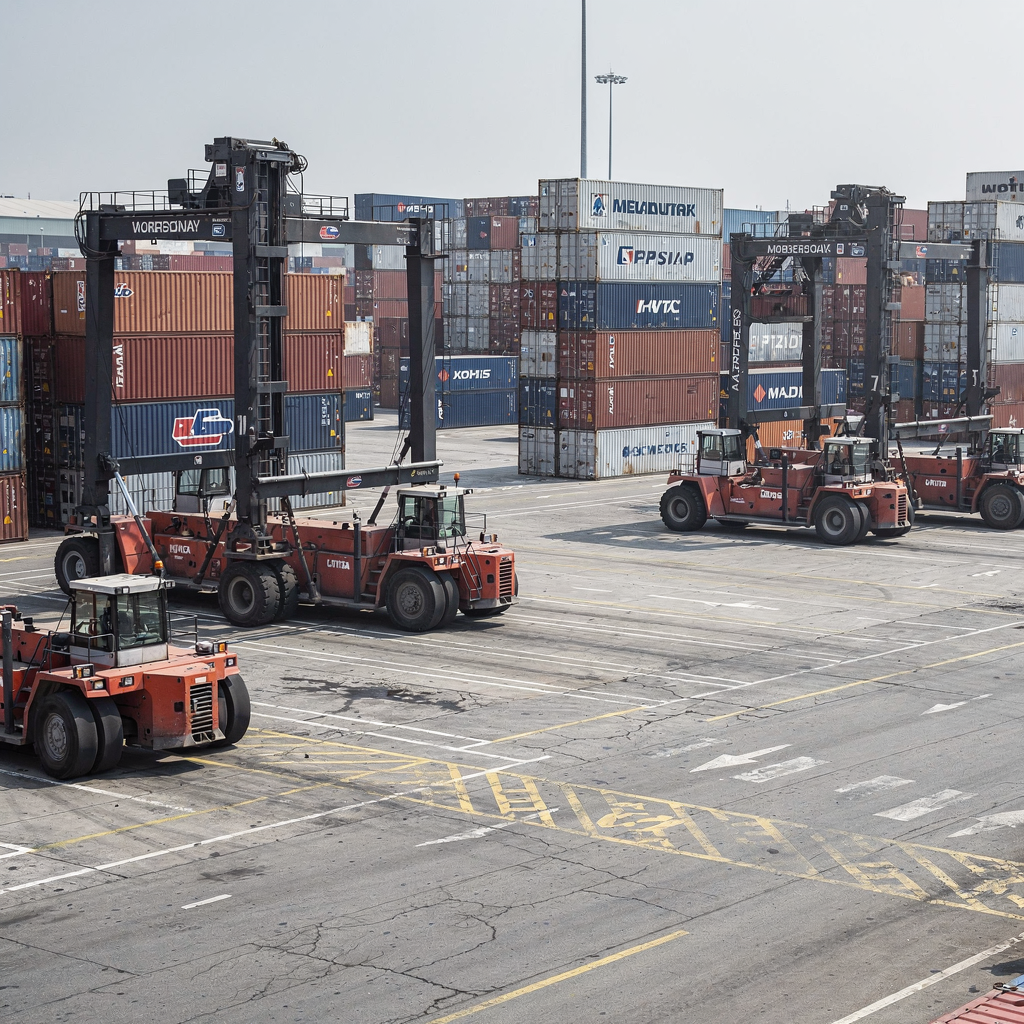
STS CRANE and straddle carriers serve different roles and they demand tailored maintenance programs. A ship-to-shore crane handles repetitive heavy lifts with long outreach, so fatigue and structural stresses dominate its failure modes. By contrast, straddle carriers move containers around the yard, and their wear patterns show up in chassis components, tires, and hydraulics. For goliath cranes and quay cranes that perform continuous loading and unloading, monitoring structural strain and hoist motor currents is essential. For straddle carriers, focus on drivetrain telemetry and brake health.
Weather conditions – cranes and conditions – cranes in port influence inspection intervals. Salt spray, wind, and temperature cycles accelerate corrosion and produce electrical ingress. Therefore, ports and terminals should adapt routine maintenance and preventive maintenance to a wide variety of weather conditions. For example, after periods of heavy storms, increase visual inspections and check corrosion-prone assemblies. Use load-based triggers to schedule service when heavy loads or high cycle counts push components toward wear limits. That way, teams optimize maintenance and avoid unnecessary replacement of parts with remaining service life.
Recommended maintenance planning varies by equipment. For ship-to-shore crane structures, schedule non-intrusive inspections monthly and detailed structural checks annually. For straddle carriers, set oil analysis and brake checks at more frequent intervals tied to equivalent units of work. Integrating condition sensors with maintenance logs and maintenance schedules lets planners replace time-based routines with data-based triggers. As a result, maintenance times fall and overall cost per move improves. Finally, consider that container handling equipment fleets include reach stackers and reach vehicles; a coordinated maintenance program reduces conflicts between yard servicing and vessel operations.
Drowning in a full terminal with replans, exceptions and last-minute changes?
Discover what AI-driven planning can do for your terminal
port and port operations under predictive maintenance
Predictive maintenance changes the economics of terminal operations. By reducing unplanned stoppages, it improves quay productivity and ship turnaround times. Shorter vessel stays raise throughput, and better crane availability lowers cost per move. In practice, ports that adopt predictive maintenance see measurable KPIs improve, such as higher uptime and crane availability above 95% when automation and smart monitoring are combined (availability example). That way, a detected bearing anomaly becomes a prioritized work order with the correct parts, and technicians can be routed with context.
Technicians need skills in sensor diagnostics and in interpreting analytics outputs. Supervisors need clear SLAs for maintenance response and for scheduled maintenance. Also, email and ticketing workflows must be efficient. In trials, teams reduce handling time per email from about 4.5 minutes to 1.5 minutes, and consequently response speed and traceability improve.
Define KPIs such as uptime, mean time between failures, maintenance costs, and cost per move. Also track unplanned maintenance events and maintenance activities per crane. For ports and terminals aiming for port 4.0 maturity, link analytics to operational dashboards and to decision rules that trigger optimal maintenance. For additional tactics on reducing vessel turnaround, see strategies to reduce vessel turnaround time in container terminals strategies to reduce vessel turnaround time. Overall, predictive maintenance supports a more efficient port by aligning technical signals with business outcomes and by making maintenance planning proactive rather than reactive.
case study of 4.0 deployment and operating efficiently with smart condition monitoring
This case study reviews a 28-ton STS CRANE that was instrumented to demonstrate strength analysis and early fault detection. Researchers installed accelerometers, strain gauges, and motor current sensors and then ran a study of dynamic loads under operational cycles. Signal sensing, conditioning, and analysis revealed stress concentrations and fatigue hotspots, and engineers used the data to perform strength analysis that prevented a potential structural failure (28-ton study). The deployment combined edge preprocessing and cloud analytics to deliver fault detection and prediction in near real-time.
Results included fault detection accuracy better than 85% when machine learning models were trained on labeled fault records, and the new predictive maintenance program reduced downtime significantly compared with the previous reactive approach (smart ports study). The pilot also clarified practical requirements: high-quality sensor mounting, robust IoT gateways, and integration with maintenance logs are needed to scale. Based on this case study, best practices include starting with a small fleet of well-instrumented cranes, validating early-warning thresholds against known faults, and then rolling out models across similar assets.
Scaling from pilot to full rollout means automating the loop from alert to action. Use dashboards to deliver prioritized work items and to track outcomes. Combine analytics solutions with computerized maintenance management to close the loop on corrective repairs and scheduled maintenance. Finally, maintain a feedback loop where maintenance outcomes update the training data and improve future fault detection and prediction. For teams that need design patterns for scaling analytics and planning, our guide on terminal operations resilience against disruptions provides practical steps and governance models terminal operations resilience against disruptions. Done correctly, smart condition monitoring solutions let terminals optimize maintenance, reduce unplanned events, and protect the wider supply chain.
FAQ
What is predictive maintenance and how does it differ from preventive maintenance?
Predictive maintenance forecasts component failures using sensor data and analytics, so work occurs only when needed. Preventive maintenance is time-based and schedules tasks at fixed intervals regardless of actual equipment condition.
Which sensors are most important for STS crane monitoring?
Vibration, temperature, and strain sensors are the core suite for ship-to-shore crane health monitoring. In addition, motor current and acoustic sensors add useful signals for fault detection and prediction.
How much downtime reduction can terminals expect?
Studies indicate predictive maintenance can reduce unplanned downtime by up to 50% in industrial applications. Actual gains depend on data quality, deployment scope, and integration with maintenance workflows (source).
Can predictive maintenance integrate with existing terminal systems?
Yes. Modern predictive maintenance systems link with terminal operating systems and computerized maintenance management for automatic work order creation. Integration improves maintenance planning and reduces manual handoffs.
What role does IoT play in condition monitoring?
IoT gateways collect and forward sensor streams and they enable real-time telemetry and buffering at the edge. That connectivity is essential for continuous condition monitoring and for running analytics in the cloud.
Are machine learning models required for fault detection?
Machine learning models often improve early fault detection, especially for complex multivariate signals. However, simpler rule-based alarms are still useful and can be combined with machine learning models for robust detection.
How should terminals handle cybersecurity for predictive maintenance?
Secure architectures, segmented networks, and encrypted telemetry are basic controls for protecting predictive maintenance systems. Cyber-risk assessments and incident response plans are also important as ports digitize (cyber-risk assessment).
What is the difference between remote monitoring and remote control?
Remote monitoring provides visibility into equipment condition and sends alerts, while remote control lets operators change machine states or settings from a distance. Both capabilities can coexist, but they require distinct safety and authorization controls.
How do weather conditions affect maintenance planning?
Salt, humidity, wind, and temperature cycles accelerate wear and influence inspection frequency; a wide variety of weather conditions requires adaptive maintenance. After severe weather layups, targeted inspections often prevent corrosion-related failures.
How can my team scale a pilot to a full predictive maintenance program?
Start with a small, instrumented fleet and validate model predictions against known faults, then expand to similar assets. Automate the alert-to-work-order flow and use dashboards to measure KPIs so you can iterate and improve the maintenance program.
our products
 stowAI
 stackAI
 jobAI
jobAI
Innovates vessel planning. Faster rotation time of ships, increased flexibility towards shipping lines and customers.
Build the stack in the most efficient way. Increase moves per hour by reducing shifters and increase crane efficiency.
Get the most out of your equipment. Increase moves per hour by minimising waste and delays.
stowAI
Innovates vessel planning. Faster rotation time of ships, increased flexibility towards shipping lines and customers.
stackAI
Build the stack in the most efficient way. Increase moves per hour by reducing shifters and increase crane efficiency.
jobAI
Get the most out of your equipment. Increase moves per hour by minimising waste and delays.