
jit and arrival fundamentals
Just-in-time (JIT) is a scheduling approach that aligns a ship’s movement with terminal readiness so the ship arrives when the berth, handling equipment and labour are available. The concept of just-in-time contrasts with older practices in which ships often make early arrival and then wait at anchorage for windows. In traditional port operations a container ship may reach the approach lanes well before a berth opens and then spend hours idling. This creates wasted fuel consumption, extra emission and congestion. JIT aims to reduce idle time by coordinating the requested time of arrival with the terminal’s plans.
First, JIT defines a berthing window that the ship should meet. Then, the shipping line or shipowner adjusts sailing speed and voyage plan so the ship arrives at that window. The approach starts at the previous port and includes estimated time of arrival (ETA) updates, tug and pilot booking, and confirmation that handling equipment will be available. The overall goal is to make ship arrivals far more efficient and to reduce non-value-added operations that cost time and money.
For example, global reviews show ships commonly wait 12 to 24 hours before docking at major terminals; that wait at anchorage can be cut with better coordination UNCTAD estimates 12–24 hours waiting. Furthermore, the concept of just-in-time seeks to streamline vessel rotation time while also addressing port congestion. The jit arrival concept involves a chain of actions: ETA refinement, berth allocation, and the final approach so the ship arrives when assets are available and ready to receive.
Ultimately, JIT reduces fuel burn and lowers environmental footprint. For ports and shipping lines it increases predictability. For cargo owners it cuts delays and handling churn. Companies that automate communication and ETA workflows can help make it arrive on schedule; for instance, tools that auto-handle operational email can reduce manual friction so stakeholders get the right updates quickly and consistently. In busy ports the reduction in waiting to berth also improves safety and reduces unnecessary ship traffic near the harbour entrance.
just-in-time arrival at container terminals
Just-in-time arrival aligns vessel calls with terminal readiness so a ship docks when the berth and crew are prepared. This reduces the chance that a ship arrives early and then sits waiting to berth at anchorage. At its core the JIT approach links berth allocation, crane and labour scheduling, and ancillary services to a single date and berthing window set by the port. When the port when all assets are available and ready, the ship can move directly to the berth and start cargo operations.
Key components of a successful just-in-time arrival include robust berth allocation and precise handling equipment scheduling. Berth planners must allocate space while crane planners map out crane splits and shifts. Terminals often combine quay-side planning with yard planning and truck appointment systems to ensure cargo flow. For further reading on berth allocation challenges in complex yards see a deep explanation of the berth allocation problem in terminal operations berth allocation problem in terminal operations.
Real terminals already pilot JIT. For example, major European and US ports have projects that reduce time at anchor by coordinating pilots, tugs and berth slots. Rotterdam has integrated digital platforms for port call planning, and Los Angeles has experimented with predictive ETA windows to smooth ship arrivals and reduce port congestion. PortXchange highlights that “low visibility of terminal planning” can block suitable berthing window identification and that better digital collaboration is required PortXchange on visibility.
Practically, changes on the terminal’s side include synchronising gate operations, pre-planning yard moves and prepping straddle carriers or RTGs. These changes on the terminal’s side must be coordinated with shipping lines and pilots. A terminal that plans well can be far more efficient at handling arriving cargo, and can reduce ship waiting to berth. To see how terminal yard planning ties into quay performance, explore container terminal yard optimization approaches that connect berth and yard logic container terminal yard optimization software solutions.
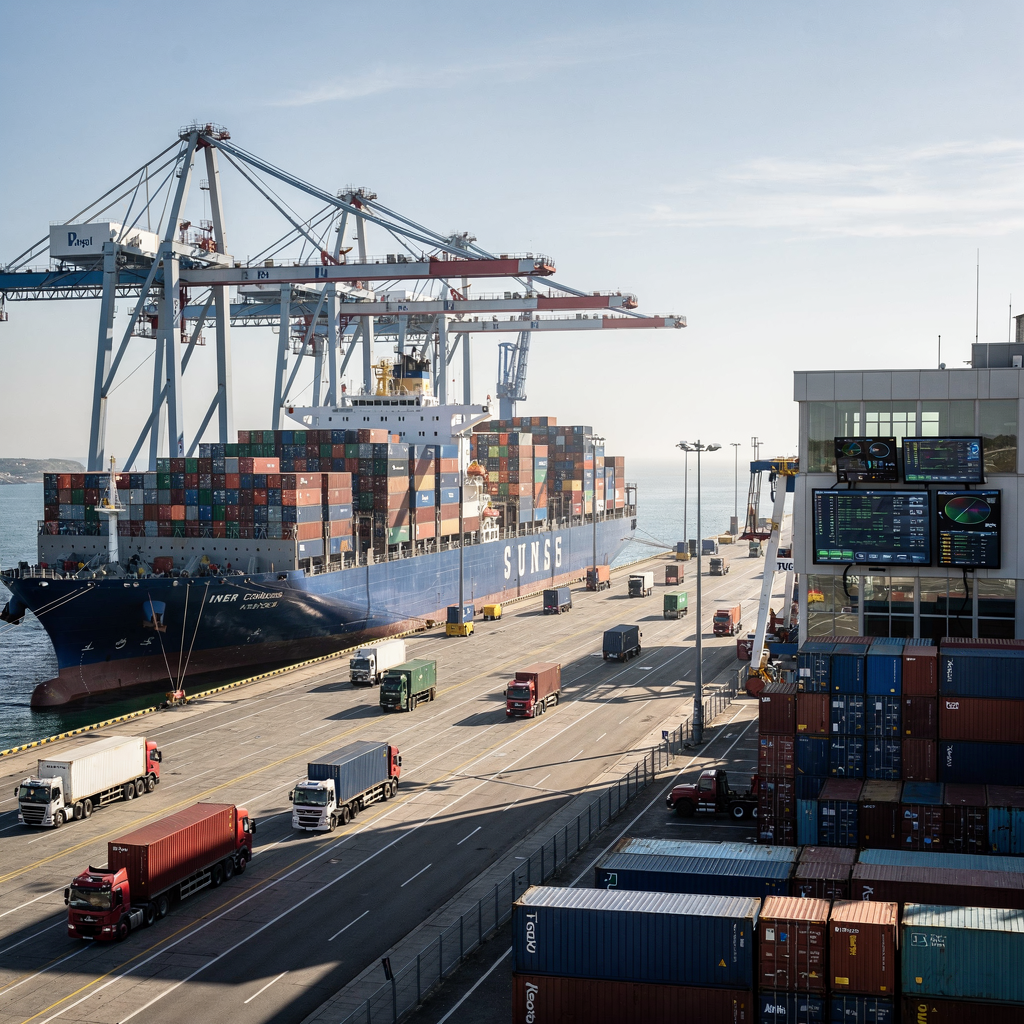
Drowning in a full terminal with replans, exceptions and last-minute changes?
Discover what AI-driven planning can do for your terminal
eta and vessel speed optimization
ETA prediction models and vessel speed optimization form the operational heart of just-in-time strategies. Accurate ETA feeds let a terminal plan berthing with confidence. Therefore, machine learning and AI models now produce more accurate estimates than classic approaches. Research shows deep neural network-based prediction models can improve ETA accuracy and support dynamic vessel speed adjustments deep learning ETA models. These models incorporate AIS, weather, berth schedules and terminal status to forecast arrival times.
Once the estimated time of arrival is reliable, the ship can adjust speed. Slow steaming or small speed adjustments reduce fuel while matching the arrival time to the berthing window. Adjusting the vessel’s speed and planning the voyage so as to make the ship arrive at the optimal date lowers fuel consumption and cuts emission. A DNV study found JIT strategies can reduce fuel consumption by up to 20%, which directly lowers CO₂ output up to 20% fuel reduction.
Techniques include incremental speed changes, single or multiple slow-steam segments, and brief holding patterns outside busy approaches. Practical control of vessel’s speed during the voyage depends on good ETA updates and coordination with port authorities and pilots. For this reason terminals and shipping lines share ETA information continuously. The requested time of arrival and the time of arrival windows then guide the ship’s engine schedule so the vessel’s approach is smooth.
Quantitatively, savings are measurable. Ports that implement AI-based ETA systems and speed optimization report better on-time performance and lower time at anchorage. Some terminals reduce waiting time by as much as 50%, improving port throughput and cutting costs for shipping lines and charterer contracts. In short, better ETA prediction plus careful vessel speed control means less fuel burned, fewer emissions, and more reliable port call timelines. This is a direct improvement in energy efficiency and operational efficiency for both terminals and ships.
implement just-in-time and jit arrivals
To implement just-in-time in a complex port requires digital platforms and robust data sharing. Digital platforms should aggregate ETA feeds, berth schedules, pilot availability and tug bookings. They must also broadcast updates to all parties so ships to arrive can alter speed early and avoid unnecessary waiting to berth. Many ports are upgrading to systems that go beyond bilateral communication and instead offer a port community view that syncs port stakeholders. This reduces frictions and supports smoother port call process.
Stakeholder coordination is critical. Shipping lines, terminals, pilots, tug operators, and port authorities must exchange timely information. A single stakeholder failing to update the system will break the chain. PortXchange and other projects underline the need for standardised data and higher visibility in terminal planning. The lack of common standards remains a major hurdle in the digital transformation of ports and can block the wider uptake of JIT techniques MDPI on digital transformation challenges.
Technically, integration hurdles include legacy systems and the standardisation of messages such as ETA, berthing window notifications, and berth allocation signals. Many operators need to modernise their terminal operating systems to accept real-time inputs. If a port uses an older TOS it may struggle to consume AI-generated ETAs or to automate berth reassignments. For terminals seeking best practice, explore AI decision support for port operations and operating systems to understand integration patterns and benefits AI decision support for port operations.
Operationally, roles and contracts must adapt. Contractual terms between carriers and terminals may need clauses for late arrivals, waiting time compensation, or flexible berthing windows. Port authorities may define a window set by the port for pilot boarding place and arrival sequencing. Also, to achieve reliable JIT arrivals some ports offer incentives or penalties tied to adherence to the window set by the port. Overall, building a resilient digital backbone and clear governance across stakeholders makes implement just-in-time feasible and repeatable.
Drowning in a full terminal with replans, exceptions and last-minute changes?
Discover what AI-driven planning can do for your terminal
benefits of just-in-time in maritime logistics
The tangible benefits of just-in-time are clear. First, fuel consumption drops. Studies indicate up to 20% lower fuel use when ships avoid long waits at anchorage and instead adjust speed to match a berth schedule Wärtsilä insight. Second, ports see fewer ships loitering in approach lanes, which reduces port congestion and improves safety. For example, some ports have reported reductions in waiting time at anchorage by as much as 50% after deploying JIT-like programs ports reporting reduced waiting times.
Economically, lower waiting costs translate into direct savings for shipping lines and cargo owners. The International Transport Forum shows operational improvements and use of larger vessels have already lowered maritime transport costs over the past decade, and JIT practices add to these gains ITF on cost trends. In addition, JIT improves predictability for the entire supply chain by reducing variability in the port call process. This benefits cargo handling, inland connections and onward truck or rail schedules.
Environmentally, emission reductions matter. Less idle time and fewer slow steaming deviations reduce CO₂ and NOx output, which supports IMO targets and local air quality goals. JIT also reduces non-value-added operations like repeated tug movements and excessive run-arounds in the fairway. Together these changes improve the maritime industry’s energy efficiency profile.
Operationally, ports become more competitive by offering reliable berthing and faster cargo turnover. The benefits of just-in-time are not limited to big terminals; smaller terminals can gain by cutting queueing and lowering turnaround variability. Finally, digital automation that handles operational email, ETA updates and berth confirmations can speed communication so humans focus on exceptions rather than routine messages. A platform that automates the email lifecycle helps teams react faster and keeps the port community aligned on the optimal time arrivals.
vessel strategies and commercial side effects
JIT changes vessel scheduling, network planning and commercial contracts. For the shipowner and charterer, meeting a precise berthing window requires flexibility in voyage execution. That may mean small adjustments to vessel speed or even brief delays at sea. These actions can shift costs from anchorage fees and fuel burn to voyage fuel planning or longer hirings. In commercial terms this creates potential contractual renegotiations between shipping line and charterer, with clauses that address penalties for missing the optimal date and berthing window.
There are also commercial side effects to consider. JIT can shift cost burdens. For instance, a shipowner that optimises vessel speed to meet a narrow berthing window may incur extra fuel cost or delay downstream legs. Conversely, the carrier may save anchorage expenses and idle-time-related fuel. Carriers and terminals should therefore evaluate risk allocation in contracts and in slot charters so incentives align. These contractual shifts can influence how attractive JIT becomes for each party.
Risk management is crucial. Ports may offer financial incentives to encourage adherence to time arrivals while also setting clear policies for waiting to berth when unexpected delays occur. Pilots and tugs must be booked with contingency in mind. Additionally, increased reliance on ETA models means that model errors can create downstream disruption. For that reason, many operators maintain a conservative buffer and contingency rules for ship arrivals.
Finally, operational changes on vessels include revised voyage planning and crew directives for slow steaming. Adjusting the vessel’s speed must be balanced with schedule reliability and maintenance windows. Changes in vessel operations affect the entire supply chain because a missed slot affects truck appointments, rail connections and inland terminals. For a complete view on reducing vessel turnaround time and the tactics that support this, see strategies to reduce vessel turnaround time in container terminals strategies to reduce vessel turnaround time in container terminals. In short, JIT offers efficiency and environmental gains but brings commercial trade-offs that must be managed through clear contracts, shared incentives and resilient operational planning.
FAQ
What is just-in-time arrival and how does it differ from traditional arrival practices?
Just-in-time arrival is a coordinated practice that times a ship’s ETA to match a berth’s readiness so the ship docks without long waiting to berth. Traditional arrivals often lead to early ship arrivals and extended anchorage waits, which increase fuel consumption and port congestion.
How much fuel can JIT strategies save a vessel?
Research indicates JIT strategies can reduce fuel consumption by up to 20%, largely by avoiding long idle time at anchorage and by enabling efficient slow steaming source on fuel savings. Actual savings vary by route, ship size and the accuracy of ETA models.
What technology supports accurate ETA prediction?
AI and machine learning models use AIS data, weather, congestion patterns and terminal schedules to improve ETA accuracy. Recent papers show deep neural networks can deliver finer-grained predictions that terminals use to plan berths and crane deployment research on neural ETA models.
Do ports implement JIT the same way everywhere?
No. Implementation varies by port capacity, digital maturity and stakeholder agreements. Major hubs like Rotterdam and Los Angeles pilot different models that reflect their local berth allocation and labour rules, and smaller ports may adopt simpler coordination tools.
How does JIT affect the supply chain?
JIT reduces variability in ship arrivals, which improves truck and rail scheduling and cuts dwell time for cargo. As a result the entire supply chain can run with fewer surprises and lower costs for cargo handling.
Who needs to collaborate to make JIT work?
Shipping lines, terminals, port authorities, pilots, tugs and cargo handlers must coordinate to share ETA updates and resource status. Good collaboration ensures the requested time of arrival aligns with actual terminal readiness.
What are common barriers to implement just-in-time?
Common barriers include legacy systems, poor data standardisation and limited visibility of terminal planning. Digital platforms and agreed message standards are necessary to overcome these hurdles MDPI on challenges.
Can JIT reduce port congestion?
Yes. By smoothing ship arrivals and reducing time at anchorage, JIT lowers local congestion and reduces ship traffic near port approaches. Some ports report up to 50% less waiting time at anchorage after implementing coordinated arrival programs reported reductions.
How do contractual terms change under JIT?
Contracts may be updated to allocate costs and risks for meeting narrow berthing windows, including clauses for delays, incentives for adherence and rules for waiting to berth. Clear contractual language helps align incentives between carriers, terminals and charterers.
How can operations teams reduce email and coordination friction when rolling out JIT?
Automating the operational email lifecycle helps by extracting ETA updates, routing messages and creating structured task records so staff handle only exceptions. Solutions that integrate ERP, TMS and terminal data cut manual lookups and speed decision-making, freeing teams to focus on strategic implementation rather than repetitive coordination.
our products
 stowAI
 stackAI
 jobAI
jobAI
Innovates vessel planning. Faster rotation time of ships, increased flexibility towards shipping lines and customers.
Build the stack in the most efficient way. Increase moves per hour by reducing shifters and increase crane efficiency.
Get the most out of your equipment. Increase moves per hour by minimising waste and delays.
stowAI
Innovates vessel planning. Faster rotation time of ships, increased flexibility towards shipping lines and customers.
stackAI
Build the stack in the most efficient way. Increase moves per hour by reducing shifters and increase crane efficiency.
jobAI
Get the most out of your equipment. Increase moves per hour by minimising waste and delays.