
container terminal operation: Key Roles of Quay Cranes and Berth Allocation
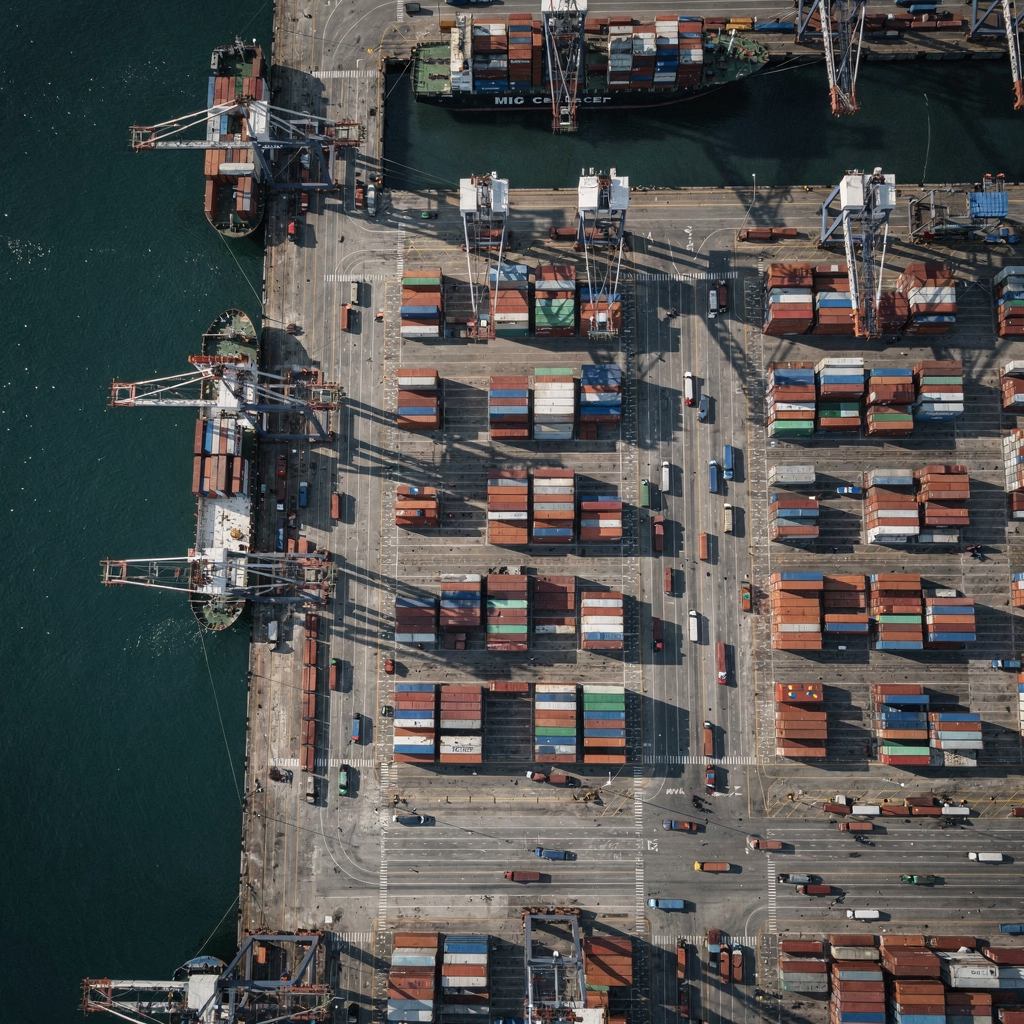
Container terminal operation depends on clear roles, fast decisions and coordinated equipment. The quay crane sits at the heart of loading and unloading. Quay crane teams move containers from ship to shore and from shore to ship. Berth allocation decides where a vessel will tie up. Berth allocation also sets the stage for quay crane deployment and allocation across the quay. When a vessel arrives, port planners assign a berth time window and assign a number of quay crane resources to the vessel. The planner then considers quay length, vessel draft and possible crane interference. Those constraints shape crane placement and the schedule. Poor quay scheduling leads to idle quay crane time and longer vessel turnaround. Ships wait while cranes reposition, and trucks queue while yard blocks congest. Each idle minute raises cost and reduces throughput.
In practice, vessel arrival, berthing and crane deployment form a chain of decisions. First, the terminal assigns a berth and time window. Next, planners select the number of quay crane units and the spanwise positions along the quay. Third, yard resources and trucks get scheduled to receive the container flows. This sequence shows why berth scheduling must act as a decision variable alongside quay crane allocation. If berth allocation and quay crane allocation do not align, operators face a classic scheduling problem. The result is crane interference, deadhead moves, and extra handling operations. To resolve that, teams use scheduling optimisation tools and a mix of rules and models.
Terminal operators focus on minimizing idle time and on container flow continuity. They track metrics such as vessel turnaround, crane productivity and container dwell. This focus drives investment in both planning tools and in real-time control. For readers who want a practical starting point on berth planning, see a focused treatment of the berth allocation problem in terminal operations. For yard-side context, explore yard planning guidance at yard planning software. Teams sometimes add AI and automation to reduce routine email and coordination load.
literature review: optimization techniques in maritime container handling
Research shows a wide range of techniques address the scheduling problem in container operations. Classic methods include linear programming and heuristics. Researchers use heuristics to create fast, feasible plans for berth and quay crane allocation. They then refine those plans with more advanced approaches. Simulation-optimization models combine a simulated terminal system with an optimization engine to test schedules under realistic variability. For instance, simulation-optimization has improved performance in tank container operations and in other terminal use-cases through dynamic modelling and profit-focused scenarios.
Genetic algorithm research has a long history in container scheduling. Many studies pair genetic algorithm search with simulation to tackle the joint yard-crane and quay-crane scheduling challenge. A notable study on joint scheduling emphasises that “joint scheduling of yard crane, yard truck, and quay crane is essential to improve terminal throughput and reduce operational costs” in the MDPI review. Those joint approaches reduce bottlenecks because they consider container moves across layers. Other authors apply particle swarm ideas to the quay crane allocation problem and to yard block assignments.
Digitalisation and real-time control systems also appear in recent work. For example, ports now use advanced wireless networks to keep crane fleets and control systems in sync in real time (Rajant port wireless solutions). Studies link increased automation to higher throughput and lower per-container costs. One industry report shows optimized terminals can raise throughput by up to 30% and reduce some costs dramatically (Rise of Automated Terminals). Other practical guides show that improved quay crane scheduling reduces turnaround time by 15-25% (optimizing terminal operations).
Despite strong progress, research gaps remain. Many papers treat quay crane assignment and berth allocation separately. Few integrate yard operations in real time. That gap motivates an integrated optimization model and a particle swarm optimization approach for combined berth and quay crane allocation. The literature review suggests hybrid algorithms can balance speed and solution quality while meeting terminal constraints.
Drowning in a full terminal with replans, exceptions and last-minute changes?
Discover what AI-driven planning can do for your terminal
model: Designing a Particle Swarm optimization Framework
We design a model that encodes berth time windows and quay crane positions as particles. Each particle represents a candidate allocation and a timeline for quay crane moves. The particle vector includes berth start times for each vessel and the spanwise indices where quay crane units will operate. The model objective is to minimize total vessel idle time and crane deadhead moves, while respecting berth and quay constraints. We therefore build an objective function that sums vessel waiting, crane reposition time and penalties for container rehandles. The objective function aims to minimize the total measured cost and to balance throughput against operational cost.
Key constraints include non-overlapping crane assignments, quay capacity and vessel draft limits. The construction prevents two quay crane booms from occupying the same span at the same time. The model also enforces minimum spacing between adjacent quay crane units to avoid interference. Vessel priority rules, such as priority for feeder services or for time-sensitive container shipping, enter the constraint set. We add rules for yard-side handover windows, so the optimization model does not produce unrealistic handoffs that the terminal yard cannot absorb. This keeps the solution feasible for terminal resources.
Particle encoding uses discrete berth slots and discrete crane positions. We allow particles to move in solution space using velocity terms that represent shifts in start time and in crane span. For implementation, we set swarm size, inertia weight and acceleration factors carefully. In British English context we recommend a modest swarm of 40–80 particles, an inertia weight that decays from 0.9 to 0.4 and acceleration factors of about 1.5 and 2.0 for the cognitive and social components respectively. These settings trade speed for exploration. The model supports hybrid moves where particles occasionally call a local search to improve crane splits and to resolve minor berth conflicts. This yields faster convergence in practice.
Because the model integrates berth and quay crane allocation, planners can test multiple what-if scenarios. The model outputs berth schedules, quay crane allocation charts and metrics such as number of quay crane moves, vessel idle time and expected container flow to yard blocks. For deeper yard-side work, consult resources on container terminal yard optimisation software solutions such as those described at container terminal yard optimisation software solutions.
algorithm: Integrating Genetic Algorithm and PSO for yard operations
The hybrid algorithm uses PSO for coarse allocation and genetic algorithm for local fine-tuning. First, PSO searches the global space for good berth windows and for a near-feasible distribution of quay crane assets. PSO excels at quickly finding promising regions. Then, a genetic algorithm takes the best particles and performs crossover and mutation on quay crane splits and on yard block handover sequences. This two-stage flow reduces the need for exhaustive search and often yields superior schedules compared to standalone genetic algorithm or particle swarm optimization runs.
The algorithm flow works as follows. Initialize particle positions with heuristic berth allocation and with a simple equal-split of quay cranes. Run PSO for a set number of iterations to locate low-cost regions. Extract top candidate solutions and feed them to the genetic algorithm. The genetic algorithm performs local optimisation on quay crane allocation, yard crane scheduling and truck pick-up windows. The hybrid approach respects yard operations because yard crane scheduling and truck operations feed back into quay crane scheduling decisions. For example, if trucks cannot arrive within an assigned handover window, the genetic algorithm penalises the solution and promotes alternatives. This loop ensures that yard crane scheduling problem constraints influence quay crane allocation and berth timing.
We observe that convergence speed improves relative to standalone methods. PSO finds a strong baseline faster, and GA refines it to remove local congestion. Solution quality typically improves, giving lower total vessel idle time and fewer quay crane deadhead moves. Computational requirements depend on terminal size. For a mid-sized container terminal with ten berths and 20 quay cranes, runs require modern multi-core servers for near-real-time reoptimisation. For real-time implementation, teams can limit iterations or use warm-start data. For those interested in real-time conflict handling, see approaches to real-time conflict resolution between equipment pools. This hybrid algorithm can run in minutes with careful tuning and in seconds for incremental reoptimisation。
Drowning in a full terminal with replans, exceptions and last-minute changes?
Discover what AI-driven planning can do for your terminal
case study: Applying container terminal optimization in a busy port
This case study examines a busy container port with annual throughput of 6 million TEU. The port has eight berths and a fleet that includes 28 quay cranes and multiple yard crane fleets. We define two scenarios. The baseline uses manual scheduling and rule-of-thumb quay crane splits. The second scenario uses our PSO-driven optimisation model and the hybrid algorithm. We simulate a month of operations including weekday peaks and occasional berth disruptions.
Results show clear benefits. The PSO-driven plan increases terminal throughput by roughly 18–28% in peak windows and reduces average vessel turnaround by about 20%, echoing reported gains where optimized operations cut turnaround by 15–25% (optimizing terminal operations). Equipment utilisation improves as well: the number of idle quay crane hours drops and the number of deadhead quay crane moves falls by nearly 40%. These gains align with aggregated reports of throughput increases in automated container terminal settings (rise of automated terminals).
We measured sensitivity to vessel arrival patterns. Under steady arrivals, the optimisation model sustained high throughput and low crane idle time. Under clustered arrivals and random delays, the model reallocated quay cranes and adjusted berth time windows to minimise knock-on effects. When a berth disruption occurred, the hybrid algorithm re-routed cranes and sequenced yard moves so the overall system absorbed the shock. The case study therefore demonstrates how an optimisation approach and the allocation and quay crane assignment can preserve performance under stress.
For port container planners considering rollout, run pilot tests in a single berth or on a single shift first. Link the optimisation output to the terminal operating system and to real-time yard controllers. For guidance on integrating AI with port planning, read about AI modules for automated container port planning. Also, teams that automate routine email and coordination can free planner attention for optimisation.
terminal efficiency: operations research insights to optimize throughput
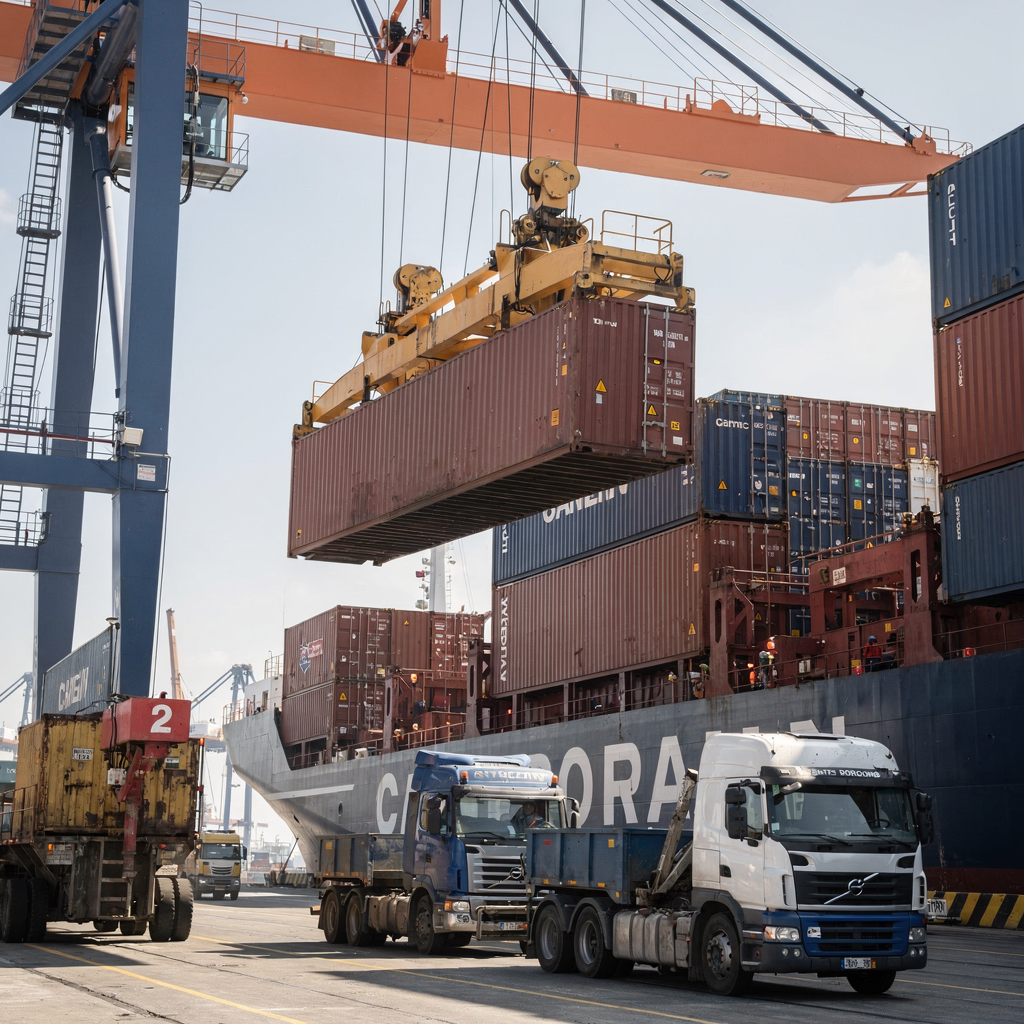
Operations research frames the optimisation problem as trade-offs between cost and service level. The objective is to minimize delays while controlling handling cost. In operations research terms, we balance the cost of additional quay crane moves against the cost of vessel waiting. The integrated optimisation approach reduces both costs and time. It also improves container handling consistency. The operations research lens highlights dual values, sensitivity and the marginal benefit of adding a quay crane or a berth slot.
Quantitatively, container terminal optimisation yields measurable gains. Studies and industry reports show terminals can raise throughput notably by using automated and optimized processes (rise of automated terminals). One paper emphasised joint scheduling benefits that directly reduce operational cost and increase throughput (joint scheduling study). For terminal operators, the objective is to minimize total vessel idle time and crane deadhead moves while keeping yard flows steady. The optimisation approach therefore should measure cost per container moved, average quay crane productivity, and the impact on truck operations and terminal gate throughput.
Best practices for rolling out PSO-based scheduling systems include pilot testing, phased integration with the terminal system and close monitoring of yard block congestion. Start with non-critical berths and with night shifts where change risk is lower. Use digital twins to validate expected outcomes before live deployment. For teams that want real-time adjustment, integrate the optimisation process with robust wireless networks for real-time operational control (port wireless solutions). Also, connect optimisation outputs to gate and truck scheduling modules to reduce queuing at the terminal gate. For practical yard-side software, review container terminal yard optimisation software solutions.
Future trends will push AI-driven digital twins and deeper integration with port community systems to coordinate berth slots across multiple terminals. Particle swarm optimization and hybrid algorithms will sit alongside reinforcement learning and predictive models. These tools will help terminal operators respond faster to changes and minimize disruptions. In the longer term, automated container terminal hardware and predictive scheduling will reduce energy consumption, equipment idle time and container dwell, delivering clearer savings for terminal operators and shipping lines alike.
FAQ
What is quay crane allocation and why does it matter?
Quay crane allocation assigns specific quay crane resources to vessels and to time windows. Good allocation matters because it controls crane idle time, vessel turnaround and the flow of container moves to the terminal yard. Efficient allocation lowers cost and increases throughput.
How does berth allocation interact with quay crane scheduling?
Berth allocation sets where and when vessels dock, while quay crane scheduling determines which cranes serve those vessels and when. The two decisions are interdependent, and integrated scheduling reduces conflicts, minimizes crane interference and speeds up loading and unloading operations.
What optimisation methods are common in container terminal planning?
Planners use linear programming, heuristics, genetic algorithm and simulation-optimization methods. Hybrid approaches combine particle swarm optimization with genetic algorithm for better global search and local refinement. Each method trades speed against solution quality.
Can a particle swarm optimization model handle yard constraints?
Yes, a particle swarm optimization model can include yard constraints by encoding yard handover windows and yard crane availability into the particle structure. The model then optimises berth timing and quay crane placement while keeping yard operations feasible.
How does the hybrid PSO–genetic algorithm approach improve results?
PSO quickly finds good global solutions while genetic algorithm refines them for local issues such as crane splits and yard block sequencing. The hybrid reduces computation time and improves the final schedule compared with either method used alone.
What data does a terminal need to run these optimisation models?
Terminals need vessel arrival estimates, quay crane counts and specifications, quay length, yard topology, truck arrival patterns and yard crane schedules. Accurate data improves model output and helps the optimisation process produce realistic plans.
How quickly can such algorithms respond to a berth disruption?
With proper tuning and warm starts, hybrid algorithms can reoptimise a schedule within minutes. For larger terminals, real-time constraints may require incremental reoptimisation or precomputed contingency plans so teams can act fast.
What role does automation play in container terminal optimisation?
Automation provides predictable handling times and continuous operations. Automated container terminal hardware plus optimisation software increases throughput and reduces labour variability. Automation also enables higher utilisation of quay cranes and yard equipment.
How should terminal operators pilot an optimisation rollout?
Start with one berth or one shift, integrate the optimisation outputs into the terminal operating system and monitor KPIs closely. Use pilots to validate the optimisation model and to tune parameters such as swarm size and penalty weights before scaling up.
By reducing inbox load, planners can act on optimisation outputs faster and communicate changes to stakeholders with consistent, data-grounded messages.
our products
 stowAI
 stackAI
 jobAI
jobAI
Innovates vessel planning. Faster rotation time of ships, increased flexibility towards shipping lines and customers.
Build the stack in the most efficient way. Increase moves per hour by reducing shifters and increase crane efficiency.
Get the most out of your equipment. Increase moves per hour by minimising waste and delays.
stowAI
Innovates vessel planning. Faster rotation time of ships, increased flexibility towards shipping lines and customers.
stackAI
Build the stack in the most efficient way. Increase moves per hour by reducing shifters and increase crane efficiency.
jobAI
Get the most out of your equipment. Increase moves per hour by minimising waste and delays.