
Optimising LASHING FORCES: Importance and Regulatory Compliance
Lashing forces are the tension and securing forces used to prevent container movement on a deck during transit. They keep cargo stable, and they preserve the structure of the ship and the container stacks. First, lashing forces protect onboard personnel and the cargo itself. Second, they preserve vessel stability and reduce the likelihood of stack collapse. Third, they contribute to predictable insurance outcomes and lower claims. For example, research shows that optimised lashing can reduce container damage by up to 30%. This statistic highlights the commercial impact of correct securing and proper configuration.
Large container ships stack higher and further. As a result, lashing complexity rose with vessel size. The Gard Guidance on freight containers details how mega-ships increase the likelihood of lateral and vertical movement and the need for more nuanced lashing bridge designs (Gard Guidance). Engineers must consider weight distribution, stack height, and dynamic sea loads. They must also monitor twistlocks, lashing rods, and lashings to maintain an acceptable parameter set.
Regulation guides practice. IMO and SOLAS lay out requirements for safe stowage and securing. Terminal operators and ship operators must follow these standards. Classification societies also inspect compliance and advise on load and lashing configuration. Thus, terminals should standardize lashing procedures and record parameters for each voyage. For reference, ports can integrate vessel stability calculation tools to validate load and lashing plans; see a software overview on vessel stability integration vessel stability calculation software.
Practically, an engineer on a vessel must check lashing bridges, locks, and twistlock condition before departure. They must confirm that the vertical and horizontal constraint mechanisms match the stowage plan and the load distribution. They should avoid excessive tension that could damage container structure. They should also avoid under-tension that could allow movement. Finally, they should document lashing forces and include them in the ship’s manifest. This sequence of checks reduces risk, aids inspections by a classification society, and supports safer cargo handling during long deepsea passages.
Improving CRANE PRODUCTIVITY: Key Metrics and Industry Outcomes
Crane productivity defines terminal throughput and vessel turnaround. Key metrics include moves per hour, crane cycle time, and idle time. Operators measure cycle time as the seconds from lift to release. Traditional manual operations averaged about 60 seconds per container move. Automated and optimized systems have cut that to around 40 seconds in some terminals (Transport 2040). Consequently, terminals recorded substantial gains in throughput and port capacity utilization.
The Port of Antwerp reported crane productivity improvements after investing in automation and scheduling. After implementation, crane moves rose by 15–25% (Port of Antwerp research). Thus, vessel port stay time dropped and berth productivity rose. For example, a shorter crane cycle time means the vessel spends fewer hours alongside. Therefore, the terminal can accept more vessels and increase throughput relative to local GDP growth.
Crane automation also changes the operator role. Instead of performing repetitive lifts, the crane operator supervises multiple automated functions and intervenes when exceptions occur. That shift increases human effectiveness, and it reduces fatigue-related errors. In addition, automated scheduling algorithms sequence lifts to avoid unnecessary repositioning. They optimize the order of moves to reduce cross-deck traffic and to protect stability during loading and unloading.
To learn more about scheduling approaches and avoiding equipment starvation, terminals can consult AI approaches to quay crane scheduling and crane workload strategies. For example, advanced crane-workload distribution strategies can balance demand across cranes and improve cycle reliability AI approaches to quay crane scheduling and crane workload distribution strategies. These resources explain algorithm choices and real-time sequencing that lower idle time and increase moves per hour. Finally, a well-tuned crane system links to yard systems to ensure the next container is ready for pickup, thereby shortening the entire loop for the vessel and the terminal.
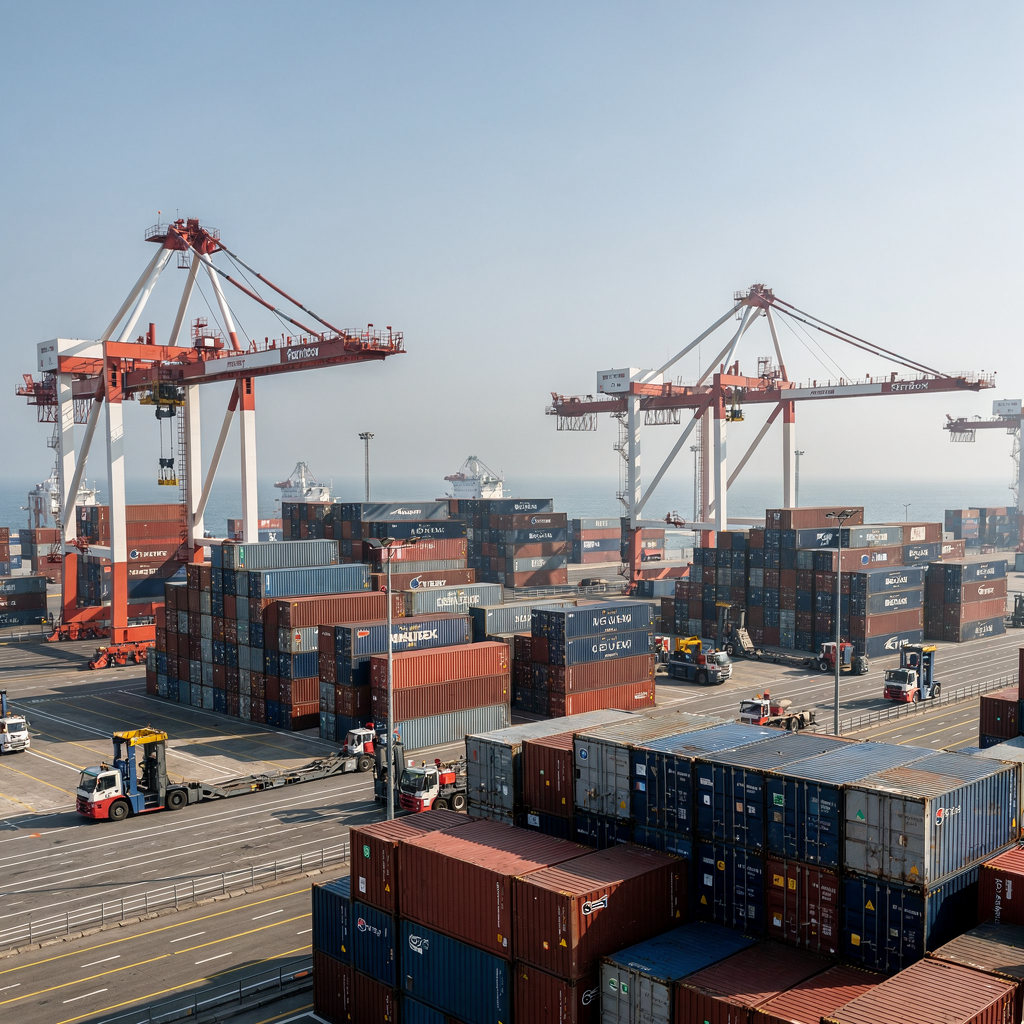
Drowning in a full terminal with replans, exceptions and last-minute changes?
Discover what AI-driven planning can do for your terminal
Automation in Container Ports: Sensor-Driven Lashing Systems
Automation now extends beyond cranes. Automated lashing systems use tension sensors, actuators, and control logic to set forces. These systems attach to twistlocks and lashing rods and measure real-time tension on each securing line. Then, they adjust tension dynamically as the vessel encounters changing sea states. The system logs each parameter for audit and inspection. Thus, operators gain traceability and evidence for claims or regulator reviews.
Transport 2040 highlights that automation improves both safety and efficiency in ports (Transport 2040). Automated lashing machines reduce the time engineers spend on high-risk tasks on deck. They also lower human error in tension application. For instance, a sensor-driven mechanism can detect an excessive load trend and relieve tension before structural damage occurs. The mechanism can also tighten when the vessel lists or pitches, thereby maintaining acceptable securing parameters.
Terminals and ship operators can link automated lashing with yard and vessel systems. When a container arrives, the stowage plan conveys the required lashing configuration and tension parameter. The sensor system verifies the dimension, weight, and lashing arrangement. It then records the final setting back into the port’s infrastructure. This feedback loop reduces inspection time and simplifies handovers between terminals and ship crews.
From an operational perspective, the combination of sensors, computer vision, and actuator control supports safer on-deck work. Computer vision inspects twistlocks and lock condition during lashing and flags anomalies. Meanwhile, sensor logs show tension over time so engineers can assess wear and plan maintenance. Operators therefore gain flexibility to schedule maintenance without disrupting vessel calls. For more on related terminal systems, see real-time equipment dispatch optimization and asset tracking systems for port operations real-time equipment dispatch optimization and asset tracking systems.
AI-Driven STOWAGE PLAN: Data-Backed Crane Scheduling
An AI-driven stowage plan optimizes container placement for stability, crane productivity, and minimal repositioning. AI algorithms ingest container weight, destination, draft constraints, and special handling flags. Then, they propose an optimized configuration for both the vessel and the terminal. The algorithm considers stability constraints and the sequence of moves that the cranes will execute. As a result, the stowage plan reduces unnecessary moves and shortens crane idle time.
AI cuts repositioning by using weight and destination clustering. For example, the algorithm places containers bound for the same discharge port in adjacent bays and tiers. It also respects vertical center of gravity and horizontal weight spread to preserve vessel stability. This task reduces cross-deck traffic and minimizes heavy rehandles. Consequently, terminals report fewer wasted crane cycles and lower fuel use for yard trucks.
Recent maritime reporting notes that “Ship operators will increasingly pay for AI solutions that lower costs with data-backed decisions,” and that trend reflects real spending on applied tools “Ship operators will increasingly pay for AI solutions…”. For example, AI scheduling and stowage systems have been linked to reductions in vessel idle time by around 20% in operations that combine automated cranes and optimized stowage sequencing. That reduction stems from better sequencing, reduced reposition moves, and faster hatch-to-hatch operations.
Digital twins and simulation feedback loops strengthen AI. Operators can simulate a stowage plan and see how cranes will move in a sequence. They can then adjust configuration parameters and run scenarios for extreme sea conditions or draft constraints. These tools increase the accuracy of predicted cycle times and the effectiveness of operator decisions. For terminals interested in capacity planning, check container-terminal-capacity-optimization and simulation frameworks for more guidance container-terminal-capacity-optimization using AI and container terminal simulation software. Finally, planners should integrate AI outputs with human oversight. This approach ensures safety and preserves the operator’s judgment in non-standard situations.
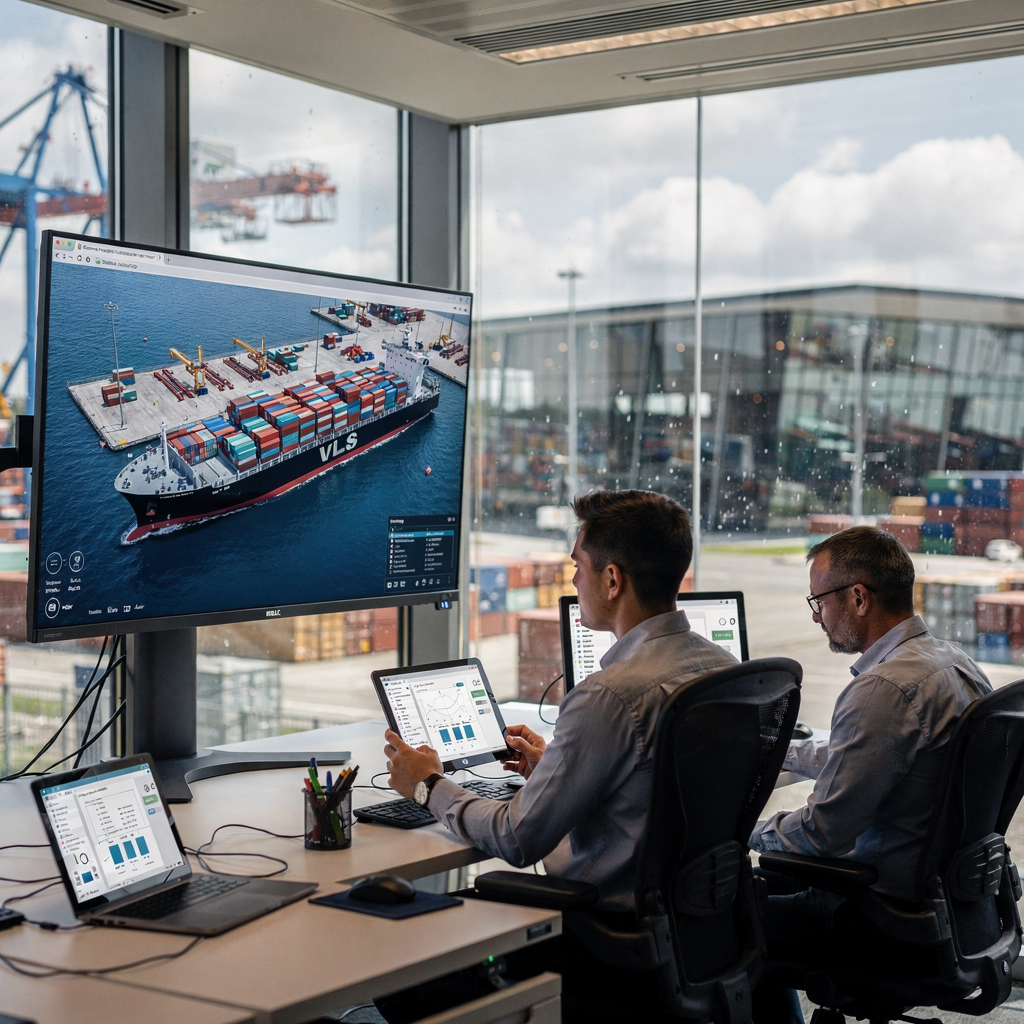
Drowning in a full terminal with replans, exceptions and last-minute changes?
Discover what AI-driven planning can do for your terminal
Statistical INSIGHTS: Throughput, Damage Reduction and Cost Savings
Quantitative evidence drives investment decisions. For instance, terminal throughput growth often outpaces regional GDP when investments focus on productivity. Studies show leading ports achieving throughput growth rates exceeding 5% annually after targeted upgrades (Transport 2040). These gains reflect better crane cycles, yard flows, and optimized stowage plans. They also reflect improved infrastructure and reduced vessel port stay time.
On damage reduction, automated lashing and optimized securing reduced container damage incidents by about 30%, according to industry guidance (Gard Guidance). That reduction translates to millions saved annually in claims and repairs. Insurance premiums can decline as terminals and ship operators document consistent application of acceptable lashing parameters and show records to a classification society.
Crane cycle improvements also show clear ROI. When cycle time falls from 60 to 40 seconds, throughput can increase by up to 25% in high-density operations (Port of Antwerp research). Faster moves cut berth time and free critical quay space for other vessels. Suppose a container terminal handles 100,000 TEU per month. A 20% improvement in crane productivity can deliver tens of thousands more TEU per year without expanding yard area. Thus, the capital cost of automation can pay back in fewer years than expected.
When calculating ROI, include both direct savings and indirect benefits. Direct savings include fewer damaged containers, lower insurance claims, and reduced overtime. Indirect benefits include improved customer satisfaction, fewer cascading delays, and better vessel scheduling. Also, consider lifecycle maintenance for automated systems. Train operators and maintain sensors to preserve long-term effectiveness. Finally, standardize reporting so planners can compare periods before and after automation. This step helps classify improvements and justify further investment in industrial automation across the terminal.
Case Studies and Recommendations: Best Practices for Secure Cargo Handling
Case studies prove useful. The Port of Antwerp achieved a 15–25% crane productivity gain after adopting automation and better scheduling (Port of Antwerp research). The same terminal reported improved berth throughput and reduced vessel idle time. In the U.S., analysts emphasize that the industry must adapt with automation and data analytics to handle mega-ships and complex logistics. Daniel C. Vock writes that “The industry must navigate a future shaped by automation and data analytics to remain competitive” (CQ Researcher).
Experts recommend phased implementation. First, pilot sensor-driven lashing on a subset of vessels and validate data. Second, roll out AI-based stowage planning for selected vessel classes. Third, integrate crane scheduling with yard and vessel systems. This staged approach limits risk and spreads capital spend over multiple budget cycles. It also allows operator training and iterative improvements.
From an operational design view, include these steps. Standardize load and lashing parameters across terminals. Adopt a consistent configuration for twistlocks and lashing rods. Use computer vision to inspect locks and twistlocks, and automate fault detection. Incorporate digital twins to simulate stowage plans and verify stability under various sea states. For implementing human-AI collaboration in planning and operations, terminals can reference strategies that align humans and AI agents human-AI collaboration in terminal operations planning.
Finally, recommend research directions. Study EU harmonization of lashing standards and the role of classification societies in approving automated lashing. Encourage PhD-level projects on multi-objective algorithms that balance stability, crane productivity, and insurance risk. Also, evaluate the industrial application of combined sensor and AI stacks for long voyages. These projects should measure effectiveness, measure the reduction in excessive wear on locks, and propose acceptable thresholds for lashing parameters. This work will yield safer, more efficient terminals and more secure cargo handling for the future.
FAQ
What are lashing forces and why do they matter?
Lashing forces are the tension and securing loads applied to containers to prevent movement during sea voyages. They matter because correct forces protect cargo, maintain vessel stability, and reduce damage and insurance claims.
How does automation improve crane productivity?
Automation standardizes crane motions, sequences lifts, and reduces unnecessary repositioning. As a result, terminals lower cycle time and increase moves per hour, which shortens vessel turnaround and raises throughput.
Can automated lashing systems adjust during rough sea states?
Yes. Sensor-driven automated lashing systems measure tension in real time and adjust actuators as sea conditions change. This capability reduces manual checks and preserves acceptable securing parameters over long voyages.
What role does AI play in stowage plan creation?
AI ingests container weight, destination, and special handling flags to propose an optimized stowage plan. It balances crane sequence, stability limits, and minimal repositioning to improve operational efficiency.
Are there measurable cost savings from these technologies?
Yes. Studies show up to a 30% reduction in container damage with automated lashing and significant throughput gains with improved crane productivity. These savings translate into lower claims and faster vessel cycles.
How do these systems affect the crane operator’s job?
Operators shift from repetitive manual tasks to supervisory and exception-handling roles. They monitor systems, intervene when needed, and use AI outputs to plan efficient sequences.
What is the impact on vessel stability?
Optimized stowage and correctly applied lashing enhance stability by managing the vertical and horizontal center of gravity. Terminals should always validate plans with stability software before finalizing a configuration.
Do classification societies approve automated lashing systems?
Classification societies review and certify systems when they meet safety and reporting standards. Terminals should document parameters and provide logs for inspection to obtain acceptance.
How should a terminal start implementing these technologies?
Start with pilot projects that test automated lashing on a subset of vessels and AI stowage plans on specific vessel classes. Then, scale in stages while training staff and integrating with terminal infrastructure and ERP/TMS systems.
Where can I learn more about scheduling and capacity optimization?
There are practical resources on quay crane scheduling, yard storage, and capacity planning that explain algorithms and deployment. For example, see content on AI approaches to quay crane scheduling and container-terminal-capacity-optimization for deeper technical guidance AI quay crane scheduling and container-terminal capacity optimization.
our products
 stowAI
 stackAI
 jobAI
jobAI
Innovates vessel planning. Faster rotation time of ships, increased flexibility towards shipping lines and customers.
Build the stack in the most efficient way. Increase moves per hour by reducing shifters and increase crane efficiency.
Get the most out of your equipment. Increase moves per hour by minimising waste and delays.
stowAI
Innovates vessel planning. Faster rotation time of ships, increased flexibility towards shipping lines and customers.
stackAI
Build the stack in the most efficient way. Increase moves per hour by reducing shifters and increase crane efficiency.
jobAI
Get the most out of your equipment. Increase moves per hour by minimising waste and delays.