
AI and maritime logistics: Transforming Container Port Operations
AI is reshaping how terminals manage container traffic. The term AI-driven container port yard management systems describes software and hardware that coordinate container movements and storage. These systems combine real-time sensors, machine learning, and digital twin models to optimize planning. As a result, terminal operators see smoother terminal operations and faster turnaround. Global trade continues to grow. Therefore ports face mounting pressure to increase throughput without expanding land. For example, smart port research shows that AI can improve storage capacity utilization by up to 20% (Smart Port Market: Revolutionary Growth & Future Insights 2025). Also, studies estimate 15–25% faster handling times when operations use artificial intelligence (How AI is Influencing the Shipping Industry Today). These numbers justify investment. Yet the value goes beyond speed. AI helps ports reduce idle time, lower costs, and improve resilience against disruption.
Core components of a modern yard management approach include continuous real-time data feeds, advanced machine learning, and a digital twin of the container yard. Together they enable adaptive allocation of yard space and equipment. Operators gain a single management system view that supports better decision-making. In practice, an AI-powered scheduling module runs optimization routines, while an ai-driven planner suggests moves that reduce dwell time and avoid bottleneck formation. Integration also links the yard to wider supply chain systems. Thus freight planners and receiving warehouses coordinate handoffs, which further improve port efficiency.
For readers who want technical details, see our guide to operational efficiency in container ports, which explains how AI models reduce driving distances and cut processing time Operational efficiency in container ports. Also, terminals can benefit from targeted AI modules for yard storage optimization AI modules for yard storage optimization. First steps typically include data cleanup, sensor deployment, and small pilots. Then teams scale successful pilots across the entire port. This staged approach reduces risk and speeds return on investment. In short, AI enables ports and terminals to become more competitive, greener, and more predictable.
Challenges in container terminal yard operations
Traditional container yard workflows strain under volume spikes. Yard operations often rely on manual scheduling, visual checks, and siloed data. As a result, congestion builds. Trucks queue. Cranes wait. Stacks become inefficient. The cost of delays is high. Ship turnaround slows. Truckers lose hours. Terminal operators face penalties. Land sits underused. For many ports, expanding physical yard space is costly or impossible. So improving utilization through smarter planning is essential.
Manual systems also raise safety and environmental concerns. Workers enter busy lanes to guide moves. Accidents and near misses occur. Fuel burns while equipment idles. Emissions rise. Automation helps, but legacy IT often blocks progress. Conventional software lacks the flexibility to adapt to unexpected disruption. Moreover, siloed systems hide the full picture. For example, a crane schedule might not consider current yard space, truck ETAs, or rail arrival times. That gap increases idle time and raises the chance of missed connections.
Terminal operators need tools that see across every process. A container yard that still uses paper logs or spreadsheets will fall behind. Data must flow between terminal operating systems and external carriers. Sensors and IoT feeds must feed models that predict arrivals and guide allocation. To reduce inefficiency, ports must modernize their data management and update operational workflows. For a closer look at reducing truck dwell at gateways, see our article on reducing truck turnaround time at deepsea container ports Reducing truck turnaround time at deepsea container ports. That piece explains how real-time visibility cuts queues and improves throughput.

Drowning in a full terminal with replans, exceptions and last-minute changes?
Discover what AI-driven planning can do for your terminal
Machine learning, predictive analytics and digital twin in yard management
Machine learning and predictive analytics power smarter yard planning. Machine learning models analyze historical data and current feeds to forecast container arrivals and departures. Consequently planners can predict yard occupancy well before a vessel berths. This forecast informs dynamic allocation of space and equipment. For example, an algorithm can recommend where to place inbound boxes to minimize re-handles. That routing reduces unnecessary moves. The result is lower handling counts and shorter dwell time.
Digital twin simulations let teams test scenarios without physical risk. A digital twin reproduces yard layout, equipment positions, and container stacking logic. Teams can simulate storms, peak arrival windows, or equipment failure. Then they assess the impact on processing time and resource needs. The tandem of predictive analytics and a digital twin supports better decision-making under stress. Research highlights digital twins as a key tool for resilience and sustainability in ports (Digital Twin for resilience and sustainability assessment of port facility).
Quantitative impact is clear. Predictive models reduce dwell time and improve slot planning. Early adopters report productivity improvements and lower costs. For instance, AI-enabled logistics in ports have reduced container handling time by roughly 15–25% in some studies (AI-Enhanced Smart Maritime Logistics). These savings come from fewer re-handles, smarter allocation, and less congestion. Predictive routing also cuts unnecessary movements, which reduces fuel use and emissions. For more on modeling port yard capacity, see our predictive modeling resource Predictive modeling for port operations yard capacity. In practice, terminals using advanced planning report better utilization and fewer delays.
Automation and computer vision in container yard workflows
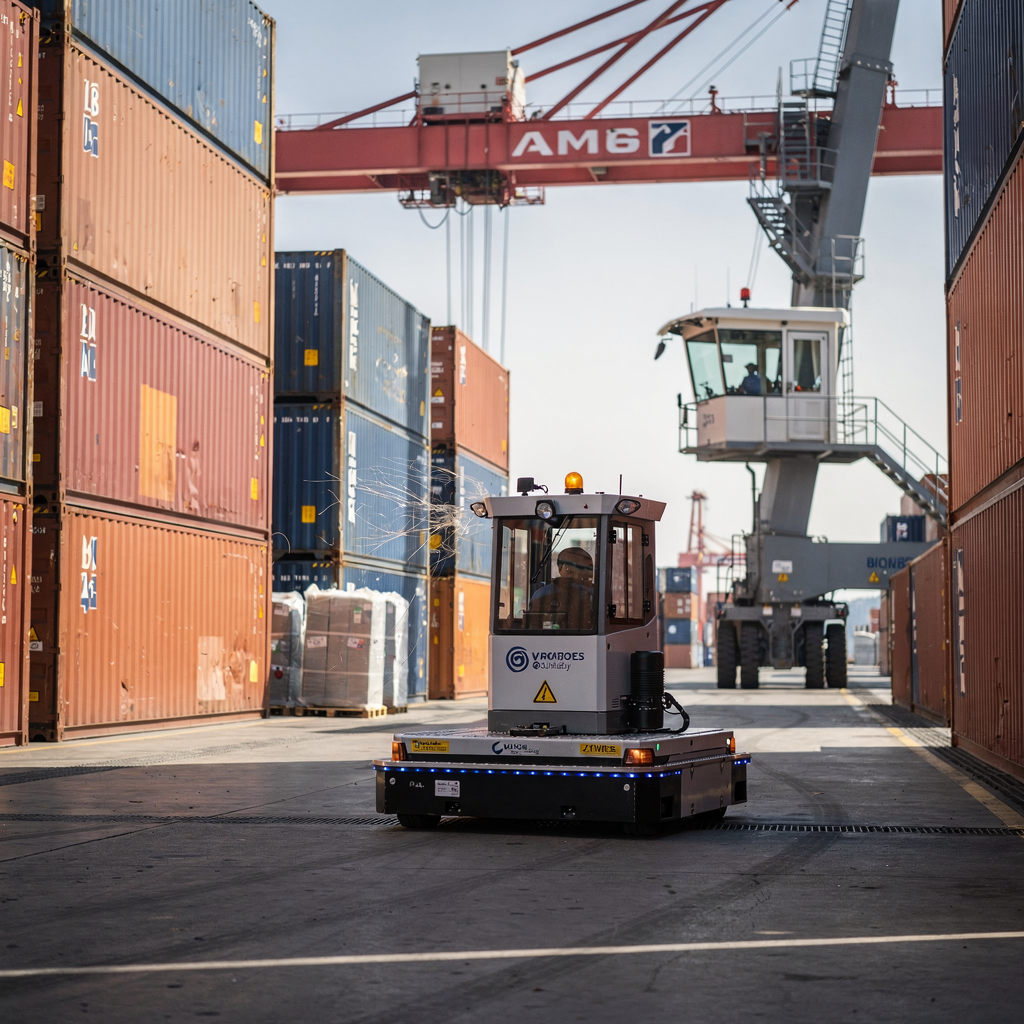
Automation now includes fleets of automated guided vehicles and semi-autonomous cranes. Automated guided vehicles handle repetitive moves, while automated stacking cranes assist with high-density storage. These automated systems reduce manual labor on busy lanes and raise equipment uptime. Computer vision complements mechanical automation. Cameras and deep learning detect container IDs, check for damage, and monitor yard safety. Thus surveillance systems spot anomalies and alert operators quickly.
Path-planning algorithms compute efficient routes for AGVs and trucks. Collision-avoidance uses sensor fusion and rapid local decision-making to keep traffic flowing. These algorithms also help automate yard planning tasks. For example, a path planner selects sequences of moves that avoid congestion and reduce driving distances. The result is lower fuel use, less equipment wear, and faster container movements.
Productivity gains come from fewer manual handoffs, shorter processing time, and higher utilization of cranes and vehicles. Terminals using automation report lower labour costs and greater consistency in operations. In some ports, automation plus AI reduced operational costs by up to 40% in targeted areas (How AI is Influencing the Shipping Industry Today). Meanwhile, camera-based inspection reduces inspection time and improves safety by limiting human exposure to hazardous zones. For engineers who want to explore real-time equipment dispatch strategies, our guide explains how smarter dispatching cuts waits and improves yard efficiency Real-time equipment dispatch optimization in container terminals.
Drowning in a full terminal with replans, exceptions and last-minute changes?
Discover what AI-driven planning can do for your terminal
AI integration for operator decision support and workflow optimisations
Successful AI adoption depends on deep integration. Systems must connect to terminal operating systems, carriers, and warehouse operations. Real-time data streams feed models and dashboards that guide the human operator. Decision support systems summarize options, list trade-offs, and recommend moves. Operators then approve plans or handle exceptions. Human–machine collaboration is central. Operators keep authority. AI speeds routine choices and highlights issues that need human judgement.
For communications and email workflows, AI agents play a growing role. The platform reads inbound messages, finds related records in ERP or TMS, and drafts grounded replies. This use of ai agents reduces manual lookup, so operators spend more time on high-value decisions and less on repetitive triage. The result is faster response times and better traceability for exceptions. In turn teams can react faster to shipment disruptions and avoid cascading delays.
Real-time data and data management are the backbone. Dashboards show current yard space, crane status, and rail ETAs, and they use AI to rank suggested actions. AI platforms also provide training modules and role-based views, which reduce cognitive load for new staff. Training and change management matter. Terminals must teach staff to trust AI insights and to intervene when required. When teams adopt a phased rollout, they capture early wins and improve acceptance. For guidance on human-AI teamwork in planning, see our piece on human–AI collaboration in terminal operations planning Human-AI collaboration in terminal operations planning.
AI implementation to optimize port logistics: Impact and future directions
Start with a practical roadmap. First prepare data and deploy sensors. Next run pilot projects focused on narrow goals, such as reducing re-handles or shortening truck queues. Then scale successful modules across the overall terminal. This approach limits risk and shows value early. AI implementation involves cross-functional teams from IT, operations, and business units. Integration of ai into legacy stacks needs careful planning, common APIs, and strong governance.
Early adopters report measurable returns. Transportation and logistics pilots produced productivity boosts in the 10–30% range, with targeted automation delivering up to 40% cost reductions in parts of the operation (How AI is Influencing the Shipping Industry Today). Route optimization examples show how AI can process tens of thousands of route variants per minute, which underscores the processing scale possible with modern platforms (How AI is Changing Logistics & Supply Chain in 2025?). These efficiency gains translate to lower costs and fewer supply chain disruptions.
Looking ahead, advanced digital twin models will support resilience planning and green logistics initiatives. Terminals using sophisticated ai models will simulate carbon outcomes and balance throughput with emission targets. Also, next-generation autonomous systems will improve safe automation of close-quarter container stacking and rail operations. Integration challenges remain, however. Interoperability between vendor stacks and the need for consistent historical data slow rollouts. Therefore ports must choose modular architectures and invest in data quality.
Finally, the future of AI in ports includes better decision-making across modes. AI enables integrated plans that align vessel stowage with yard planning and truck windows. As a result the overall port becomes more efficient and responsive. To explore specific AI planning tools, consider our resource on container-terminal capacity optimization using AI-based planning solutions Container-terminal capacity optimization using AI-based planning solutions. With steady implementation, terminals will meet demand, cut emissions, and improve safety while keeping supply chains moving.
FAQ
What is an AI-driven container port yard management system?
An AI-driven yard management system uses artificial intelligence to coordinate container movements, storage, and equipment. It combines sensors, predictive analytics, and automation to reduce delays, improve utilization, and support operator decisions.
How much can AI improve yard utilization?
Studies show AI can increase storage capacity utilization by up to 20% in some contexts (Smart Port Market). The actual gain depends on initial inefficiency and data quality, but pilots often show clear improvements.
Will automation replace human operators?
Automation reduces manual tasks but does not remove the need for human judgement. Operators still handle exceptions and supervise workflows. AI and operators work together to improve safety and throughput.
Are digital twins useful for port planning?
Yes. Digital twin models let teams simulate scenarios and test yard planning ideas without disrupting real operations. They help decision-makers evaluate trade-offs and stress-test plans against disruptions (Digital Twin research).
What role does computer vision play in yards?
Computer vision identifies container IDs, checks for visible damage, and monitors safety zones. It works alongside automated guided vehicles and cranes to reduce manual inspection time and improve yard surveillance.
How do AI agents help operations teams?
AI agents can automate repetitive communications and data lookups, resolve routine queries, and draft accurate messages grounded in ERP and TMS data. This reduces email handling time and keeps operators focused on exceptions.
How should a port start an AI implementation?
Begin with data readiness, then run focused pilots that target a single problem like reducing dwell time or improving dispatch. Scale progressively and ensure change management and staff training are part of the plan.
What are common integration hurdles?
Legacy systems, siloed data, and inconsistent APIs create interoperability problems. Strong data governance and modular architectures help overcome these hurdles and speed integration.
Can AI reduce environmental impact?
Yes. By lowering re-handles, optimizing routes, and reducing idle time, AI cuts fuel use and emissions. Advanced planning and digital twins also let ports balance throughput with carbon goals.
Where can I learn more about AI planning for yards?
Explore practical case studies and implementation guides, such as our articles on predictive modeling and storage optimization Predictive modeling for port operations yard capacity and AI modules for yard storage optimization. These resources explain pilot design, metrics, and scaling strategies.
our products
 stowAI
 stackAI
 jobAI
jobAI
Innovates vessel planning. Faster rotation time of ships, increased flexibility towards shipping lines and customers.
Build the stack in the most efficient way. Increase moves per hour by reducing shifters and increase crane efficiency.
Get the most out of your equipment. Increase moves per hour by minimising waste and delays.
stowAI
Innovates vessel planning. Faster rotation time of ships, increased flexibility towards shipping lines and customers.
stackAI
Build the stack in the most efficient way. Increase moves per hour by reducing shifters and increase crane efficiency.
jobAI
Get the most out of your equipment. Increase moves per hour by minimising waste and delays.